
Touchless vs Soft-Touch Car Wash
Touchless vs. Soft-Touch Car Wash: Which Is Better?
A touchless car wash is often the better choice if avoiding brush contact is your top priority. A soft-touch car wash is often better at removing heavy dirt, road film, and grime. However, neither system is always safer, cleaner, or more profitable. The best choice depends on the equipment, wash program, maintenance, and business location.
A touchless car wash uses high-pressure water and cleaning chemicals without brushes touching the vehicle. In contrast, a soft-touch car wash uses flexible foam, cloth, or similar cleaning materials to remove dirt through gentle mechanical action.
For car owners, the key questions are paint safety and cleaning quality. For commercial operators, the decision is more complex.
Gas stations, independent car wash businesses, dealerships, and fleet operators must also consider equipment prices, customer demand, water use, maintenance costs, and return on investment (ROI).
For example, a compact gas station may prefer a touchless automatic system that offers contact-free washing. Meanwhile, a busy express car wash may benefit from a soft-touch tunnel system that supports higher vehicle throughput.
In this guide, we compare touchless vs. soft-touch car wash systems in detail. We explain their main differences, advantages, disadvantages, costs, technical features, and best business applications.
We also cover what equipment buyers in the United States, Canada, the United Kingdom, and Europe should check before purchasing an automatic car wash machine.
1. Touchless vs. Soft-Touch Car Wash: Quick Comparison
Both systems provide automatic vehicle cleaning. However, they use different methods to remove dirt.
The following table explains the main differences.
| Feature | Touchless Car Wash | Soft-Touch Car Wash |
|---|---|---|
| Cleaning method | High-pressure water and chemicals | Brushes or cloth, water, and chemicals |
| Physical contact | No brush contact | Cleaning material touches the vehicle |
| Heavy dirt removal | Depends on chemicals and spray coverage | Mechanical action helps remove dirt |
| Paint finish concerns | Avoids brush-related friction | Depends on brush material and maintenance |
| Chemical dependence | Often higher | Mechanical action supports cleaning |
| Water consumption | Depends on equipment design | Depends on equipment design |
| Main maintenance | Pumps, sensors, nozzles, valves | Brushes, motors, bearings, sensors |
| Common machine design | Touchless rollover or in-bay system | Brush rollover or conveyor tunnel |
| Customer preference | Contact-free washing | Thorough routine cleaning |
| Commercial suitability | Gas stations, premium wash bays | Gas stations, express washes, large sites |
Quick Recommendation
Choose a touchless automatic car wash machine when customers prefer contact-free cleaning and the site needs a compact system.
Choose a soft-touch automatic car wash machine when removing road film and everyday dirt is a major priority.
For high-volume operations, a soft-touch tunnel may offer greater capacity. However, throughput depends on the machine configuration, conveyor speed, staffing, and local demand.
Before making a commercial purchase, always compare actual performance data rather than relying only on the cleaning method.
2. What Is a Touchless Car Wash?
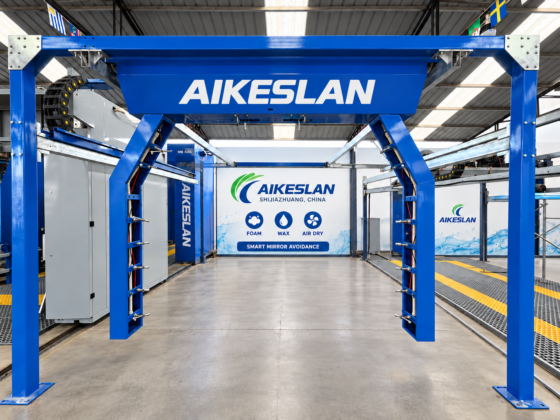
Aikesilun touchless car wash machine
A touchless car wash is an automatic system that cleans a vehicle without using brushes or cloth against its body.
Instead, it uses pressurized water, cleaning products, and carefully positioned spray nozzles.
Some systems also include sensors that help detect the vehicle’s position and shape.
These features allow the machine to follow a programmed washing process.
How Does a Touchless Car Wash Work?
A typical touchless wash follows several stages.
Step 1: Vehicle positioning
The driver enters the wash bay and stops at the indicated position.
Sensors then confirm the vehicle’s location.
Step 2: Pre-rinse
The machine sprays water over the vehicle to remove loose dirt.
Step 3: Chemical pre-soak
Cleaning chemicals help break down road film, grease, and other contaminants.
Step 4: High-pressure washing
Water jets remove loosened dirt from the vehicle surface.
Step 5: Final rinse
The system rinses away remaining chemicals and dirt.
Step 6: Drying
Air blowers remove some of the water from the vehicle.
Additional options may include underbody cleaning, wheel washing, wax, and spot-free rinsing.
However, these features depend on the machine model and selected wash package.
Main Advantages of Touchless Washing
The main advantage is avoiding direct brush contact.
This can appeal to owners of new vehicles, premium cars, or vehicles with delicate finishes.
In addition, touchless systems do not need large rotating cleaning brushes.
Therefore, they avoid brush replacement costs, although pumps, nozzles, and other components still require care.
Many touchless machines also use a compact in-bay design.
As a result, they can fit into gas stations and commercial wash bays with limited space.
Main Limitations
Touchless washing relies heavily on chemical action and spray coverage.
Therefore, some bonded dirt or heavy road film may remain after one wash.
Furthermore, poor chemical selection or incorrect settings can affect vehicle finishes.
For this reason, good chemical control and regular equipment checks are important.
3. What Is a Soft-Touch Car Wash?
A soft-touch car wash uses flexible cleaning materials to wash the vehicle surface.
These may include foam brushes, textile curtains, or other approved wash materials.
The cleaning equipment makes contact with the vehicle while water and detergent help remove dirt.
Soft-touch equipment is used in both rollover and tunnel car wash systems.
How Does a Soft-Touch Car Wash Work?
First, the vehicle enters the wash area.
Next, the system applies water and cleaning chemicals.
Then, soft cleaning materials move across the vehicle surface.
This mechanical action helps lift dirt and road film.
After washing, the system rinses the vehicle and may apply protective finishing products.
Finally, air dryers remove remaining water.
Main Advantages of Soft-Touch Washing
Mechanical cleaning is the main benefit.
When properly designed and maintained, brushes and cloth can help remove dirt that water pressure alone may leave behind.
This makes soft-touch washing attractive in areas with heavy road film, mud, or winter grime.
In addition, soft-touch technology is available in high-capacity tunnel systems.
Therefore, it can work well for busy commercial car wash locations.
Main Limitations
Brushes and cloth must remain clean and in good condition.
If contaminated cleaning material contacts the vehicle, it may cause marks or surface damage.
In addition, brushes, motors, bearings, and moving assemblies require routine maintenance.
Therefore, operators should follow strict cleaning and inspection procedures.
4. Which Car Wash Cleans Better?
Cleaning performance is one of the biggest differences between touchless and soft-touch washing.
In many situations, soft-touch washing has an advantage when removing firmly attached road film.
This is because mechanical contact helps loosen dirt.
However, a well-designed touchless system can also produce good results.
The final outcome depends on the type of contamination, the chemical program, the nozzle system, and the wash cycle.
Removing Loose Dirt
Both systems can remove loose dust and dirt.

Showcase of Aikesilun Touchless Car Wash Machines
For light contamination, a touchless wash may provide satisfactory results without direct brush contact.
Removing Heavy Road Film
Road film can contain oil, fine dust, exhaust residue, and other contaminants.
These materials may stick to vehicle surfaces.
Soft-touch systems can use mechanical cleaning to help remove them.
Touchless systems may need stronger or longer chemical treatment.
Removing Mud
Fresh mud may wash away with water pressure.
However, dried mud can require more cleaning action.
In some cases, a pre-wash or additional cycle may be necessary.
Removing Winter Salt
Both systems can help remove winter road salt.
However, results depend on spray coverage and whether underbody cleaning is available.
Therefore, drivers in snowy regions should look for a wash package that includes suitable lower-body cleaning.
Cleaning verdict: Soft-touch systems often have an advantage on stubborn dirt. Touchless systems may be sufficient for routine cleaning when properly configured.
5. Is Touchless or Soft-Touch Car Wash Safer for Paint?
Many drivers choose a touchless car wash because they want to reduce the risk of scratches.
However, paint safety depends on more than the cleaning method.
Touchless Paint Safety
A touchless system avoids the friction caused by brushes moving across the body.
Therefore, it reduces exposure to brush-related marking.
However, high-pressure water and chemical products must still be used correctly.
A poorly positioned nozzle or unsuitable chemical program can create other risks.
In addition, loose trim or damaged accessories may be affected by strong spray.
Soft-Touch Paint Safety
Modern soft-touch machines use flexible cleaning materials.
When they are clean and properly maintained, they can provide effective cleaning.
However, contamination in brushes or cloth may cause visible marks.
The risk can increase if cleaning materials are worn, dirty, or incorrectly adjusted.
What About Ceramic Coatings?
A vehicle with a ceramic coating may be easier to wash, but coating care instructions still matter.
Some coating installers recommend specific cleaning methods and chemical products.
Therefore, drivers should follow the coating manufacturer’s guidance.
What About Paint Protection Film?
Paint protection film can have special care requirements.
Strong pressure close to film edges or poorly maintained contact equipment may be unsuitable.
As a result, owners should check the film manufacturer’s maintenance advice.
Paint safety verdict: Touchless washing avoids brush contact, but it is not risk-free. A properly maintained soft-touch system can also be suitable for many vehicles.
6. Touchless vs. Soft-Touch Car Wash: Water Consumption
Water use matters to both car wash owners and local communities.
However, there is no universal rule that touchless systems always use less water.
Actual consumption depends on nozzle flow, pressure, wash time, vehicle detection, and water reclamation.
How Touchless Systems Use Water
Touchless systems rely on water jets to remove dirt.
Some programs use several rinse and chemical stages.
Therefore, water use can increase when the wash cycle is long or the system has high flow rates.
How Soft-Touch Systems Use Water
Soft-touch equipment combines water with mechanical action.
In some designs, contact cleaning can reduce the need for repeated high-pressure rinsing.
However, actual water use still depends on the machine.
The Role of Water Reclamation
A water reclaim system collects and treats used wash water for suitable reuse.
For example, reclaimed water may be used for underbody washing or selected cleaning stages.
Higher-quality rinse stages may require additional treatment.
Therefore, buyers should compare measured fresh-water consumption per wash, not only total water circulated through the machine.
What Should Commercial Buyers Ask?
Request the following figures from suppliers:
- Fresh water use per completed wash.
- Total water flow for each wash program.
- Reclaimed water percentage, if applicable.
- Water treatment requirements.
- Wastewater discharge requirements.
- Maintenance needs for pumps and filters.
These figures can help operators compare long-term operating costs.
7. Which Car Wash Uses More Electricity?

Showcase of Aikesilun Reciprocating Car Wash Systems
Electricity is another important operating expense.
Both technologies need energy for pumps, motors, controls, and dryers.
However, the equipment uses power in different ways.
Touchless Energy Use
High-pressure pumps can consume significant electricity.
Drying blowers may also represent a major part of total energy use.
Therefore, a long wash cycle with several high-pressure stages may increase electricity consumption.
Soft-Touch Energy Use
Soft-touch equipment uses motors to rotate brushes and move cleaning assemblies.
It may also use pumps, conveyor drives, and dryers.
As a result, electricity use depends on the number and type of components.
How to Compare Energy Costs
Ask suppliers for measured kilowatt-hours per completed wash.
For example, assume one machine uses 2.5 kWh per wash and electricity costs $0.20 per kWh.
The electricity cost would be $0.50 per wash.
This is an illustrative calculation, not a verified performance figure.
Energy verdict: Neither technology is always more efficient. Compare energy use under similar wash programs and vehicle conditions.
8. Touchless vs. Soft-Touch Car Wash Equipment Cost
Equipment purchase price is important for business planning.
However, price varies by machine size, features, controls, and manufacturing quality.
A compact touchless rollover cannot be compared directly with a large soft-touch conveyor tunnel.
Therefore, buyers should compare equipment of similar capacity.
Touchless Equipment Costs
Touchless machines typically include high-pressure pumps, spray nozzles, chemical dosing systems, controls, and vehicle sensors.
Some also include moving gantries and automatic dryers.
More advanced vehicle profiling and high-capacity drying can increase the price.
Soft-Touch Equipment Costs
Soft-touch machines include cleaning brushes or cloth, motors, movement systems, chemical delivery, controls, and drying equipment.
Large tunnel systems also require conveyors and multiple cleaning modules.
As a result, equipment scope can vary significantly.
What Does a Commercial Car Wash Project Cost?
The full installed project budget may include:
- Machine purchase.
- Building and foundation work.
- Water supply and drainage.
- Electrical installation.
- Shipping and customs.
- Payment equipment.
- Water treatment.
- Installation and commissioning.
- Spare parts and operator training.
Therefore, a lower machine price does not always lead to a lower total project cost.
Before buying, request a complete quotation with clear inclusions and exclusions.
9. Maintenance: Which System Is Easier to Manage?
Both touchless and soft-touch systems require maintenance.
However, their service needs are different.
Touchless Maintenance
Typical maintenance tasks include checking pumps, cleaning spray nozzles, inspecting hoses, testing sensors, and checking chemical dosing.
Filters may also need regular cleaning or replacement.
In addition, high-pressure parts should be inspected according to the manufacturer’s service schedule.
Soft-Touch Maintenance
Soft-touch systems require brush or cloth inspection.
Cleaning materials must be kept free from harmful debris.
Motors, bearings, rails, belts, and other moving parts also need attention.
Therefore, operators should keep maintenance records and replace worn components before they cause problems.
Which Is Easier?
Touchless systems avoid brush maintenance.
However, they may require more attention to pumps, chemicals, and high-pressure components.
Soft-touch systems have additional mechanical cleaning parts.
The best choice depends on service access, local technician availability, and spare parts support.
Maintenance verdict: Compare scheduled service time, replacement part prices, and expected downtime rather than assuming one technology is maintenance-free.
10. Touchless vs. Soft-Touch Car Wash: Customer Experience
Customer experience can affect repeat visits and revenue.
A good car wash should be easy to use, provide a clear wash result, and operate reliably.
Touchless Customer Experience
Touchless washing appeals to drivers who want to avoid brush contact.

Diagram of the Shuttle Airfield Demonstration Site
It may also create a modern experience through moving spray arms, foam application, and automatic drying.
However, some customers may be disappointed if heavy dirt remains.
Soft-Touch Customer Experience
Soft-touch systems provide visible mechanical cleaning.
Customers may value the removal of road film and everyday dirt.
However, some drivers worry about brush contact.
Therefore, operators should explain the cleaning materials and maintenance process.
Which Helps Customer Loyalty?
Neither system guarantees better loyalty.
Instead, repeat business depends on cleaning quality, price, waiting time, and reliability.
As a result, owners should track customer feedback and service performance.
11. Best Car Wash System for Gas Stations
Gas stations often have limited wash space.
For this reason, compact in-bay automatic machines are common choices.
Why Choose Touchless for a Gas Station?
A touchless rollover can provide automated, contact-free washing in a single bay.
This may be attractive to fuel stations that want to offer a premium wash service.
It can also support different wash packages.
However, chemical performance and water supply must be considered.
Why Choose Soft-Touch for a Gas Station?
A soft-touch rollover can help remove everyday road film through mechanical cleaning.
It may suit locations where customers expect strong cleaning during routine visits.
However, the station must maintain its brushes and moving parts.
What About Large Fuel Stations?
High-traffic travel centers may consider a conveyor tunnel.
This can provide greater wash capacity.
However, the extra space and investment must be justified by customer demand.
Best recommendation: For most compact gas stations, compare touchless and soft-touch rollover machines first. Choose a tunnel only when site capacity and demand support it.
12. Best Car Wash System for Independent Car Wash Businesses
Independent wash businesses often focus on customer demand, wash speed, and operating costs.
The right equipment depends on the service model.
Premium Contact-Free Service
A touchless machine may be suitable for businesses that want to promote contact-free cleaning.
The owner should test whether local customers value this benefit enough to support the planned prices.
High-Volume Express Washing
A soft-touch conveyor tunnel may be more suitable for businesses expecting many vehicles per hour.
However, actual throughput depends on conveyor speed, wash layout, and customer flow.
Small Neighborhood Wash
A compact in-bay machine may reduce land requirements.
The owner can choose touchless or soft-touch based on local customer needs.
Which Is More Profitable?
Profitability depends on sales volume, wash prices, variable costs, fixed expenses, and equipment investment.
Therefore, neither technology is automatically more profitable.
A financial forecast is essential before purchase.
13. Best Car Wash System for Dealerships
Vehicle dealerships need consistent cleaning for showroom cars, used vehicles, and customer deliveries.
A touchless system may appeal to dealerships that want to avoid brush contact.
However, touchless washing may not remove every type of stubborn dirt.
Soft-touch equipment may offer stronger routine cleaning.
Yet dealerships must also consider the condition of vehicle finishes.
For this reason, the best solution depends on vehicle types, wash frequency, and finish requirements.
Some dealerships may still need manual detailing for premium preparation.
Automatic washing should support the overall cleaning process rather than replace every detailing task.
14. Best Car Wash Equipment for Fleet Operators
Commercial fleets often need to wash many vehicles regularly.
Examples include rental cars, delivery vehicles, taxis, and company fleets.
For these businesses, speed and operating cost per wash are important.
Touchless Fleet Washing
Touchless equipment may be attractive where avoiding brush contact is a priority.
However, vehicle shape and dirt levels can affect cleaning results.
Soft-Touch Fleet Washing
Soft-touch equipment can provide mechanical cleaning for routine dirt.
However, brush systems must be suitable for the vehicle dimensions and accessories.
Important Fleet Buying Factors
Buyers should check maximum vehicle size, wash time, water use, service requirements, and equipment availability.
In addition, a fleet operator should estimate how many vehicles must be cleaned during each shift.
15. Important Technical Features for Automatic Car Wash Buyers
The cleaning method is only one part of equipment quality.
A commercial machine also needs suitable controls, sensors, pumps, and safety systems.
PLC Control
A programmable logic controller, or PLC, manages the wash sequence.
It can control pumps, motors, valves, sensors, and timing.
Therefore, buyers should review the controller’s functions and fault reporting.
Vehicle Profiling
Some machines use sensors to detect the vehicle’s shape or size.
This can help adjust cleaning movement or spray position.
However, profiling must work within approved vehicle limits.
Chemical Dosing
Automatic dosing systems control how much cleaning product enters the wash process.
Proper settings can support consistent results.
However, chemical selection must match the equipment and vehicle surfaces.
Drying Technology
Dryers use high-speed airflow to remove water.
Buyers should compare drying results, energy use, and noise.
Water Treatment
Water treatment can include filtration, reclaim systems, and spot-free rinse equipment.
The correct setup depends on local water quality and the planned wash process.
Safety Controls
Commercial machines may include emergency stops, vehicle detection, movement limits, and other protective devices.
The exact requirements depend on machine design and local regulations.
16. Buying Touchless or Soft-Touch Equipment in North America
Buyers in the United States and Canada should consider local vehicle types, climate, utility systems, and safety requirements.
Vehicle Size
SUVs and pickup trucks are common in many North American markets.
Therefore, check the machine’s maximum approved vehicle height, width, and length.
Winter Conditions
Cold regions may need freeze protection for pumps, pipes, and exposed equipment.
Road salt can also increase the value of underbody cleaning.
Electrical Compatibility
Confirm voltage, frequency, phase, and electrical load.
Imported equipment may require destination-specific configurations.
Local Approvals
Equipment and site installations must meet applicable local requirements.
Therefore, consult qualified installers and authorities before purchasing.
Spare Parts and Service
A machine that cannot be repaired quickly may lose sales.
For this reason, ask suppliers about parts inventory, technical support, and warranty response procedures.
17. Buying Automatic Car Wash Equipment in Europe
European buyers should review equipment conformity, water management, and local installation needs.
Equipment Safety and Documentation
Applicable European product safety rules may require conformity assessment, supporting technical documents, and CE marking.
The exact obligations depend on the equipment and when it enters the market.
Therefore, buyers should confirm the relevant requirements with qualified professionals.
Water and Wastewater
Local wastewater rules can affect site design.
In some locations, treatment equipment may be necessary before discharge.
Energy Use
Electricity prices can affect long-term operating costs.
Therefore, request measured energy consumption rather than relying only on motor ratings.
Local Language Support
Operating instructions and safety information should meet applicable local requirements.
In addition, suitable language support can improve staff training.
18. How to Compare Touchless and Soft-Touch Car Wash Manufacturers
Choosing a supplier is just as important as choosing the cleaning method.
A reliable manufacturer should provide clear specifications and practical support.
Review Real Machine Performance
Ask for a wash demonstration using vehicles with realistic dirt levels.
If possible, compare results before and after washing.
Check Equipment Quality
Review pumps, motors, controls, structural materials, sensors, and corrosion protection.
Also ask which component brands and specifications are included.
Confirm Installation Support
The supplier should provide site drawings and utility requirements.
Also confirm whether installation assistance and commissioning are available.
Check Warranty and Spare Parts
Ask which parts are covered, how long coverage lasts, and what exclusions apply.
In addition, review spare parts delivery times.
Compare Complete Quotes
One quotation may include dryers and installation support.
Another may exclude them.
Therefore, compare the same equipment scope before making a decision.
19. Should You Buy Automatic Car Wash Equipment from China?
China is one of the possible sourcing markets for automatic car wash machines.
Manufacturers may offer touchless, soft-touch, hybrid, and tunnel systems.
However, buyers should not choose equipment based only on a low factory price.
What to Check Before Importing
Ask for technical specifications, factory inspection records, equipment manuals, installation drawings, and electrical details.
Also confirm which safety and conformity documents are available.
Shipping and Installation
International buyers should review freight costs, customs clearance, unloading, and commissioning.
The supplier’s quotation should explain the delivery terms.
After-Sales Support
Ask whether technicians can provide remote diagnostics or on-site assistance.
In addition, check which spare parts are supplied with the machine.
Long-Term Value
A lower initial price may be attractive.
However, long-term value also depends on machine uptime, cleaning performance, and service support.
Therefore, compare total ownership cost.
20. Touchless vs. Soft-Touch Car Wash ROI
Return on investment is an important factor for commercial buyers.
However, the cleaning method alone does not determine profitability.
Customer demand, selling price, operating cost, and total investment all matter.
Example Financial Model
Assume a car wash serves 50 vehicles per day.
The average selling price is $12.
Monthly revenue would be:
50 × $12 × 30 days = $18,000
Next, assume variable costs average $2.50 per wash.
Monthly variable costs would be:
50 × $2.50 × 30 = $3,750
Contribution before fixed costs would be:
$18,000 − $3,750 = $14,250
Now assume fixed monthly cash operating costs are $6,000.
Estimated monthly operating cash surplus would be:
$14,250 − $6,000 = $8,250
If the total installed project investment is $180,000, simple payback would be approximately 21.8 months.
This is only an illustration.
It excludes financing, taxes, depreciation, major unexpected repairs, and working capital changes.
Actual results may be very different.
What Changes ROI?
Higher wash volume can improve contribution when capacity is available.
However, low customer demand, expensive maintenance, or long downtime can reduce returns.
Therefore, buyers should prepare several financial scenarios before investing.
21. Can a Hybrid Car Wash Offer the Best of Both Systems?
Some automatic systems combine touchless and soft-touch cleaning.
These are often called hybrid car wash machines.
They may use brushes during certain stages and high-pressure water during others.
Some also offer separate contact and contact-free wash programs.
Benefits of Hybrid Equipment
A hybrid system may offer more cleaning flexibility.
For example, an operator could offer different wash packages based on customer preference.
In addition, combining mechanical cleaning with targeted high-pressure washing may improve results for certain dirt types.
Potential Drawbacks
Hybrid systems may include more parts.
This can increase purchase cost and maintenance complexity.
Therefore, buyers should confirm which functions are standard and whether they create useful business value.
Hybrid verdict: A hybrid system may suit commercial operators who want more service options, but it is not automatically the best investment.
22. Common Mistakes When Choosing a Car Wash System
Several mistakes can lead to unnecessary costs.
Mistake 1: Assuming Touchless Means Zero Risk
Touchless washing avoids brush contact, but pressure and chemicals still need control.
Mistake 2: Assuming Soft-Touch Always Damages Paint
Well-maintained equipment can provide suitable cleaning for many vehicles.
However, contaminated brushes create risks.
Mistake 3: Choosing Equipment Based Only on Price
A cheaper machine may lack important features or service support.
Mistake 4: Ignoring Customer Demand
The most advanced machine may not generate enough revenue in a low-traffic location.
Mistake 5: Overlooking Water and Electricity
Operating costs affect profitability over time.
Mistake 6: Forgetting Maintenance
Every automatic car wash requires routine inspection and service.
Mistake 7: Failing to Check Local Requirements
Imported equipment may need additional documentation or local approval.
Therefore, review these needs before ordering.
23. How to Choose the Right Car Wash System: Buying Checklist
Before purchasing equipment, review the following items.
Business requirements
- Expected vehicles per day.
- Target customer group.
- Average selling price.
- Required wash packages.
- Available investment budget.
Site requirements
- Building dimensions.
- Entry and exit lanes.
- Vehicle queue space.
- Electrical supply.
- Water supply and drainage.
Equipment requirements
- Cleaning method.
- Wash cycle time.
- Vehicle size limits.
- Pump and motor specifications.
- Drying equipment.
- Chemical dosing.
- Safety controls.
Supplier requirements
- Technical documentation.
- Installation support.
- Factory testing.
- Warranty coverage.
- Spare parts availability.
- After-sales service.
This checklist can make supplier comparisons more useful.
24. Frequently Asked Questions
Is a touchless car wash better than a soft-touch car wash?
Touchless washing is often preferred when avoiding brush contact is important. Soft-touch washing often performs better on stubborn dirt because it uses mechanical cleaning. Neither is best in every situation.
Does a soft-touch car wash scratch cars?
A poorly maintained soft-touch system may cause surface marks if cleaning materials contain abrasive debris. Proper maintenance can reduce this risk, but it cannot eliminate every possibility of damage.
Are touchless car washes safe for ceramic coatings?
They may be suitable when the chemical program and pressure settings follow the coating manufacturer’s guidance. However, not every touchless system uses the same chemicals or settings.
Do touchless car washes clean as well as brush car washes?
Touchless systems can provide good routine cleaning. However, soft-touch equipment may remove certain types of bonded dirt more effectively through mechanical action.
Which type of car wash uses less water?
Neither technology always uses less water. Water consumption depends on wash time, spray flow, machine design, and reclaim equipment. Compare measured fresh water use per wash.
Which car wash costs more to operate?
Touchless systems may rely more on chemical action and high-pressure pumps. Soft-touch systems have additional brush and motor maintenance. Actual costs depend on the selected equipment.
Which system is better for a gas station?
A compact touchless or soft-touch rollover can work well for a gas station. The best choice depends on customer preferences, space, local dirt conditions, and operating costs.
Which car wash is better for heavy road salt?
Both can help remove winter salt when properly configured. Underbody cleaning and spray coverage are especially important in regions with salted roads.
Is a hybrid car wash worth buying?
It may be worthwhile when customers value multiple wash methods. However, the added equipment must justify its purchase and maintenance costs.
Can a touchless car wash operate without staff?
Some systems support unattended washing with suitable payment and safety equipment. However, regular inspection, cleaning, maintenance, and customer support remain necessary.
How long does an automatic car wash machine last?
Service life depends on equipment quality, operating hours, maintenance, water chemistry, and local conditions. Buyers should request service schedules and replacement part information.
What should I ask an automatic car wash manufacturer?
Ask about machine dimensions, wash time, water use, energy consumption, cleaning performance, safety documentation, installation support, warranty terms, and spare parts.
25. Find the Right Automatic Car Wash Machine for Your Business
Choosing between touchless and soft-touch technology starts with understanding your business.
A compact gas station may need a single-bay touchless machine.
A busy commercial car wash may benefit from soft-touch tunnel equipment.
A dealership may place more value on finish care and reliable routine cleaning.
Meanwhile, a fleet operator may focus on throughput and operating cost per vehicle.
Therefore, the best equipment should match the site, customer expectations, and long-term goals.
Request a Custom Car Wash Equipment Quote
Are you planning a new automatic car wash or upgrading an existing system?
Contact our team to compare touchless, soft-touch, and hybrid automatic car wash equipment.
Share your project location, available space, expected wash volume, preferred technology, and target budget.
With these details, we can discuss suitable equipment configurations and the information needed for a detailed quotation.
Request a Quote | Compare Car Wash Systems | Discuss Your Project
Conclusion: Touchless or Soft-Touch Car Wash?
The choice between a touchless and soft-touch car wash depends on what matters most to the user or business.
Touchless systems avoid brush contact and can provide convenient automatic cleaning.
Soft-touch systems use mechanical action that can help remove stubborn dirt and road film.
However, neither method guarantees perfect cleaning or zero risk.
For commercial buyers, equipment quality, maintenance, wash capacity, water use, energy demand, and after-sales support are just as important.
Therefore, compare real equipment performance and complete project costs before making an investment.
For compact gas stations, both touchless and soft-touch rollover systems deserve consideration.
For high-volume commercial operations, soft-touch tunnel equipment may offer useful capacity advantages.
Ultimately, the best automatic car wash system is the one that provides reliable cleaning, fits your site, and supports your business goals.
Ready to choose your next automatic car wash machine? Contact our team for a tailored equipment recommendation and quotation.