Can One Automatic Car Wash Machine Wash Different Types of Vehicles?
Yes. One automatic car wash machine can wash different types of vehicles when they fall within its approved size, shape, and operating limits. Depending on the configuration, the same system may serve compact cars, sedans, SUVs, and selected pickups or vans. However, no single machine should be assumed to accept every vehicle.
Compatibility depends on more than height and width. Wheel dimensions, ground clearance, external fittings, vehicle condition, and the vehicle maker’s wash instructions also matter.
For business owners, the goal is to serve a useful vehicle mix through one reliable process. That requires the right equipment, clear entry rules, and a suitable site.
This guide explains how multi-vehicle washing works, where its limits lie, and what European and North American buyers should ask before ordering.
What Does Multi-Vehicle Compatibility Really Mean?
A multi-vehicle car wash system can handle a defined range of vehicles without requiring a separate machine for each body style.
For example, a site may wash a small hatchback, a family SUV, and an approved light van using the same equipment.
However, compatibility has several layers.
First, the vehicle must fit the equipment’s approved operating envelope. Next, its shape and fittings must suit the wash process. Finally, the driver must prepare the vehicle as required.
A vehicle that fits through the entrance may still be unsuitable for the wash.
Therefore, buyers should request a written compatibility specification for the exact machine configuration.
That document is more useful than a broad claim such as “suitable for all passenger vehicles.”
It also gives operators a clear basis for signs, staff training, and customer guidance.
1. Start With the Vehicles Your Business Will Actually Serve
Before comparing equipment, define the intended customer base.
A retail wash may see a changing mix of private vehicles. A dealership can often provide a known model range. Meanwhile, a fleet site may have a detailed asset list.
Each case supports a different buying process.
For a public site, observe local traffic and record common body styles. Also note larger vehicles, modified vehicles, and frequent accessories.
For a fleet, list dimensions and relevant fittings for each vehicle group.
Then separate essential coverage from occasional demand.
A small number of unusual vehicles may not justify changing the whole project. In some cases, an approved alternative wash process may be more practical.
This early work helps suppliers recommend suitable equipment.
It also reduces the risk of buying a machine around a general market description rather than the vehicles that will use it.
2. Check Dimensions as a Complete Set
Height matters, but it is only one part of vehicle fit.
The approved limits may also cover width, length, wheelbase, track width, tire dimensions, and ground clearance.
Furthermore, different measurements can apply at different points.
A machine’s outer frame width is not its permitted vehicle width. Likewise, a building door height does not establish the effective washing height.
Optional equipment can also affect the available space.
Therefore, ask for a drawing that shows the relevant operating limits for the quoted configuration.
For European and North American projects, request dimensions in clearly labeled metric and imperial units where useful.
Also establish how width is measured. Mirrors and other projections may affect the answer.
Avoid estimating fit from vehicle category alone. Two SUVs can differ greatly in size.
The correct comparison uses actual vehicle dimensions and the supplier’s stated measurement method.
3. Compact Cars and Sedans Need More Than Basic Clearance
Compact cars and sedans often form part of the intended range for passenger-car wash equipment.
However, smaller size does not automatically remove every concern.
A low front spoiler, modified suspension, unusual wheels, or loose trim may affect suitability.
Positioning also matters.
The driver must stop or align the vehicle within the area required by the machine. A compact vehicle placed incorrectly can still cause a poor wash result or a fault.
Therefore, buyers should review entry guidance for both short and long vehicles.
Ask how the system confirms position and what happens when positioning is wrong.
Also test cleaning and drying on representative smaller vehicles.
A machine selected mainly for large SUVs should still deliver the intended result on the lower and narrower cars in the local market.
Useful flexibility covers both ends of the approved range.
4. SUVs and Crossovers Require Shape Awareness
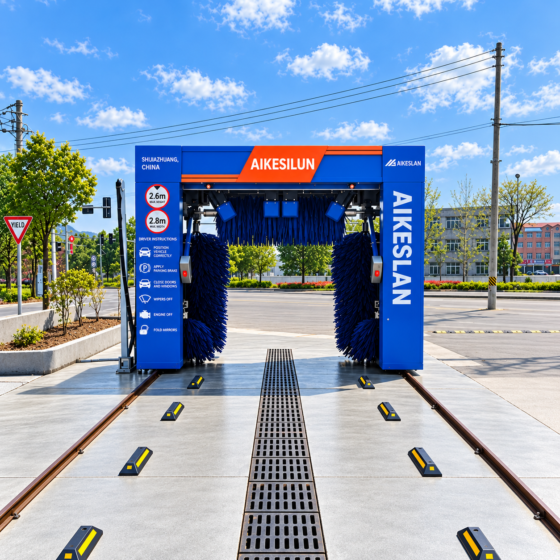
Reciprocating machine
SUVs and crossovers vary widely.
Some resemble raised hatchbacks, while others have tall roofs, broad bodies, steep rear surfaces, or external spare wheels.
As a result, the category name alone says little about wash compatibility.
The system must suit the vehicle’s dimensions and profile.
Buyers should also review mirrors, roof rails, spoilers, and rear-mounted items.
In addition, cleaning and drying may differ across body shapes.
A tall, flat rear surface creates a different task from a sloped rear window. Therefore, demonstrations should include more than one SUV style.
Ask the supplier to show how the quoted configuration handles those differences.
Finally, confirm whether any special program is required.
A premium wash package and a vehicle-specific handling mode are different functions, even if both appear on the same operator screen.
5. Pickup Trucks Need Specific Approval
An automatic car wash for pickup trucks must account for more than overall size.
An open load bed creates a different profile from a closed passenger-car roof. Bed covers, sports bars, tools, and cargo can add further complexity.
Therefore, pickup compatibility should be confirmed for the exact system and vehicle condition.
Ask whether an open bed is accepted and whether the machine requires a dedicated operating mode.
Also request the rules for emptying or securing the load area.
A closed bed cover does not automatically establish suitability. Its condition, fittings, and manufacturer instructions still matter.
Some equipment manuals include special procedures for pickups. For example, the cited WashTec SoftWash manual describes model-specific handling of the roof brush around open loading areas. That instruction applies to the documented equipment, rather than every modern wash. WashTec SoftWash Operating Instructions
Buyers should obtain current guidance for their proposed machine.
6. Vans Must Be Assessed by Size and Use
“Van” covers a wide range of vehicles.
A compact delivery van may fit a passenger-vehicle wash. A high-roof commercial van may exceed the limits or need different equipment.
Therefore, divide the fleet into clear groups.
Record roof height, body length, mirrors, steps, ladders, racks, and rear fittings.
Also include any changes made after the vehicle left the factory.
For delivery fleets, vehicle availability may be as important as wash speed. The site must fit the dispatch schedule and leave room for queuing and turning.
Ask suppliers to review the full vehicle list.
Do not assume that buying a taller machine solves every issue. Width, length, wheel guidance, and external accessories still need checking.
A suitable proposal should identify accepted vehicles, conditional cases, and exclusions.
7. Heavy Vehicles May Need a Different Wash Class

Tunnel Car Wash Machine
A multi-vehicle passenger-car wash is not automatically a truck or bus wash.
Heavy commercial vehicles can differ in structure, dimensions, wheel layout, and cleaning needs.
Similarly, motorcycles, trailers, and vehicles with unusual equipment require explicit approval rather than an assumption of fit.
For a mixed business, it may be more effective to separate the passenger-vehicle process from specialized washing.
That decision should follow the actual vehicle mix and project requirements.
First, identify the largest and most complex essential vehicles. Then ask whether the proposed system was designed for them.
If the answer depends on removing safeguards or using an undocumented workaround, the equipment choice needs review.
A clear exclusion can be a sign of sound engineering.
The objective is dependable coverage of a defined market, with suitable alternatives for vehicles outside it.
8. How Sensors Help the Machine Adapt
Depending on the model, sensors can help detect vehicle position, size, or contour.
The controller can use that information to guide selected wash movements.
However, sensor capability varies.
A system that confirms vehicle presence does not necessarily measure a detailed body profile. Likewise, contour sensing does not prove that every small accessory can be recognized.
As one product example, WashTec describes real-time size and contour sensing on its SmartCare Connect gantry system. The stated capability belongs to that product and must not be assumed for other equipment. WashTec SmartCare Connect
For procurement, ask three questions: what does the sensor measure, how is that information used, and what remains outside its detection scope?
Also confirm cleaning and testing requirements.
A sensing feature needs maintenance and a defined response when its signal is unavailable or invalid.
9. Contour Following Has Defined Limits
Contour following helps a wash mechanism respond to the shape of an accepted vehicle.
Depending on the design, that may involve brush position, spray movement, or drying equipment.
Yet it does not turn an unsuitable vehicle into a suitable one.
A sensor may detect a roofline without establishing whether a roof-mounted item can withstand the wash process.
Similarly, a control system cannot be assumed to judge the condition of loose trim or damaged seals.
Therefore, separate shape adaptation from compatibility approval.
Ask the supplier to explain the operating envelope and excluded features.
Then review how the system reacts to an unexpected profile or a failed measurement.
These questions make a demonstration more useful.
They also help operators avoid relying on vague statements that the machine will “recognize everything automatically.”
10. Brush Control Supports Different Body Profiles
A brush-based automatic car wash machine needs controlled contact with the vehicle.
The method varies by equipment.
Some systems use feedback related to brush load or other measured conditions to regulate movement. The exact approach should be confirmed with the supplier.
For buyers, the practical focus is consistency.
How does the machine handle a narrow car followed by a wider SUV? What checks are required when brush media wear or are replaced?
Also ask which media are approved.
Changing material can affect the system’s intended setup, so replacements should follow the equipment instructions.
For a tunnel wash brush system, review each brush stage separately.
Different assemblies may serve different parts of the vehicle.
Good control depends on suitable hardware, approved settings, and routine care across the full process.
11. Touchless Washing Still Needs Compatibility Checks
Touchless equipment cleans without wash brushes contacting the body.
However, the vehicle must still fit the system and be suitable for the applied chemicals, spray process, and operating method.
Therefore, “touchless” should not be used as a universal approval.
Damaged seals, loose fittings, unsuitable finishes, or external accessories may still require review.
Likewise, the cleaning result depends on setup and conditions.
Ask for a demonstration using representative local soil and vehicles.
Also confirm chemical requirements, water quality, and permitted adjustments.
A touchless process may suit customers whose vehicle instructions call for that method, but the operator must still check the full set of conditions.
The useful comparison is between documented configurations and tested results.
It is less useful to compare broad claims that one process is always better.
12. Rollover and Tunnel Systems Handle Vehicles Differently
In a rollover, the vehicle generally remains in a defined position while the wash assembly moves.
In a conveyor tunnel, the transport system moves the vehicle through wash stages.
This difference affects compatibility.
A tunnel may have specific wheel, tire, ground-clearance, and loading requirements. A rollover still needs suitable positioning and approved vehicle dimensions.
Therefore, ask for limits specific to the installed transport and guidance arrangement.
Do not rely only on the wash frame’s clearance.
Also review the transition into and out of the wash.
Approach slopes or floor changes may matter for low vehicles even when the machine itself has enough clearance.
Finally, train staff on the correct procedure for each system.
Vehicle preparation for a moving conveyor should not be copied from a stationary-bay process without checking the instructions.
13. Electric Vehicles Need Model-Specific Preparation
Electric vehicles should be assessed by their actual design and instructions.
The power source alone does not determine wash compatibility.
Relevant issues can include automatic parking functions, charging-port behavior, wipers, and the steps needed for conveyor movement.
For example, Tesla’s cited Model Y manual specifies touchless automatic washing and describes Car Wash Mode and Free Roll functions. Those instructions apply to the documented model and market; they should not be generalized to all EVs. Tesla Model Y Cleaning Instructions
Operators should direct drivers to the current manual for their vehicle.
Staff also need a clear escalation process when preparation is uncertain.
A car wash mode is a vehicle function. It does not confirm that the vehicle fits a particular machine or that every wash method is approved.
14. Accessories and Vehicle Condition Can Change the Answer
Two vehicles of the same model may need different decisions.
One may be standard and intact. The other may carry a roof box, bike carrier, damaged spoiler, or aftermarket trim.

Tunnel Car Wash Machine
Therefore, compatibility screening must consider the vehicle as presented.
Useful categories include:
- Roof-mounted loads and fittings.
- Rear-mounted carriers and spare wheels.
- Protruding steps, bars, or equipment.
- Loose or damaged body parts.
- Modified suspension and wheels.
- Special paint, wraps, or finishes.
The correct action depends on the equipment and vehicle instructions.
Convertible roofs also need model-specific guidance. A closed roof does not by itself establish approval.
Similarly, new paint or a repaired panel may need instructions from the responsible vehicle or finish provider.
Staff should avoid making unsupported judgments based only on appearance.
A written rule gives them a clearer basis for accepting, reviewing, or declining a vehicle.
15. Vehicle Programs and Wash Packages Serve Different Jobs
A wash package defines what the customer buys.
A vehicle-handling program defines how the equipment treats an approved vehicle type or feature.
These functions may be linked, but they are not the same.
For example, a premium package might add another treatment stage. A vehicle-specific mode may alter an approved movement sequence.
Buyers should ask how both are selected and protected.
Can a customer choose a package that is unsuitable for a vehicle category? Does staff approval remain necessary for conditional cases?
Also confirm whether changes require a trained technician.
Clear program control supports consistent operation across shifts.
It also prevents a common misunderstanding: buying the highest-priced wash does not expand the machine’s physical limits or override the vehicle maker’s instructions.
16. Different Vehicles May Need Different Cleaning and Drying Expectations
Multi-vehicle compatibility means the machine can process an approved vehicle. It does not promise identical results on every shape.
Deep recesses, broad rear panels, mirrors, and body trim can affect cleaning or retained water.
Likewise, soil conditions vary.
A lightly dusty sedan presents a different task from a vehicle carrying heavy mud.
Therefore, define the intended service and any prewash requirements.
If severe dirt needs an approved separate preparation step, make that clear in the operating plan.
Then evaluate drying as its own part of the process.
Review water remaining around mirrors, rear trim, and other common collection points.
The aim is an honest service promise supported by representative testing, rather than a claim that one program produces the same finish on every vehicle.
17. Match Multi-Vehicle Capability to the Business Scenario
The same technical feature can have different value across businesses.
A fuel station may prioritize clear self-service guidance and common local passenger vehicles.
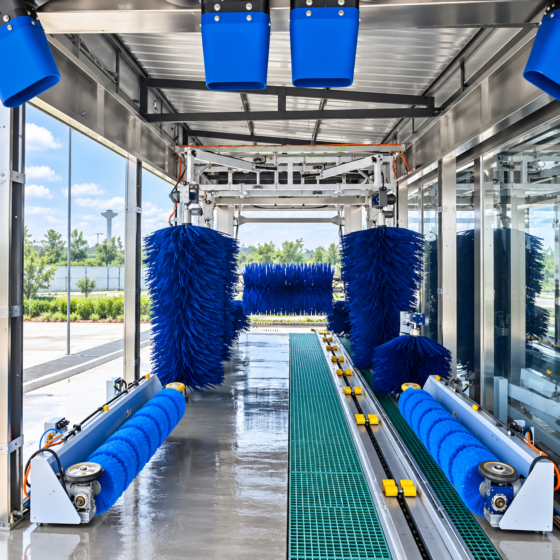
Tunnel Car Wash Machine
A dealership may need compatibility with its stock, including demonstration and service vehicles.
A delivery fleet may value a defined van list and predictable wash windows.
Meanwhile, a retail tunnel may need efficient screening for a broad mix of vehicles.
Use the operating scenario to shape the specification.
| Business scenario | Priority to define |
|---|---|
| Fuel station | Simple entry rules and practical bay flow |
| Dealership | Approved model range and finish expectations |
| Rental operation | Changing vehicle mix and staff procedures |
| Light-vehicle fleet | Documented vehicle list and access control |
| Retail tunnel | Screening, loading, and consistent throughput |
For EU and North American projects, work from local vehicles and site conditions.
Regional labels alone cannot define the correct configuration.
18. Use an Entry Process That Catches Exceptions
A clear entry process supports multi-vehicle operation.
First, display the important limits before drivers reach a difficult turning point.
Next, provide a way to review conditional cases.
Where the site uses staff, give them a short decision checklist.
For unattended operation, ask the supplier how the system handles vehicles or conditions it cannot approve.
Also plan what happens when a customer has paid but cannot enter.
The payment and support process should allow an appropriate resolution.
Keep instructions short and readable.
A sign that lists every technical detail may be hard to use from a vehicle. Place essential information first, then provide further guidance through suitable channels.
Finally, update the rules when equipment or approved procedures change.
Old signs can undermine a correct technical setup.
19. Maintain the Features That Support Adaptation
Sensors, brush assemblies, guides, and moving parts need care.
Therefore, the maintenance plan should cover the functions used to serve different vehicle shapes.
Follow the manufacturer’s requirements for cleaning, checks, adjustment, and technical service.
Also record recurring faults or unusual behavior.
If a certain accepted vehicle repeatedly causes positioning errors or interrupted cycles, investigate rather than repeatedly clearing the alarm.
The cause could involve setup, maintenance, driver guidance, or a compatibility issue.
Keep the relevant vehicle details and fault records.
Where settings are changed, use the approved process and retain a record.
Multi-vehicle performance depends on the maintained system.
A feature demonstrated during installation may not remain reliable if its required cleaning or inspection is missed.
20. Ask Suppliers for a Compatibility Matrix
A compatibility matrix turns a broad product claim into a practical buying document.
Ask the supplier to classify your intended vehicles as accepted, conditional, or excluded.
For conditional cases, require a clear explanation.
The matrix should identify the configuration, relevant limits, special programs, and preparation rules.
It should also distinguish manufacturer-standard vehicles from modified examples.
Then request evidence that matches the proposed scope.
A demonstration on one sedan does not validate a claim covering pickups and high-roof vans.
Likewise, a video of another machine may not represent the quoted configuration.
For procurement, keep the matrix with the quotation and final handover documents.
This helps the operator, installer, and service provider work from the same requirements.
It also makes later changes easier to assess.
21. Test Representative Vehicles Before Final Acceptance
A useful acceptance plan reflects the intended customer mix.
Select vehicles near both ends of the approved range, along with any important conditional category.
The test list might include a compact car, a common SUV, and an approved pickup or van.
However, tests must follow supplier-approved procedures and vehicle instructions.
Record the configuration, program, preparation, operating conditions, and result.
Review entry, sensing, washing, drying, and exit.
Also check how staff handle a vehicle that should not enter. This can be reviewed through the documented process without exposing an unsuitable vehicle to the wash.
Agree in advance on what counts as acceptance and how open issues will be resolved.
That approach creates stronger evidence than a general statement that the equipment “works with many vehicle types.”
22. Evaluate the Commercial Value of Broader Coverage
Serving more approved vehicle types can expand the addressable market.
However, wider coverage does not automatically justify a higher investment.
Compare the extra cost with the demand you can reasonably serve.
Include site changes, utility needs, maintenance, training, and any effect on practical throughput.
Also consider how often conditional vehicles arrive.
A configuration selected for rare vehicles may add complexity without enough business benefit.
Therefore, build the case from the expected mix.
Track rejected vehicles after opening, including the reason for rejection.
This can show whether an upgrade is worth reviewing.
Use actual contribution and operating data where available.
Avoid treating the largest possible wash envelope as the best commercial choice for every site.
Frequently Asked Questions
Can one automatic car wash machine wash both cars and SUVs?
Yes, if both vehicles meet the exact machine’s approved limits and operating conditions. Check actual dimensions, accessories, vehicle condition, and the vehicle maker’s wash instructions.
Can an automatic car wash wash pickup trucks?
Some configurations can process approved pickups. Open beds, covers, cargo, and rear fittings need specific review. Confirm the required program and preparation with the equipment supplier.
Can a passenger-car wash accept high-roof vans?
Not automatically. Some vans exceed passenger-car equipment limits. Review height, width, length, wheel guidance, and accessories. A taller configuration still needs a complete compatibility check.
Are all electric cars suitable for brush washing?
No. Follow the instructions for the specific model and market. Some vehicle manuals require touchless automatic washing. A vehicle’s car wash mode does not override those instructions.
Does touchless mean every vehicle is safe to wash?
No. Touchless equipment still has size limits, operating requirements, and compatibility conditions. Vehicle fittings, finishes, seals, and condition can affect suitability.
Can sensors detect every roof rack or accessory?
Do not assume so. Detection scope varies by system. Ask what the sensors measure and which features still require screening. Contour sensing is not universal accessory approval.
Will a larger machine always be a better investment?
No. The correct size follows the intended vehicle mix, site layout, demand, and costs. Extra capacity has value when it serves a documented business need.
What should buyers send when requesting a quotation?
Provide a vehicle list, dimensions, accessories, site drawing, expected demand, and intended wash method. Then request a written compatibility matrix for the proposed configuration.
Choose Flexibility With Clear Boundaries
One automatic car wash machine can serve several vehicle types when the equipment and operating process are designed for that range.
Suitable dimensions, contour control, approved programs, and clear preparation rules all contribute.
However, the best system is not defined by a promise to wash everything.
It is defined by reliable coverage of the vehicles your business needs to serve.
If you are evaluating a rollover, touchless machine, or tunnel wash brush system, start with your actual vehicle mix.
Then request a configuration-specific proposal, compatibility matrix, representative demonstration, and maintenance plan.
Those documents connect technical capability with daily operation.
They also help you choose equipment that supports a clear customer promise and a practical long-term business model.