 するつもりです | 全自動洗車機メーカー
自動洗車機が無人運転に適している理由?
A Complete 2026 Guide to Unattended Car Wash Safety, Automation, Remote Monitoring, Payment Systems, Reliability, and Commercial Site Design
Introduction: Why Unattended Car Wash Operations Need More Than Automation
An automatic car wash machine can complete a wash cycle without manual control. However, that does not always mean it is suitable for unattended operations.
This difference matters to commercial buyers.
A machine may wash vehicles automatically while trained staff remain nearby. An unattended site has different needs. Customers may enter, pay, position their vehicles, and leave without direct help from an employee.
Therefore, the equipment must work within a wider operating system.
The site needs clear instructions. The machine needs suitable sensors and protective functions. The payment system needs reliable transaction handling. Operators also need a way to respond when something goes wrong.
For gas stations, commercial car wash businesses, and fleet facilities, an unattended automatic car wash machine may offer a practical way to reduce routine staffing needs.
However, reduced staffing does not remove the need for management, inspection, cleaning, and technical service.
In addition, not every site is suitable for the same level of unattended operation.
A machine that works at a monitored gas station may need further equipment and procedures before operating at a remote standalone location.
This guide explains how to evaluate unattended car wash equipment for the United States, Canada, the United Kingdom, and European markets.
It covers automation design, vehicle detection, safety systems, payment integration, remote monitoring, reliability, maintenance, and manufacturer selection.
It also includes a buyer checklist to support commercial equipment purchasing decisions.
Quick Answer: 自動洗車機が無人運転に適している理由?
An automatic car wash machine is suitable for unattended operation when its approved design and the surrounding site support safe customer use without routine staff assistance.
Key requirements may include:
- Reliable vehicle detection and positioning
- Appropriate risk reduction and protective measures
- Clear traffic controls and customer instructions
- Automatic wash cycle control
- Fault detection and safe stopping behavior
- Payment and access system integration
- Remote operating information and alerts
- Suitable emergency assistance procedures
- Effective water, chemical, and utility management
- Preventive maintenance and local service support
- Defined operating limits and site supervision arrangements
However, no single feature makes a car wash safe for unattended operation.
Unattended readiness depends on the complete machine, site design, operating procedures, and response capability.
Buyers should request evidence that the proposed equipment and installation are suitable for the intended operating model.
1. Understand the Meaning of Unattended Car Wash Operations
An unattended car wash allows customers to use the facility without an employee continuously managing each wash cycle.
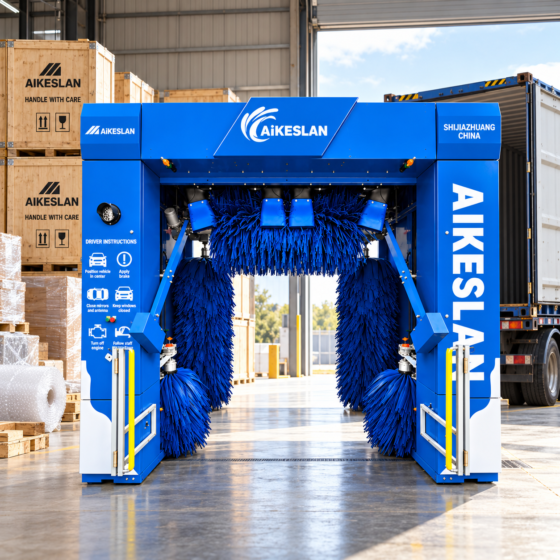
Reciprocating machine
For example, a driver may purchase a wash at an automated terminal.
The system may then direct the vehicle into the correct position and start the selected program once the necessary conditions are met.
After the cycle, the customer follows the exit instructions.
However, the absence of an on-site attendant does not mean the business can operate without supervision.
The operator still needs to manage equipment condition, customer issues, cleaning, and emergency response.
Therefore, unattended operation should be treated as a defined business process.
2. Distinguish Automatic Washing From Unattended Washing
The terms automatic and unattended are often used together.
However, they describe different functions.
An automatic machine controls its washing process.
An unattended facility must also manage customers, access, payment, faults, and site conditions.
For example, a machine may have a sophisticated PLC but no clear way to help a customer whose payment was accepted while the wash bay remains unavailable.
Therefore, buyers should examine the complete customer journey.
A suitable unattended system connects machine control with business operations.
This makes equipment integration an important part of manufacturer evaluation.
3. Start With a Site-Specific Risk Assessment
Unattended operation changes how customers interact with machinery.
Therefore, manufacturers and site operators should identify foreseeable hazards before the facility opens.
These may involve vehicle movement, moving machine assemblies, electrical equipment, water, chemicals, and slippery surfaces.
However, the correct safeguards depend on the actual installation.
A risk assessment should consider normal operation, foreseeable misuse, faults, and maintenance.
It should also address what happens when customers behave unexpectedly.
For example, a driver may open a door, move the vehicle, or attempt to leave at the wrong time.
The operating design must account for relevant foreseeable events.
4. Evaluate Vehicle Detection Technology

Tunnel Car Wash Machine
Vehicle detection is an important part of automatic car wash automation.
A machine may use photoelectric sensors, proximity sensors, or other detection devices.
However, the exact arrangement depends on the machine design.
For example, sensors may help identify vehicle presence or movement.
Other devices may provide positioning information.
The manufacturer should explain what each sensor does.
Buyers should also ask how the system responds to missing or inconsistent signals.
A suitable design should not rely on a single unverified assumption about vehicle position.
Where sensing is safety-related, the function must be designed and validated accordingly.
5. Check Vehicle Positioning and Guidance
Customers need to know where to stop.
Therefore, a suitable unattended facility should provide clear vehicle guidance.
Depending on the installation, this may include signs, lights, display messages, or other positioning aids.
However, the guidance method should match the machine.
For example, a rollover system may need the vehicle to remain stationary during washing.
A tunnel system may require a different entry and conveyor procedure.
The manufacturer should explain the approved operating method.
The operator should also verify that customers can understand the instructions without staff assistance.
Clear guidance reduces confusion and supports consistent operation.
6. Review Vehicle Movement Protection
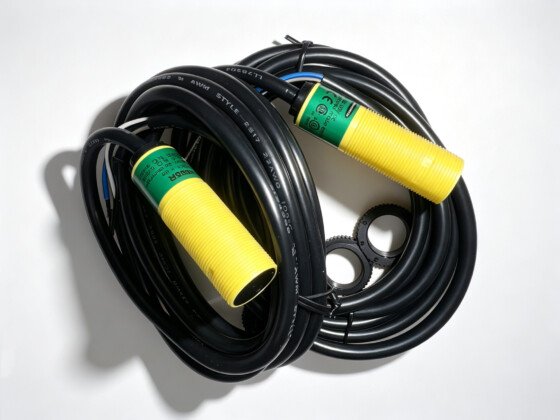
sensor
Vehicle movement can create hazards inside a wash bay.
For example, a driver may start moving during an active cycle.
Therefore, the site must provide suitable instructions and risk controls.
However, the correct approach varies with machine type.
A stationary rollover wash and a conveyor tunnel do not have identical operating requirements.
The manufacturer should identify the intended vehicle behavior.
Buyers should ask what happens if the vehicle moves outside permitted conditions.
They should also confirm how the machine handles unexpected inputs.
Any protective measures must be supported by proper engineering analysis.
7. Evaluate Emergency Stop Functions
Emergency stop devices may be part of the machine’s safety system.
However, they do not replace the need for other safeguards.
A suitable design may require guarding, protective sensing, interlocks, or other measures.
Therefore, buyers should review the complete safety concept.
Emergency stop controls should be selected and positioned according to the assessed risks and applicable requirements.
For unattended sites, emergency assistance arrangements are also important.
Customers need clear information about how to report a problem.
However, an emergency stop should not be treated as a substitute for trained response procedures.
8. Examine the Machine’s Safe Fault Response
A reliable automatic car wash machine should respond appropriately when faults occur.
For example, a sensor may fail or a drive may report an abnormal condition.
However, the necessary response depends on the fault and machine design.
Some faults may require a controlled stop.
Others may prevent the next cycle from starting.
Therefore, buyers should ask for a description of key fault responses.
Also, request evidence that important functions have been tested.
The manufacturer should explain what the operator must do before restarting equipment.
Automatic restart should not occur when it could create an unsafe condition.
9. Review PLC Automation Capability

Rendering of a gas station
A programmable logic controller coordinates many machine functions.
It may manage wash sequences, pumps, motors, valves, and sensor information.
However, a powerful PLC does not automatically make the machine suitable for unattended operation.
The control logic must be designed for the intended process.
For example, the controller may need to verify selected conditions before allowing a wash cycle to begin.
The manufacturer should explain its control architecture.
Buyers should also ask who develops and maintains the software.
Version control and change management are useful when machines receive updates.
10. Assess the Human-Machine Interface
The human-machine interface helps operators understand equipment status.
At an unattended facility, customer-facing interfaces are also important.
However, these may be separate systems.
For example, a payment kiosk may guide customers through a purchase.
The machine HMI may be used only by authorized staff.
Therefore, buyers should clarify how the interfaces work together.
Customer messages should be simple and easy to read.
Maintenance screens should provide useful fault information.
Where the equipment serves international markets, language requirements should be confirmed.
A clear interface improves usability but does not replace safety engineering.
11. Check Automatic Payment Integration
An unattended commercial car wash often needs an automated payment system.
Customers may pay by card, mobile payment, prepaid code, or another approved method.
However, payment options depend on the country and service provider.
The machine should only begin an authorized wash when the required operating conditions are satisfied.
Therefore, payment confirmation and machine control must be integrated carefully.
Buyers should ask how transactions are handled when the machine is unavailable.
They should also review refund and failed-payment procedures.
An automated payment system should support reliable customer service rather than create new operational problems.
12. Evaluate Payment Security
Payment security is a major issue for unattended businesses.
However, selecting a card reader is only one part of the task.
The overall solution may involve a payment provider, network connection, terminal configuration, and transaction records.
Therefore, operators should work with qualified payment service providers.
Applicable payment card requirements must be assessed for the specific system.
Buyers should ask whether the proposed devices and services are suitable for the market.
They should also clarify which party handles payment data.
A car wash manufacturer should not claim full payment security merely because a terminal supports contactless payments.
13. Review Membership and Subscription Support
Some unattended car wash businesses offer monthly memberships.
Others use prepaid packages or fleet accounts.
Therefore, operators may want the payment system to support recurring customer access.
However, these features are not standard on every machine.
Buyers should confirm whether membership functions are included in the proposed solution.
They should also review integration with customer management software.
For example, the business may need to recognize an eligible vehicle or account.
The supplier should explain available interfaces and limitations.
A successful membership system depends on both software and reliable site operations.
14. Evaluate Remote Monitoring Capability
Remote monitoring can help operators manage unattended equipment.
For example, a connected system may report machine status, selected alarms, or operating information.
However, monitoring functions vary by manufacturer.
Therefore, buyers should request a demonstration of available features.
Can operators see whether the machine is ready?
Are critical faults reported?
Does the system provide useful operating records?
A supplier should also explain connectivity requirements.
Remote monitoring is valuable when the information is accurate and leads to a clear response.
However, monitoring alone cannot fix a mechanical problem.
15. Look for Real-Time Fault Alerts
At a staffed site, an operator may notice a problem immediately.
At an unattended location, important faults may remain unnoticed without monitoring.
Therefore, alert functions can be useful.
Depending on the equipment, alarms may involve machine faults, selected utility problems, or operating interruptions.
However, not every system provides the same alerts.
Buyers should ask which conditions are monitored.
They should also confirm who receives notifications.
An alert has limited value if nobody is responsible for responding.
Therefore, alert management should be part of the operating plan.
16. Understand the Limits of Remote Control
Some automatic car wash systems support remote troubleshooting.
However, remote control and remote monitoring are not the same.
Monitoring provides information.
Remote control may change equipment operation.
Therefore, remote actions need appropriate safeguards and authorization.
A manufacturer should explain which functions can be controlled remotely.
It should also identify actions that require local inspection.
For example, restarting machinery after certain faults may not be appropriate without a qualified person on site.
Buyers should never assume that remote control makes physical maintenance unnecessary.
17. Review Internet and Connectivity Requirements
Connected systems need reliable communication.
However, internet service can fail.
Therefore, buyers should ask what happens when the connection is lost.
Can the machine complete a cycle already in progress?
Will new payments be accepted?
Can operators still access important local controls?
The answers depend on the system design.
A manufacturer should document the intended offline behavior.
For a remote site, backup communication may be worth considering.
However, reliable connectivity should not be confused with the machine’s protective safety functions.
18. Evaluate Cybersecurity Protection
Remote access can create cybersecurity risks.
Therefore, a connected car wash system needs a suitable security approach.
Buyers should ask how user access is managed.
They should also ask about software updates, passwords, and supported network arrangements.
However, cybersecurity depends on the complete installation.
The payment provider, operator, installer, and manufacturer may have different responsibilities.
A supplier should explain which controls it provides.
It should also identify required customer actions.
Unattended equipment should not expose critical functions through uncontrolled public network access.
19. Check Automatic Wash Program Reliability
Customers expect an unattended machine to complete the purchased wash.
Therefore, wash programs should operate consistently within approved conditions.
For example, the program may include pre-soak, washing, rinsing, and drying stages.
However, the sequence differs by machine type.
Buyers should ask how programs are tested.
They should also verify which functions are included in the quoted model.
A complex program is not automatically better.
The system should deliver a suitable result while respecting machine limits.
Clear program definitions also help businesses explain wash packages to customers.
20. Assess Water Pump Performance
Water delivery affects cleaning performance.
Therefore, pump engineering is important for automatic car wash reliability.
However, pump pressure alone does not determine wash quality.
Flow, piping, nozzles, water supply, and control settings also matter.
Buyers should request approved operating specifications.
The manufacturer should explain what happens when water supply is insufficient.
For example, the machine may need to prevent certain functions from operating.
However, the exact response must be defined by the equipment design.
Reliable water delivery supports consistent unattended operation.
21. Evaluate Water Pressure Monitoring
Water pressure monitoring may help identify operating problems.
For example, low pressure could indicate an inadequate supply or another system issue.
However, pressure readings do not explain every possible fault.
Therefore, monitoring should be part of a broader diagnostic process.
Buyers should ask whether pressure conditions are checked automatically.
They should also confirm which warnings are displayed.
A manufacturer should explain how its system distinguishes normal variations from unacceptable conditions.
Good diagnostics can support maintenance.
However, the system must still be inspected by qualified personnel when necessary.
22. Review Chemical Dosing Reliability
Cleaning chemicals may be part of the washing process.
However, automatic chemical dosing needs suitable control and maintenance.
The system should use compatible components for the approved products.
Buyers should ask how dosing is adjusted and checked.
They should also review what happens when chemical supply runs low.
However, automatic monitoring features depend on the equipment.
The operator remains responsible for safe storage, handling, and replenishment.
A practical unattended design should make routine chemical servicing manageable.
It should also provide clear instructions and chemical compatibility limits.
23. Consider Water Recycling Integration
Some car wash businesses use reclaim or treatment systems.
However, recycling does not remove the need for water quality management.
A suitable design must account for flow, filtration, and the needs of each wash stage.
Therefore, buyers should ask about integration requirements.
The manufacturer should clarify which water quality conditions the machine can accept.
In addition, operators must consider local discharge rules.
However, wastewater compliance is a site-wide issue.
It may require specialist design and local permits.
A good supplier should provide accurate equipment requirements and cooperate with relevant professionals.
24. Assess Dryer System Performance
Drying affects the customer experience.
However, dryer performance depends on blower design, airflow, positioning, and vehicle conditions.
Therefore, buyers should evaluate more than blower power.
The manufacturer should provide relevant equipment specifications.
It should also explain how dryers interact with the wash program.
However, some residual water may remain depending on vehicle geometry and site conditions.
Operators should avoid promising perfectly dry vehicles under all circumstances.
For unattended operations, consistent settings and routine maintenance help support predictable results.
25. Review Mechanical Drive Reliability
Moving car wash assemblies need suitable mechanical systems.
These may include motors, gear reducers, bearings, chains, rails, and wheels.
However, component reliability depends on design and maintenance.
For example, incorrect alignment may increase wear.
Therefore, buyers should review the manufacturer’s engineering approach.
Ask about maintenance intervals and replacement parts.
Also, confirm whether components can be inspected safely.
A machine intended for frequent daily use needs suitable duty ratings.
However, high-duty equipment still requires scheduled service.
26. Compare Touchless and Soft-Touch Systems
Touchless and soft-touch machines can both be considered for unattended operation.
However, their engineering and maintenance needs differ.
Touchless systems use water delivery and chemical processes without routine brush contact.
Soft-touch systems use approved contact materials and controlled movement.
Therefore, buyers should compare cleaning requirements, vehicle compatibility, and maintenance.
The presence or absence of brushes does not by itself establish unattended suitability.
Both systems need appropriate sensing, control, safety measures, and customer guidance.
The best choice depends on site conditions and business priorities.
27. Assess Rollover Car Wash Suitability
Rollover systems are common options for compact wash bays.
The vehicle generally remains stationary while the machine moves around it.
However, the specific operating procedure depends on the model.
For unattended use, clear vehicle positioning is essential.
The manufacturer should explain the required stopping position and operating limits.
Buyers should also review entry and exit arrangements.
A site with poor traffic flow may create problems even when the machine itself works correctly.
Therefore, rollover suitability should be assessed at both machine and site levels.
28. Assess Tunnel Car Wash Suitability
Tunnel systems may offer higher throughput at suitable sites.
However, vehicle movement adds operational complexity.
For example, conveyor loading and vehicle spacing may require specific customer instructions and protective measures.
Therefore, a tunnel system should not be treated as automatically suitable for unsupervised operation.
The operator must assess the full entry, loading, washing, and exit process.
Some facilities may require employees for selected tasks.
Buyers should confirm the proposed staffing model.
A manufacturer should explain how its design supports the intended operating process.
29. Review Site Traffic Flow
Traffic flow affects customer safety and equipment performance.
Therefore, unattended sites need clear entry and exit routes.
Drivers should know where to queue and when to move forward.
However, traffic needs vary by property.
For example, a gas station may share access roads with fuel customers.
A standalone wash may have a dedicated approach lane.
The operator should evaluate signs, waiting space, visibility, and pedestrian areas.
Local site regulations may also apply.
A well-planned traffic layout reduces confusion and supports a smoother customer experience.
30. Evaluate Lighting and Visibility
Unattended locations may operate during early mornings or evenings.
Therefore, suitable lighting is important.
Customers need to read instructions and identify entry and exit paths.
However, lighting design should suit the actual property.
Poorly placed lights may create glare or reduce visibility.
Operators should also consider maintenance access and local requirements.
If video monitoring is planned, lighting conditions may affect image quality.
However, cameras should not be treated as machinery safety devices unless specifically engineered and validated for that purpose.
Good visibility supports customer usability and site management.
31. Plan Customer Assistance and Emergency Response
A customer may need help even when the machine works correctly.
For example, a payment may fail or the driver may misunderstand an instruction.
Therefore, an unattended facility needs a customer assistance process.
This may include a clearly displayed support number or another communication method.
However, the correct arrangement depends on the site.
The operator should also define emergency response procedures.
Who responds to a stopped machine?
Who handles trapped or disabled vehicles?
How quickly can qualified help reach the facility?
A business should not open for unattended operation without answering these questions.
32. Check Local Operating Rules
Legal requirements for unattended car washes vary by jurisdiction.
Therefore, buyers should review the rules that apply to their location.
These may involve machinery safety, building conditions, electrical work, wastewater handling, accessibility, signage, and business operations.
However, there is no single approval that automatically makes a car wash suitable for every market.
For European projects, manufacturers must assess applicable machinery conformity obligations.
For North American projects, local electrical and safety requirements may differ.
Qualified professionals should verify the site-specific requirements.
The manufacturer should provide relevant technical documents.
33. Consider Cold-Weather Operation
Cold climates create additional operating challenges.
For example, exposed water systems may be vulnerable to freezing.
Therefore, manufacturers should specify approved temperature limits.
Some projects may require heating, drainage arrangements, or other protective measures.
However, winterization depends on the complete site and equipment design.
An outdoor machine without suitable protection may not be appropriate for year-round unattended service.
Buyers should ask what happens when conditions fall outside approved limits.
The operating plan should allow the facility to close when necessary.
34. Prepare for Utility Interruptions
Unattended equipment depends on electricity, water, and sometimes compressed air.
However, utility interruptions can occur.
Therefore, buyers should ask how the machine responds.
For example, what happens if power is lost during a wash?
How are pumps and moving mechanisms managed?
Can customers exit safely?
What is required before operation resumes?
A capable manufacturer should explain the intended fault behavior.
These questions should also be addressed during commissioning.
The correct response may vary with machine design and local site conditions.
35. Build a Preventive Maintenance Plan
Preventive maintenance is essential for unattended operations.
However, maintenance schedules should match the actual equipment.
Common tasks may involve inspection, cleaning, lubrication, and replacement of wear parts.
The manufacturer should provide model-specific instructions.
Operators should also keep service records.
For example, recurring faults may indicate a component or installation issue.
A maintenance plan can help identify these problems.
However, it does not eliminate breakdowns.
Unattended businesses still need qualified technicians and a process for taking equipment out of service.
36. Evaluate Spare Parts Availability
A stopped car wash cannot serve customers.
Therefore, spare parts planning matters.
Buyers should ask which components are likely to require routine replacement.
They should also request part numbers and ordering information.
However, the recommended spare-parts inventory depends on usage and service arrangements.
For international projects, shipping lead times may increase downtime.
Therefore, local stocking may be useful for selected items.
The manufacturer should explain which parts are standard and which are model-specific.
This information helps operators plan maintenance without keeping unnecessary inventory.
37. Review Equipment Diagnostics
Diagnostics can help maintenance teams identify faults.
For example, a control system may record selected alarms and operating states.
However, the quality of diagnostics varies.
Therefore, buyers should ask to see the actual interface.
Are fault messages clear?
Can technicians identify the affected function?
Are operating records available?
What information can be shared with the manufacturer?
Useful diagnostics can reduce troubleshooting time.
However, they should not encourage unqualified operators to bypass safeguards or perform unsafe repairs.
38. Evaluate Manufacturer After-Sales Support
Unattended operations require dependable technical support arrangements.
Therefore, buyers should review the supplier’s service capabilities before ordering.
For example, can the manufacturer assist with fault diagnosis?
Are spare parts available?
Is local installation support offered?
However, support availability may differ by region.
The buyer should request written terms.
Warranty coverage, response arrangements, and responsibilities should be clear.
A manufacturer with strong engineering knowledge may provide valuable assistance.
However, overseas operators should also consider local service access for urgent physical repairs.
39. Assess the Business Value of Unattended Operations
Unattended equipment may reduce the need for routine on-site staffing.
However, it does not eliminate business costs.
The operator still needs maintenance, customer support, utilities, cleaning supplies, insurance, and site management.
Therefore, financial evaluation should consider the complete operating model.
For example, longer opening hours may create additional sales opportunities.
However, demand is not guaranteed.
A site may have low overnight traffic.
Therefore, buyers should estimate realistic usage rather than assuming that 24-hour availability automatically creates strong revenue.
40. Estimate Total Cost of Ownership
Purchase price is only one part of the investment.
The total cost of ownership may include equipment, installation, water, power, chemicals, maintenance, repairs, payment processing, and software services.
For unattended sites, monitoring and customer support may also create expenses.
Therefore, buyers should request a clear cost breakdown.
However, operating costs vary by wash program, utility rates, equipment type, and location.
Manufacturers should avoid presenting unverified profit guarantees.
A useful financial plan should compare realistic demand scenarios.
It should also allow for downtime and maintenance.
41. Evaluate Commercial Reliability With Data
A manufacturer may describe its machine as reliable.
However, buyers should ask how reliability is measured.
For example, the supplier may have test records or field maintenance data.
It may also provide information about known service requirements.
However, claims such as “zero downtime” should be treated with caution.
No commercial machine is completely free from maintenance needs.
A credible manufacturer should discuss operating limits and service planning.
Where performance figures are provided, buyers should ask about the test conditions and definitions.
Verified information is more useful than unsupported marketing claims.
42. Request a Demonstration of Unattended Functions
A factory demonstration can help buyers understand the equipment.
However, a basic wash-cycle video may not be enough.
For example, ask the manufacturer to show the customer interface and operating sequence.
Also, request a demonstration of selected fault handling.
How does the system respond when a required condition is not satisfied?
Can it report an alarm?
What must happen before a cycle is restarted?
Safety-related testing should be performed by qualified personnel under a documented procedure.
Buyers should not request unsafe demonstrations involving people or vehicles.
43. Define Factory Acceptance Testing
Factory acceptance testing helps verify agreed functions before delivery.
For unattended equipment, the FAT plan should address more than cleaning performance.
Depending on the system, it may include control interfaces, selected sensors, alarms, payment integration tests, and documented operating states.
However, full site behavior cannot always be reproduced at the factory.
Therefore, factory testing and on-site testing should have separate scopes.
The buyer should agree on acceptance criteria in advance.
A clear test plan reduces uncertainty and helps identify missing functions before shipment.
44. Perform Site Acceptance Testing
After installation, the machine should be tested in its actual environment.
This may include vehicle guidance, electrical connections, water supply, control interfaces, and appropriate protective functions.
However, the exact procedure depends on the equipment.
The test plan should also consider the intended unattended customer journey.
For example, can a customer understand the instructions?
What happens if a payment is accepted while the machine is unavailable?
How are relevant alerts handled?
Qualified personnel should perform required technical and safety checks.
The facility should not open until the agreed acceptance process is complete.
45. Compare Unattended Car Wash Manufacturers
A structured comparison helps buyers evaluate suppliers.
Use the same project requirements for every quotation.
| Evaluation Area | What to Check |
|---|---|
| Machine safety | Risk assessment, safeguards, protective functions |
| Vehicle detection | Approved sensors, positioning, fault response |
| Automation | PLC logic, wash programs, operating states |
| Payments | Provider integration, transaction handling |
| Monitoring | Machine status, alerts, connection requirements |
| Mechanical design | Drive systems, component ratings, maintenance |
| Factory testing | Defined tests, records, acceptance criteria |
| Documentation | Drawings, instructions, technical records |
| Installation | Site requirements, commissioning support |
| After-sales support | Spare parts, troubleshooting, service arrangements |
However, buyers should treat critical safety requirements as mandatory.
A low purchase price should not compensate for an unacceptable safety risk.
46. Questions to Ask Before Ordering
Before purchasing an unattended automatic car wash machine, ask the manufacturer:
- Is this exact model approved for the intended unattended operating arrangement?
- Which site conditions and safeguards are required?
- How does the machine confirm vehicle positioning?
- What happens if the vehicle moves unexpectedly?
- Which faults stop the machine or prevent a new cycle?
- How are emergency situations handled?
- Can the machine connect to an approved payment provider?
- What happens when a payment succeeds but the machine cannot start?
- Which remote monitoring functions are included?
- What happens if the internet connection fails?
- How are software updates and remote access controlled?
- What preventive maintenance is required?
- Which components should be stocked locally?
- What factory and site acceptance tests are available?
- What technical support is available in the destination country?
These questions help distinguish genuine unattended capability from general automation claims.
47. Frequently Asked Questions
What is an unattended automatic car wash machine?
It is a machine used in a facility designed to let customers complete normal washing transactions without routine staff assistance, subject to suitable safeguards and operating procedures.
Can an automatic car wash operate without staff?
Some installations can operate without continuous on-site attendance. However, this depends on machine design, site risk assessment, local requirements, and response arrangements.
Is a touchless car wash suitable for unattended operation?
It may be, but touchless cleaning alone does not establish unattended suitability. Sensors, controls, safety measures, customer guidance, and site management remain important.
Can an unattended car wash operate 24 hours a day?
Some sites may support extended hours or 24-hour service. However, local rules, weather, maintenance, noise, demand, and response capabilities can limit operation.
How do customers pay at an unattended car wash?
Depending on the installation, customers may use payment terminals, mobile payments, prepaid codes, memberships, or other supported methods.
Does an unattended machine require remote monitoring?
Remote monitoring can be valuable, especially at remote sites. However, the necessary supervision and response arrangements should be based on a site-specific risk assessment.
What happens when an unattended car wash breaks down?
The machine should respond according to its engineered fault handling. The operator also needs clear customer assistance and maintenance procedures.
Is remote restart always safe?
No. Some faults require local inspection and appropriate authorization before operation can resume.
What safety sensors does an automatic car wash need?
The appropriate devices depend on the machine type, identified hazards, and safety functions. Buyers should request model-specific safety documentation.
Can unattended car washes reduce labor costs?
They may reduce routine on-site staffing needs. However, operators still need maintenance, cleaning, customer support, and emergency response arrangements.
Are unattended car washes suitable for gas stations?
They may be suitable when the machine and site support the intended operating model. Shared vehicle traffic and customer access should be assessed.
Is a tunnel car wash suitable for unattended operation?
It depends on the conveyor, vehicle loading process, protective measures, site layout, and supervision requirements.
How often should unattended car wash equipment be inspected?
Inspection intervals depend on the machine, operating conditions, manufacturer guidance, and applicable rules. Operators should follow an approved maintenance plan.
What should buyers check before choosing a manufacturer?
They should review safety engineering, control systems, payment compatibility, monitoring functions, factory testing, documentation, installation support, and service arrangements.
Conclusion: Unattended Readiness Is a Complete System
An unattended automatic car wash machine requires more than an automatic wash cycle.
It needs suitable sensing, control logic, fault handling, customer guidance, and protective measures.
For commercial use, payment integration and operating information may also be important.
However, the machine is only one part of the business.
The site needs a suitable layout, reliable utilities, clear customer instructions, and an effective response plan.
Maintenance and technical support remain essential.
Therefore, buyers should evaluate the complete operating model before choosing equipment.
The strongest unattended car wash solution is not the machine with the largest number of advertised smart features. It is the system whose safety, operating process, technical support, and commercial requirements have been properly assessed and verified.
Request a Technical Proposal for an Unattended Automatic Car Wash Machine
Are you planning an unattended car wash at a gas station, commercial wash center, dealership, or fleet facility?
Prepare the following information before requesting a quotation:
- Project country and location
- Business type and intended operating hours
- Preferred machine category
- Available site dimensions
- Expected vehicle types
- Target daily wash volume
- Electrical and water supply conditions
- Required payment methods
- Preferred remote monitoring functions
- Customer assistance arrangements
- Local maintenance resources
- Installation and commissioning needs
- Applicable safety and approval requirements
- Desired delivery schedule
- Estimated investment budget
Request a model-specific proposal that explains the machine configuration, technical requirements, available automation features, test scope, and after-sales support.
Request an Unattended Car Wash Technical Consultation | Compare Automatic Car Wash Systems | Get a Commercial Equipment Quotation
Technical References
ISO — ISO 12100:2010, Safety of Machinery: Risk Assessment and Risk Reduction
https://www.iso.org/standard/51528.html
European Union — Regulation (EU) 2023/1230 on Machinery
https://eur-lex.europa.eu/eli/reg/2023/1230/oj
OSHA — Machine Guarding
https://www.osha.gov/machine-guarding
OSHA — Control of Hazardous Energy
https://www.osha.gov/laws-regs/regulations/standardnumber/1910/1910.147
PCI Security Standards Council
https://www.pcisecuritystandards.org/
Google Search Central — Creating Helpful, Reliable, People-First Content
https://developers.google.com/search/docs/fundamentals/creating-helpful-content
Disclaimer: This article provides general information about unattended car wash equipment evaluation. It does not determine whether a specific machine or location is safe, certified, legally permitted, or suitable for unattended operation. Requirements depend on the machine design, operating procedures, destination market, and site conditions. Qualified professionals should assess the relevant risks, product requirements, and installation before a facility enters service.