 나는 ~할 생각이다 | 완전 자동 세차 기계 제조업체
How Do Automatic Car Wash Systems Support Preventive Maintenance Scheduling?
Automatic car wash systems support preventive maintenance scheduling by tracking use, recording faults, and helping teams plan service before problems grow. Depending on the equipment, they may use wash counts, run hours, sensor readings, and remote alerts. Operators can combine these records with the maker’s service plan to decide what needs attention and when.
For car wash owners, that means a clearer way to manage daily work. Instead of relying on memory, staff can follow a plan based on real use and known service needs.
하지만, the value depends on the whole process. A dashboard alone does not maintain a pump. Someone must review the data, assign the task, provide the right parts, and check the result.
This guide explains how to build that process. It also shows what buyers in Europe and North America should look for when choosing automatic car wash equipment.
Why Preventive Maintenance Matters for Car Wash Operators
A car wash brings water, chemicals, moving parts, and electrical controls into one harsh work area. 결과적으로, small faults can spread across the wash process.
예를 들어, a blocked nozzle may reduce rinse quality. A worn guide part may affect how a brush moves. 그 동안에, a slow leak may waste water long before it stops the machine.
Preventive maintenance gives teams a planned way to find and address these issues.
It also helps protect the customer experience. Drivers expect a clean vehicle, a clear entry process, and a wash that runs as promised. If performance varies, staff may face more complaints and repeat washes.
For B2B operators, the challenge grows with scale. One busy tunnel may have many parts that need care. A group with several sites must also manage travel, 예비 부품, and staff time.
그러므로, a useful maintenance schedule must connect equipment needs with site demand.
Preventive, Condition-Based, and Predictive Maintenance
These terms are related, but they describe different ways to plan work.
Preventive maintenance follows planned intervals. Tasks may be due after a set time, wash count, or number of operating hours.
Condition-based maintenance responds to the current state of a part. For instance, an approved pressure check may show that a filter needs attention before its next planned service.
Predictive maintenance uses trends or models to estimate future service needs. It requires suitable data, a reliable method, and checks against actual equipment behavior.
A fault alert, by itself, is not proof of predictive maintenance.
In practice, a car wash may use all three methods. Staff can inspect visible parts each day, replace selected wear items at approved intervals, and review trends to spot changing conditions.
Start with the maker’s maintenance instructions. Then use site records to improve planning within those requirements.
This approach keeps advanced tools useful without asking them to replace basic care.
1. Wash Counts Turn Site Activity Into Service Triggers
Calendar reminders are easy to use. Yet they do not show how hard a wash has worked.
Two sites may own the same model. One may serve light weekday traffic, while the other handles long queues each weekend. Their service needs can differ even when both machines are the same age.
Wash counts help explain that gap.
Where the system supports count-based reminders, operators can track use between service visits. WashTec, for example, describes live wash-count access as a tool for planning routine maintenance on its online management platform. Availability still depends on the installed system and service offering. WashTec Plus
하지만, total wash count is only a starting point. Different wash packages may use different equipment.
A premium package may run an extra chemical stage or drying pass. 그러므로, component cycles or run hours can be more useful than total vehicles alone.
Buyers should ask which counters the controller stores and whether staff can review or export them.
Use the Earliest Applicable Trigger
A practical rule is to complete a task when its first applicable limit is reached.
That limit may be:
- A calendar interval.
- A wash or component cycle count.
- An operating-hour limit.
- A condition that requires earlier action.
The equipment manual must define the actual limits. Generic online schedules should not override model-specific instructions.
2. Run Hours Reveal Loads That Wash Counts Miss
Some parts keep running between vehicles. Others work only during selected steps.
예를 들어, a pump may run for a different period on each wash program. A ventilation or support system may operate beyond the active wash cycle.
결과적으로, vehicle count does not always match equipment use.
Run-hour records help teams plan work around the load on a specific unit. They can also explain why two parts at the same site wear at different rates.
When reviewing equipment, ask whether run hours are available for key pumps, 모터, and drying units. Also check how the controller handles replaced components.
If a motor is changed, the service record should preserve the old history while clearly identifying the new unit.
Otherwise, staff may mistake the site’s total run hours for the replacement part’s actual use.
Clear records make the next maintenance decision easier and more accurate.
3. Sensor Data Can Help Teams Spot Changes Earlier
Sensors can add useful context to a maintenance plan. Depending on the design, a system may monitor pressure, level, temperature, position, flow, or motor load.
These readings can help staff see when normal operation starts to change.
예를 들어, an unusual pressure trend may prompt a check of the water supply, filter, pump, or nozzle circuit. 하지만, it does not identify the cause on its own.
That distinction matters. Good maintenance planning uses readings to guide checks, not to support guesswork.
First, establish a normal range under known conditions. Then compare later readings under similar conditions.
Also account for changes in wash programs, incoming water, and weather. A reading that looks unusual on a cold morning may need a different explanation from the same reading during steady indoor operation.
마지막으로, check the sensor itself. A dirty, damaged, or poorly calibrated sensor can create misleading data.
Useful monitoring depends on both sound equipment and reliable measurement.
4. Fault Logs Make Repeat Problems Easier to Find

Reciprocating Automatic Car Wash
A single fault message can help staff restore service. A fault history can help them prevent the same stop from happening again.
Useful logs record more than an error code. They should show the time, affected unit, operating stage, and action taken.
Suppose a brush-position fault appears several times during busy periods. A technician can compare those events with wash programs, physical checks, and recent service work.
The cause might involve alignment, a connection, a sensor, or another issue. The log narrows the search, while inspection confirms the cause.
Without that history, staff may reset the same alarm repeatedly.
그러므로, a strong process separates restoration from resolution. Restarting the wash may restore service, but the work record should stay open if the cause remains unknown.
Assign an owner and a due date for follow-up.
This simple step helps turn recurring faults into planned corrective work.
5. Remote Monitoring Supports Service Planning
Remote monitoring lets approved users review selected site information without standing beside the machine.
Depending on the platform, that information may include equipment status, fault history, wash activity, or service messages.
For multi-site operators, this can help answer basic questions before a visit:
- Is the issue still active?
- Which unit needs attention?
- Has the same problem occurred before?
- What information should the technician review?
- Which spare parts may be worth bringing?
WashTec describes its digital platform as helping service teams plan maintenance, order parts, and provide online assistance. This is an example of an available supplier capability, rather than a feature shared by all automatic car wash systems. WashTec Digital Platform
Remote tools work best when their limits are clear.
Ask what happens if the internet connection fails. Also confirm which alerts remain available locally and how missing data is shown.
A remote connection should support a defined service process with clear responsibilities.
6. Service Logs Connect Alerts With Completed Work
An alert tells the team that something may need attention. A service log shows what happened next.
Each completed maintenance record should include the asset, task, date, person, findings, and parts used. Where relevant, it should also record the reading or wash count at completion.
Next, staff should note how they checked the result.
예를 들어, after a nozzle service, the record might include the approved inspection and the observed spray pattern. After a drive repair, it should show the required functional checks.
These details help the next technician understand the equipment’s history.
They also support better scheduling. If a part repeatedly needs attention before its planned interval, the team can investigate the cause and review the plan with the supplier.
하지만, do not simply extend intervals because a part looked clean once.
Changes should follow evidence and the equipment maker’s guidance, especially where safety or warranty conditions apply.
7. A Useful Schedule Combines Daily Checks With Planned Service
An automatic car wash maintenance schedule should make tasks easy to assign and review.
The table below is a planning framework. It is not a universal service instruction, and it does not set replacement or lubrication intervals.
| Planning layer | Typical focus | Scheduling basis |
|---|---|---|
| Start-of-shift review | Visible condition, operating readiness, unresolved alerts | Approved opening procedure |
| Routine care | Debris, accessible cleaning tasks, visible leaks | Manual and site conditions |
| Usage-based service | Wear parts and selected component checks | Approved counts or run hours |
| Planned technical service | Adjustment, inspection, replacement, calibration | Model-specific service plan |
| Seasonal review | Freeze protection, 배수, weather exposure | Local conditions and manual |
| Follow-up work | Repeat faults and unresolved defects | Risk, urgency, and technician advice |
Keep each task specific.
“Check the wash” leaves too much room for doubt. “Inspect the identified hose for visible damage using the approved procedure” gives staff a clearer task.
게다가, separate operator care from work that requires a trained technician.
Staff should know both what they own and when they must escalate.
8. Match the Maintenance Plan to the Wash Type
Different automatic car wash systems place different demands on maintenance teams.
A useful plan follows the equipment actually installed.
Tunnel Wash Brush Systems
A tunnel wash brush system includes moving contact equipment that needs close attention to condition and movement.
Depending on the design, checks may cover brush media, mounts, drives, bearings, pivots, and position sensors. Staff should also review any approved guidance for brush contact and alignment.
Moreover, the conveyor and vehicle guide system affect the wider wash process. Brush service should therefore fit into the full tunnel maintenance plan.
When comparing suppliers, ask how teams access wear parts and how the system supports safe inspection.
Clear access can make planned work easier to complete within a service window.
Touchless Automatic Car Wash Systems
Touchless systems place more focus on water delivery, chemical application, spray movement, and vehicle-position sensing.
Useful records may include pressure checks, nozzle condition, dosing checks, and approved movement tests.
하지만, a poor wash result does not always mean the machine has failed.
Water quality, soil type, chemical setup, and selected programs can also affect cleaning. 그러므로, staff should review the whole process before replacing parts.
Rollover and Gantry Systems
Rollover systems need a plan for gantry travel, wash-stage equipment, hoses, cables, and position controls.
The mix varies between brush, touchless, and hybrid models.
결과적으로, buyers should request a maintenance plan for the exact configuration in the quotation.
9. Include Water Treatment and Chemical Delivery
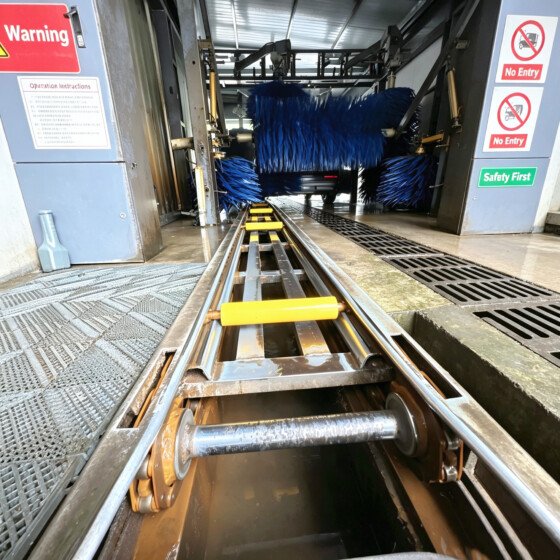
Small-track chain
Maintenance planning should cover the supporting equipment as well as the main wash machine.
Water treatment can affect rinse quality and the condition of downstream parts. 그 동안에, a chemical delivery issue can change cleaning results even when the main machine runs normally.
Depending on the site, the plan may need to include:
- Filters and strainers.
- Water storage and level controls.
- Reclaim system components.
- Water softening equipment.
- Reverse osmosis equipment.
- Chemical tubing, fittings, and dosing units.
Use the supplier’s procedures to check each system.
예를 들어, visible water spots may prompt a review of rinse-water quality and drying performance. They should not automatically trigger a change to one setting.
Likewise, rising chemical use may reflect a program change, a leak, or a dosing issue.
Record the observation, check the likely causes, and confirm the result.
This keeps maintenance decisions tied to evidence.
10. Adapt Scheduling to Climate and Site Conditions
A maintenance plan should reflect where the equipment works.
Europe and North America include a wide range of climates, water conditions, and operating models. A single regional label cannot define the right service schedule.
Cold-Weather Sites
At sites exposed to freezing temperatures, teams should review the approved freeze-protection process before cold weather arrives.
The plan may involve heaters, exposed lines, doors, 배수, and relevant alarms.
게다가, winter traffic can bring more road salt and grit into the wash area. Staff may need to review cleaning and inspection needs with the equipment supplier.
Coastal and Humid Sites
Moisture and salt exposure can make material choice and condition checks more important.
Buyers should ask about suitable finishes, fittings, and care instructions for their actual site environment.
Hard-Water and Dusty Sites
Hard water can lead to deposits, while dust and grit can increase cleaning needs.
그러므로, operators should include local water tests and observed site conditions in their planning.
The goal is a schedule shaped by real exposure, within the approved maintenance requirements.
11. Use Traffic Patterns to Choose Better Service Windows
A good maintenance plan considers when the wash is busy.
First, review traffic by hour, day, and season. Then identify windows with lower demand.
Where practical, plan service before a known peak rather than immediately after it begins. For instance, a site can review readiness before a holiday travel period or a seasonal promotion.
하지만, service timing must also fit the work.
A short cleaning task may fit into an opening routine. A larger repair may require a longer closure, a technician, and a planned restart check.
Group tasks when doing so saves repeated setup time. Yet avoid creating an oversized service visit that becomes too difficult to schedule.
마지막으로, allow time for testing before reopening.
The job is complete when the equipment has passed the required checks, not when the last part has been fitted.
12. Build Spare Parts Planning Into the Schedule
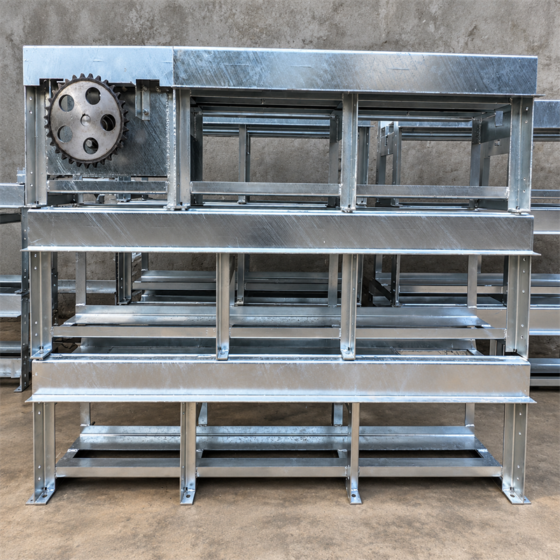
Main guide rail
Even a well-planned service visit can fail if the right part is missing.
그러므로, connect the maintenance schedule with a parts list.
Start with the exact model, configuration, and serial number. Then ask the supplier to identify routine service items and parts that are important to site recovery.
Consider both the likely need and the time required to obtain a replacement.
A low-cost part with a long lead time may deserve more attention than a larger part available nearby.
Also check storage needs. Some items can age, absorb moisture, or suffer damage in poor conditions.
For multi-site groups, decide which parts belong at each wash and which can sit in a shared store.
마지막으로, update the records after any equipment change.
An old parts list can create delays even when the maintenance plan itself is sound.
13. Turn System Data Into a Clear Work Process
The strongest automatic car wash preventive maintenance program follows a repeatable workflow.
Step 1: Create an Asset List
List the main wash units and supporting equipment. Include the model, serial number, location, and supplier.
For larger sites, give each serviceable unit a clear asset name.
Step 2: Add Approved Tasks
Build the initial schedule from the equipment manuals and service agreement.
Record the trigger for each task and the skills needed to complete it.
Step 3: Connect Available Data
Add relevant wash counts, run hours, alerts, and inspection findings.
If the system cannot transfer data automatically, use a simple manual process that staff can sustain.
Step 4: Assign Responsibility
Give each task an owner, due date, and status.
An alert that reaches several people can still be missed if no one owns the response.
Step 5: Confirm Completion
Record the work, findings, parts, and required checks.
Then set the next due point using the approved scheduling rule.
Step 6: Review Results
Look for repeat faults, missed work, and parts delays.
Use those findings to improve planning with the supplier or service team.
14. Connect Maintenance Software Only Where It Adds Value
Some operators use a computerized maintenance management system, often called a CMMS. Others manage tasks through a supplier platform or a simpler shared log.
The right choice depends on the size and needs of the business.
For a single site, clear task ownership may matter more than a complex software link. For a larger group, shared records can make cross-site planning easier.
Before buying an integration, confirm what it actually does.
Can it create a work order, or does it only send an email? Can it close a task, or must staff update two systems? Does it preserve the equipment’s full service history?
Also ask about data export, user access, connection costs, and ongoing support.
Start with the work process, then choose the tool.
Otherwise, a software project may add admin work without improving maintenance completion.
15. Plan for Safe Access and Reliable Remote Support
Serviceability is part of equipment value.
Buyers should review how trained staff reach filters, wear parts, drives, and control areas. They should also ask which tasks need special tools or supplier support.
Clear labels, useful drawings, and available manuals help technicians prepare.
For remote support, confirm who can access the system and what each role can do. Monitoring access and control access should be clearly defined.
Ask how the supplier manages user accounts, records remote actions, and supports the installed software over time.
게다가, establish a process for connection loss and local operation.
All maintenance must follow the manufacturer’s isolation and service procedures and applicable local requirements. Remote status information does not establish that equipment is safe to touch.
A practical plan combines digital visibility with approved physical checks and trained people.
16. Measure Whether the Maintenance Plan Works
A maintenance program should improve results that the business can observe.
Start with a few clear measures:
| Measure | What it helps reveal |
|---|---|
| Unplanned downtime | How often faults interrupt service |
| Overdue maintenance tasks | Whether the plan is being completed |
| Repeat faults | Whether repairs resolve the cause |
| Parts-related delays | Whether stock and supply support recovery |
| Maintenance labor hours | How much work the equipment requires |
| Wash-quality complaints | Whether customers notice performance issues |
Define each measure before comparing sites.
예를 들어, record planned closures separately from unexpected stops. Also separate equipment faults from external causes such as a supply outage.
Then review trends over a useful period.
One quiet week does not prove that a new schedule works. Likewise, one major repair does not explain the whole year.
Use the numbers to guide questions and action.
They should help the team learn, rather than encourage staff to hide problems or close unfinished tasks.
17. Evaluate Costs With Transparent Assumptions

Workshop Display Images
Preventive maintenance has a cost. So do missed service tasks, repeat visits, emergency parts, and unplanned closures.
A useful cost review considers all of them.
Start with actual site records where possible. Include service fees, labor, routine parts, and urgent callouts.
Next, estimate the business impact of downtime with care.
Lost sales are not the same as lost profit. Some customers may return later, while others may use a different site. Variable costs also change when the wash is closed.
For a simple planning estimate:
Potential lost contribution = missed washes × contribution per wash
State how each input was calculated.
Then test more than one scenario, since the effect of a closure depends on traffic and timing.
This creates a more useful business case than a broad promise of savings.
Ask suppliers to explain any claimed financial benefit and the operating conditions behind it.
18. What Should B2B Buyers Ask Equipment Suppliers?
When comparing automatic car wash systems, request evidence that matches your intended operation.
Useful questions include:
- Which maintenance tasks apply to this exact configuration?
- Are reminders based on time, use, condition, or a combination?
- Which counters and fault records can operators access?
- Which sensors are standard, and which are optional?
- What can the remote platform monitor or control?
- Can service records and operating data be exported?
- What happens when the internet connection is unavailable?
- Which parts should be stocked locally?
- What training is included for operators and technicians?
- How is service provided in the destination market?
Also request a sample maintenance plan and an example fault report.
For European and North American projects, confirm documentation language, local service coverage, delivery terms, and site-specific installation requirements.
A detailed reply helps buyers compare the complete ownership experience.
The machine price alone does not show how easy the system will be to maintain.
Frequently Asked Questions
How often should an automatic car wash receive preventive maintenance?
Follow the schedule for the exact model and configuration. It may combine daily checks, calendar intervals, wash counts, and run hours. Site conditions can require earlier inspection, so review unusual wear or recurring faults with the supplier.
Can automatic car wash systems schedule maintenance automatically?
Some systems can issue reminders or pass data to maintenance software. 하지만, capability varies. Confirm whether the system only displays an alert or also creates, assigns, and tracks a service task.
Does remote monitoring replace on-site inspection?
No. Remote data can help teams prepare and set priorities, but physical checks remain necessary. Brush condition, loose parts, leaks, and other issues may require direct inspection under approved procedures.
What should a tunnel car wash maintenance checklist include?
It should cover the installed wash equipment and supporting systems. Depending on the design, this may include brushes, conveyor components, 슬리퍼, 노즐, drying units, 센서, water treatment, and chemical delivery. Use the manufacturer’s checklist as the starting point.
Are all connected car wash systems predictive?
No. Connectivity means a system can exchange information. Predictive maintenance requires an additional method for estimating future service needs, supported by suitable data and validation.
What matters most when buying equipment for easier maintenance?
Look for clear service instructions, safe access, useful operating records, available parts, and dependable support. The best fit also depends on site traffic, climate, staffing, and the type of wash.
Choose a System That Supports Your Maintenance Plan
Automatic car wash systems can make preventive maintenance easier by turning daily operation into usable service information.
Wash counts show activity. Run hours show component use. Fault logs reveal repeat issues. 그 동안에, clear service records show what has been checked and what still needs work.
Together, these tools help operators plan tasks, prepare parts, and choose suitable service windows.
하지만, strong results depend on the match between equipment, people, and support.
If you are comparing a tunnel wash brush system or another automatic wash solution, share your expected traffic, vehicle mix, site conditions, and service needs with the supplier.
Then request a configuration-specific maintenance plan, a spare parts proposal, and a demonstration of the available monitoring functions.
Those details make it easier to choose equipment that fits both your wash goals and your daily operating needs.