
How to Evaluate After-Sales Support From an Automatic Car Wash Supplier?
2026 B2B Buyer’s Guide to Equipment Warranty, Technical Support, Spare Parts, Installation, Service Response, Maintenance, and Long-Term Reliability
Introduction: Why After-Sales Support Matters When Buying a Car Wash Machine
Buying an automatic car wash machine is a major business decision. The equipment may serve hundreds of customers each week. It can help a gas station attract drivers, support a convenience store loyalty program, or create revenue for a dedicated washing business.
However, the purchase price is only one part of the investment.
After installation, the machine needs maintenance, replacement parts, technical guidance, and occasional repairs. Even reliable equipment can experience normal wear or unexpected faults.
When problems occur, the quality of supplier support becomes important.
For example, a failed sensor may interrupt vehicle detection. A damaged water pump may affect cleaning pressure. A missing spare part may keep the entire wash bay closed.
In these situations, a low equipment price offers little comfort if the supplier cannot help.
That is why automatic car wash after-sales support should be evaluated before signing a purchase agreement.
A good supplier should explain what support is available, how customers can request assistance, which costs are covered, and how service is delivered.
For international buyers, additional questions matter. Who handles installation in another country? Can technicians provide remote assistance? How are spare parts shipped? What happens when local working hours do not match the manufacturer’s schedule?
This guide explains how to compare suppliers using practical criteria.
It covers warranty terms, technical support, installation, maintenance, spare parts, service agreements, and total ownership costs. It also includes a supplier scorecard and an inquiry checklist for buyers in North America and Europe.
The goal is simple: choose equipment with a support arrangement that matches your business needs.
Quick Answer: How Do You Evaluate Automatic Car Wash After-Sales Support?
The best way to evaluate after-sales support is to request written evidence of the supplier’s service capabilities.
Start by reviewing warranty terms, technical response procedures, spare-parts availability, installation assistance, and maintenance documentation.
Then ask how the supplier handles serious equipment faults.
A strong evaluation should answer seven questions:
- What is covered by the warranty?
- How quickly does the supplier acknowledge and address support requests?
- Who provides technical assistance in your country?
- Are critical replacement parts available?
- What installation and operator training are included?
- What costs remain the buyer’s responsibility?
- Can the supplier support the machine throughout its expected operating life?
However, a promise of fast service is not enough.
Buyers should request written terms, sample support procedures, service contacts, and relevant customer references where available.
The right supplier is not necessarily the one offering the longest warranty. It is the one offering a clear, realistic, and dependable support arrangement.
1. What Is Automatic Car Wash After-Sales Support?
After-sales support includes services provided after equipment purchase.
These services may begin before installation and continue throughout machine operation.
For example, support may include installation planning, commissioning guidance, operator training, troubleshooting, warranty handling, parts supply, and maintenance assistance.
However, service packages differ by supplier.
One manufacturer may provide remote technical assistance directly.
Another may work through local dealers or independent service partners.
A third may offer several paid support packages.
Therefore, buyers should not assume that the term “after-sales support” means the same thing in every quotation.
Ask the supplier to define each included service.
2. Why After-Sales Service Can Affect Profitability
Automatic car wash income depends partly on equipment availability.
When a machine is not operating, customers may be unable to purchase washes.
However, the financial effect depends on demand, pricing, and whether customers return later.

Reciprocating Car Wash Machine
A service provider that helps diagnose faults efficiently may reduce unnecessary downtime.
Likewise, access to compatible spare parts can prevent long repair delays.
Therefore, after-sales support should be evaluated alongside equipment performance.
A low purchase price may create higher long-term costs if technical service is limited.
However, expensive support is not automatically better.
Buyers should compare service value against actual operating needs.
3. Start With the Supplier’s Service Structure
Before evaluating promises, understand how support is organized.
Does the manufacturer employ its own service engineers?
Does it use distributors in the destination country?
Are maintenance services performed by approved third-party technicians?
These arrangements can all work, but responsibilities must be clear.
For example, a local dealer may provide the first response while the manufacturer supplies advanced technical guidance.
However, a dealer may not cover every machine model or location.
Therefore, buyers should request the exact service structure for their project.
Ask who is responsible for diagnosis, repairs, warranty approval, and parts orders.
4. Distinguish Manufacturers, Traders, and Service Partners
Some automatic car wash suppliers manufacture equipment directly.
Others source machines from external factories.
However, business structure alone does not prove whether after-sales service is good or poor.
A manufacturer may have strong engineering knowledge but limited local coverage.
A distributor may provide excellent local repair services.
Therefore, the correct question is who takes responsibility for supporting the installed machine.
Request the legal supplier name, warranty issuer, and technical contact details.
Also, confirm who controls replacement parts and software access.
Clear accountability is more important than marketing labels.
5. Check the Warranty Before Comparing Prices
Warranty terms should be reviewed before purchase.
A warranty may cover selected manufacturing defects for a defined period.
However, coverage often depends on conditions.
For example, suppliers may distinguish between parts, labor, travel, freight, and consumables.
Certain failures may be excluded if the equipment was operated outside approved conditions.
Therefore, buyers should request the complete warranty document.
Do not rely only on a quotation stating “12-month warranty” or “24-month warranty.”
The detailed terms determine what the promise actually means.
6. What Should a Car Wash Equipment Warranty Cover?
The correct coverage depends on the product and commercial agreement.
However, buyers should review major systems individually.
These may include motors, pumps, gear reducers, control components, sensors, and structural assemblies.

cylinder
Ask whether the warranty covers replacement parts only or also covers labor.
Confirm whether installation-related defects are included.
Also, ask how the supplier handles components from third-party manufacturers.
Some parts may carry their own separate warranties.
Therefore, the buyer needs a clear explanation of which organization handles each claim.
7. Understand Warranty Exclusions
A warranty may exclude normal wear, misuse, unauthorized modifications, or maintenance-related damage.
However, the exact exclusions vary.
For example, brush materials and certain seals may be treated as wear items.
A supplier may also specify requirements for approved chemicals, water quality, or lubrication.
Therefore, review exclusions carefully.
Ask the supplier to identify common maintenance items and their expected replacement conditions.
Do not assume that every component failure during the warranty period will receive free replacement.
A transparent warranty makes the buyer’s obligations easier to understand.
8. Confirm When the Warranty Starts
Warranty start dates can create confusion in international purchases.
For example, one agreement may start coverage when equipment leaves the factory.
Another may start when the machine arrives.
A third may use a commissioning date.
These differences matter when ocean freight, customs clearance, or site preparation takes several weeks.
Therefore, buyers should ask when coverage begins and ends.
Also, confirm what happens if installation is delayed for reasons outside the buyer’s control.
The agreed date and any conditions should appear in the contract.
9. Evaluate the Warranty Claim Process
A warranty is useful only if the claim process works.
Ask how a customer submits a claim.
Does the supplier require photographs, videos, machine serial numbers, or diagnostic logs?
Who reviews the request?
How is approval communicated?
Who pays for shipping a replacement part?
Are defective parts returned for inspection?
These questions help reveal possible delays and extra costs.
The supplier should provide a written claim procedure.
For international projects, customs and freight responsibilities deserve particular attention.
10. Understand Technical Response Times
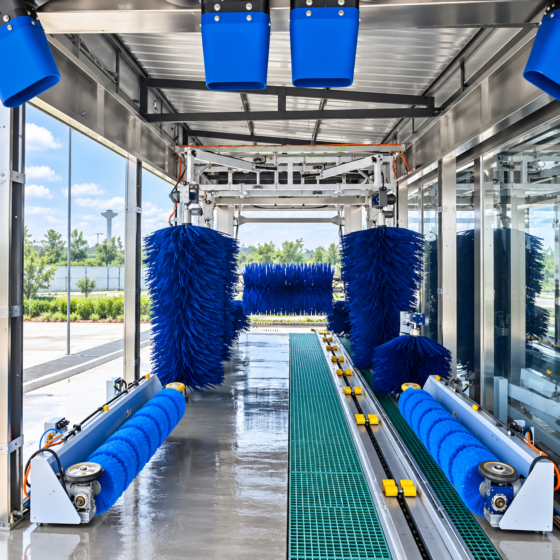
Tunnel Car Wash Machine
Fast technical support can be valuable when a machine stops operating.
However, response time must be defined.
A supplier may respond to an email within several hours without resolving the fault.
Therefore, buyers should distinguish initial acknowledgment from technical engagement and final resolution.
Ask which time measure is covered by the service agreement.
Also, check whether the stated target applies during weekends or holidays.
A clear response commitment is more useful than an unsupported claim of “instant support.”
11. Response Time vs. Repair Time
Response time and repair time are different measurements.
For example, a supplier may acknowledge a fault quickly.
However, the repair may require additional diagnosis or a replacement component.
The total restoration time depends on several factors.
These include fault severity, technician access, part availability, and site conditions.
Therefore, a supplier should not promise one repair time for every possible failure unless its agreement clearly defines the scope and exceptions.
Buyers should ask how service progress is tracked.
Transparent updates can be valuable even when a repair takes longer than expected.
12. Ask About Technical Support Channels
Support may be available through email, telephone, messaging platforms, video calls, or a dedicated service portal.
However, the number of channels matters less than their reliability.
For example, an email address is not useful if messages remain unanswered.
Ask which channel should be used for urgent faults.
Also, confirm what information the technician needs.
A good support process may request the machine model, fault code, operating conditions, and recent maintenance details.
This helps avoid unnecessary exchanges and speeds up diagnosis.
13. Check Support Hours and Time Zones
International equipment suppliers often support customers across several time zones.
However, working hours may not overlap.
For example, a European operator may need help while an Asian manufacturer’s office is closed.
Therefore, buyers should check actual service hours.
Does the supplier provide emergency support?
Are weekend requests accepted?
Is there an escalation contact for critical machine faults?
Do not assume that a supplier offers 24/7 assistance unless this is stated in the agreement.
For high-volume businesses, time-zone coverage may be an important purchasing factor.
14. Remote Technical Support

Tunnel Car Wash Machine
Remote troubleshooting can help suppliers investigate many faults without sending an engineer to the site.
For example, a customer may share controller alarms, operating videos, or diagnostic information.
A technician can then recommend appropriate checks.
However, remote support has limits.
Some failures require physical inspection or specialist repair.
Therefore, buyers should ask what problems can be handled remotely.
They should also confirm whether the supplier provides step-by-step guidance suitable for trained local technicians.
Remote access to machine controls must use appropriate security and authorization procedures.
15. Ask About Remote Diagnostics
Some automatic car wash systems provide diagnostic screens or fault histories.
Others may support additional monitoring features.
However, remote diagnostics vary by machine model.
Buyers should ask what data is available.
Can technicians review fault codes?
Can operating conditions be exported?
Does the controller record repeated errors?
Are remote software tools included?
Also, confirm whether additional subscriptions or network equipment are required.
A machine should not be described as having advanced remote diagnostics without specifying what the feature actually does.
16. Protect Data and Remote Access
Remote assistance may involve connecting to equipment controls or viewing operational information.
Therefore, access should be managed carefully.
Buyers should ask who can connect to the machine.
What permissions do they receive?
Are sessions authorized and recorded?
Can access be revoked?
What data leaves the site?
The supplier should explain its security arrangements.
For customers in the EU or UK, privacy and data protection requirements may apply when personal data is involved.
Remote support should not require disabling essential safety controls.
17. Installation Support
Installation quality can affect equipment performance and service life.
Therefore, after-sales support should begin with clear installation guidance.
Ask whether the supplier provides drawings and utility requirements.
These may include foundation dimensions, drainage, water supply, electrical connections, and service clearances.
However, providing drawings is not the same as performing installation.
Buyers should confirm which work is included.
Also, ask who verifies site readiness.
A well-defined installation plan reduces misunderstandings before the equipment arrives.
18. Who Performs Installation?
International automatic car wash projects may use several installation arrangements.
The manufacturer may send technicians.
A local service partner may complete the work.
Alternatively, a qualified contractor may install the machine with remote guidance.
Each approach can be suitable under the right conditions.
However, responsibilities need to be documented.
Who supervises mechanical assembly?
Who performs electrical connections?
Who checks water and air supplies?
Who completes safety verification?
The agreement should identify each responsible party and the required qualifications.
19. Commissioning and Acceptance Testing
Commissioning confirms that the installed machine operates according to its approved design.
However, commissioning should not mean simply switching on the equipment.
A suitable process may include checking utility supplies, mechanical movement, sensor operation, wash sequences, protective functions, and available fault diagnostics.
The exact tests depend on the machine.
Therefore, request a commissioning checklist before purchase.
Also, define the acceptance criteria.
For example, the parties may agree on which functions must be demonstrated before final acceptance.
Documented commissioning results can reduce later disputes.
20. Operator Training
A machine may include advanced features, but staff still need suitable training.
Operators should understand the approved vehicle entry process.
They should know how to select wash programs and recognize common alarms.
They also need to understand when to stop the machine.
However, operator training is different from technical repair training.
Buyers should ask which training levels are included.
Will the supplier provide instructions in English?
Are videos or illustrated manuals available?
Can new employees receive training later?
Clear training arrangements support reliable day-to-day operation.
21. Maintenance Technician Training
Maintenance technicians may need deeper technical knowledge.
For example, they may be responsible for pumps, chains, gear reducers, sensors, or electrical components.
However, some tasks require specific qualifications.
Therefore, buyers should ask whether the supplier offers technical training for authorized personnel.
Does the training cover fault codes and component replacement?
Are electrical drawings and spare-parts diagrams included?
Can technicians access approved service procedures?
Training should not encourage unqualified staff to bypass safeguards or work on hazardous equipment.
22. Evaluate Spare Parts Availability
Spare-parts access is one of the most important parts of after-sales support.
A supplier may offer helpful technical advice, but a repair can still be delayed if the required component is unavailable.
Therefore, buyers should request a recommended spare-parts list.
This should identify components such as sensors, seals, valves, pumps, motors, chains, and other relevant wear items.
However, actual needs vary by machine.
Ask which parts are normally stocked.
Also, confirm how availability is checked and whether stock information can be provided before ordering.
23. Critical Spare Parts vs. Routine Wear Parts
Not every replacement part has the same importance.
Some components require regular replacement through normal maintenance.
Others may fail less often but stop the entire machine when they do.
Therefore, buyers should distinguish routine wear parts from critical spare parts.
For example, a common seal may be inexpensive and easy to store.
A specialized controller may be costly and have a longer lead time.
The supplier should help identify the consequences of each failure.
A suitable parts plan considers cost, failure impact, and delivery time.
24. Spare Parts Delivery Times
International shipping can affect repair schedules.
However, delivery time depends on stock location, transport method, customs processing, and destination.
Therefore, buyers should ask for realistic dispatch and delivery information.
Does the supplier stock parts in the destination region?
Are urgent shipments available?
Can it provide tracking information?
Which import costs are the buyer’s responsibility?
Avoid treating an estimated delivery time as a guaranteed commitment unless the contract expressly provides one.
For critical parts, keeping approved inventory on site may reduce disruption.
25. Spare Parts Pricing Transparency
Replacement parts should be included in long-term cost planning.
However, a low machine purchase price may not reflect future component costs.
Therefore, buyers should request prices for common wear parts and selected critical components.
Ask whether the supplier publishes a parts list or provides quotations on request.
Also, check minimum order quantities and shipping costs.
Currency and import duties can affect the final amount.
A supplier that provides transparent parts information makes budget planning easier.
26. Compatibility of Replacement Parts
A replacement part must meet the machine’s specifications.
However, components that look similar are not always interchangeable.
For example, a sensor may have different electrical outputs.
A solenoid valve may use another seal material.
A chain may have a different strength rating.
Therefore, accurate part numbers are important.
The supplier should identify approved replacements and any relevant model revisions.
Buyers should ask how older machines are supported when a component is discontinued.
Unapproved substitutes may create technical and safety risks.
27. Long-Term Parts Support
A commercial car wash may remain in service for many years.
However, components and product lines can change.
Therefore, buyers should ask how the supplier supports older equipment.
Is there a documented policy for spare-parts availability?
Can the supplier provide compatible alternatives when original parts are discontinued?
Are control software and configuration files maintained?
What happens if a particular machine model is no longer manufactured?
Do not assume a fixed number of support years unless the supplier offers a written commitment.
28. Preventive Maintenance Support
After-sales service should not focus only on breakdowns.
A maintenance program can help identify wear before it causes serious damage.
For example, approved inspections may cover chains, bearings, pumps, brush assemblies, and guide systems.
However, maintenance intervals depend on the machine and operating conditions.
The supplier should provide a service schedule.
Ask whether the schedule uses operating hours, wash counts, calendar periods, or component condition.
Buyers should also confirm which activities are included in any service agreement.
29. Service Manuals and Technical Documentation
Reliable after-sales support requires usable documentation.
At minimum, buyers should request operating instructions and maintenance guidance appropriate for the machine.
Technical personnel may also need electrical drawings, component lists, lubrication specifications, and troubleshooting information.
However, access to certain technical materials may depend on legitimate safety, intellectual property, or service arrangements.
Therefore, confirm which documents are provided.
Ask whether updates are available.
Documentation should match the actual delivered configuration, not just a similar model.
30. Software Updates and Controller Support
Modern automatic car wash equipment may use PLCs, HMIs, drives, and other electronic controls.
However, software maintenance arrangements vary.
Ask whether the supplier provides updates for known faults.
Who approves changes?
Can configuration files be backed up?
What happens if the controller needs replacement?
Also, confirm whether updates require an on-site technician or remote connection.
Safety-related changes need appropriate engineering review and validation.
A supplier should not promise software upgrades without explaining compatibility and associated costs.
31. Handling Repeated Equipment Failures
Some faults may return after an initial repair.
For example, repeated sensor replacement may not correct damaged wiring.
A pump may fail again if the water supply problem remains.
Therefore, a support provider should investigate recurring failures.
Ask whether the supplier offers root-cause analysis for repeated issues.
Does it review maintenance records and operating conditions?
Are corrective actions documented?
A reliable service process should focus on preventing recurrence rather than repeatedly replacing the same component.
32. Escalation Procedures for Serious Faults
Some support requests are routine.
Others may stop the complete washing system.
Therefore, buyers should ask whether the supplier classifies fault severity.
For example, a minor display issue may have a different response procedure from a major drive failure.
However, the classification system should be explained.
Who decides that a fault requires urgent attention?
When can the issue be escalated to a senior engineer?
What happens if the first support contact cannot resolve it?
A documented escalation process creates clearer expectations.
33. On-Site Technical Support
Remote diagnosis cannot resolve every mechanical or electrical problem.
Some repairs require a qualified person at the equipment.
Therefore, buyers should confirm whether on-site assistance is available.
The supplier may use its own engineers or an approved local partner.
Ask about geographic coverage.
Also, confirm travel charges, labor rates, scheduling, and emergency arrangements.
For imported equipment, visa requirements, travel time, and local technician availability may affect service.
The contract should clearly identify what is included.
34. Local Service Partners
A local service partner can reduce some travel and communication barriers.
However, buyers should verify the partner’s actual capabilities.
Does the partner have experience with the machine model?
Has it received manufacturer training?
Can it access approved parts and technical documentation?
What territory does it cover?
Ask for the partner’s legal business details and service contact information.
A supplier should not claim local service coverage based only on an informal relationship.
Written responsibility and practical capability matter more.
35. Language and Communication Quality
Good technical support depends on clear communication.
For buyers in North America and Europe, English-language support may be essential.
However, English-language sales staff do not necessarily provide technical service.
Therefore, buyers should speak directly with the support team before ordering.
Can technicians understand fault descriptions?
Can they explain troubleshooting steps clearly?
Are manuals and alarms available in an appropriate language?
Clear technical communication reduces misunderstandings and unnecessary delays.
36. How to Test Support Before Purchase
Buyers can learn a great deal by submitting a realistic technical question before signing a contract.
For example, ask what would happen if the machine displayed a vehicle detection fault.
Request the support procedure.
Ask which documents or diagnostic data would be required.
Then evaluate the clarity and completeness of the response.
However, a pre-sales test does not guarantee future service quality.
It provides useful evidence about the supplier’s communication process.
A supplier should also be willing to explain when local technical inspection is necessary.
37. Customer References and Service History
Customer references may help verify service claims.
However, references should be relevant to the buyer’s application.
For example, a small domestic installation may not demonstrate support capability for a high-volume international site.
Ask for references from similar equipment or markets when available.
Questions may include whether parts arrived as expected and whether technical problems were resolved.
Respect customer confidentiality.
Do not treat testimonials as a substitute for written service terms.
Use references as one part of the wider evaluation.
38. Evaluate High-Volume Support Requirements
High-volume commercial sites have particular service needs.
For example, a busy tunnel wash may process vehicles for many hours each day.
Unexpected downtime can therefore create substantial disruption.
However, support needs depend on the business model.
Buyers should identify critical components and acceptable interruption periods.
Then evaluate whether the supplier’s service arrangement matches those needs.
A basic remote support package may be suitable for one site.
Another may need local maintenance coverage and critical parts inventory.
The best support plan is based on operating risk.
39. Support for Rollover Car Wash Machines
Rollover machines use moving assemblies to clean stationary vehicles.
Depending on their design, maintenance may involve gantry travel, sensors, motors, brushes, and spray equipment.
Therefore, after-sales support should cover both mechanical and control systems.
Ask whether the supplier provides diagnostic procedures for travel and position faults.
Also, check the availability of approved replacement parts.
A support team familiar with the exact rollover model can be valuable.
However, service capability should be demonstrated through documentation and actual technical arrangements.
40. Support for Touchless Car Wash Systems
Touchless systems depend on suitable water delivery, chemical dosing, control systems, and spray movement.
However, the exact configuration varies.
Therefore, support requirements may include pump servicing, nozzle replacement, pressure troubleshooting, and control diagnostics.
Ask whether technicians can help distinguish water supply faults from pump problems.
Also, confirm the availability of relevant seals, valves, and sensors.
A supplier should explain the maintenance responsibilities of the operator.
The goal is to keep the complete washing process working reliably.
41. Support for Tunnel Car Wash Systems
Tunnel systems may include conveyors, several washing stages, and drying equipment.
Therefore, the service arrangement should cover multiple connected functions.
For example, conveyor problems may interrupt the complete line.
Buyers should ask whether the supplier can support the conveyor, control sequence, brush drives, and water systems.
Local technician availability may be particularly important for high-volume tunnel facilities.
However, buyers should compare support capability with the exact installed configuration.
The number of machine functions alone does not establish reliability.
42. Support for Gas Station Car Washes
Gas station operators may use automatic washing to improve customer experience and support fuel or loyalty programs.
Therefore, service interruptions can affect more than direct wash sales.
However, station employees may not be trained to repair industrial equipment.
A suitable supplier should provide clear operator instructions and an escalation contact.
Ask which faults can be handled by trained on-site staff and which require a technician.
The service arrangement should fit the station’s staffing and opening hours.
43. Support for Convenience Store Car Washes
Convenience store wash sites may have limited service space and smaller operating teams.
Therefore, accessible components and clear documentation can improve ownership experience.
Buyers should review service clearances before installation.
They should also confirm how replacement parts are ordered.
A compact machine may be convenient to install but difficult to repair if access was not planned correctly.
After-sales support should therefore be considered during site design, not only after a fault occurs.
44. Evaluating International Suppliers
International purchasing offers access to different equipment options.
However, distance creates additional service considerations.
For example, spare parts may travel across borders.
Technicians may work in different time zones.
Local contractors may need manufacturer instructions.
Therefore, buyers should define service responsibilities in advance.
Ask how remote diagnosis, urgent parts dispatch, warranty claims, and site visits will work.
Also, confirm the language of technical documents and communication.
An international supplier can provide effective support, but the arrangement must be practical and documented.
45. Import Logistics and Service Parts
International service parts may require customs documentation and transport arrangements.
However, the correct process depends on the destination and shipment.
Buyers should ask whether the supplier provides commercial invoices and suitable part identification.
Also, confirm responsibility for import taxes, duties, and freight.
Warranty replacement parts may have different customs treatment depending on local rules.
Therefore, do not assume that a free replacement part means a shipment will have no related costs.
A clear parts shipping procedure can reduce surprises.
46. Compare Service Contracts
Some suppliers include basic support in the machine price.
Others offer optional maintenance or service agreements.
However, the content of these packages varies.
A contract should define the included services, duration, exclusions, charges, and customer responsibilities.
For example, scheduled inspections may be included while emergency travel is billed separately.
Buyers should compare actual coverage rather than plan names.
Ask whether support is provided directly or through another company.
The agreed service terms should be attached to the commercial contract.
47. Service-Level Agreements
A service-level agreement, or SLA, defines measurable service commitments.
However, not every supplier offers one.
An SLA may address support availability, acknowledgment targets, escalation, and reporting.
It should also describe exceptions.
For example, the agreement may exclude delays caused by inaccessible sites or unavailable customer information.
Buyers should understand the difference between a service target and a guaranteed repair outcome.
A useful SLA sets realistic expectations.
It should be specific enough that both parties can measure performance.
48. Suggested Support Service Metrics
| Metric | What It Measures | Buyer Question |
|---|---|---|
| First response time | Time until a request is acknowledged | When does the clock start? |
| Technical engagement time | Time until qualified support begins | Does it apply outside business hours? |
| Parts dispatch time | Time until an available part is shipped | Is stock guaranteed? |
| On-site attendance | Time until a technician reaches the site | Which areas are covered? |
| Resolution time | Time until the issue is resolved | What factors are excluded? |
| Repeat fault rate | How often similar issues return | Is root-cause analysis included? |
These are comparison criteria, not universal industry standards.
Service targets should reflect the site and the contractual agreement.
49. Compare Total Cost of Ownership
The initial equipment price is only one part of the purchasing decision.
Total cost of ownership may include installation, maintenance, replacement parts, labor, freight, downtime, and support fees.
Therefore, buyers should request more than a machine quotation.
Ask for routine maintenance requirements and common spare-parts costs.
Also, review local service arrangements.
A lower-priced machine may cost more over time if repairs are difficult.
However, a higher purchase price does not automatically guarantee better support.
The correct comparison uses the full operating model.
50. Example: Cost of Unexpected Downtime
Consider a hypothetical commercial car wash.
Suppose the site completes 12 paid washes per hour during a busy period.
The average wash price is $15.
A fault stops the machine for six hours.
Potential gross sales exposure is:
12 × $15 × 6 = $1,080
However, that amount is not necessarily lost profit.
Some customers may return later, and variable costs may be avoided.
The example shows why repair time matters.
Buyers should calculate the possible financial effect using their own demand and pricing data.
51. Example: Comparing Two Suppliers
Suppose Supplier A offers a machine for $45,000.
Supplier B offers a similar machine for $49,000.
However, Supplier B also includes additional installation training and a defined local service arrangement.
The difference in purchase price is $4,000.
Whether that extra amount is worthwhile depends on the actual services and expected operating benefits.
For example, lower downtime or reduced technician travel costs may create value.
However, those benefits should be estimated conservatively.
This is an illustrative comparison, not a market price quotation.
52. Supplier After-Sales Support Scorecard
A weighted scorecard helps buyers compare suppliers consistently.
Use a scale from 1 to 5 for each category.
A score of 1 indicates weak or unclear evidence.
A score of 5 indicates strong, verified capability.
| Evaluation Category | Suggested Weight |
|---|---|
| Warranty coverage and clarity | 15% |
| Technical response and escalation | 20% |
| Spare-parts availability | 20% |
| Installation and commissioning | 15% |
| Local or on-site service capability | 10% |
| Training and documentation | 10% |
| Service cost transparency | 10% |
| Total | 100% |
The weights are illustrative.
Buyers should adjust them to their operating needs.
53. How to Calculate a Supplier Support Score
For each category, assign a score from 1 to 5.
Multiply the score by the category weight.
Then add the weighted values.
For example, suppose a supplier receives:
- Warranty: 4 out of 5
- Technical support: 5 out of 5
- Spare parts: 3 out of 5
- Installation: 4 out of 5
- Local service: 3 out of 5
- Training: 4 out of 5
- Cost transparency: 4 out of 5
Using the suggested weights, the total score is:
4 × 15% + 5 × 20% + 3 × 20% + 4 × 15% + 3 × 10% + 4 × 10% + 4 × 10% = 3.9 out of 5
That equals 78 out of 100.
However, the score should support judgment rather than replace it.
54. Warning Signs of Weak After-Sales Support
Some supplier behavior should prompt additional questions.
For example, a quotation may promise lifetime service without explaining the scope.
A warranty may be mentioned but not provided in writing.
Technical contacts may be unclear.
A supplier may refuse to identify critical spare parts or replacement procedures.
However, one missing document does not necessarily prove poor service.
The buyer should request clarification.
The strongest warning sign is repeated unwillingness to define responsibilities, costs, and realistic service arrangements.
55. What Good After-Sales Support Looks Like
Reliable after-sales support is clear and practical.
The buyer knows whom to contact.
The supplier provides the relevant documentation.
Warranty coverage is understandable.
Spare parts can be identified accurately.
Technical assistance follows a defined process.
However, good service does not mean every problem can be solved immediately.
Complex repairs may require time and additional resources.
The difference is that responsibilities are clear and communication remains consistent.
This helps buyers manage uncertainty and maintain the machine more effectively.
56. Questions to Ask Before Signing a Contract
Before purchasing, request written answers to these questions:
- Who issues the equipment warranty?
- When does the warranty begin?
- What parts and services are excluded?
- Are labor and travel costs covered?
- What are the technical support hours?
- Is urgent support available?
- What are the response and escalation procedures?
- Can engineers provide remote diagnostics?
- Are local technicians available?
- What installation assistance is included?
- Who performs commissioning?
- What operator training is provided?
- Which spare parts should be stored on site?
- What are the parts ordering procedures?
- How are warranty parts shipped?
- Who pays customs and freight charges?
- Are service manuals provided in English?
- How are software updates handled?
- How are recurring failures investigated?
- Can the supplier provide relevant customer references?
These questions help buyers compare real support capabilities.
57. What Should Be Included in the Purchase Agreement?
The purchase agreement should identify the machine and its technical configuration.
It should also define installation and service responsibilities.
Important attachments may include the warranty document, service terms, commissioning criteria, spare-parts information, and training scope.
However, contract requirements depend on the transaction and governing law.
Buyers should seek appropriate legal advice for significant international purchases.
Do not rely on informal messages for important commitments.
Clear written terms make it easier to resolve disputes.
They also help establish realistic expectations for both parties.
58. Automatic Car Wash After-Sales Support Checklist
Warranty
- Confirm the warranty issuer.
- Review start and end dates.
- Check component coverage.
- Identify exclusions.
- Confirm claim and shipping procedures.
Technical Support
- Obtain service contact details.
- Verify support hours.
- Clarify response-time definitions.
- Review escalation procedures.
- Confirm remote diagnostic capability.
Spare Parts
- Request critical spare-parts recommendations.
- Obtain part numbers.
- Check stock and delivery arrangements.
- Review freight and import costs.
- Ask about long-term component support.
Installation and Training
- Obtain installation drawings.
- Confirm contractor responsibilities.
- Request commissioning criteria.
- Review operator training.
- Confirm access to technical manuals.
Commercial Terms
- Compare service fees.
- Review local technician availability.
- Evaluate likely downtime exposure.
- Calculate total ownership costs.
- Include important service commitments in writing.
59. Frequently Asked Questions About Automatic Car Wash After-Sales Support
Why is after-sales support important when buying a car wash machine?
It affects how equipment faults are diagnosed, how replacement parts are obtained, and how maintenance is managed over time.
What should I look for in an automatic car wash supplier?
Review warranty coverage, technical support, parts availability, installation assistance, documentation, and local service arrangements.
Is a longer warranty always better?
No. Coverage, exclusions, labor costs, and claim procedures can matter as much as warranty length.
Does an equipment warranty usually include labor?
It depends on the supplier and contract. Buyers should request written confirmation.
How quickly should a supplier respond to a breakdown?
The appropriate response target depends on the support agreement and business needs. Ask for a clear, measurable commitment.
Can a supplier provide support from another country?
Yes. International support may include remote guidance, parts shipping, and local service partners. Actual capabilities must be verified.
Is remote support enough for an automatic car wash?
Not always. Some faults require qualified on-site inspection or repair.
What spare parts should I keep in stock?
The manufacturer’s critical spare-parts list should guide inventory planning for the exact machine.
How can I check spare-parts availability?
Request part numbers, stock information, ordering procedures, and realistic dispatch arrangements.
What if a part becomes discontinued?
Ask the supplier about approved alternatives, technical compatibility, and long-term support policies.
Should installation support be included in the quotation?
The scope should be clear. Whether it is included depends on the commercial agreement.
What is commissioning?
Commissioning is a structured process used to verify that installed equipment operates according to its approved design and requirements.
Can local mechanics service imported car wash equipment?
Qualified technicians may handle appropriate tasks when they have the necessary information and authorization. Some work may require specialist support.
Do I need a service agreement?
Not every project requires the same arrangement. High-volume sites may benefit from more formal support commitments.
What is an SLA?
A service-level agreement defines measurable service commitments, such as support availability and response targets.
What should I do if the same fault keeps returning?
Request a documented investigation of the underlying cause instead of repeatedly replacing the same component.
Can after-sales support reduce operating costs?
Effective support may reduce certain repair delays and unnecessary maintenance, but benefits depend on the actual service arrangement.
What should EU buyers check?
Review applicable machinery requirements, technical documentation, local service availability, and contractual responsibilities.
Is a Chinese automatic car wash supplier suitable for overseas projects?
It may be suitable if the machine meets project requirements and the supplier provides a practical, documented international service arrangement.
What is the best way to compare after-sales support?
Use a weighted scorecard and verify each claim through written terms, technical documents, and relevant evidence.
60. Final Recommendations for Commercial Buyers
After-sales support should be evaluated before selecting an automatic car wash supplier.
Begin with the warranty.
Then review technical support, spare parts, installation services, training, and documentation.
Next, consider the operating needs of the wash facility.
A high-volume tunnel wash may require different support arrangements from a compact gas station rollover system.
International buyers should pay particular attention to time zones, shipping, and local technical capability.
However, no supplier should be selected based only on promises.
Ask for written service terms and verify important claims.
Finally, compare the full cost of ownership rather than the machine purchase price alone.
The right supplier should provide a clear path from installation to long-term maintenance.
Conclusion: Choose a Supplier That Supports Your Business After Installation
Choosing an automatic car wash machine is not simply a product purchase.
It is the beginning of a long-term operating relationship.
Reliable equipment matters, but maintenance, spare parts, technical knowledge, and service arrangements matter too.
Therefore, buyers should examine after-sales support as carefully as they examine machine specifications.
A useful evaluation covers warranty clarity, service response, remote assistance, installation support, spare-parts access, and long-term operating costs.
For overseas buyers, realistic local service arrangements are especially important.
A supplier that documents its responsibilities and communicates clearly may be easier to work with when problems arise.
The best automatic car wash after-sales support is not defined by the biggest promise. It is defined by clear commitments, suitable technical capability, dependable parts access, and practical service when your business needs it.
Request an Automatic Car Wash Quotation and Support Plan
Are you comparing automatic car wash manufacturers for a gas station, convenience store, commercial washing center, or fleet facility?
Before making a purchase, request both the machine quotation and a detailed support plan.
Share the following project information:
- Installation country and city
- Business type
- Preferred machine type
- Available installation dimensions
- Expected daily wash volume
- Peak-hour demand
- Water and electrical conditions
- Preferred installation arrangements
- Local maintenance capabilities
- Expected spare-parts needs
- Target project timeline
- Estimated equipment budget
Ask the supplier for technical specifications, warranty terms, installation requirements, maintenance documentation, spare-parts information, and available service options.
Request a Detailed Equipment Quote | Review Warranty and Service Terms | Compare Automatic Car Wash Suppliers
References and Further Reading
Google Search Central — Creating Helpful, Reliable, People-First Content
https://developers.google.com/search/docs/fundamentals/creating-helpful-content
Google Search Central — Search Essentials
https://developers.google.com/search/docs/essentials
Google Search Central — AI Search Content Guidance
https://developers.google.com/search/docs/fundamentals/ai-optimization-guide
European Union — Regulation (EU) 2023/1230 on Machinery
https://eur-lex.europa.eu/eli/reg/2023/1230/oj
OSHA — Control of Hazardous Energy, 29 CFR 1910.147
https://www.osha.gov/laws-regs/regulations/standardnumber/1910/1910.147
Disclaimer: This article provides general equipment purchasing and service evaluation guidance. Warranty coverage, support availability, technical response targets, parts supply, installation responsibilities, and regulatory obligations vary by supplier, agreement, equipment, and destination. Numerical examples and scorecard weights are illustrative, not verified industry averages or guaranteed outcomes. Buyers should review actual contracts, applicable requirements, and supplier documentation before making a purchase.