
What Should Commercial Buyers Know About Car Wash Machine Sensor Accuracy?
2026 B2B Buying Guide: Vehicle Detection, Photoelectric and Ultrasonic Sensors, Calibration, Safety Systems, Maintenance, and Equipment Reliability
Introduction: Why Does Car Wash Machine Sensor Accuracy Matter?
Car wash machine sensor accuracy affects how an automatic washing system detects vehicles, controls equipment movement, manages wash cycles, and responds to certain operating conditions.
Accurate detection can support more consistent cleaning and reduce unwanted machine movements. However, reliable results depend on more than the sensor itself.
The sensor type, mounting position, control system, installation quality, environmental conditions, and maintenance procedures all matter.
For commercial buyers, this creates an important purchasing question.
How can a manufacturer prove that its vehicle detection system will work reliably in a real car wash?
A sensor may perform well in a clean testing area but face more difficult conditions inside a commercial wash bay. Water spray, chemical foam, dirt, vibration, and changing vehicle shapes can affect detection.
Furthermore, the washing machine must respond correctly to the information received.
A highly accurate sensor cannot prevent every operating problem if the machine’s control logic or mechanical system is unsuitable.
This guide explains the main types of sensors used in automatic car wash equipment. It also shows buyers how to compare specifications, evaluate reliability, request testing information, and plan long-term maintenance.
The information is intended for car wash operators, gas station owners, equipment distributors, and commercial buyers in North America, the United Kingdom, and the European Union.
1. What Is Car Wash Machine Sensor Accuracy?
Car wash machine sensor accuracy describes how closely a sensor’s output matches the actual condition or measurement it is intended to detect.
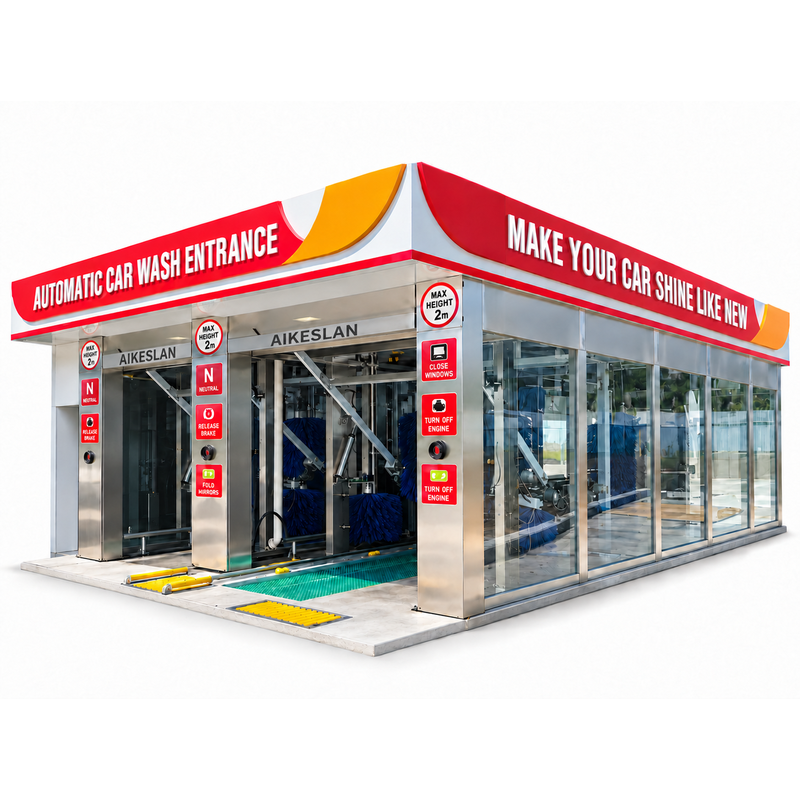
Tunnel Car Wash Machine
However, not every sensor measures distance.
Some devices simply report whether an object is present.
Others measure position, distance, speed, or movement.
Therefore, buyers should first ask what a particular sensor is designed to do.
Detection Sensors
A detection sensor may report whether a vehicle or machine component is present in a defined area.
Distance Sensors
A distance sensor may estimate the separation between equipment and an object.
Position Sensors
Position sensors may indicate the location of moving machinery.
Pressure Sensors
These devices help monitor water or air pressure.
Level Sensors
Level sensors may monitor tanks or other fluid systems.
The word “accuracy” means different things for each category.
A supplier should explain the measurement function and provide the corresponding specification.
2. Accuracy, Repeatability, and Reliability Are Different
These three terms are often confused.
However, they describe different performance characteristics.
Accuracy
Accuracy concerns how closely a measurement matches the true value.
Repeatability
Repeatability describes how consistently a sensor produces results under similar conditions.
Reliability
Reliability concerns whether the sensor continues to perform its intended function during operation.
Why the Difference Matters
A sensor may provide similar readings every time but still be incorrectly calibrated.
In that case, it has good repeatability but poor accuracy.
Similarly, a sensor may perform accurately during a short test but fail after exposure to moisture or contamination.
Commercial buyers should therefore review all three characteristics.
Car wash machine sensor accuracy should never be evaluated using one isolated specification.
3. Why Accurate Vehicle Detection Matters
Vehicle detection helps coordinate the washing process.
Depending on the machine design, sensors may support entry control, positioning, equipment movement, and wash program timing.
Vehicle Positioning
The machine needs to identify whether the vehicle is in the intended washing position.

sensor
Movement Control
The control system may use position information to guide moving equipment.
Cleaning Coverage
Certain systems adjust cleaning equipment according to detected vehicle dimensions.
Operational Consistency
Repeatable detection helps the machine follow the intended wash sequence.
Fault Recognition
A control system may respond when expected sensor signals are missing.
Customer Experience
Reliable operation can reduce unnecessary interruptions and confusing entry instructions.
However, sensor accuracy alone cannot guarantee vehicle safety or cleaning quality.
The complete machine design must also be suitable.
4. Main Types of Automatic Car Wash Sensors
Different sensor technologies are used for different tasks.
A machine may combine several types.
| Sensor Type | Typical Function | Important Limitation |
|---|---|---|
| Photoelectric | Object detection or beam interruption | Alignment and optical contamination |
| Ultrasonic | Distance or object detection | Surface angle and environmental effects |
| Inductive proximity | Detecting nearby metal targets | Limited to suitable target materials and range |
| Magnetic or position sensor | Monitoring defined equipment positions | Installation and target compatibility |
| Encoder | Tracking movement or rotation | Mechanical coupling and reference integrity |
| Pressure sensor | Monitoring fluid or air pressure | Calibration and operating range |
| Level sensor | Monitoring tank conditions | Fluid properties and contamination |
| Laser-based sensor | Measuring distance or profile, where used | Optical conditions and application suitability |
The machine manufacturer should identify which technologies are installed.
Buyers should not assume that every model uses all these sensor types.
5. Photoelectric Sensors in Car Wash Machines
Photoelectric sensors use light to detect objects or changes in a sensing area.
They are common components in industrial automation.
Through-Beam Sensors
A separate transmitter and receiver create a light beam.
Detection occurs when the expected beam condition changes.
Retroreflective Sensors
The sensor uses a reflector to return light.
An object may interrupt the light path.
Diffuse Sensors
The sensor uses reflected light from an object.
Its performance can depend on the object’s surface.
Car Wash Applications
Photoelectric devices may detect vehicle presence or support machine positioning.
Important Buyer Questions
Ask about sensing range, required alignment, response time, environmental protection, and limitations.
Water, foam, dirt, and reflective surfaces can affect certain optical arrangements.
Therefore, installation quality and regular inspection are essential.
6. How Ultrasonic Sensors Detect Vehicles
Ultrasonic sensors use sound waves to detect objects or estimate distance.
These devices may be useful in applications where non-contact measurement is required.
Distance Detection
An ultrasonic sensor may estimate distance by measuring the return of an emitted sound signal.
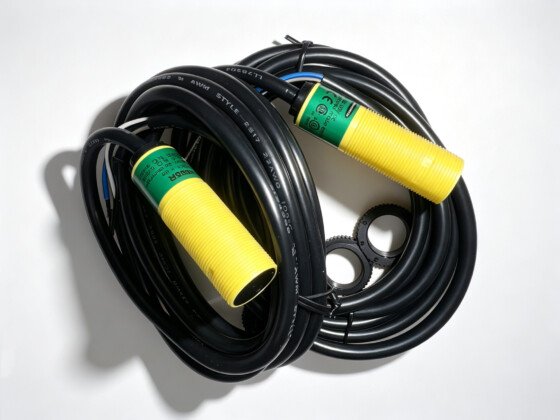
sensor
Vehicle Position
Some systems use ultrasonic sensing to help locate vehicle surfaces.
Surface Differences
Results can depend on geometry, angle, and other target characteristics.
Environmental Conditions
Temperature, airflow, and other operating factors can influence some ultrasonic measurements.
Installation Position
The detection area must match the intended vehicle range.
Specification Review
Buyers should request the operating range, measurement behavior, response characteristics, and installation requirements.
Ultrasonic technology should be evaluated as part of the complete control system rather than assumed superior in every situation.
7. Laser and Optical Distance Measurement
Some automated systems use laser-based or other optical distance sensors.
These devices can support specific measuring or positioning functions.
However, suitability depends on the sensor design.
Distance Measurement
An optical sensor may estimate distance to a surface.
Vehicle Profiling
Certain systems can use multiple readings to support a vehicle profile.
Measurement Range
The sensor must operate within its specified distance range.
Target Reflectivity
Dark, glossy, or reflective surfaces may affect performance in some optical applications.
Water and Foam
Droplets and airborne contamination can weaken or distort certain optical signals.
Maintenance
Sensor windows may need cleaning and inspection.
Manufacturers should provide actual specifications and test results, not unsupported claims about universal precision.
8. Position Sensors and Machine Movement
Automatic washing equipment contains moving parts.
Position sensors help the control system determine where selected components are located.
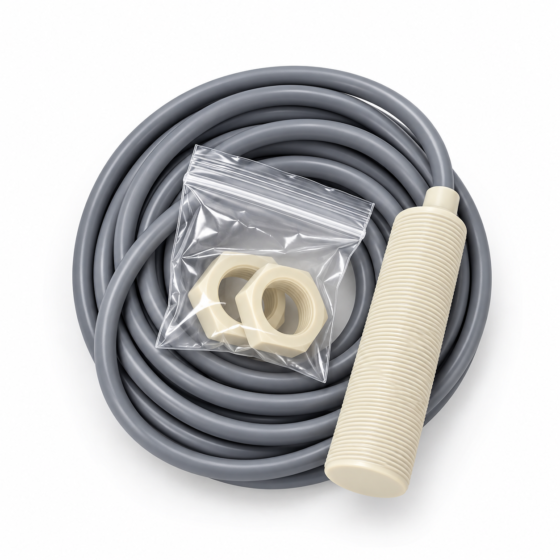
sensor
Limit Detection
A sensor may identify when equipment reaches a defined position.
Travel Monitoring
Position feedback may help control machine movement.
Mechanical Coordination
Different components must operate in the intended sequence.
Reference Positions
Some control systems use established reference points during startup.
Installation
The sensor and target must be correctly mounted.
Maintenance
Loose mounts or mechanical wear can affect the position signal.
Reliable position detection depends on the relationship between the sensor, mechanical structure, and controller.
9. Encoders and Motion Feedback
An encoder provides information about movement or rotation.
Depending on its type and installation, the control system may use encoder signals to estimate machine position or speed.
Movement Measurement
Encoders may be connected to motors or mechanical drives.
Speed Feedback
The controller can use relevant feedback to monitor motion.
Position Tracking
Certain designs count movement increments from a reference point.
Mechanical Connection
Loose couplings or drive slip can reduce the accuracy of calculated movement.
Electrical Signals
Noise or wiring faults may affect some installations.
Setup
Encoder resolution and control settings must match the application.
A high-resolution encoder does not automatically mean that the complete machine can position itself to the same precision.
10. How Sensors Work With PLC Control Systems
A programmable logic controller, or PLC, coordinates many machine functions.
Sensors send information to the control system.
The controller then responds according to the approved program.
Input Signals
The PLC receives information about vehicle presence, equipment position, pressure, and other conditions.
Control Decisions
The program evaluates these signals.
Equipment Outputs
The system may control motors, pumps, valves, and other equipment.
Fault Handling
Certain abnormal conditions may generate alarms or stop selected functions.
Timing
Input processing and equipment response take time.
System Validation
The complete sequence needs testing.
Car wash machine sensor accuracy matters, but safe and reliable operation also depends on how the controller interprets each signal.
11. Why Sensor Response Time Matters
Response time describes how quickly a sensing device reacts to a change.
However, total system response is more complex.
Sensor Detection
First, the sensor recognizes a change.
Signal Processing
The device and controller process the information.
Communication
The signal travels through the relevant electrical or communication system.
Control Action
The controller determines the required response.
Mechanical Behavior
Motors or other moving components need time to respond.
Practical Meaning
A fast sensor does not guarantee a fast stop if the remaining system is slow.
Buyers should ask about the complete machine response under the intended operating conditions.
Safety-related response requirements should be established through appropriate engineering assessment.
12. How Sensor Mounting Affects Accuracy
Correct mounting is essential.
Even a suitable sensor can perform poorly when installed incorrectly.
Detection Angle
The sensor should face the intended detection area.
Height
The mounting height should match the vehicle and machine geometry.
Stable Supports
Vibration or loose brackets can change sensor alignment.
Protection
The mounting position should reduce unnecessary exposure where possible.
Cable Routing
Cables should be protected from damage and unsuitable electrical interference.
Maintenance Access
Technicians should be able to inspect and service the sensor safely.
Buyers should request model-specific mounting drawings.
During installation, qualified personnel should verify alignment against the manufacturer’s instructions.
13. Water Spray, Foam, and Mist: Real Car Wash Challenges
The car wash environment is challenging for many sensing technologies.
Water droplets can collect on exposed surfaces.
Foam and mist may also pass through detection areas.
Optical Obstruction
Water or chemical deposits may block part of an optical path.
Signal Scattering
Mist can scatter light and reduce signal quality.
False Detection
Some sensors may report an object when no intended target is present.
Missed Detection
Other conditions may prevent correct recognition.
Environmental Protection
A suitable sensor housing can help protect internal components.
Operating Tests
Buyers should ask how the detection system performs during active washing, not only when the equipment is dry.
Industrial sensor guidance confirms that fog, dirt, and moisture can affect certain optical measurements.
14. Understanding IP Ratings for Car Wash Sensors
IP ratings describe defined levels of protection against solid objects and water ingress.
They do not directly measure sensing accuracy.
Dust Protection
The first digit relates to protection against solid objects and dust.
Water Protection
The second digit relates to specified water-exposure tests.
IP67
An IP67 rating includes defined dust protection and temporary immersion conditions.
High-Pressure Cleaning
A sensor exposed to high-pressure or high-temperature washdown may require different protection characteristics.
Chemicals
IP ratings do not automatically prove resistance to every cleaning chemical.
Installation Details
Connectors, cable entries, and mounting arrangements also matter.
Buyers should match the complete assembly to the actual installation environment.
A higher IP rating alone does not guarantee reliable detection.
15. Vehicle Color, Shape, and Surface Material
Commercial car washes serve many different vehicles.
This creates challenges for sensing systems.
Dark Surfaces
Some optical sensors may receive different amounts of reflected light from dark materials.
Reflective Surfaces
Glossy or highly reflective surfaces may affect certain optical measurements.
Curved Body Panels
Vehicle shape influences the direction of reflected signals.
Large Vehicles
SUVs, pickups, and vans may have different dimensions and profiles.
Exterior Accessories
Roof racks, mirrors, and other attachments can change vehicle geometry.
Damaged Components
Loose or damaged bodywork may introduce additional risks.
Buyers should ask which vehicle types were included in the manufacturer’s testing.
16. What Happens When a Sensor Gives the Wrong Signal?
A faulty signal can affect the washing sequence.
However, the result depends on the machine’s control design.
False Positive
A sensor reports detection when the intended object is absent.
False Negative
A sensor fails to detect the intended object.
Incorrect Distance
A measurement differs from the actual separation.
Delayed Response
The system receives information too late for the intended function.
Intermittent Fault
A signal changes unexpectedly because of an unstable connection or other problem.
Appropriate Response
The control system should handle relevant faults according to the machine’s approved design.
A professional supplier should explain known failure modes and the corresponding diagnostic or protective functions.
17. How Sensor Errors Affect Cleaning Performance
Detection problems can influence the wash result.
For example, incorrect position information may affect when certain cleaning stages begin.
Incomplete Coverage
The system may fail to reach intended areas.
Program Interruptions
Unexpected signals may stop or delay a wash.
Incorrect Movement
Some equipment may move differently from the intended sequence.
Water Consumption
Repeated wash stages can increase water use.
Chemical Use
Unnecessary cycles may affect cleaning-product consumption.
Customer Experience
Faults can create confusion and waiting time.
However, poor washing results can also come from pumps, chemicals, nozzles, and other components.
Diagnosis should examine the complete process.
18. Sensor Accuracy and Vehicle Safety
Sensors can be part of a machine’s safety strategy.
However, an ordinary detection sensor is not automatically a safety-rated device.
Risk Assessment
The manufacturer should identify hazards associated with machine operation.
Safety Functions
Required safety functions must be designed for their intended purpose.
Suitable Components
Safety-related functions may require appropriately specified components and control architecture.
Fault Response
The system must respond to relevant faults according to the validated design.
Testing
The finished machine requires suitable verification and validation.
Operator Instructions
Customers and staff still need clear operating guidance.
ISO 13849-1:2023 provides methods and guidance for the design and integration of safety-related parts of control systems.
Buyers should ask which applicable standards and validation methods support the machine’s safety claims.
19. Can Accurate Sensors Prevent Vehicle Damage?
Accurate sensors may help reduce particular risks, but they cannot guarantee zero vehicle damage.
Positioning
Reliable detection can support the correct positioning process.
Distance Control
Suitable distance information may help equipment follow its intended movement.
Fault Identification
The system may recognize certain operating problems.
Vehicle Differences
Not every accessory or unusual vehicle shape can be detected reliably.
Mechanical Condition
Worn or incorrectly adjusted machinery can still create problems.
Human Factors
Drivers may fail to follow positioning instructions.
Therefore, car wash machine sensor accuracy should be evaluated as one part of a wider safety and maintenance system.
Manufacturers should avoid claims that sensor technology eliminates every collision or paint-damage risk.
20. How Manufacturers Should Test Sensor Performance
A commercial buyer should request meaningful evidence of detection performance.
Factory Testing
The manufacturer can test sensor inputs and machine responses before shipment.
Vehicle Range
Testing should cover the intended range of vehicle dimensions.
Detection Conditions
Appropriate tests may include different positions and surface characteristics.
Environmental Conditions
The supplier should explain testing under relevant moisture and contamination conditions.
Fault Scenarios
Selected faults should be tested according to the approved engineering and safety procedures.
Documentation
Results should identify the equipment configuration and test conditions.
Acceptance Criteria
The buyer and manufacturer should agree on measurable performance requirements.
A test report is more useful than an unsupported statement that sensors are highly accurate.
21. Factory Acceptance Testing Before Shipment
Factory acceptance testing, or FAT, gives buyers an opportunity to review equipment functions before delivery.
Test Plan
Agree on the functions to be demonstrated.
Sensor Identification
Confirm that the installed components match the approved configuration.
Basic Detection
Verify intended sensor responses.
Control Sequence
Check relevant machine behavior under test conditions.
Fault Indication
Review how the system reports selected abnormalities.
Documentation
Record results, issues, and corrective actions.
Limitations
Factory tests cannot reproduce every real installation condition.
Therefore, a separate site commissioning and acceptance process may also be needed.
22. Site Acceptance Testing After Installation
Site acceptance testing verifies the installed machine under its actual operating conditions.
Utility Verification
Electrical, water, and other services should match specifications.
Sensor Alignment
Check mounting positions and relevant detection areas.
Control Integration
Verify that inputs and outputs work with the installed equipment.
Vehicle Testing
Use suitable test vehicles within the approved operating range.
Wash Conditions
Evaluate performance under relevant normal washing conditions.
Fault Response
Qualified personnel should test the applicable functions through approved procedures.
Handover
Record results and provide operator instructions.
The final acceptance process should be defined before the installation begins.
23. Calibration and Adjustment: What Buyers Should Know
Not every sensor requires field calibration.
Some devices are factory-adjusted or configured for a specific application.
Therefore, maintenance requirements depend on the sensor type.
Factory Calibration
Certain measuring devices are calibrated during production.
Installation Setup
Some sensors require teach-in, alignment, or parameter configuration.
Reference Checks
Technicians may compare measurements with suitable known references.
Mechanical Alignment
Mounting or target positions may need correction.
Configuration Records
Settings should be documented where applicable.
Qualified Service
Only authorized personnel should adjust critical functions.
Buyers should request the manufacturer’s actual calibration and verification instructions instead of assuming a universal schedule.
24. Maintenance Practices That Support Sensor Reliability
Regular maintenance is important for commercial car wash equipment.
Clean Sensor Surfaces
Inspect optical windows using approved methods.
Check Connections
Look for loose or damaged cables and connectors.
Inspect Mounting Brackets
Vibration may loosen mechanical supports.
Review Alarm Records
Repeated warnings may indicate a developing problem.
Verify Detection
Perform approved functional checks at the recommended intervals.
Replace Damaged Components
Use suitable parts that match the approved specification.
Record Work
Maintain service and repair records.
Car wash machine sensor accuracy can deteriorate when components become dirty, damaged, or incorrectly positioned.
A preventive maintenance plan helps identify these problems earlier.
25. Troubleshooting Common Sensor Problems
A sensor fault should be investigated systematically.
Problem: Vehicle Not Detected
Possible causes include alignment problems, contamination, unsuitable target conditions, or electrical faults.
Problem: False Triggers
Water droplets, reflections, electrical disturbances, or incorrect settings may contribute.
Problem: Intermittent Signals
Loose wiring, moisture, or vibration may be involved.
Problem: Incorrect Distance Reading
Check the installation, target, operating range, and approved configuration.
Problem: Repeated Alarm
Review the alarm code and the relevant machine documentation.
Problem: Fault After Cleaning
Inspect whether water has affected a connector or other exposed component.
Troubleshooting should follow manufacturer instructions.
Unqualified staff should not bypass protective devices or alter safety-related settings to keep the machine running.
26. Why Sensor Quality Affects Equipment Uptime
Sensor problems can interrupt business operations.
However, the size of the financial impact depends on the site.
Wash Interruptions
Unexpected faults may stop customer service.
Technician Costs
Troubleshooting and replacement work may require qualified personnel.
Spare Parts
International lead times can extend repairs.
Customer Delays
Drivers may leave when the wash is unavailable.
Maintenance Planning
Fault records can help identify recurring issues.
Supplier Support
Accessible technical documentation makes diagnosis easier.
A reliable sensing system can support operating consistency, but it does not eliminate downtime caused by other equipment failures.
27. Estimating the Commercial Cost of Sensor-Related Downtime
A simple financial example can show why sensor reliability matters.
Assume a car wash completes 50 paid vehicles per day.
The average wash price is $12.
Variable costs average $3 per wash.
Contribution per wash is:
$12 – $3 = $9
If a full day’s operation is lost, the contribution associated with those 50 washes is:
50 × $9 = $450
However, the actual financial loss may be lower if customers return later.
It may also differ because of repair expenses, staffing, and other operating conditions.
This is a hypothetical example, not an industry average.
When comparing suppliers, buyers should consider parts availability, technical support, and realistic fault-response procedures alongside sensor specifications.
28. Sensor Requirements for Gas Station Car Wash Machines
Gas station car washes often serve customers with little direct staff assistance.
As a result, reliable vehicle detection and clear user instructions are important.
Vehicle Entry
The machine should provide understandable positioning instructions.
Unattended Operation
Appropriate automatic controls help coordinate the intended process.
Customer Diversity
Different vehicle sizes and shapes must be considered.
Maintenance Access
Station employees may have limited technical experience.
Fault Reporting
Clear alarm information can support faster service.
Service Support
The owner should know how to contact qualified technicians.
Equipment Selection
A compact rollover or touchless system may suit certain sites, subject to the project requirements.
Gas station buyers should focus on complete system operation rather than one sensor performance claim.
29. Sensor Accuracy in Tunnel Car Wash Systems
Tunnel car washes can contain multiple detection and control points.
Vehicle entry, conveyor movement, wash stages, and equipment position may all require suitable coordination.
Entry Detection
Sensors may help identify vehicle arrival.
Conveyor Monitoring
The system may use movement or position feedback.
Wash Equipment Control
Different stations can respond to vehicle location or other signals.
Exit Monitoring
Detection may support selected downstream functions.
High Vehicle Volume
Repeated cycles create demanding operating conditions.
Maintenance
Multiple sensors may require a structured inspection schedule.
Integration
The supplier should explain how the complete control system coordinates its sensors.
The relevant performance measure is the reliable operation of the full tunnel, not simply one sensor’s catalog accuracy.
30. Sensor Accuracy in Rollover and Touchless Systems
In-bay automatic systems generally wash a stationary vehicle.
The washing equipment may move around it.
Vehicle Position
The machine needs the vehicle to remain in the approved washing area.
Gantry Movement
Position information may help monitor moving equipment.
Spray Distance
Some touchless designs use distance information to support spray positioning.
Vehicle Height
Certain systems adapt to different vehicle sizes.
Fault Detection
Sensors may report selected abnormal conditions.
Setup
The equipment must be installed and configured for the actual wash bay.
For commercial buyers, the correct questions concern the complete positioning process and supported vehicle range.
31. Comparing Sensor Accuracy Between Car Wash Manufacturers
Buyers should compare manufacturers using consistent evaluation criteria.
| Evaluation Area | What to Request |
|---|---|
| Sensor technology | Type, application, and installed model |
| Measurement function | Presence, distance, speed, or position |
| Accuracy | Defined specification and test conditions |
| Repeatability | Published or validated performance |
| Sensing range | Minimum and maximum supported values |
| Response | Sensor and overall system response |
| Environmental rating | Relevant housing and connection protection |
| Wet-condition performance | Applicable test results |
| Vehicle compatibility | Tested dimensions and vehicle types |
| Maintenance | Cleaning, adjustment, and replacement instructions |
| Fault handling | Alarm and control response description |
| Technical support | Spare parts and troubleshooting arrangements |
A manufacturer should not be ranked only by a claimed accuracy number.
Complete system performance is more important.
32. What Should US and Canadian Buyers Verify?
North American buyers should check both technical performance and installation requirements.
Intended Vehicle Range
Confirm the vehicles commonly used in the local market.
Electrical Compatibility
Sensors and controllers must work with the supplied machine and site power system.
Local Installation
Qualified technicians should complete relevant wiring and installation work.
Environmental Conditions
Consider moisture, cleaning chemicals, and seasonal temperature changes.
Spare Parts
Confirm availability and compatibility.
Documentation
Request diagrams, operating manuals, and relevant specifications.
Safety Requirements
Identify the applicable equipment and workplace requirements.
Service
Ask who can diagnose faults and replace sensors.
A supplier’s export experience does not replace local project verification.
33. What Should UK and EU Buyers Verify?
UK and EU buyers should consider sensing performance within the wider machinery installation.
Machinery Risk Assessment
The equipment should be assessed for its intended operation.
Safety Functions
Sensors used in safety-related systems must be evaluated appropriately.
Technical Documentation
Buyers should obtain relevant instructions and supporting records.
Electrical Compatibility
The complete machine must suit the intended installation.
Environmental Protection
Components should be suitable for the wash environment.
Spare Parts
Review lead times and local service access.
Training
Operators need suitable fault-reporting and inspection instructions.
Regulatory Transition
For EU projects, consider the upcoming general application of Regulation (EU) 2023/1230 on 20 January 2027.
For the UK, check the separately applicable legal requirements.
No individual sensor specification, on its own, establishes compliance for the complete machine.
34. Important Questions to Ask Before Purchasing
Use this checklist when reviewing an automatic car wash quotation.
- Which sensors are installed in the selected model?
- What does each sensor detect or measure?
- What is the specified measurement range?
- How is accuracy defined?
- What repeatability information is available?
- Under what conditions was performance tested?
- How are water, foam, and dirt managed?
- What protection ratings apply to installed components?
- Which vehicle sizes and types have been tested?
- How does the control system respond to sensor faults?
- Which sensors are part of safety-related functions?
- What installation and alignment procedures are required?
- What routine inspections are recommended?
- Are compatible spare parts available?
- What warranty and technical support are provided?
Written answers make it easier to compare suppliers fairly.
35. Common Mistakes When Evaluating Car Wash Sensors
Focusing Only on Millimeter Accuracy
An impressive number may not describe real machine performance.
Ignoring Environmental Conditions
Car wash sensors operate around water, chemicals, and dirt.
Confusing Detection With Safety Certification
Ordinary object detection is not the same as a validated safety function.
Forgetting Installation Quality
Poor alignment can undermine suitable equipment.
Ignoring Vehicle Variation
Different shapes and finishes may affect some sensing technologies.
Accepting Unverified Claims
Suppliers should provide applicable specifications and testing information.
Neglecting Maintenance
Even good components can fail when damaged or contaminated.
Overlooking Spare Parts
Long delivery times can increase business interruption.
Avoiding these mistakes can improve the quality of the purchasing decision.
36. Frequently Asked Questions About Car Wash Machine Sensor Accuracy
What is car wash machine sensor accuracy?
It describes how closely a sensor detects or measures its intended condition. The relevant accuracy definition depends on the sensor type and function.
Why is sensor accuracy important in an automatic car wash?
It can affect vehicle positioning, machine movement, wash program timing, and operating consistency.
Which sensors are used in automatic car wash machines?
Depending on the design, they may include photoelectric, ultrasonic, proximity, position, pressure, and level sensors.
Are ultrasonic sensors better than photoelectric sensors?
Not in every application. Each technology has different benefits and limitations.
Can water spray affect sensor accuracy?
Yes. Moisture, droplets, foam, and mist can affect some sensing technologies, particularly certain optical arrangements.
Does IP67 mean a car wash sensor is waterproof?
IP67 describes defined ingress-protection tests. It does not guarantee resistance to every spray condition, chemical, or installation environment.
Can sensors prevent vehicle collisions?
Suitable sensors can support particular protective functions, but they cannot guarantee that no collision will occur.
What is the difference between accuracy and repeatability?
Accuracy concerns closeness to the true value. Repeatability concerns consistency under similar conditions.
Do car wash sensors need calibration?
Some do. Others require alignment or configuration checks instead. Follow the manufacturer’s model-specific instructions.
How often should sensors be inspected?
Inspection intervals depend on the component, installation conditions, and maintenance instructions.
Can dirty sensors cause false alarms?
Yes. Contamination can affect some sensing systems and may contribute to incorrect signals.
Do dark vehicles affect detection?
Certain optical sensors can respond differently to various surface colors and reflectivity. Suitability should be verified through testing.
Does higher sensor accuracy improve wash quality?
It may support certain functions, but cleaning results also depend on the mechanical system, water supply, chemicals, and maintenance.
What should a buyer ask about safety sensors?
Ask which safety functions are provided, how they were designed and validated, and what documentation supports those claims.
How can buyers compare sensor systems?
Review technology, accuracy definitions, environmental performance, vehicle testing, fault handling, maintenance, and service support.
37. Request Technical Specifications for Automatic Car Wash Sensors
Choosing commercial automatic car wash equipment requires more than comparing machine size and wash programs.
Vehicle detection, sensor configuration, control logic, and maintenance needs can affect the overall operating experience.
For buyers considering a new wash system, the most useful approach is to request complete technical information.
Share Your Project Requirements
Provide:
- Country and city of installation
- Business type
- Preferred machine type
- Expected daily vehicle volume
- Common vehicle dimensions
- Available installation space
- Electrical and water supply details
- Local operating conditions
- Required wash programs
- Maintenance and service expectations
- Target project budget
Request the Following Information
Ask the manufacturer for:
- Machine specifications
- Sensor and vehicle detection descriptions
- Supported vehicle dimensions
- Technical drawings
- Installation requirements
- Applicable safety documentation
- Maintenance instructions
- Spare-parts information
- Warranty and service terms
- Customized commercial quotation
A supplier should be able to explain how its detection system works and what limitations apply.
Request Sensor Specifications | Compare Automatic Car Wash Systems | Get a Customized Equipment Quote
Conclusion: Evaluate the Complete Detection System, Not Just a Sensor Number
Car wash machine sensor accuracy matters because sensors help automatic washing equipment recognize vehicles, monitor movement, and follow the intended operating sequence.
However, accuracy is only one part of reliable performance.
Sensor repeatability, environmental protection, mounting quality, control logic, and maintenance all influence the final result.
Photoelectric, ultrasonic, proximity, and position sensors have different functions and limitations.
Water spray, foam, dirt, vibration, and vehicle geometry can also create difficult operating conditions.
Therefore, commercial buyers should request clear technical specifications and relevant testing evidence.
They should also review sensor fault handling, maintenance procedures, spare-parts availability, and service arrangements.
For gas station owners, commercial car wash operators, and international distributors, the best equipment choice is one supported by practical engineering information rather than exaggerated precision claims.
A well-designed and properly maintained detection system can help support reliable washing operations.
Planning a commercial automatic car wash project? Contact our team to review equipment specifications, available vehicle detection features, and suitable machine configurations for your business.
References and Further Reading
- SICK — Environmental Influences on Optical Detection and Measurement. Discusses how rain, fog, dust, and contamination can affect optical sensing performance.
https://support.sick.com/sick-knowledgebase/article/?code=KA-09881 - ISO — ISO 13849-1:2023, Safety of Machinery: Safety-Related Parts of Control Systems. Explains the framework for designing and integrating safety-related control systems.
https://www.iso.org/standard/73481.html - Pantron Automation — Eyes in the Tunnel: Using Photoelectric Sensors Effectively in a Car Wash. Provides application-specific discussion of sensor alignment and environmental challenges.
https://www.pantron.com/us/articles.php?slug=carwash-article - Google Search Central — Creating Helpful, Reliable, People-First Content.
https://developers.google.com/search/docs/fundamentals/creating-helpful-content
Technical disclaimer: This article provides general information about automatic car wash sensors and commercial equipment evaluation. Sensor accuracy, environmental ratings, response times, safety functions, and vehicle compatibility vary by model. No single sensor can guarantee collision-free operation. Buyers should verify specifications, test reports, and applicable regulatory requirements with the equipment manufacturer and qualified professionals before purchasing or installing machinery.