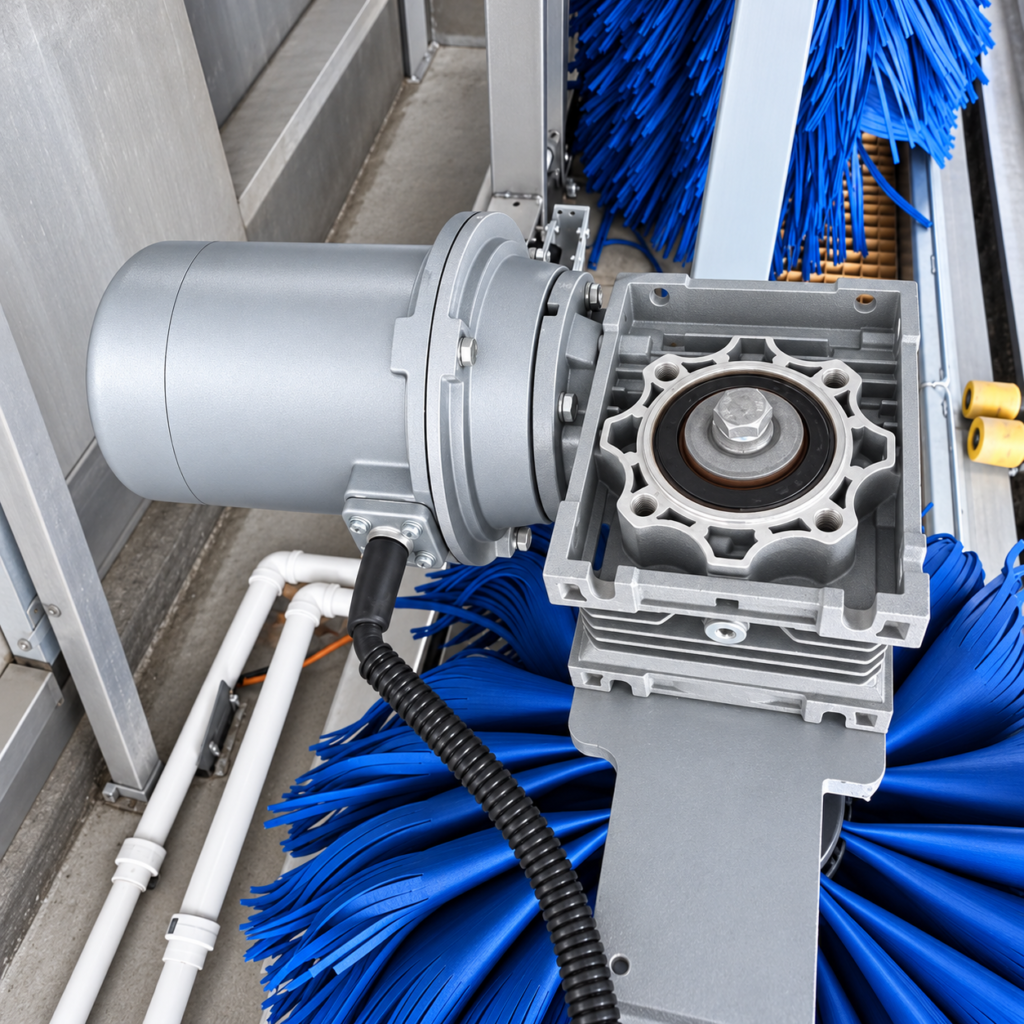


Reducer for Automatic Car Wash Machine – Reliable Gear Reducers and Speed Reduction Solutions
Industrial Gear Reducers, Speed Reducers, and Gearbox Solutions for Automatic Car Wash Equipment
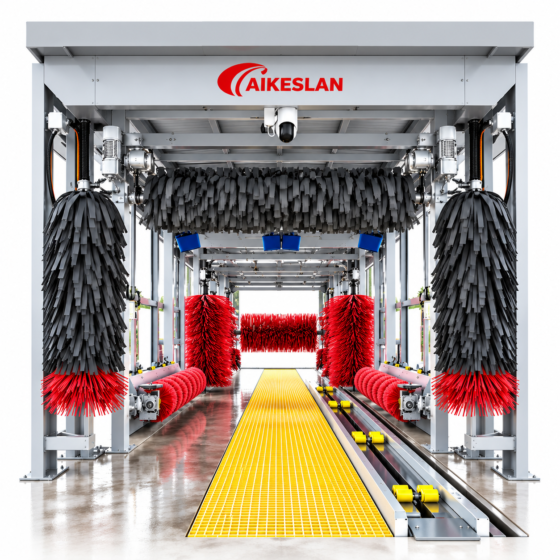
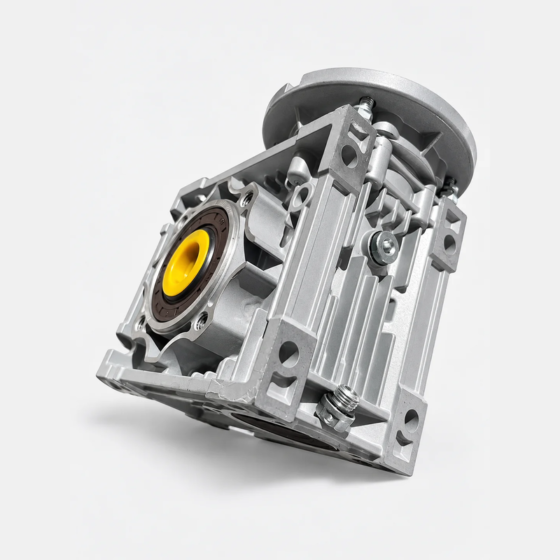
A Reducer for Automatic Car Wash Machine is an important part of many automated vehicle washing systems. It helps reduce motor speed and deliver the output torque needed to drive conveyors, rotating brushes, and other mechanical components.
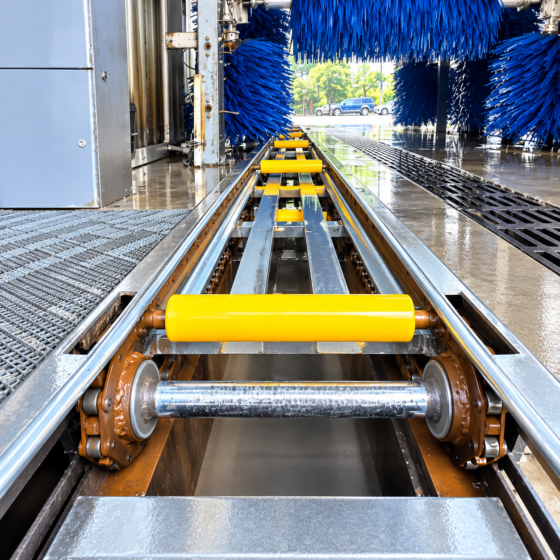
In a commercial car wash, different parts of the equipment need different operating speeds. For example, a conveyor must move vehicles at a controlled rate. Meanwhile, rotating brush systems require suitable speed and torque to perform their cleaning functions.
Therefore, selecting the right gear reducer helps support smooth movement, stable power transmission, and reliable equipment operation.
Our automatic car wash gear reducer solutions are intended for various mechanical drive applications, including tunnel car wash conveyors, brush drive assemblies, moving equipment mechanisms, and replacement projects.

Reducer for automatic car wash machine
Different machines require different gearbox configurations. As a result, gear ratio, input speed, output torque, mounting dimensions, and working conditions must be reviewed before purchasing.
Whether you need a reducer for new automatic car wash equipment or a replacement gearbox for an existing machine, choosing the correct specifications is essential.
Key Product Highlights
- Gear reducer solutions for automatic car wash equipment
- Speed reduction and torque transmission for mechanical drive systems
- Options for conveyor, brush, and equipment movement applications
- Worm gear, helical gear, and other gearbox configurations
- Selection based on gear ratio, torque, speed, and duty cycle
- Compatibility review for electric motors and drive assemblies
- Suitable configurations for different mounting requirements
- Environmental protection options for wet operating conditions
- Replacement matching for existing car wash gearboxes
- OEM specification review and wholesale purchasing inquiries
Looking for a reliable automatic car wash gear reducer?
Contact our team with your gearbox model, motor specifications, required output speed, and installation details.
We can help review the information needed to identify a suitable reducer configuration.
Request a Quote | Contact Us | Send Your Specifications
What Is a Reducer for an Automatic Car Wash Machine?
A reducer, also known as a gear reducer or speed reducer, is a mechanical transmission device that reduces rotational speed between an input shaft and an output shaft.
In many applications, this speed reduction increases the available output torque, subject to gearbox efficiency and mechanical limits.
An automatic car wash machine may use several reducers to drive different moving components.
For example, a conveyor drive may require a relatively low output speed and suitable torque to move vehicles through a wash tunnel.
Similarly, a rotating brush assembly may require a gearbox to match motor speed to the brush’s operating requirements.
Therefore, gear reducers help adapt electric motor output to the movement requirements of automated washing equipment.
How Does an Automatic Car Wash Gear Reducer Work?
A gear reducer transfers power through a set of gears.
The input shaft receives rotational motion from a motor or another drive source.
Inside the reducer, gears transmit this motion at a different rotational speed.
When the gearbox is designed for speed reduction, the output shaft rotates more slowly than the input shaft.
At the same time, the gearbox may deliver higher output torque.
However, part of the input power is lost through friction and other mechanical effects.
Therefore, output torque depends on both the gear ratio and gearbox efficiency.
In simple terms, a car wash gear reducer converts high-speed motor rotation into slower, higher-torque movement suitable for the driven equipment.
Key Features of Gear Reducers for Automatic Car Wash Machines
1. Stable Speed Reduction
Electric motors often run faster than the mechanical components they drive.
For this reason, speed reduction is needed in many automatic car wash applications.
A properly selected gearbox helps deliver the required output speed to a conveyor, brush assembly, or moving mechanism.
For example, reducing motor speed allows a conveyor drive to operate at its intended movement rate.
However, the correct gear ratio must be selected according to the motor speed and machine requirements.
2. Suitable Output Torque
Torque is the turning force available at the output shaft.
Automatic car wash equipment may require significant torque to start and move loaded mechanical components.
For example, a conveyor system must overcome friction and changing operating loads.
A reducer with suitable output torque can help meet these requirements.
However, the gearbox must remain within its rated torque and load limits.
3. Reliable Mechanical Power Transmission
A gear reducer transfers power between the motor and driven equipment.
Correct gearbox selection supports consistent mechanical movement.
However, performance also depends on alignment, mounting, lubrication, and the connected transmission system.
Therefore, the entire drive assembly should be reviewed during equipment design.
4. Suitable Configurations for Different Applications
Automatic car wash machines have different mechanical layouts.
Some require parallel input and output shafts.
Others need a right-angle transmission arrangement.
Therefore, manufacturers may use different reducer configurations depending on available space and equipment design.
5. Protection for Demanding Working Conditions
Car wash equipment operates in wet environments where water spray, moisture, and cleaning chemicals may be present.
As a result, gearbox housing materials, seals, coatings, and installation position are important.
However, a standard industrial gearbox is not automatically suitable for direct water exposure.
Environmental suitability must be confirmed for the selected model.
6. Compatibility With Electric Motors
A reducer must connect correctly to the driving motor.
This includes the motor frame, input coupling, flange, shaft, and required power transmission capacity.
For example, some gearboxes are designed to accept flange-mounted electric motors.
Others use separate shafts and couplings.
Therefore, motor compatibility must be verified before ordering.
7. Practical Maintenance and Replacement
Many industrial gear reducers are designed for maintenance or replacement.
However, the required maintenance depends on the gearbox design.
Some models require periodic oil changes.
Others use sealed lubrication systems.
Regular inspection helps identify leakage, unusual noise, overheating, or vibration.
Main Types of Gear Reducers Used in Automatic Car Wash Equipment
Different gearbox types offer different mechanical characteristics.
Therefore, the correct choice depends on output speed, torque, installation space, duty cycle, and efficiency requirements.
Worm Gear Reducer for Automatic Car Wash Machine
A worm gear reducer uses a worm shaft and a mating worm wheel to transmit motion.
This design often provides a compact right-angle drive arrangement.
Worm gear reducers may be considered for car wash applications that need controlled low-speed movement.
For example, a worm gearbox may be used in a suitable conveyor drive or positioning mechanism.
Key selection factors include:
- Required gear ratio
- Output torque
- Input motor speed
- Thermal capacity
- Mounting position
- Lubrication requirements
- Mechanical efficiency
However, worm gear efficiency varies according to gear geometry, ratio, load, and lubrication.
A worm gear reducer should not automatically be treated as self-locking.
Where holding or stopping safety is required, use a suitable braking or safety arrangement.
Helical Gear Reducer
A helical gear reducer uses gears with angled teeth.
This design can provide efficient power transmission in suitable industrial applications.
Helical gear reducers are widely used where controlled speed and torque are required.
In automatic car wash equipment, a helical reducer may be suitable for selected conveyor drives or other mechanical assemblies.
However, the correct model depends on the load and installation requirements.
Bevel Gear Reducer
A bevel gear reducer transmits power between intersecting or angled shaft arrangements.
Some bevel-helical gearbox designs are used for right-angle power transmission.
This can be useful when equipment space requires the motor and output shaft to face different directions.
However, the gearbox must match the required torque and mounting arrangement.
Planetary Gear Reducer
A planetary gear reducer uses a central sun gear, planet gears, and an outer ring gear.
This design can offer a compact torque transmission arrangement.
Planetary reducers are commonly used in industrial machinery and motion control equipment.
However, they are not necessary for every car wash drive.
Their suitability depends on the machine’s torque, speed, space, and control requirements.
Geared Motor for Car Wash Equipment
A geared motor combines an electric motor and gearbox into one drive assembly.
This can simplify some equipment installations.
For example, a geared motor may drive a conveyor or rotating mechanical component.
However, the motor and gearbox must be selected together.
Important factors include voltage, frequency, motor power, gear ratio, output speed, and torque.
Technical Specifications – Automatic Car Wash Gear Reducer

Lightweight System / Minimalist System
Different reducer models have different technical ratings.
The following table outlines the main specifications buyers should review.
| Specification | Description |
|---|---|
| Product Name | Reducer for Automatic Car Wash Machine |
| Product Category | Industrial Gear Reducer / Speed Reducer |
| Gearbox Type | Worm / Helical / Bevel / Planetary / Other |
| Gear Ratio | According to selected model |
| Input Speed | Based on motor and gearbox requirements |
| Output Speed | Determined by input speed and reduction ratio |
| Rated Output Torque | Model-specific |
| Maximum Permitted Torque | According to gearbox design |
| Motor Power Compatibility | Based on gearbox and motor specifications |
| Service Factor | According to application and manufacturer’s method |
| Gearbox Efficiency | Depends on gear type, ratio, load, and speed |
| Housing Material | According to selected model |
| Gear Material | According to model specifications |
| Input Connection | Shaft / Flange / Motor Adapter |
| Output Configuration | Solid Shaft / Hollow Shaft / Other |
| Mounting Type | Foot / Flange / Shaft Mounted / Other |
| Mounting Position | According to product specification |
| Lubrication | Oil / Grease / Sealed Lubrication, as applicable |
| Sealing | Model-specific shaft and housing seals |
| Operating Temperature | According to gearbox rating |
| Protection Requirements | Based on installation environment |
| Application | Automatic Car Wash Equipment |
| OEM Support | Subject to technical review |
| Replacement Matching | Dimensional and specification review |
Technical Note: Final ratios, torque ratings, materials, mounting dimensions, and available product options must be confirmed using the selected gearbox datasheet.
Understanding Gear Ratio, Output Speed, and Torque
Selecting the correct gear ratio is one of the most important steps when choosing a speed reducer.
What Is Gear Ratio?
Gear ratio describes the relationship between input speed and output speed.
For example, a 20:1 reduction ratio means the input shaft turns about 20 times for every single output shaft revolution.
If the motor runs at 1,400 RPM, a 20:1 reducer delivers a nominal output speed of about 70 RPM.
However, actual operating speed can vary with motor and drive conditions.
How Does a Gear Reducer Increase Torque?
A reducer trades rotational speed for torque.
For example, an ideal gearbox with a 20:1 ratio could increase input torque by a factor of 20.
However, real gearboxes have mechanical losses.
Therefore, actual output torque is lower than the ideal value.
In addition, the output torque must remain within the gearbox’s rated limits.
Why Is Service Factor Important?
Automatic car wash machines may experience repeated starts, stops, changing loads, or shock.
As a result, gearbox selection should consider the application duty.
A service factor provides a way to account for operating conditions when following the manufacturer’s selection method.
However, service factor definitions can vary between manufacturers.
Therefore, buyers should not assume that identical service factor values from different brands represent exactly the same operating capacity.
How to Choose the Right Reducer for an Automatic Car Wash Machine
Choosing a reducer requires a clear understanding of the complete drive system.
Step 1: Identify the Drive Application
First, confirm what the reducer will drive.
Is it a conveyor, rotating brush, moving gantry mechanism, or another mechanical component?
Different applications have different speed and torque requirements.
Step 2: Confirm Motor Specifications
Next, check the driving motor.
Important details include motor power, rated speed, voltage, frequency, and connection dimensions.
For replacement projects, the original motor nameplate can provide useful information.
Step 3: Determine the Required Output Speed
Calculate the output speed needed by the driven component.
For example, a conveyor may need a lower output speed than a rotating brush assembly.
The gear ratio should be selected accordingly.
Step 4: Calculate Required Output Torque
The gearbox must provide enough output torque for normal operation.
Also, consider starting torque, peak load, friction, and changing operating conditions.
For demanding applications, an engineering calculation may be necessary.
Step 5: Select the Gearbox Type
Choose between worm, helical, bevel, planetary, or another suitable reducer design.
The decision depends on efficiency, space, shaft arrangement, cost, and required torque.
Step 6: Check Mounting Dimensions
Confirm the gearbox housing size, mounting holes, input flange, output shaft, and installation position.
For replacement projects, dimensional compatibility is especially important.
Step 7: Review the Working Environment
Consider moisture, cleaning chemicals, temperature, ventilation, and water spray.
The selected gearbox must be suitable for these conditions.
Step 8: Confirm Lubrication and Maintenance
Check the lubricant type, required oil quantity, maintenance intervals, and mounting-position instructions.
Incorrect lubrication can cause early gearbox failure.
Step 9: Verify Technical Documentation
Finally, review the official gearbox datasheet and dimensional drawings.
This helps reduce compatibility problems before purchasing.
Applications of Gear Reducers in Automatic Car Wash Systems
Tunnel Automatic Car Wash Conveyor Systems
Tunnel car wash systems use conveyors to move vehicles through washing, rinsing, and drying stages.
A gear reducer may form part of the conveyor drive assembly.
The reducer lowers motor speed and provides the output torque required by the conveyor.
However, actual gearbox requirements depend on the conveyor design, mechanical load, and operating speed.
Automatic Car Wash Brush Drive Systems
Some brush-based car wash machines use geared motors or separate gear reducers to rotate brushes.
These drives must provide suitable speed and torque.
For example, side brushes and top brushes may have different mechanical requirements.
Therefore, gearbox selection should be based on the actual brush drive design.
Rollover Automatic Car Wash Machines
Rollover car wash machines move a gantry around a stationary vehicle.
Depending on the design, a gear reducer may drive selected movement mechanisms.
However, some machines use alternative transmission systems.
Therefore, gearbox compatibility must be confirmed for each equipment model.
Touchless Automatic Car Wash Systems
Touchless car wash machines use controlled water spray and chemical cleaning processes.
Some touchless systems may use geared drives for gantry movement or positioning assemblies.
In these applications, the reducer helps deliver the required mechanical movement.
Commercial Truck and Bus Wash Equipment
Truck and bus washing systems may use larger mechanical assemblies.
Where reducers are used, their torque and duty ratings must match the equipment.
In addition, mounting, shock loads, and maintenance access should be reviewed.
Gas Station and Fleet Car Wash Equipment
Commercial car wash equipment is commonly installed at gas stations and fleet washing facilities.
Reliable gearbox operation can help support daily equipment availability.
Therefore, suitable gearbox selection, lubrication, and replacement planning are important.
Why Choose the Right Gear Reducer for Automatic Car Wash Equipment?

Reducer for automatic car wash machine
Smooth and Controlled Mechanical Movement
A correctly selected gearbox provides the required output speed for the driven component.
This helps support steady mechanical movement.
Suitable Torque for Working Loads
Gear reducers help adapt motor torque to application needs.
However, the reducer must be sized for both normal and peak operating loads.
Flexible Installation Options
Different gearbox designs provide different shaft and mounting arrangements.
This helps manufacturers select configurations that fit their equipment layouts.
Better Drive System Compatibility
Matching the reducer with the motor and driven component helps reduce installation problems.
It also supports efficient power transmission.
Practical Maintenance and Replacement
Gear reducers can be inspected for noise, leakage, vibration, and wear.
Correct maintenance helps reduce avoidable failures.
Support for OEM Equipment Design
Selecting the right gearbox during equipment development helps engineers plan mechanical layout, operating speed, and maintenance access.
Worm Gear Reducer vs. Helical Gear Reducer
Both designs can provide speed reduction, but they offer different characteristics.
| Feature | Worm Gear Reducer | Helical Gear Reducer |
|---|---|---|
| Gear Arrangement | Worm and Worm Wheel | Helical Gear Stages |
| Shaft Layout | Commonly Right-Angle | Commonly Parallel, depending on design |
| Speed Reduction | Wide range of reduction options | Different ratios across one or more stages |
| Efficiency | Depends strongly on ratio and operating conditions | Often relatively high in suitable designs |
| Torque Capacity | Model-dependent | Model-dependent |
| Heat Generation | May be significant in some high-ratio applications | Depends on load, losses, and design |
| Maintenance | Lubrication and seal inspection | Lubrication and seal inspection |
| Suitable Application | Application-dependent | Application-dependent |
A worm gear reducer may be useful when a compact right-angle arrangement is needed.
Meanwhile, a helical gearbox may be preferred for certain continuous-duty applications.
However, the final choice must be based on the complete drive requirements.
Gear Reducer Materials and Environmental Protection
Automatic car wash equipment operates in wet and demanding conditions.
Therefore, reducer construction must be reviewed carefully.
Gearbox Housing Materials
Gearbox housings may use aluminum alloys, cast iron, or other materials.
The best option depends on mechanical load, installation space, corrosion exposure, and gearbox design.
Gear Materials
Gears are commonly made from selected metal alloys, although materials depend on gearbox type.
For example, some worm reducers use a steel worm with a suitable bronze-alloy worm wheel.
However, gear materials and heat treatments vary by manufacturer.
Shaft Seals
Shaft seals help retain lubricant and limit contaminant entry.
In wet environments, seal selection and installation are important.
However, no gearbox should be assumed waterproof without model-specific evidence.
Corrosion Protection
Suitable coatings or housing materials may help reduce corrosion.
However, resistance to detergents and cleaning chemicals depends on the actual product.
Therefore, the installation environment must be reviewed.
Gear Reducer Maintenance for Automatic Car Wash Machines
Regular maintenance helps support gearbox reliability.
Check Lubricant Condition
Gearboxes require suitable lubrication.
Low oil level or degraded lubricant may increase wear and operating temperature.
Follow the manufacturer’s lubricant and maintenance requirements.
Inspect for Oil Leakage
Check shaft seals, housing joints, and drain or fill points.
Oil leakage may indicate damaged seals or installation problems.
Monitor Noise and Vibration
Unusual gearbox noise or vibration can indicate mechanical problems.
Possible causes include worn gears, damaged bearings, poor alignment, or overload.
Check Operating Temperature
Gearboxes generate heat during operation.
Excessive temperature may result from overload, poor ventilation, insufficient lubrication, or incorrect installation.
Inspect Couplings and Mounting Bolts
Loose mounting hardware or poor coupling alignment can increase mechanical stress.
Therefore, inspect these parts during routine maintenance.
Follow Safe Maintenance Procedures
Before inspection or replacement, disconnect and isolate the electrical drive.
Also, secure moving equipment against unexpected movement.
Follow the machine manufacturer’s maintenance and safety instructions.
Automatic Car Wash Gear Reducer Replacement Guide
Replacing a gearbox requires careful specification matching.
A reducer with the same gear ratio may still have different torque capacity, mounting dimensions, and shaft connections.
Therefore, replacement selection should not rely on gear ratio alone.
Information Needed for Replacement
- Original reducer brand and model
- Gearbox type
- Gear ratio
- Input motor power and speed
- Required output torque
- Output shaft speed
- Mounting dimensions
- Input and output shaft dimensions
- Motor flange or coupling details
- Installation orientation
- Lubrication requirements
- Machine model and application
Photos of the original gearbox nameplate and installation are also helpful.
Common Signs of Gear Reducer Problems
A gearbox may require inspection when the equipment shows:
- Unusual operating noise
- Excessive vibration
- Oil leakage
- High operating temperature
- Reduced or unstable output movement
- Damaged output shaft
- Excessive backlash
- Repeated drive overloads
However, these symptoms may also result from motor problems, damaged bearings, chain tension, coupling misalignment, or other mechanical faults.
Therefore, the complete drive system should be inspected before replacement.
Can You Replace a Gear Reducer With Another Brand?
A compatible gearbox from another brand may be available.
However, the replacement must match the required torque, ratio, shaft arrangement, mounting design, and operating duty.
Motor compatibility must also be confirmed.
OEM Gear Reducer Solutions for Automatic Car Wash Manufacturers
Automatic car wash machine manufacturers need reducers that match their equipment designs.
For OEM projects, gearbox selection should begin during mechanical development.
This allows engineers to review drive requirements, available installation space, and maintenance access.
OEM Technical Requirements
Please provide:
- Automatic car wash machine type
- Gearbox application
- Input motor specifications
- Required gear ratio
- Required output speed
- Operating and peak output torque
- Mounting arrangement
- Input and output shaft details
- Expected operating duty
- Required quantity and destination market
These details help support accurate technical evaluation.
Gear Reducers for Equipment Distributors
Distributors may need gearbox replacements for several automatic car wash machine models.
Clear model identification and dimensional drawings help simplify sourcing.
Gear Reducers for Maintenance Companies
Maintenance providers often need replacement gearboxes for existing equipment.
To reduce ordering errors, provide the original reducer details and installation photos.
European and North American Market Considerations
International buyers should confirm that reducers match the electrical, mechanical, and regulatory requirements of their destination markets.
Gear Reducers for European Equipment
European projects commonly use metric mechanical dimensions and IEC-based motor arrangements.
However, reducer compatibility still depends on model-specific input and output connections.
Where a geared motor is supplied as a complete assembly, applicable motor efficiency and electrical requirements may also need review.
Gear Reducers for North American Equipment
North American projects may use NEMA motor conventions and inch-based shaft or mounting dimensions.
However, the actual requirements vary by equipment design.
Therefore, buyers should confirm motor frame compatibility, shaft connections, and installation dimensions.
International OEM Applications
For export equipment, the reducer should be selected together with the motor and driven mechanism.
This helps avoid compatibility problems after installation.
Always provide the destination country during the quotation process.
Frequently Asked Questions About Automatic Car Wash Gear Reducers
1. What is a reducer for an automatic car wash machine?
A reducer for an automatic car wash machine is a mechanical gearbox that reduces motor speed and transmits torque to driven equipment. It may be used in conveyors, brush drives, and other moving assemblies.
2. What types of gear reducers are used in automatic car wash machines?
Depending on the equipment design, suitable reducer types may include worm, helical, bevel, and planetary gearboxes. The correct type depends on torque, speed, mounting space, and operating duty.
3. How do I choose the right gear reducer for my car wash machine?
Check the motor speed, required output speed, operating torque, gear ratio, mounting dimensions, and working conditions. You should also consider starting loads and duty cycle.
4. What does gear ratio mean?
Gear ratio describes the relationship between input and output speed. For example, a 20:1 reducer delivers one output revolution for approximately 20 input revolutions.
5. Does a gear reducer increase torque?
A speed reducer can increase available output torque while reducing rotational speed. However, actual output torque depends on gearbox efficiency and must remain within the rated capacity.
6. What is the difference between a worm gearbox and a helical gearbox?
A worm gearbox commonly uses a right-angle shaft arrangement and may provide high reduction ratios. A helical gearbox uses angled gear teeth and can offer efficient power transmission. The best option depends on the application.
7. Can I replace my existing car wash reducer with another brand?
Yes, a compatible replacement may be possible. However, gear ratio, output torque, mounting dimensions, shaft connections, and motor compatibility must match.
8. Are gear reducers suitable for wet car wash environments?
Some reducers use suitable seals, coatings, and materials for demanding environments. However, water and chemical resistance depend on the specific gearbox model and installation conditions.
9. How long does an automatic car wash gear reducer last?
Gearbox service life depends on load, lubrication, operating speed, duty cycle, installation quality, and maintenance. Correct sizing and regular inspection can help reduce premature failures.
10. Why is my car wash gearbox making noise?
Possible causes include worn gears, damaged bearings, poor lubrication, misalignment, or overload. Inspect the complete drive system to identify the cause.
11. Does a car wash gear reducer require lubrication?
Most industrial gear reducers require suitable lubrication, but maintenance schedules vary. Some models use sealed lubrication, while others require periodic oil inspection or replacement.
12. Can a gear reducer operate continuously?
Some gearboxes are designed for continuous duty. However, the operating load, thermal capacity, lubrication, and installation conditions must remain within the manufacturer’s ratings.
13. What is the difference between a gear reducer and a geared motor?
A gear reducer is a mechanical gearbox. A geared motor combines an electric motor and gearbox into one drive assembly.
14. Are reducers available for OEM automatic car wash projects?
Gear reducer configurations can be reviewed for OEM projects based on torque, speed, gear ratio, mounting requirements, and order quantity. Available options depend on the product range.
15. How can I request a quote for an automatic car wash gear reducer?
Send us the reducer type, gear ratio, input speed, required output torque, motor details, mounting dimensions, quantity, and delivery destination. Photos of the original gearbox are helpful for replacement inquiries.
Packing & Delivery
Secure Packaging for Automatic Car Wash Gear Reducers
Gear reducers contain precision gears, shafts, bearings, and seals.
Therefore, suitable packaging is important during storage, handling, and international transportation.
Packaging options may include:
- Protective wrapping for gearbox housings
- Suitable cushioning materials
- Protection for input and output shafts
- Strong cartons for compact reducers
- Wooden cases for heavy gearbox assemblies
- Pallet packaging for bulk shipments
- Moisture and corrosion protection when required
- OEM packaging arrangements, subject to confirmation
Packaging methods depend on gearbox size, weight, order quantity, and transportation requirements.
International Shipping & Delivery
We welcome shipping inquiries from customers in Europe, North America, and other international markets.
Depending on order size and destination, suitable shipping methods may include:
- Sea Freight: Suitable for heavy gearboxes and large orders
- Air Freight: An option for urgent replacement projects
- Express Delivery: Suitable for compact reducers and small shipments, subject to carrier limits
Lead Time & Order Processing
Delivery times depend on the gearbox model, gear ratio, motor configuration, order quantity, and stock availability.
Special mounting arrangements or project-specific requirements may affect processing time.
Estimated lead times and shipping terms will be confirmed during quotation.
OEM & Bulk Order Packaging
For automatic car wash manufacturers, equipment distributors, and wholesale buyers, packaging requirements may be reviewed according to project needs.
Suitable packaging helps protect gearbox components and supports efficient international transportation.
Why Choose Us for Automatic Car Wash Gear Reducer Inquiries?
A suitable gearbox is an important part of reliable automatic car wash equipment.
Correct reducer selection helps support controlled mechanical movement, torque transmission, and practical maintenance planning.
We welcome inquiries from:
- Automatic car wash machine manufacturers
- Car wash equipment distributors
- Industrial gearbox importers
- Car wash maintenance companies
- Equipment repair service providers
- Conveyor drive system integrators
- Commercial car wash operators
- Fleet washing equipment buyers
For OEM and replacement projects, detailed technical information helps identify suitable reducer configurations.
Request a Quote for Automatic Car Wash Gear Reducers
Find the Right Gear Reducer for Your Automatic Car Wash Equipment

Reducer for automatic car wash machine
Are you looking for a worm gear reducer, helical gearbox, geared motor, or compatible replacement speed reducer?
We welcome inquiries for automatic car wash equipment, OEM projects, maintenance, and wholesale purchasing.
Please provide:
- Reducer application and machine type
- Existing gearbox brand and model
- Required gear ratio
- Motor power and input speed
- Required output torque and speed
- Mounting and shaft dimensions
- Installation orientation
- Required quantity
- Delivery destination
Our team can review your requirements and provide information about suitable gearbox options.
Contact Us Today
Explore automatic car wash gear reducer solutions and discuss your equipment requirements with our team.
Request a Quote | Contact Us | Send Your Specifications
A correctly selected reducer helps support controlled movement, reliable power transmission, and efficient automatic car wash equipment operation.