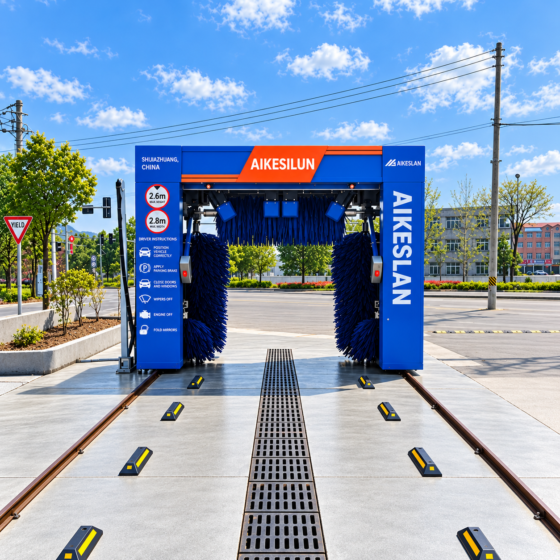
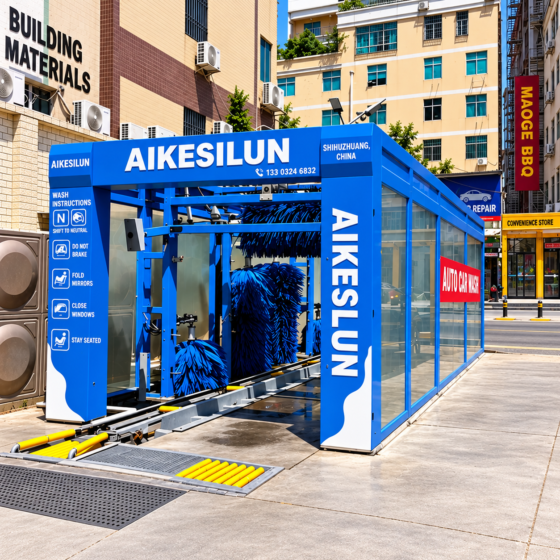
 나는 ~할 생각이다 | 완전 자동 세차 기계 제조업체
What Is the Right Car Wash Equipment for a Convenience Store?
2026 Commercial Buying Guide: Automatic Car Wash Systems, Site Planning, Equipment Costs, Water Use, Customer Experience, and Business ROI
Introduction: Choosing Car Wash Equipment That Fits Your Store
Choosing the right convenience store car wash equipment can help a retailer add a useful service, attract local drivers, and create another source of revenue.
하지만, not every automatic car wash is suitable for every convenience store.
A small store with limited space may need a compact in-bay automatic system. 그 동안에, a busy travel center with strong local demand may consider a larger tunnel wash.
The best choice depends on several factors. These include site size, traffic flow, customer needs, water supply, equipment capacity, and available investment.
It is also important to consider how the wash will work with the existing store. Drivers should find it easy to enter, pay, wash, and leave without blocking fuel pumps or parking spaces.
게다가, store owners should compare long-term operating costs rather than focus only on the purchase price.
This guide explains how to select an automatic car wash machine for a convenience store or fuel retail location. It covers equipment types, technical features, installation requirements, 운영 비용, marketing ideas, and purchasing questions.
빠른 답변: What Is the Best Car Wash Equipment for a Convenience Store?
For many convenience stores with limited space, an in-bay automatic rollover car wash is a practical option because the vehicle stays in one position while the machine moves around it. A touchless system may appeal to customers who prefer non-contact washing. A soft-touch system may offer effective cleaning through controlled brush contact.
A tunnel car wash can be suitable when the site has enough land, strong demand, and the required vehicle flow.
There is no single best machine for every store. The right choice should match the location, expected sales, vehicle types, and operating budget.
1. Why Are Convenience Stores Adding Car Wash Services?
Many convenience stores serve customers who value quick and easy services.
Drivers may already visit the site to buy fuel, snacks, coffee, or daily essentials. Adding a car wash can give them another reason to stop.
More Reasons to Visit
A wash can turn a routine fuel stop into a more complete service visit.

Reciprocating machine
Additional Revenue
The store may earn income from single washes, prepaid packages, or memberships.
Customer Convenience
Drivers can use several services at one location.
Fuel and Wash Packages
Retailers may offer a wash discount with a fuel purchase.
Loyalty Opportunities
A car wash can become part of an existing rewards program.
Competitive Differentiation
A clean, well-run facility can help a store stand out from nearby businesses.
Still, adding a wash does not guarantee higher profits. Results depend on local demand, service quality, and operating costs.
2. What Is Convenience Store Car Wash Equipment?
Convenience store car wash equipment refers to washing machines and related systems installed at convenience stores, fuel stations, or similar retail sites.
A complete project may include more than the main machine.
Typical elements can include:
Automatic washing equipment
Water pumps and spray systems
Brushes or touchless cleaning components
Chemical dosing equipment
Vehicle positioning sensors
Control cabinets and operator interfaces
Payment and access systems
Drainage and wastewater equipment
Optional water reclaim systems
Signs and traffic-control features
The exact package varies by manufacturer and model.
그러므로, buyers should ask which components are standard and which are optional.
3. Main Types of Car Wash Equipment for Convenience Stores
Commercial retailers can choose from several equipment categories.
| Equipment Type | 공통 응용 | Main Consideration |
|---|---|---|
| In-bay automatic rollover | Compact convenience stores and fuel sites | Bay dimensions and cycle time |
| Touchless automatic wash | Non-contact cleaning preference | Chemistry and spray performance |
| Soft-touch automatic wash | Sites seeking contact-assisted cleaning | Brush condition and surface compatibility |
| Hybrid automatic wash | Multiple cleaning methods | Cost and service complexity |
| Tunnel conveyor wash | Larger sites with strong demand | Land, investment, and staffing |
| Self-service wash bay | Customer-operated cleaning | Labor model and customer preference |
The right system depends on how the business plans to serve customers.
예를 들어, a compact site may benefit from a single automatic bay. In contrast, a larger site may support several wash options.
4. Why In-Bay Automatic Washes Fit Many C-Stores
An in-bay automatic wash cleans a vehicle while it remains in a designated position.
The machine moves around or along the car during the wash cycle.
This type of equipment is common at smaller fuel retail locations.
Compact Operating Layout
An in-bay system can suit a dedicated wash bay without requiring a long conveyor line.
Controlled Vehicle Position
The driver follows signs and stops within the approved area.
Automated Wash Programs
The controller runs selected washing stages.
Package Flexibility
Operators may offer basic, standard, and premium services.
Reduced Routine Manual Work
The process automates many washing tasks, although staff oversight and maintenance remain necessary.
Site Compatibility
The building, vehicle clearance, 배수, and equipment travel still need careful planning.
For many small convenience stores, an automatic rollover car wash is a reasonable starting point for equipment comparisons.
5. Touchless Car Wash Equipment for Convenience Stores
A touchless car wash uses water, spray nozzles, and cleaning chemicals without rotating brushes contacting the vehicle body.
Some customers prefer this method.

주유소 렌더링
No Brush Contact
The system avoids direct mechanical contact from brushes.
Pump Performance
The wash depends on appropriate water pressure and flow.
Spray Coverage
Nozzle position helps determine which surfaces receive cleaning.
Chemical Process
Pre-soak and detergent selection are important.
Rinsing
A suitable rinse helps remove chemical residue.
Maintenance
Nozzles, 슬리퍼, 밸브, and sensors require regular checks.
Touchless does not mean every wash will remove all dirt. Heavy road film can be difficult to remove without suitable chemistry and process design.
또한, no system can promise a completely risk-free wash for every vehicle or surface condition.
6. Soft-Touch Car Wash Equipment for Convenience Stores
Soft-touch systems use designed cleaning materials that make contact with the vehicle.
These systems can help remove certain types of road dirt.
Mechanical Cleaning
Controlled contact helps loosen contamination.
Brush Materials
Cleaning media should suit the intended vehicle surfaces.
Vehicle Detection
Sensors may guide selected equipment movements.
Chemical Support
Pre-soak and detergent remain important.
Cleaning Consistency
Routine inspection supports repeatable performance.
Wear Management
Brushes and related components need timely replacement.
A suitable soft-touch system should include clear vehicle restrictions and maintenance instructions.
Customers should not be told that any automatic contact wash is guaranteed to prevent scratches.
7. Touchless vs. Soft-Touch: Which Should a Store Choose?
Both systems can serve convenience store customers, but their operating needs differ.
| Factor | Touchless | Soft-Touch |
|---|---|---|
| Main cleaning method | Water and chemicals | Chemicals and brush contact |
| Vehicle contact | No brush contact | Designed brush contact |
| Heavy road film | Depends strongly on chemistry and coverage | Contact can assist removal |
| Brush maintenance | Not applicable to a fully touchless system | Required |
| Pump and nozzle care | Important | Important where spray equipment is used |
| Customer preference | Appeals to non-contact users | Appeals to users seeking contact-assisted cleaning |
| Operating cost | Project-specific | Project-specific |
A store owner should compare cleaning tests, utility requirements, consumables, warranty terms, and local customer preferences.
The better option is the one that meets the intended service standard at a sustainable cost.
8. When Does a Tunnel Car Wash Make Sense?
A tunnel car wash moves vehicles through several cleaning stages, often using a conveyor.
It can offer high throughput when supported by the site and operating process.
하지만, it usually requires a larger project than one compact in-bay system.
Available Land
The site needs enough room for the tunnel and related equipment.
Vehicle Queue
Customers require space to wait safely.
Entrance and Exit
The layout must support smooth movement.
Investment
Tunnel projects can involve substantial civil works and operating systems.
Staffing
The business may need attendants during operating hours.
Local Demand
Higher potential capacity is only valuable if enough customers use the service.
For a convenience store with limited land, a tunnel may be less practical than a rollover machine.
9. How Much Space Does a Convenience Store Car Wash Need?
There is no universal space requirement for every automatic wash.
The exact dimensions depend on the machine and site conditions.
Machine Footprint
The equipment needs enough room for its structure and moving parts.
Vehicle Clearance
The bay must support the intended vehicle height, width, and length.
Entry Lane
Drivers need adequate space to approach the wash.
Exit Lane
Vehicles should be able to leave without unsafe reversing.
Queue Area
Waiting cars should not block fuel pumps or store parking.
Equipment Service Area
Technicians need access for maintenance.
Plant and Treatment Space
Pumps, tanks, and water treatment equipment may require separate space.
Before ordering, buyers should request installation and general arrangement drawings.
10. Convenience Store Car Wash Equipment and Traffic Flow
Traffic flow is one of the most important parts of a retail wash project.
A poorly placed machine can create problems for other store operations.
예를 들어, a queue that crosses the main fuel lane may reduce convenience rather than improve it.
A practical layout should consider:
The normal route customers take through the property
Fuel pump access
Store parking
Pedestrian movements
Car wash payment points
Queue length
Vehicle turning paths
Exit access
Emergency and delivery routes
Where possible, the wash should have a clear entry and exit route.
The store should also use visible signs and simple operating instructions.
A qualified site designer should review the complete vehicle movement plan.
11. How to Estimate Car Wash Capacity
Capacity affects customer waiting time and potential revenue.
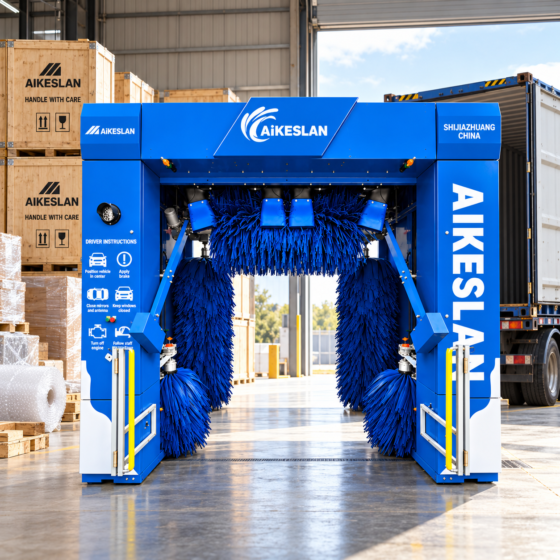
Reciprocating machine
하지만, machine cycle time and actual site throughput are not the same.
Assume a wash program takes six minutes.
Theoretical machine-only capacity would be ten cycles per hour.
Yet drivers also need time to enter, position, pay, and exit.
게다가, equipment pauses, program variation, and occasional faults affect throughput.
그러므로, actual capacity may be lower.
Buyers should request cycle-time figures for each available program.
They should also ask how the manufacturer measures throughput.
A high advertised capacity is not useful if the site cannot manage entry and exit traffic.
12. Water Supply Requirements
Automatic car washes need a suitable water supply.
하지만, demand differs by machine model and cleaning program.
Water Flow
The supply must meet the required operating demand.
Water Pressure
Incoming pressure must remain within the approved range.
Pipe Size
Existing water lines may require assessment.
Storage
Some sites use tanks to support water delivery.
Water Quality
Sediment, minerals, and other conditions may affect performance.
Filtration
The project may need filtration or additional treatment.
Testing
The supply should be checked under realistic operating conditions.
Ask the manufacturer for specific requirements rather than relying on generic figures.
13. Why Water Recycling Matters
Water use can be an important operating cost.
It can also affect site permits and sustainability goals.
A suitable water reclaim system may collect and treat selected wash water for reuse.
Collection
Wastewater is directed to an appropriate collection system.
Separation
Grit and other solids may need removal.
Oil and Grease
Treatment may be required before reuse or discharge.
Filtration
Filters can improve water quality for selected applications.
Storage
Reclaimed water needs suitable tanks.
Reuse Selection
Water quality requirements vary by washing stage.
예를 들어, final rinsing may require higher-quality water than some earlier wash steps.
EPA WaterSense guidance explains that treatment needs depend on the intended use of reclaimed water.
A reclaim system should be evaluated using site-specific water costs, treatment needs, maintenance, and local requirements.
14. Drainage and Wastewater Planning
Car wash wastewater should be considered before construction begins.
Used wash water may contain dirt, detergents, oil, and other materials.
Drainage Design
The wash floor should guide water toward approved collection points.
Sediment Management
Grit and solids can collect in traps or treatment units.
Pretreatment
Some discharge systems require specific treatment.
Local Approval
Municipal or utility rules may apply.
Stormwater Protection
Wash water should not enter storm drains unless the discharge is authorized.
Cleaning Access
Drainage systems need regular maintenance.
A store owner should confirm the applicable local requirements with qualified professionals.
The machine supplier should provide its relevant water and wastewater specifications.
15. Electrical Requirements and Energy Use
Automatic car wash equipment may include water pumps, 모터, controls, and blowers.
Electrical requirements depend on the actual system.
Supply Voltage
Confirm the machine is configured for the installation country.
Frequency
Check local power frequency compatibility.
Connected Load
Review the combined electrical demand.
Motor Starting
Some equipment may create significant startup loads.
Control Cabinets
Electrical controls need suitable environmental protection.
Installation Safety
Electrical work should be completed by qualified personnel.
Energy Monitoring
Some operators track electricity cost per wash.
Buyers should request a complete electrical load list before site work begins.
16. Drying Systems and Customer Experience
Drying can affect how customers judge the finished wash.
하지만, not every system has the same drying features.
Blowers
Airflow removes water from accessible exterior surfaces.
Air Direction
Proper outlet placement supports coverage.
Vehicle Shape
Different vehicles may dry differently.
Energy Demand
Powerful drying equipment adds electricity use.
Noise
The site may need to consider neighbors and local limits.
Maintenance
Blowers and related motors require inspection.
Premium Packages
Drying may form part of a higher-priced wash program.
A manufacturer should explain expected drying performance and any practical limitations.
17. Car Wash Sensors and Automatic Controls
Modern automatic systems use sensors and controllers to coordinate machine operation.
하지만, the exact technology differs by model.
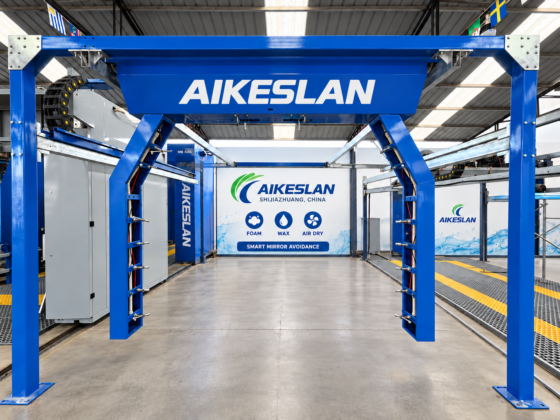
Touchless Car Wash Machine
Vehicle Detection
Sensors may confirm the presence of a vehicle.
Position Guidance
Lights or signs may help drivers stop correctly.
Machine Position
Sensors can monitor travel limits and machine movement.
Wash Selection
The controller can run the selected cleaning program.
Fault Detection
Some systems identify defined operating problems.
Operator Interface
Staff may need access to controls and status information.
Maintenance
Sensors and control components require periodic checks.
Buyers should ask for an explanation of the safety functions and vehicle restrictions.
18. Weather Resistance and Equipment Reliability
Convenience store washing equipment often operates in wet and demanding conditions.
Outdoor temperature can also affect the project.
Corrosion Protection
The structure and components need appropriate protection.
Moisture Resistance
Electrical and mechanical parts require suitable installation conditions.
Cold Weather
Freezing temperatures can damage water lines and equipment.
Heat
Local climate may affect ventilation and electrical equipment.
Chemicals
Cleaning products must be compatible with system materials.
Dust and Dirt
Sensors and moving components may require cleaning.
Maintenance Access
Technicians need enough space to work safely.
The right equipment should be selected for the actual climate, not just a general weather-resistant claim.
19. What Features Should Be Included in a Complete Package?
A complete quotation should identify the included equipment clearly.
Depending on the design, the package may contain:
Main machine structure
Washing arms or brush assemblies
Water pumps
Motors and drives
Spray nozzles
Chemical dosing components
Vehicle sensors
Control cabinet
Operator panel
Dryer equipment, if included
Standard machine cables and fittings
Installation documentation
Operating instructions
Recommended spare-parts list
Other components may be optional.
예를 들어, water reclaim equipment, payment terminals, building construction, and some installation materials may be excluded.
Never assume a quote includes every item needed to open the wash.
20. How Much Does Convenience Store Car Wash Equipment Cost?
Equipment cost varies significantly by type and project specification.
A compact rollover machine and a full tunnel installation cannot be compared using equipment price alone.
Cleaning Technology
Touchless and contact systems use different components.
Machine Configuration
Wash programs and optional features affect price.
Dryer Equipment
Additional blowers may increase cost.
Payment Integration
Compatible commercial payment systems may require extra equipment.
Site Construction
Civil works can be a major expense.
Utility Upgrades
Water and electrical infrastructure may need changes.
Freight and Installation
International shipping, lifting, labor, and commissioning add costs.
The most useful comparison is total installed project cost.
21. Sample Convenience Store Car Wash Project Budget
The following amounts are a hypothetical budgeting example, not verified market prices or a manufacturer quotation.
| Project Component | Illustrative USD |
|---|---|
| Automatic rollover wash equipment | $65,000 |
| Optional features and payment integration | $12,000 |
| Freight and handling | $8,000 |
| Civil works and wash bay preparation | $30,000 |
| Water and electrical connections | $15,000 |
| Drainage and wastewater works | $18,000 |
| Installation and commissioning | $12,000 |
| Contingency | $15,000 |
| Total Illustrative Project Cost | $175,000 |
Actual costs can be much higher or lower.
A project that already has a suitable building may require different work from a new construction project.
Likewise, a tunnel wash can require a very different level of investment.
Request site-specific quotations before making a decision.
22. Operating Costs per Car Wash
A wash can generate revenue while creating several ongoing expenses.
Water
Calculate the fresh-water volume used for each wash program.
Electricity
Include pumps, 모터, dryers, and other equipment.
Chemicals
Track detergent and finishing-product consumption.
Maintenance
Allow for inspections, repairs, and replacement parts.
Payment Fees
Include relevant transaction charges.
Labor
Some locations need staff assistance or supervision.
Wastewater
Treatment and discharge can create ongoing costs.
Insurance and Administration
These expenses also affect business results.
Operators should separate variable cost per wash from annual fixed operating costs.
This makes financial planning more useful.
23. How to Estimate Convenience Store Car Wash ROI
Car wash profitability depends on traffic, conversion, pricing, and operating expenses.
Consider an illustrative example.
Assume a convenience store completes 35 paid washes per day.
Average wash revenue is $12.
The site operates 330 days per year.
Annual wash revenue would be:
35 × $12 × 330 = $138,600
Assume variable operating expenses average $3.50 per wash.
Annual variable costs would be:
35 × $3.50 × 330 = $40,425
Annual contribution before fixed costs would be:
$138,600 – $40,425 = $98,175
Now assume annual fixed wash-related operating expenses of $45,000.
Illustrative operating cash contribution before financing, taxes, depreciation, and further capital spending would be:
$98,175 – $45,000 = $53,175
Against the hypothetical $175,000 project investment, simple payback would be approximately 3.3 years.
This example is not a forecast.
Actual sales, 운영 비용, equipment life, and site performance may differ substantially.
24. Fuel and Car Wash Bundles
Fuel retailers can consider offering a wash together with a fuel purchase.
하지만, bundle pricing needs careful planning.
Fuel Purchase Discount
Customers may receive a wash discount after buying fuel.
Wash Upgrade
Drivers may pay extra for a premium cleaning program.
Receipt Promotion
A fuel receipt can include a wash offer.
In-Store Purchase
The store may sell wash codes at checkout.
Limited-Time Campaign
A promotion may encourage trial during slower periods.
Loyalty Rewards
Members may receive selected wash benefits.
The goal is to improve total customer value, not simply reduce the wash price.
Retailers should measure whether promotions create additional sales or mainly discount purchases customers would have made anyway.
25. Convenience Store Car Wash Memberships
Some car wash businesses use recurring memberships.
A convenience store may consider this model when it has suitable equipment and local demand.
Predictable Billing
Memberships can create recurring revenue.
Customer Retention
Regular users may return more often.
Plan Limits
Terms should define usage and eligible vehicles.
Payment Management
The system needs appropriate billing functions.
Wash Capacity
High membership use can increase demand during peak periods.
Customer Support
Operators must handle billing and access issues.
Financial Monitoring
Revenue should be compared with actual wash use and costs.
An unlimited wash plan is not suitable for every business.
The right model depends on customer behavior, local competition, and operating capacity.
26. Improving Sales Through Store Integration
A car wash works best when customers can purchase it easily.
Fuel Pump Promotions
The store may advertise wash packages near fuel dispensers.
Checkout Offers
Cashiers or self-service systems can present relevant options.
Digital Screens
Clear pricing can help customers understand the service.
Payment Terminals
Buyers should confirm system compatibility before ordering.
Wash Codes
Some operators use printed or digital access codes.
Loyalty Platforms
A connected rewards program may support repeat use.
Performance Tracking
Operators can measure promotions and purchase conversion.
The purchasing experience should remain simple.
A confusing payment process can reduce the value of otherwise good washing equipment.
27. Customer Experience and Vehicle Safety
Convenience store customers often expect a quick and straightforward service.
The machine should therefore support clear operating instructions.
Entrance Signs
Explain who can use the wash and how to enter.
Vehicle Limits
Post applicable height and width restrictions.
Positioning
Drivers need clear stop or movement instructions.
Warning Notices
Customers should follow restrictions for accessories and unsuitable vehicles.
Emergency Arrangements
The facility requires an appropriate emergency response plan.
Surface Conditions
Slip risks, 배수, and pedestrian movements need attention.
Employee Training
Staff should understand normal operation and fault procedures.
A well-designed customer experience supports safety as well as convenience.
28. Car Wash Maintenance for Convenience Store Operators
Routine maintenance helps protect equipment performance.
Tasks depend on the specific machine.
Daily Checks
Operators may inspect the wash area for visible damage and obstructions.
Spray Nozzles
Nozzles should be checked for blockage and wear.
Pumps
Leaks, unusual noise, and operating conditions may need attention.
Brushes
Contact systems require brush inspection and replacement.
Sensors
Detection devices may collect water or dirt.
Dryers
Fans and related equipment require maintenance.
Drainage
Sediment traps and collection systems need cleaning.
Records
Maintenance logs help operators identify recurring faults.
The manufacturer should supply a documented service schedule.
29. Why After-Sales Support Matters
The cost of equipment downtime can extend beyond the repair itself.
When a wash is unavailable, customers may leave or choose another service.
그러므로, buyers should compare support arrangements before ordering.
Warranty Coverage
Review what is included and excluded.
예비 부품
Ask about critical replacement components.
Technical Assistance
Confirm support channels and availability.
Installation Help
Determine who manages commissioning.
Training
Employees need suitable operating instruction.
Maintenance Guidance
Request service manuals and schedules.
Remote Support
Ask whether the specific equipment supports remote diagnostics.
International buyers should also check local service options and spare-parts delivery arrangements.
30. Choosing a Reliable Car Wash Equipment Supplier
The right supplier should understand both the machine and the project environment.
Technical Documents
The supplier should provide accurate equipment specifications.
Site Review
Buyers should receive guidance on the required installation conditions.
Product Scope
Included and optional functions must be clear.
Safety Documentation
Relevant machinery information should be provided.
Performance Claims
Cycle time and consumption data should have defined operating conditions.
Spare-Parts Policy
Replacement procedures should be documented.
Commercial Terms
Warranty, delivery scope, and payment terms need review.
References
Where available, genuine customer references or operating examples can help buyers evaluate the supplier.
Avoid relying only on promotional claims.
31. Equipment Buying Checklist for Convenience Stores
Before selecting a car wash, confirm the following.
Business Planning
Expected local customer demand
Nearby competition
Available project budget
Desired wash pricing
Sales and membership plans
Expected operating hours
Site Requirements
Available land and building space
Vehicle entry and exit routes
Queue management
Water supply
Electrical supply
Drainage and wastewater arrangements
Equipment Selection
Touchless or soft-touch method
Maximum vehicle dimensions
Wash program options
Cycle time
Dryer configuration
Payment-system compatibility
Standard and optional components
Supplier Evaluation
Installation documentation
Warranty coverage
Spare-parts availability
Training options
Technical support
Commissioning responsibilities
Complete quotation scope
This checklist helps reduce avoidable problems during purchasing and installation.
32. What Should US Convenience Store Owners Consider?
US buyers should evaluate the machine alongside the property’s existing business operations.
Local building, 연관, electrical, and wastewater rules may apply.
Fuel Site Layout
The wash should not interfere with access to fuel dispensers.
Queue Control
Waiting vehicles should remain within appropriate areas.
Local Vehicle Mix
The machine must support intended passenger cars, SUVs, and other eligible vehicles.
Water Use
Assess utility cost and water reclamation options.
Winter Conditions
Cold-weather locations may need suitable freeze protection.
Service Availability
Determine who can maintain the machine locally.
Payment Integration
Check compatibility with the store’s existing systems.
Requirements vary by state, municipality, utility provider, and project.
33. What Should Canadian Buyers Consider?
Canadian convenience store operators should place additional attention on local climate and operating conditions.
Cold Weather
Water lines and exposed components may need frost protection.
Salt and Road Dirt
Wash programs should suit seasonal contamination.
Building Conditions
The machine needs an appropriate installation environment.
Utility Compatibility
Confirm voltage, frequency, and electrical capacity.
Wastewater Rules
Review local collection and discharge requirements.
Equipment Maintenance
Cold-weather operating procedures should be documented.
Parts Supply
International repair lead times may affect downtime.
A supplier should explain the climate-related limitations of its specific equipment.
34. What Should UK and European Buyers Consider?
UK and EU convenience stores should review applicable machinery, environmental, and site requirements.
Equipment Compliance
Ask for the appropriate machinery documentation for the intended market.
Electrical Configuration
Confirm compatibility with local supplies.
Wastewater Discharge
Requirements may involve the local authority or water company.
Water Efficiency
High water costs can make water-saving measures important.
Urban Space
Smaller retail sites may need compact layouts.
Noise
Dryers and motors may affect neighboring properties.
Service Networks
Consider local maintenance and spare-parts arrangements.
Import Documentation
Confirm responsibilities for shipping, customs, and installation.
EU and UK requirements should be checked separately rather than treated as identical.
35. Common Mistakes When Buying a Store Car Wash
A convenience store should avoid several common purchasing mistakes.
Choosing by Price Alone
A low machine price may exclude major project costs.
Ignoring Vehicle Flow
A poor layout can interfere with normal store operations.
Overestimating Demand
Traffic does not automatically turn into paying wash customers.
Ignoring Water Supply
Insufficient utility capacity can create operating problems.
Buying Too Much Capacity
A large machine may be difficult to justify at a low-volume site.
Missing Payment Requirements
The wash may not work with the intended payment platform.
Neglecting After-Sales Service
Limited access to parts can increase downtime.
Assuming Every Vehicle Is Compatible
Machines have specific vehicle limits.
Careful site planning and supplier review can reduce these risks.
36. Comparing Equipment for Different Convenience Store Types
Not every store needs the same equipment.
| Store Type | Potentially Suitable Equipment | Key Priority |
|---|---|---|
| Small neighborhood C-store | Compact in-bay automatic | Space and convenience |
| Gas station with a wash bay | Rollover or touchless system | Existing site compatibility |
| Busy fuel retail location | Higher-capacity automatic option | Queue management |
| Large travel center | In-bay or tunnel system | Demand and available land |
| Premium urban location | Suitable automatic wash with upgraded finish options | Customer experience |
| Multi-site retail chain | Standardized compatible equipment | Support, 훈련, and reporting |
These are planning examples, not universal recommendations.
Each location should be assessed separately.
37. How to Request an Accurate Equipment Quote
A detailed request helps suppliers prepare a more useful proposal.
Provide the following information:
Project Location: Country, city, and site type.
Store Type: Independent convenience store, fuel station, or retail chain.
Site Space: Available wash bay and surrounding dimensions.
Vehicle Types: Main customer vehicles and required clearance.
Wash Capacity: Expected daily and peak demand.
Wash Method: Touchless, soft-touch, or undecided.
Utilities: 수압, flow, 및 전원 공급 장치.
Wastewater: Existing drainage and treatment arrangements.
Payment: Standalone payment or store-system integration.
Budget: Target total project budget.
Schedule: Planned installation and opening dates.
Ask the supplier to separate machine price, optional features, freight, 설치, and excluded site work.
38. Frequently Asked Questions
What is the best car wash equipment for a convenience store?
An in-bay automatic rollover system is often worth considering for sites with limited space. The best choice still depends on layout, demand, budget, and vehicle compatibility.
Can a small convenience store install an automatic car wash?
Possibly. The site must have enough room for the machine, vehicle movement, 유용, 배수, and maintenance access.
Is touchless better than soft-touch?
Neither is universally better. Touchless systems avoid brush contact, while soft-touch systems use controlled contact to assist cleaning. Compare wash results and operating requirements.
What is the difference between rollover and tunnel car washes?
A rollover system moves around a stationary vehicle. A tunnel system generally moves vehicles through fixed cleaning stages.
How much does a convenience store car wash machine cost?
Prices vary by machine type, features, and project conditions. Buyers should request an itemized quotation and calculate total installed cost.
How many cars can an automatic wash clean per hour?
Capacity depends on wash cycle length, vehicle entry and exit, payment, and site operation.
Does an automatic car wash require staff?
Automation can reduce routine manual cleaning work, but stores still need suitable supervision, maintenance, and customer support.
Can a car wash increase convenience store revenue?
It can create additional sales opportunities. 하지만, actual profitability depends on demand, prices, operating costs, and project investment.
Can a convenience store offer fuel and wash discounts?
Yes, subject to the store’s commercial systems and local rules. Promotions should be evaluated based on total business performance.
Is water recycling necessary?
That depends on local requirements, fresh-water costs, available space, and the project’s operating volume.
What water pressure does a rollover car wash require?
Requirements vary by model. Buyers should request the manufacturer’s specified inlet pressure, flow, and pump data.
Can payment terminals connect to existing store systems?
Some systems offer compatible integration options. Compatibility must be checked for the specific machine and payment platform.
How much space is needed for an automatic rollover wash?
Space requirements depend on vehicle limits, machine travel, access lanes, maintenance areas, and the site layout.
What maintenance does a car wash machine need?
Typical tasks include checking pumps, 노즐, 센서, moving parts, brushes where applicable, and drainage systems.
What should I ask a car wash manufacturer?
Ask for machine drawings, technical specifications, utility needs, cycle times, included equipment, warranty terms, 예비 부품, and a complete quotation.
39. Final Buying Advice: Match the Machine to the Business
The right convenience store car wash equipment should fit the site and support the business model.
Start with the available space and expected customer demand.
Next, compare automatic wash technologies and their cleaning performance.
그 다음에, confirm water, power, 배수, payment, and maintenance requirements.
마지막으로, calculate the full project investment and realistic operating costs.
For a compact retail site, an in-bay automatic machine may offer a practical way to introduce a new service. For a larger location, a tunnel wash may deserve closer study.
하지만, bigger equipment is not always the better investment.
Store owners should prioritize reliable operation, convenient customer access, manageable expenses, and supplier support.
Conclusion: Choose a Car Wash That Works for Your Convenience Store
Adding an automatic car wash can help a convenience store offer greater value to drivers.
하지만, success depends on selecting a system that matches the location.
The best equipment choice is based on several connected decisions: cleaning technology, machine size, traffic flow, 세탁 용량, installation requirements, and long-term costs.
A suitable system should also work with the store’s payment methods and customer service plans.
For US, Canadian, UK, and European operators, local site conditions and relevant regulations are important parts of the decision.
Before making a purchase, request technical drawings, utility specifications, an itemized quotation, and clear after-sales terms.
The most suitable convenience store car wash is not simply the cheapest machine. It is the system that fits the property, serves its customers, and supports a realistic business plan.
Request a Commercial Car Wash Equipment Quote
Planning to add a car wash to your convenience store, gas station, or fuel retail location?
Compare available automatic rollover, touchless, and other compatible commercial washing options.
Share your site dimensions, vehicle requirements, utility information, and expected wash volume to receive a project-specific equipment recommendation.
Contact Us for Equipment Specifications | Request a Customized Quotation | Discuss Your Car Wash Project
Sources and Further Reading
US Environmental Protection Agency — WaterSense at Work: Vehicle Washes
Explains common vehicle wash system types, water efficiency, and water reclamation options.
https://nepis.epa.gov/Exe/ZyPURL.cgi?Dockey=P1018SSR.TXT
US Environmental Protection Agency — WaterSense at Work: Best Management Practices for Commercial and Institutional Facilities
Provides additional technical context on commercial vehicle washing and water-saving measures.
https://nepis.epa.gov/Exe/ZyPURL.cgi?Dockey=P100ODFM.TXT
Google Search Central — SEO Starter Guide
Official guidance on clear, useful, readable, and well-organized website content.
https://developers.google.com/search/docs/fundamentals/seo-starter-guide
Google Search Central — Creating Helpful, Reliable, People-First Content
Official guidance on search-focused content quality and avoiding unhelpful keyword-driven publishing.
https://developers.google.com/search/docs/fundamentals/creating-helpful-content
Disclaimer: This article is a general commercial equipment buying guide. Technical specifications, prices, installation requirements, vehicle compatibility, and support arrangements depend on the manufacturer and project. Financial examples are hypothetical and do not represent verified market averages or guaranteed returns. Local professionals should confirm site design, safety, electrical installation, and wastewater requirements before purchase or construction.