 나는 ~할 생각이다 | 완전 자동 세차 기계 제조업체
How Can Commercial Car Wash Equipment Support Business Expansion?
Commercial car wash equipment can support business expansion by increasing wash capacity, making service more consistent, and helping teams control costs. It can also support new wash packages, fleet contracts, and more sites. 하지만, growth depends on how well the system fits local demand, site space, 유용, and service support.
For a growing wash business, the next step is not always a second location. First, it may be better to serve more cars at the current site. In other cases, the best move is to add a wash bay, upgrade an old system, or serve business fleets.
Each path needs a different plan. A fast conveyor cannot solve a poor entrance layout. Likewise, a low purchase price does not help if spare parts take weeks to arrive.
This guide explains how commercial car wash equipment can help businesses grow across Europe and North America. It also shows which technical features matter, how to match them to real sites, and what to check before buying.
## 1. Start With the Business Problem You Need to Solve
Before comparing machines, define what limits growth today. Is the queue too long? Does wash quality vary? Are running costs hard to track? Or does the site need more repeat visits?
예를 들어, a busy wash may lose sales when drivers see a long line. In that case, better loading and higher useful capacity may help. By contrast, a quiet site may need better access, clearer offers, or stronger local demand before adding equipment.
Set one main goal, then choose a few measures to track it. These might include completed washes per hour, repeat visits, downtime, and cost per wash.
또한, record a baseline before making changes. Use full weeks with both busy and quiet days. This gives the team a fair basis for comparison.
마지막으로, turn the goal into a purchase brief. Instead of asking for the biggest machine, describe the daily workload and the current bottleneck. A useful proposal should explain how the proposed system addresses that problem.
## 2. Match Commercial Car Wash Equipment to Your Growth Model
The main wash formats serve different needs. The [US Environmental Protection Agency’s vehicle wash guidance](https://nepis.epa.gov/Exe/ZyPURL.cgi?Dockey=P1018SSR.TXT) distinguishes conveyor, in-bay automatic, and self-service systems.
In a conveyor wash, the car moves through fixed wash stages. In an in-bay automatic wash, the car stays still while equipment moves around it. At a self-service site, the customer uses wash tools directly.
| Equipment format | Expansion use to assess | Main planning question |
| — | — | — |
| Conveyor or tunnel system | A dedicated site with strong peak demand | Can the entrance, loading area, and exit support steady flow? |
| In-bay automatic or rollover | Adding automated washing to a suitable bay | Can cycle time meet demand within the available space? |
| Self-service equipment | Serving customers who prefer direct control | Can the site support clear instructions and routine upkeep? |
하지만, format alone does not define the right choice. A tunnel still needs suitable utilities and support. Similarly, a compact rollover needs safe vehicle access and maintenance space.
그러므로, compare complete site plans rather than machine drawings alone. Include payment lanes, plant space, 배수, queues, and service access in the same review.

Finished Tunneling Machine (Image)
## 3. Increase Useful Throughput, Not Just Rated Speed
Throughput means the number of completed washes within a set time. More useful throughput can help a site serve extra demand without adding land.
하지만, rated speed and real output are different. Loading delays, payment steps, customer questions, and exit blockages can all reduce actual capacity.
First, map the full customer journey. Time the steps from arrival to payment, loading, washing, and departure. Then identify the slowest stage.
For conveyor car wash equipment, review vehicle spacing and safe loading procedures. For an automatic wash bay, review the full cycle, including entry and exit time.
또한, compare like-for-like wash programs. A short basic cycle should not be compared with a full premium program. Ask suppliers to state the conditions behind each capacity claim.
예를 들어, request a demonstration with the planned wash package and a realistic mix of cars. Observe how staff handle hesitant drivers and unusual vehicle shapes.
결과적으로, the capacity plan will reflect daily operations. That is more useful than a peak figure that the site rarely achieves.
## 4. Build Consistent Wash Quality as Volume Grows
More cars create little value if customers leave unhappy. 그러므로, wash quality must remain stable as volume rises.
Start with the main wash stages: chemical application, cleaning, 헹구기, 그리고 건조. Each stage should work with the next. More chemical, pressure, or brush speed does not automatically mean a better result.
For brush systems, ask how the equipment manages contact and follows the vehicle shape. For touchless systems, assess chemical dosing, coverage, dwell time, and rinse performance.
하지만, avoid choosing a method from a label alone. Test it with the dirt, weather, and vehicle types common at the site.
또한, check hard-to-clean areas. These may include rear panels, lower doors, wheels, and mirrors. Inspect the result after the car leaves the bay.
마지막으로, define a simple quality check that staff can repeat. Log missed areas and rewash requests by program. When a pattern appears, adjust the process with the supplier’s guidance.
This turns quality control into a routine task. It also helps the business protect its service standards when training new staff or opening another site.
## 5. Control Labor Needs Without Losing Customer Support
Automated car wash systems can handle repeat tasks such as dosing, washing, and program control. 결과적으로, staff may spend more time on loading, customer help, inspections, and site care.
하지만, automation does not remove all labor. Someone still needs to check equipment, refill supplies, manage faults, and keep the work area safe.
First, list the tasks required during opening, peak hours, and closing. Then assign clear responsibility for each task.
Simple controls can make this easier. Ask for a clear operator screen, useful fault messages, and written steps for common issues. 또한, confirm which settings staff may change and which need service support.
For multiple locations, use the same task lists where possible. This makes training easier and reduces reliance on one experienced operator.
그 동안에, keep customer needs in view. A driver using a conveyor for the first time may need help. Good guidance can improve flow and reduce confusion.
The aim is a repeatable staffing model that supports growth while preserving service quality.
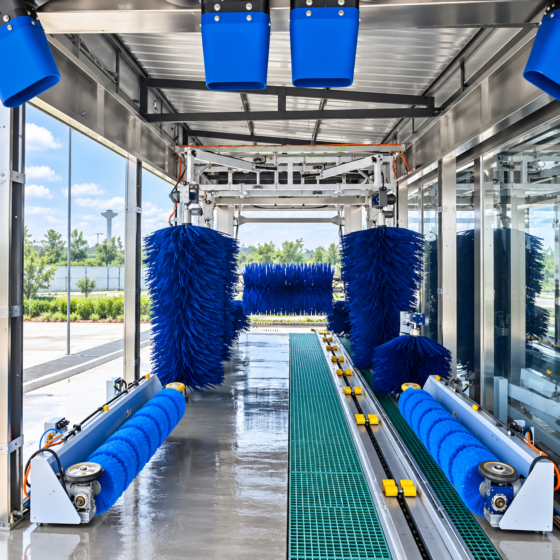
Tunnel Machine 11 Plate Change
## 6. Make Water and Chemical Use Easier to Measure
Water and chemicals affect both wash results and running costs. 그러므로, expansion planning should include a clear way to measure their use.
Ask for fresh water demand by wash program. Keep this separate from total water circulated within the system. If a proposal includes water reclaim, ask which wash stages use treated water.
The [EPA’s vehicle wash guidance](https://nepis.epa.gov/Exe/ZyPURL.cgi?Dockey=P1018SSR.TXT) explains that reclaim systems treat wash water for reuse. It also notes that treatment needs depend on where the water will be used.
하지만, a reclaim system needs its own care plan. Review tank cleaning, filters, sludge handling, odor control, and service access. Do not treat water reuse as a maintenance-free feature.
Likewise, ask how chemical dosing works. Can staff check actual use? Can the supplier help tune the dose for local water and soil conditions?
Then track fresh water and chemical cost per completed wash. If either rises, investigate leaks, dosing changes, or extra rewashes.
Measured use provides a stronger basis for expansion than broad claims about savings.
## 7. Review Power Demand and Drying Performance Together
Power planning is about more than the electricity bill. The site must also support motors, 슬리퍼, dryers, controls, and any added plant equipment.
First, request the required supply voltage, frequency, phases, and connection load. Then ask a qualified local professional to check the proposed design against the site supply.
또한, distinguish installed power from energy used per wash. Equipment may not run at full load throughout every program.
Drying deserves a separate review because it affects both customer experience and energy use. Ask how dryer placement and control suit the vehicles you expect to wash.
예를 들어, inspect water left around mirrors, rear windows, and trim. Then check whether a proposed change improves drying without creating a new noise or power issue.
하지만, compare results under similar conditions. Weather and vehicle shape can affect the outcome.
마지막으로, include noise and neighboring uses in the site plan. A dryer arrangement that suits an isolated industrial site may need a different approach near homes or shops.
## 8. Add Wash Packages That Customers Understand
Commercial car wash equipment can support business expansion by enabling a clear range of wash packages. 하지만, the menu must match the functions actually installed.
Start with a basic service that meets the main cleaning need. Then consider higher tiers with useful added steps, such as wheel treatment or an approved surface care product.
For each package, state what the customer receives in plain language. Avoid vague names that hide small differences.
또한, calculate the extra cost and time of each option. A premium program may raise the average sale, but it can also use more supplies or slow a bay.
그러므로, review both the margin and the effect on queues. The best package mix may change between peak and quiet periods.
Memberships are another option where payment and control systems support them. 하지만, model repeat use carefully. More visits can improve loyalty while also increasing the workload.
마지막으로, train staff to explain the menu honestly. Clear offers can build trust and make the buying choice easier.
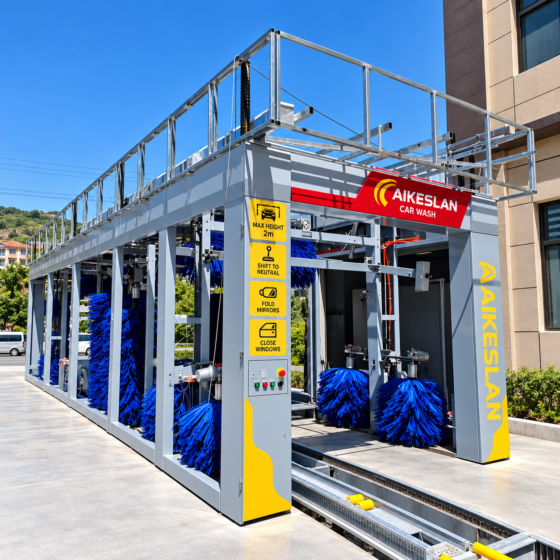
Tunnel-type machine, 9-brush version
## 9. Serve Fleets, Dealerships, and Fuel Retail Sites
Expansion can come from new customer groups as well as new locations. Fleet washing, dealership work, and fuel retail add-ons each bring different needs.
For fleet car wash solutions, check vehicle size, access times, billing, and the expected wash schedule. A contract is easier to serve when both sides agree on eligible vehicles and service windows.
하지만, do not assume a passenger car system can wash vans or larger commercial vehicles. Confirm the permitted height, width, length, and any restrictions with the equipment supplier.
Dealerships may value a consistent finish before handover. In that case, inspect rinse and drying results closely. 또한, check how the wash fits the team’s existing vehicle flow.
At fuel retail sites, the key issue may be traffic. Wash queues should not block pumps, deliveries, or the store entrance.
그 동안에, off-peak fleet bookings may help use spare capacity. Yet the operator should protect space for retail customers during busy hours.
Matching each sales channel to the right operating plan makes growth easier to manage.
## 10. Match Technical Capabilities to Real Site Conditions
A strong proposal links each technical feature to a site need. It should explain what the feature does and how the buyer can verify it.
| Site condition or goal | Capability to review | Evidence to request |
| — | — | — |
| Heavy peak demand | Wash flow and loading controls | A realistic capacity demonstration |
| Limited space | Bay dimensions and service access | A full site layout with clearances |
| High water costs | Metering and suitable water reclaim | A water balance and care plan |
| Mixed vehicle sizes | Vehicle sensing and permitted dimensions | A written vehicle compatibility list |
| Several locations | Shared settings and operating reports | A live demonstration of supported functions |
| Remote location | Fault guidance and parts support | Service terms and parts lead times |
| Cold climate | Suitable freeze protection measures | A site-specific winter operating plan |
또한, ask which functions are standard and which cost extra. A feature shown in a brochure may belong to another configuration.
For imported equipment, confirm the exact version supplied. Drawings, manuals, controls, and parts lists should refer to that version.
마지막으로, record the agreed scope in the order. This reduces gaps between the sales proposal and the system that reaches the site.
## 11. Plan for European and North American Projects Early
Overseas buying adds more steps to a car wash project. 그러므로, local requirements should be reviewed before the equipment order is placed.
For EU projects, identify the product rules that apply to the supplied system. Request the required documentation and review importer responsibilities. The [European Commission’s CE marking guidance](https://single-market-economy.ec.europa.eu/single-market/goods/ce-marking_en) explains that CE marking represents the manufacturer’s declaration of conformity with applicable requirements. It is not an EU quality award.
For North American projects, ask the relevant local professionals and authorities what approvals the installation needs. Confirm the scope before shipping, including electrical work, building work, 배수, and utility connections.
또한, check water discharge conditions with the local utility or responsible authority. A standard machine specification cannot replace a site review.
Climate is another factor. Cold sites may need suitable heating, 배수, and freeze protection. Coastal sites may need closer review of materials and corrosion care.
마지막으로, request manuals and training in a language the operating team understands. Clear documents help the installation team, daily operators, and future service staff.
## 12. Compare Total Cost of Ownership
Commercial car wash equipment cost includes more than the machine price. A useful comparison should cover the same scope for every supplier.
First, list the initial project costs. These may include equipment, freight, import costs, unloading, site work, utility upgrades, 설치, and startup training.
Next, list the ongoing costs. Include water, sewer charges, chemicals, energy, labor, maintenance, parts, software, and site overhead where relevant.
또한, ask what the warranty covers. Travel, labor, consumables, and freight for parts may have separate terms.
Then compare costs over the same planning period and wash volume. Use the same currency and state the tax treatment clearly.
하지만, do not hide uncertainty inside one precise total. Build a lower-demand case and a higher-cost case as well as the base plan.
예를 들어, test how the plan changes if opening is delayed or daily washes fall below the target. Likewise, allow for planned service and unexpected stoppages.
This approach helps buyers understand the investment without relying on a fixed payback promise.
## 13. Use a Simple Growth Model Before You Commit
A basic model can show whether extra capacity has a clear business purpose. 하지만, it should use local evidence and written supplier inputs.
Start with expected paid washes, the average selling price, and the direct cost per wash. Then add fixed costs and the full project investment.
Useful calculations include:
– Wash revenue = paid washes × average selling price.
– Contribution per wash = average selling price − direct variable cost per wash.
– Break-even wash volume = fixed operating costs ÷ contribution per wash.
Use the same time period throughout. 또한, define which costs sit in each category so they are not counted twice.
These calculations support planning, but they do not prove future profit. Financing, taxes, depreciation, working capital, and changes in demand may need separate treatment.
For memberships, use actual or estimated revenue per visit rather than the public single-wash price. Otherwise, the model may overstate income.
마지막으로, compare the expansion with simpler options. Better opening hours, loading flow, or maintenance may solve part of the problem at a lower cost.
## 14. Protect Growth With Maintenance and Parts Support
Downtime becomes more costly when a site serves more customers. 그러므로, service support should be part of the equipment decision.
Ask for a preventive maintenance schedule before ordering. It should explain checks, service intervals, and the parts that need routine replacement.
또한, review access to pumps, 모터, 센서, and controls. Easy access can make inspections and repairs less disruptive.
For overseas equipment, ask where spare parts are held and how urgent orders work. Confirm lead times for both common wear parts and less common components.
Remote support can help diagnose some issues. 하지만, it does not replace the need for suitable local skills and physical parts.
Agree on support hours, contact methods, and escalation steps. If the site is in another time zone, check how the supplier handles urgent faults outside normal hours.
마지막으로, keep fault and repair records. Repeated small issues may reveal a training gap, a site condition, or a component that needs attention.
A clear care plan helps protect both service capacity and customer trust.

Blue tunnel-style car wash machine (9-brush version)
## 15. Use Operating Data to Prepare for More Locations
A growing car wash business needs facts that teams can compare. 그러므로, begin with a small set of useful measures rather than a large dashboard.
Track completed washes, paid revenue, fresh water use, chemical use, downtime, and rewashes. Then review the results by week and wash program.
If the equipment supports remote reports, ask to see the actual screens. Confirm how data is stored, exported, and accessed. 또한, check whether paid software or network access is required.
하지만, keep comparisons fair. A site serving muddy rural vehicles may use more resources than one serving lightly soiled city cars.
For several sites, use the same definitions for downtime and completed washes. This makes trends easier to understand.
그 동안에, protect operating access. Use role-based permissions where available and define who may change wash settings.
마지막으로, turn useful findings into shared work steps. If one site improves loading or reduces repeat faults, test the change elsewhere. Data supports expansion best when it leads to clear action.
## 16. Choose a Supplier Who Can Support the Full Project
The right commercial car wash equipment supplier should help connect the product, site, and operating plan. A price sheet alone cannot do this.
First, request a written scope with the exact model and options. It should show dimensions, utility needs, wash functions, and customer responsibilities.
Next, ask for drawings and a planned installation schedule. Clarify who handles foundations, 배수, unloading, wiring, and startup checks.
또한, request relevant project references where available. A similar site and climate may provide more useful insight than an unrelated showcase.
During a live or recorded demonstration, ask to see the full wash process. Review the finished car as well as the machine in motion.
하지만, verify claims about certifications, performance, and service coverage with the documents that apply to your order.
마지막으로, compare how each supplier answers difficult questions. Clear limits and detailed answers can be more useful than broad promises.
Before payment, also confirm the agreed trade terms and handover point. Ask who carries transport insurance and who arranges unloading. Then put these details beside the installation schedule so purchasing, logistics, and site teams can work from the same clear project delivery plan.
For an expansion project, the goal is a system the business can install, operate, and maintain with confidence.
## 17. Follow a Practical Expansion Roadmap
Start by measuring the current site and defining the growth goal. Then assess demand, traffic flow, space, 유용, and local project requirements.
Next, prepare one brief for all suppliers. Include the vehicle mix, expected wash programs, operating hours, and support needs. This makes proposals easier to compare.
After that, review technical fit and total cost together. Resolve unclear options before signing the order.
During installation, use the agreed drawings and checklists. Record changes so the final documents match the installed system.
Before launch, train the team and test the planned wash programs. Check vehicle guidance, emergency procedures, water use, and the finished wash result.
마지막으로, review performance after startup. Compare actual results with the original goals and correct issues before repeating the model elsewhere.
This staged approach helps the business grow from a tested operating process. It also gives the next project a stronger starting point.
## 18. Agree on Acceptance Tests Before Delivery
A clear acceptance plan helps both buyer and supplier know when the system is ready. 그러므로, agree on the tests before delivery.
First, check the supplied equipment against the order. Confirm the model, options, controls, and supporting documents. 또한, inspect the shipment for damage before the installation work starts.
Next, define startup tests with the supplier and local installation team. These should cover the agreed functions, utility connections, and safe operation. Any formal checks should follow the requirements that apply to the project.
Then test the wash programs with suitable vehicles. Look at cleaning, 헹구기, drying, loading, and exit flow. Record the conditions so later checks have a useful reference.
하지만, do not judge performance from one clean car on a quiet day. Include realistic dirt levels and the vehicle types your customers use.
또한, keep a written list of open issues. Give each item an owner and an agreed next step. This makes it easier to separate a small adjustment from a problem that blocks opening.
마지막으로, collect the final drawings, training records, and service contacts. A complete handover helps the operating team manage the site after the installers leave.
## 19. Improve the Customer Journey Alongside the Machine
Equipment works best when customers can use the site with ease. 그러므로, review signs, payment, loading guidance, and the exit as part of expansion.
First, make the entrance easy to identify. Drivers should understand where to queue before reaching a narrow lane. Clear signs can also help them choose a package before payment.
Next, show vehicle restrictions early. Roof items, unusual accessories, or other limits should follow the equipment supplier’s instructions. This gives drivers time to ask for help.
또한, make wash guidance short and visible. Use language that suits the local audience, with clear symbols where helpful. At multilingual sites, check that translations convey the same instructions.
그 동안에, give staff a simple way to assist drivers who are unsure. A smooth handover can reduce delays and improve the first visit.
마지막으로, review customer feedback after launch. If several drivers report the same confusion, fix the sign or process. Small changes to the journey can help the business use its equipment more effectively as traffic grows.
## Frequently Asked Questions
### How does commercial car wash equipment help a business expand?
It can increase useful wash capacity, support consistent service, and make routine tasks easier to manage. It may also enable new packages or fleet services. 하지만, the system must fit demand, site conditions, staffing, and maintenance support.
### Which car wash equipment is best for a growing business?
The best choice depends on the growth plan. A conveyor may suit strong peak demand at a suitable site. An in-bay automatic may suit a bay-based project. Self-service equipment serves a different customer need. Compare full layouts and operating costs before deciding.
### Can an existing car wash be upgraded instead of replaced?
Sometimes, yes. Controls, dosing, drying, payment, or water systems may offer useful upgrade options. 하지만, check compatibility and overall condition first. Ask the supplier to confirm which changes are practical and how they affect support for the existing equipment.
### How much does a commercial car wash system cost?
There is no single price that fits all projects. Format, configuration, freight, site work, 설치, and local requirements affect the total. 그러므로, request an itemized quotation based on your site and expected workload. Compare the full scope rather than the machine price alone.
### What should buyers check when importing car wash equipment?
Confirm technical fit, required documents, local approvals, delivery terms, installation duties, warranty scope, and parts support. 또한, check utility specifications and operating manuals before shipping. This helps reduce gaps between the supplied machine and the finished site.
### Can one system handle both retail and fleet customers?
It may, if the vehicles fall within its approved limits and the site has enough capacity. Agree on fleet access times, eligible vehicles, and billing. Then plan bookings so fleet work does not overwhelm retail service during peak hours.
## Plan Your Next Car Wash Project With Clear Inputs
Commercial car wash equipment supports expansion when technical ability matches a clear business need. Useful capacity, stable wash quality, controlled resource use, and reliable service all matter.
To request a tailored proposal, share your country, site plan, vehicle types, target volume, and preferred wash format. 또한, include the available utilities and any existing equipment.
Ask for a configuration, layout, utility schedule, cost breakdown, and support plan based on those inputs. With these details, you can compare options and choose a practical next step for your business.