 Aikeslan | Fully Automatic Car Wash Machine Manufacturer

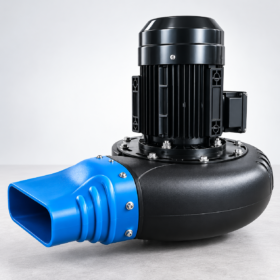


Automatic Car Wash Blower – High-Airflow Drying Blower for Commercial Car Wash Machines

Automatic Car Wash Blower
Reliable Air Dryer Blower Solutions for Tunnel, Touchless, Rollover, and Industrial Car Wash Equipment
An automatic car wash blower is an important part of a modern vehicle drying system. It creates a controlled airflow that helps remove water from vehicle surfaces after washing and rinsing.
In a commercial automatic car wash, the drying stage plays a key role in the customer experience. After the vehicle has been cleaned, water may remain on the body, windows, mirrors, and other exterior surfaces.
A suitable car wash drying blower helps move this water away before the vehicle leaves the washing area.
Therefore, selecting the right blower supports effective water removal, consistent drying performance, and reliable daily equipment operation.
Our automatic car wash blower solutions are intended for a range of vehicle drying applications. These include tunnel car wash systems, touchless car wash machines, rollover washing equipment, and commercial vehicle cleaning facilities.
Whether you need a blower for new equipment or a replacement for an existing drying system, choosing the correct specifications is essential.
Different machines require different airflow, pressure, motor power, and installation arrangements. As a result, the blower should be selected according to the complete drying system rather than motor power alone.
Key Product Highlights
- Blower solutions for automatic car wash drying systems
- Airflow delivery for vehicle surface water removal
- Options for different blower and fan configurations
- Selection based on airflow, pressure, and motor power
- Integration with suitable air ducts and drying nozzles
- Configurations for tunnel, touchless, and rollover systems
- Motor and electrical compatibility review
- Replacement matching for existing car wash dryer assemblies
- OEM technical specification and project inquiries
- B2B procurement and international shipping inquiries
Looking for a suitable automatic car wash blower?
Contact our team with your blower model, airflow requirements, motor specifications, and installation details.
We can help review the technical information needed to identify a suitable drying blower configuration.
Request a Quote | Contact Us | Send Your Blower Specifications
What Is an Automatic Car Wash Blower?
An automatic car wash blower is an air-moving device used to support vehicle drying after washing and rinsing.
It normally consists of a fan or blower assembly driven by an electric motor.
The rotating impeller moves air through the blower housing or air passage.
The airflow is then directed toward the vehicle through suitable outlets, ducts, or drying nozzles.
As air moves across the vehicle surface, it helps push water droplets away.
This reduces the amount of water left on the vehicle after the washing process.
However, drying performance depends on more than the blower itself.
Airflow volume, outlet velocity, nozzle geometry, air pressure, distance from the vehicle, and equipment layout all affect the final result.
Therefore, the blower should be considered part of a complete car wash air drying system.
How Does an Automatic Car Wash Blower Work?
A car wash blower uses an electric motor to rotate an impeller.
As the impeller turns, it transfers energy to the surrounding air.
The blower moves air through its housing and toward the outlet.
The air then passes through a duct or nozzle, depending on the equipment design.
When this airflow reaches the vehicle, it applies force to water droplets and helps move them off the surface.
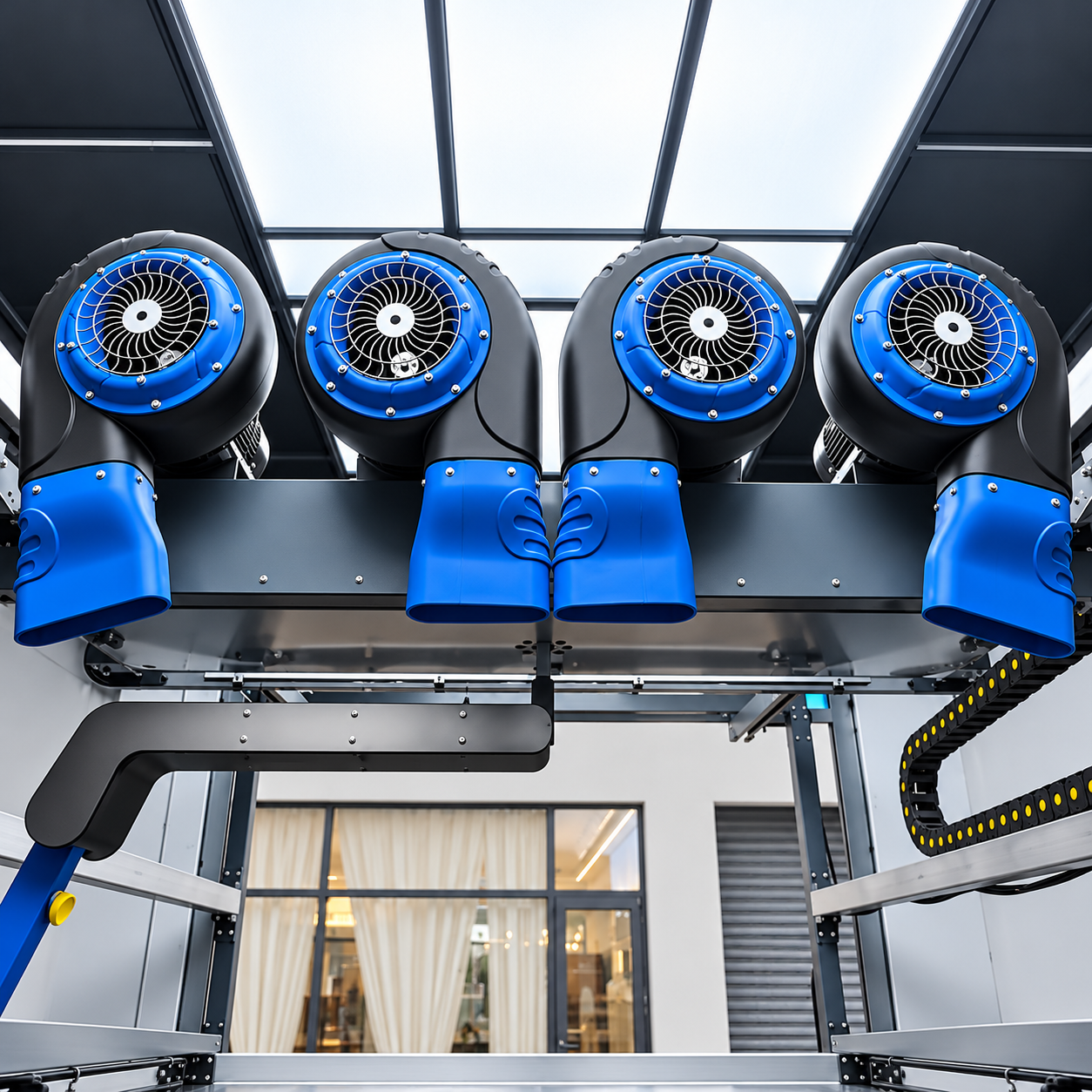
For example, a tunnel car wash may use several blowers positioned above and beside the vehicle.
These blowers work together to direct airflow toward the roof, windows, sides, and other exterior areas.
In some systems, the drying equipment moves around a stationary vehicle. In others, the vehicle moves past fixed blowers.
In simple terms, an automatic car wash blower helps dry vehicles by using a directed stream of moving air to remove surface water.
Key Features of Automatic Car Wash Blowers
1. High Airflow for Vehicle Drying
Airflow is one of the most important factors in car wash drying equipment.
A suitable blower delivers enough air to meet the system’s drying requirements.
For example, a wide drying outlet may require a large air volume to cover the intended vehicle area.
However, airflow alone does not determine drying performance.
The air must also reach the vehicle at a useful velocity and direction.
Therefore, blower sizing should consider the complete air delivery system.
2. Stable Air Pressure
Air pressure is important because ducts, outlets, and nozzles create resistance to airflow.
The blower must overcome this resistance while supplying the required air volume.
For example, a long duct or narrow drying nozzle may require more pressure than a simple open outlet.
Therefore, the selected blower should be evaluated at the intended operating point.
A blower’s maximum free-air airflow does not represent the airflow it will deliver through every installed drying system.
3. Reliable Operation for Commercial Use
Commercial automatic car wash equipment may run through repeated washing and drying cycles every day.
As a result, blowers may face frequent motor starts, changing loads, and demanding operating schedules.
A correctly rated blower and motor help support these conditions.
However, the selected equipment must match the expected duty cycle.
For example, continuous-duty requirements may differ from those of a machine that operates for short periods with breaks between cycles.
4. Efficient Motor and Fan Performance
Electricity is an important operating cost for commercial car wash businesses.
Drying blowers can represent a significant part of the electrical load of a washing system.
Therefore, selecting efficient equipment may help control long-term energy use.
However, energy consumption depends on airflow demand, system pressure, motor efficiency, operating time, and control settings.
The best approach is to evaluate the complete fan and motor assembly.
5. Suitable Design for Wet Environments
Car wash drying equipment operates near water spray, mist, and cleaning chemicals.
Therefore, the blower installation must account for moisture exposure.
The motor, housing, bearings, electrical connections, and protective components should be suitable for the expected environment.
However, a blower installed near water should not automatically be described as waterproof.
The actual protection level depends on the selected model and installation design.
6. Flexible Blower Arrangements
Automatic car wash systems have different equipment layouts.
Some use fixed overhead blower assemblies.
Others use side-mounted blowers or moving drying structures.
In addition, the air may travel through ducts before reaching the vehicle.
Therefore, suitable mounting and outlet arrangements are important for effective integration.
7. Practical Replacement and Maintenance
Many blower systems can be maintained through regular inspection.
Depending on the model, maintenance may include checking bearings, cleaning air passages, inspecting the impeller, and monitoring motor performance.
For replacement projects, matching the original blower dimensions and performance is important.
Main Types of Blowers Used in Automatic Car Wash Systems
Different blower types and layouts are used in vehicle drying equipment.
The best choice depends on the airflow requirements, system resistance, available space, and motor configuration.
Centrifugal Blower for Car Wash Drying
A centrifugal blower uses a rotating impeller to move air outward from its center.
It can produce airflow against pressure resistance in suitable ducted systems.
As a result, centrifugal blowers are commonly used in industrial air-moving applications.
In a car wash drying system, a centrifugal blower may supply air through a duct or shaped outlet.
Its suitability depends on the fan curve, power requirements, and installation design.
Common applications include:
- Ducted vehicle drying systems
- Overhead drying assemblies
- Side air delivery systems
- Commercial vehicle washing equipment
- Selected industrial drying applications
High-Velocity Car Wash Dryer Blower
Some vehicle drying systems use focused, high-velocity air streams.
These systems are designed to move water from vehicle surfaces through controlled air direction.
However, high outlet velocity is not the same as high total airflow.
A narrow nozzle can increase local air velocity while also creating pressure resistance.
Therefore, both airflow and pressure must be considered during blower selection.
Overhead Car Wash Blower
An overhead blower directs air toward the top of the vehicle.
It may help remove water from the roof, windshield, rear glass, and upper body areas.
Depending on the equipment design, the blower may be fixed or mounted on a moving structure.
The outlet shape and distance from the vehicle affect drying performance.
Side Car Wash Blower
Side blowers direct airflow toward the vehicle doors, side windows, and lower body surfaces.
They may operate together with overhead blowers to improve drying coverage.
However, the number and placement of blowers depend on the equipment design.
The correct configuration should be evaluated for the intended vehicle sizes.
Automatic Car Wash Blower Motor Assembly
A blower motor assembly combines an electric motor with an impeller and related mechanical components.
Some assemblies also include a housing, outlet, and mounting structure.
For replacement projects, buyers should confirm whether they need the complete blower assembly or only the motor.
A motor alone cannot replace a complete blower without checking mechanical compatibility.
Industrial Air Blower for Commercial Vehicle Wash Systems
Truck and bus washing systems may require airflow over larger vehicle surfaces.
These applications may use different blower arrangements or operating capacities.
However, larger motor power does not automatically guarantee better drying.
The full system must be designed for the required vehicle coverage and air delivery.
Technical Specifications – Automatic Car Wash Blower
The technical specifications of a car wash blower depend on its design and intended application.
The following table outlines the main parameters required for product selection.
| Specification | Description |
|---|---|
| Product Name | Automatic Car Wash Blower |
| Product Category | Industrial Air Blower / Vehicle Dryer Blower |
| Blower Type | Centrifugal / Other Suitable Fan Design |
| Airflow Capacity | According to selected blower model |
| Static Pressure | Based on blower performance and system requirements |
| Total Pressure | According to selected product performance data |
| Motor Power | Matched to blower operating requirements |
| Rated Voltage | According to motor model and destination market |
| Frequency | Model-specific 50 Hz / 60 Hz compatibility |
| Motor Phase | Single-Phase / Three-Phase, where available |
| Rated Speed | According to motor and blower design |
| Impeller Diameter | Model-specific |
| Impeller Material | According to selected design |
| Housing Material | According to model specification |
| Motor Efficiency | According to selected motor data |
| Electrical Protection | Model-specific |
| Noise Level | Based on stated measurement conditions |
| Motor Duty Rating | According to selected model |
| Mounting Type | According to blower configuration |
| Air Outlet Design | Direct Outlet / Ducted / Nozzle Assembly |
| Speed Control | Where supported by motor and drive |
| Operating Temperature | According to product rating |
| Installation Environment | Based on environmental protection requirements |
| Application | Automatic Car Wash Drying Equipment |
| OEM Requirements | Subject to technical review |
| Replacement Matching | Specification and dimensional review |
Technical Note: This table is a product selection guide. Final airflow, pressure, motor power, noise, efficiency, dimensions, and certifications must be verified using the actual model datasheet.
Understanding Airflow, Static Pressure, and Blower Power
A blower should not be selected by motor power alone.
Several technical parameters affect its performance.

Automatic Car Wash Blower
What Is Airflow Capacity?
Airflow capacity describes how much air a blower moves during a given period.
Common units include cubic meters per hour (m³/h), cubic feet per minute (CFM), and cubic meters per second (m³/s).
For example, a car wash drying system with several outlets may require a larger total air volume.
However, the blower must deliver that flow against the resistance of the installed system.
Therefore, buyers should review the blower performance curve.
What Is Static Pressure?
Static pressure describes one part of the pressure available in a moving air system.
Ducts, bends, filters, and nozzles can create pressure losses.
A suitable blower must overcome these losses to deliver the required flow.
However, static pressure, total pressure, and outlet velocity pressure are different quantities.
Buyers should use consistent test definitions when comparing blower specifications.
How Does Motor Power Affect Drying?
Motor power supports the mechanical energy required to move air.
However, two blower designs with similar motor power can deliver different airflow and pressure.
Impeller design, efficiency, rotational speed, and system resistance all affect performance.
Therefore, higher motor power does not automatically mean faster vehicle drying.
What Is a Blower Performance Curve?
A blower performance curve shows the relationship between airflow and pressure at specified operating conditions.
It may also provide information about power demand and efficiency.
The actual operating point occurs where the blower performance meets the system resistance.
Therefore, buyers should request the relevant curve when selecting a blower for an OEM drying system.
Why Does Outlet Design Matter?
The outlet controls where and how the air reaches the vehicle.
For example, a narrow air blade may produce a focused stream.
A wider outlet may cover a larger area but require a different airflow and pressure balance.
Therefore, air nozzle design should be reviewed together with blower capacity.
How to Choose the Right Automatic Car Wash Blower
Choosing the correct blower requires a clear understanding of the drying system.
Step 1: Identify the Car Wash Machine Type
First, confirm whether the blower will be used in a tunnel, touchless, rollover, or other automatic car wash system.
Different systems have different drying layouts.
Step 2: Determine the Required Drying Coverage
Next, identify the vehicle areas that need airflow.
For example, the system may require overhead drying, side drying, or complete vehicle coverage.
The vehicle size range should also be considered.
Step 3: Calculate the Required Airflow
Estimate the air volume needed for the intended drying process.
The required flow depends on the outlet design, number of blowers, and desired drying performance.
Step 4: Review System Pressure Losses
Check the resistance created by ducts, bends, and drying nozzles.
Select a blower that can deliver the required airflow at the expected pressure.
Step 5: Confirm Motor Specifications
Review voltage, frequency, motor power, rated speed, and phase.
For export equipment, confirm compatibility with the destination market.
Step 6: Check Installation Space
Measure the available space and mounting points.
Also, confirm inlet and outlet orientation.
For replacement projects, dimensional compatibility is especially important.
Step 7: Review Noise Requirements
Commercial car wash facilities may have limits on operational noise.
Therefore, the selected blower should be reviewed using noise data measured under stated conditions.
Step 8: Consider Environmental Conditions
Review moisture, water spray, temperature, corrosion exposure, and ventilation.
The blower and motor must be suitable for the actual installation environment.
Step 9: Confirm Technical Documentation
Finally, check the datasheet, performance curve, drawings, and relevant electrical documents before ordering.
Applications of Automatic Car Wash Blowers
Tunnel Automatic Car Wash Systems
Tunnel car wash systems move vehicles through washing, rinsing, and drying stages.
Drying blowers are commonly installed near the end of the tunnel.
As a vehicle passes through the drying area, the blowers direct airflow over different body surfaces.
Some systems use overhead blowers and side blowers together.
Therefore, blower placement and airflow direction are important for drying coverage.
Touchless Automatic Car Wash Systems
Touchless car wash equipment cleans vehicles without brushes contacting the body.
After rinsing, an air drying system may remove surface water.
Depending on the machine design, the blower may be fixed or installed on a moving gantry.
The drying result depends on airflow, nozzle geometry, vehicle shape, and wash cycle timing.
Rollover and In-Bay Car Wash Machines
Rollover car wash machines operate around a stationary vehicle.
Some designs use moving air dryer assemblies.
In these systems, the blower must match the gantry’s installation space, weight capacity, and electrical system.
Gas Station Automatic Car Wash Equipment
Gas stations often offer automatic car washing as an added service.
A suitable drying system can help provide a more convenient customer experience.
However, drying effectiveness depends on the entire equipment setup.
Commercial Fleet Washing Facilities
Fleet washing facilities may clean vans, buses, trucks, and other commercial vehicles.
These vehicles have different sizes and shapes.
Therefore, the blower system should be selected for the required drying coverage.
Car Wash Equipment Replacement Projects
Maintenance providers may need replacement blowers when existing equipment fails.
In these cases, matching airflow, pressure, motor specifications, dimensions, and outlet design is important.
Why Choose the Right Automatic Car Wash Blower?
Effective Water Removal
A properly selected blower helps move water away from vehicle surfaces.
This supports the drying stage of the automatic washing process.
Stable Drying Performance
Correct airflow and outlet design help provide consistent air delivery.
However, the result depends on vehicle geometry and wash conditions.
Suitable Performance for Commercial Duty
A blower selected for the expected operating cycle can support reliable daily operation.
Correct motor and fan sizing are important.
Better Energy Management
Efficient blower selection may help reduce unnecessary electrical energy use.
However, actual savings depend on the equipment design and operating profile.
Flexible Equipment Integration
Different blower configurations can match different machine layouts.
This helps OEM manufacturers design suitable drying systems.
Easier Replacement Planning
Clear technical specifications make it easier to identify compatible replacement blowers.
This supports maintenance and repair planning.
Automatic Car Wash Blower vs. Fan vs. Air Dryer
These terms are related but do not always describe the same product.
| Term | Meaning | Typical Role |
|---|---|---|
| Blower | Device that moves air against system resistance | Air delivery for drying |
| Fan | General term for an air-moving machine | Airflow generation |
| Air Dryer System | Complete assembly that removes surface water | Vehicle drying process |
| Blower Motor | Motor that drives the impeller | Mechanical power source |
| Air Nozzle | Outlet that directs air | Airflow distribution |
| Air Knife | Shaped outlet producing a focused air stream | Targeted water removal |
An automatic car wash blower is one part of the air drying system.
Therefore, buyers should confirm whether the quotation includes the blower alone, the motor, the duct, or a complete drying assembly.
Energy Efficiency and Noise Control
Energy and noise are important considerations for commercial automatic car wash operations.
Matching the Blower to the System
An oversized blower may increase purchase cost and energy demand without providing a matching improvement in drying performance.
Meanwhile, an undersized blower may not deliver enough airflow at the required pressure.
Therefore, selecting the correct operating point is important.
Variable Speed Operation
Some blower motor systems support variable frequency drives.
This may allow airflow to be adjusted according to the operating program.
However, variable-speed operation must be approved for the selected motor and blower assembly.
Noise Reduction
Blower noise depends on impeller design, rotational speed, airflow conditions, mounting, and system layout.
Noise control may involve suitable fan selection, vibration isolation, duct design, or acoustic treatment.
However, these measures must not create excessive airflow resistance or unsafe operating conditions.
Efficient Drying System Design
Good drying performance depends on the complete system.
Blower efficiency, nozzle design, equipment timing, and vehicle coverage all matter.
Therefore, an efficient blower should be evaluated as part of the full automatic car wash drying process.
Automatic Car Wash Blower Materials and Environmental Protection
Car wash drying equipment often operates near water, mis

Automatic Car Wash Blower
Therefore, blower materials and protection features should match the working environment.
Housing Materials
Blower housings may use steel, aluminum, stainless steel, or other suitable materials.
The correct choice depends on the mechanical design, corrosion exposure, and installation requirements.
Impeller Materials
Impellers may use metal or other engineered materials.
However, strength, balance, corrosion resistance, and maximum operating speed must be considered.
Motor Protection
The motor must be suitable for its installation location.
Relevant considerations include enclosure protection, cooling, temperature, and electrical connections.
Corrosion Resistance
Protective coatings and suitable materials may help reduce corrosion.
However, cleaning chemicals can affect different materials in different ways.
Therefore, chemical compatibility must be verified.
Vibration Control
An unbalanced impeller or damaged bearing may cause excessive vibration.
This can affect equipment performance and component life.
Regular inspection and correct installation are important.
Automatic Car Wash Blower Maintenance Guide
Regular maintenance helps support blower reliability.
Inspect the Impeller
Check for dirt buildup, damage, or signs of imbalance.
Contamination can affect airflow and vibration.
Check Air Inlets and Outlets
Blocked air passages can reduce performance.
Therefore, keep inlets and outlets clear according to the manufacturer’s instructions.
Monitor Motor Temperature
Unusual temperature rise may indicate overload, cooling problems, or electrical faults.
Inspect the complete drive system when abnormal heating occurs.
Check Bearings
Bearing condition affects vibration and equipment reliability.
Follow the manufacturer’s inspection and lubrication instructions.
Inspect Mounting Hardware
Loose mounting points may cause unwanted vibration.
Therefore, inspect brackets, bolts, and supports during routine maintenance.
Review Electrical Connections
Moisture and vibration may affect electrical connections.
Electrical inspections should be performed by qualified personnel under safe isolation procedures.
Follow Safe Maintenance Procedures
Before maintenance, isolate electrical power and wait for the impeller to stop completely.
Never operate a blower with removed guards or unsafe access to rotating components.
Automatic Car Wash Blower Replacement Guide
Replacing a car wash dryer blower requires careful technical matching.
A blower with similar dimensions may deliver different airflow or pressure.
Therefore, buyers should not select a replacement by appearance or motor power alone.
Information Needed for Replacement
- Original blower manufacturer and model
- Blower type
- Rated airflow
- Required static or total pressure
- Motor power
- Voltage and frequency
- Rotational speed
- Inlet and outlet dimensions
- Mounting arrangement
- Housing and impeller details
- Operating duty
- Original equipment model
Photos of the existing blower, motor nameplate, and installation can also help identify a suitable replacement.
Common Signs of Blower Problems
A blower may require inspection if the equipment shows:
- Weak drying airflow
- Unusual noise
- Excessive vibration
- Motor overheating
- Reduced drying performance
- Damaged impeller
- Electrical trips
- Unexpected shutdowns
However, these symptoms may also result from blocked air passages, poor electrical supply, damaged bearings, or incorrect control settings.
Therefore, the complete drying system should be inspected.
OEM Automatic Car Wash Blower Solutions
Automatic car wash machine manufacturers need blower assemblies that match their equipment designs.
For OEM projects, blower selection should begin with the required airflow and pressure.
The design must also account for installation space, motor compatibility, noise, and maintenance access.
OEM Technical Requirements
Please provide:
- Automatic car wash machine type
- Blower application
- Required airflow
- Required static or total pressure
- Motor power and electrical supply
- Inlet and outlet dimensions
- Mounting requirements
- Operating duty
- Environmental conditions
- Required quantity and destination market
These details help support accurate technical evaluation.
Replacement Blowers for Equipment Distributors
Equipment distributors may need replacement drying blowers for different automatic car wash machine models.
Clear model numbers, drawings, and performance data help simplify purchasing.
Blower Solutions for Maintenance Companies
Maintenance providers often need blower parts to restore drying performance.
For replacement inquiries, provide the original blower model and installation details.
European and North American Market Considerations
International buyers should confirm that automatic car wash blowers meet their destination market’s technical requirements.
Automatic Car Wash Blowers for Europe
European equipment projects often use 50 Hz electrical systems.
However, exact motor voltage and electrical requirements vary.
Industrial fans and blower assemblies may also fall within relevant EU energy efficiency and product safety requirements.
Therefore, manufacturers and buyers should verify the applicable rules for each selected model.
Automatic Car Wash Blowers for the United States and Canada
North American projects may use 60 Hz electrical supplies and NEMA-based motor configurations.
However, motor voltage, mounting dimensions, and electrical safety requirements vary by installation.
Buyers should confirm the complete electrical specification before purchasing.
International OEM Projects
For export equipment, fan and motor compatibility should be reviewed during machine design.
This helps avoid electrical, mechanical, and performance problems after delivery.
Frequently Asked Questions About Automatic Car Wash Blowers
1. What is an automatic car wash blower?
An automatic car wash blower is an air-moving device used to remove water from vehicles after washing and rinsing. It directs airflow toward the vehicle surface to help improve drying performance.
2. How does a car wash dryer blower work?
A motor rotates an impeller to move air through the blower assembly. The air travels through outlets or ducts and reaches the vehicle surface, where it helps push water droplets away.
3. What type of blower is used in automatic car wash machines?
Different systems use different blower configurations, including centrifugal blowers and specialized vehicle drying fans. The correct type depends on airflow, pressure, installation space, and drying requirements.
4. How do I choose the right automatic car wash blower?
Check the required airflow, static pressure, motor power, voltage, installation dimensions, and operating duty. You should also consider noise and environmental conditions.
5. What airflow is required for a car wash blower?
The required airflow depends on the number of drying outlets, nozzle design, vehicle size, and system layout. There is no single airflow value suitable for every automatic car wash machine.
6. Does a more powerful blower provide better drying?
Not always. Motor power alone does not determine drying performance. Airflow, pressure, nozzle design, and blower efficiency also matter.
7. Are automatic car wash blowers waterproof?
Not all blowers are waterproof. Some models offer suitable protection for wet environments. However, the actual protection level depends on the motor, housing, connections, and installation conditions.
8. Can I replace my existing car wash blower with another brand?
A compatible replacement may be possible. However, airflow, pressure, voltage, dimensions, motor speed, and mounting requirements must match the existing system.
9. Why is my car wash blower making noise?
Possible causes include bearing wear, impeller damage, imbalance, loose mounting hardware, or airflow restrictions. Inspect the complete blower assembly to identify the cause.
10. How long does an automatic car wash blower last?
Service life depends on blower design, operating hours, environmental conditions, maintenance, and motor quality. Regular inspection and correct installation help reduce premature failures.
11. Can a car wash blower operate continuously?
Some industrial blowers are suitable for continuous operation. However, the motor and blower must remain within their rated operating limits.
12. Can automatic car wash blowers use variable speed control?
Some blower systems support compatible variable frequency drives. However, the motor and blower must be designed for the intended speed range.
13. Are blowers suitable for tunnel and touchless car wash machines?
Yes. Suitable drying blowers may be used in tunnel, touchless, rollover, and other automatic car wash systems. The configuration depends on the equipment design.
14. Can blowers be supplied for OEM automatic car wash projects?
OEM blower inquiries can be reviewed based on airflow, pressure, motor requirements, installation dimensions, and order quantity. Available options depend on the actual product range.
15. How can I request a quote for an automatic car wash blower?
Send us the blower type, airflow, pressure, motor specifications, mounting details, quantity, and delivery destination. Photos or drawings of the original blower are helpful for replacement projects.
Packing & Delivery
Secure Packaging for Automatic Car Wash Blowers
Automatic car wash blowers contain precision rotating components, motors, housings, and electrical parts.
Therefore, suitable packaging is important during handling and international transportation.
Packaging options may include:
- Protective wrapping for blower housings
- Suitable cushioning materials
- Protection for impellers and air outlets
- Strong cartons for compact blower assemblies
- Wooden cases for heavy or large blower units
- Pallet packaging for bulk orders
- Moisture protection where required
- OEM packaging arrangements, subject to confirmation
The final packaging method depends on blower size, weight, and shipment requirements.
International Shipping & Delivery
We welcome shipping inquiries from customers in Europe, North America, and other international markets.
Depending on shipment size and destination, suitable shipping options may include:
- Sea Freight: Suitable for large blower assemblies and bulk orders
- Air Freight: An option for urgent replacement projects
- Express Delivery: Suitable for compact blowers and spare parts, subject to carrier limits
Lead Time & Order Processing
Delivery times depend on blower specifications, motor configuration, order quantity, stock availability, and project requirements.
Estimated production times and shipping arrangements will be confirmed during quotation.
OEM & Bulk Order Packaging
For automatic car wash manufacturers, equipment distributors, and wholesale buyers, packaging requirements may be reviewed according to project needs.
Suitable packaging helps protect blower assemblies during storage and transportation.
Why Choose Us for Automatic Car Wash Blower Inquiries?
Choosing the right blower is an important part of reliable automatic car wash drying equipment.
The selected blower must match the required airflow, pressure, motor specifications, installation layout, and operating environment.
We welcome technical inquiries from:
- Automatic car wash machine manufacturers
- Car wash equipment distributors
- Industrial blower importers
- Car wash maintenance companies
- Equipment repair service providers
- Vehicle drying system integrators
- Commercial car wash operators
- Fleet washing equipment buyers
For OEM and replacement projects, accurate technical information helps identify suitable blower configurations.
Request a Quote for Automatic Car Wash Blowers
Find the Right Drying Blower for Your Automatic Car Wash Equipment
Automatic Car Wash Blower
Are you looking for a commercial car wash dryer blower, centrifugal blower, complete motor-blower assembly, or compatible replacement unit?
We welcome inquiries for OEM equipment projects, maintenance, and wholesale purchasing.
Please provide:
- Car wash machine type
- Blower application
- Required airflow
- Static or total pressure
- Motor power and electrical requirements
- Inlet and outlet dimensions
- Mounting configuration
- Original blower model, if available
- Required quantity
- Delivery destination
Our team can review the information and provide details about suitable blower options.
Contact Us Today
Explore automatic car wash blower solutions for commercial vehicle drying systems and discuss your technical requirements with our team.
Request a Quote | Contact Us | Send Your Specifications
A correctly selected automatic car wash blower helps support effective water removal, reliable drying performance, and efficient car wash equipment operation.