

Reliable Drive Motor for Automatic Car Wash Equipment
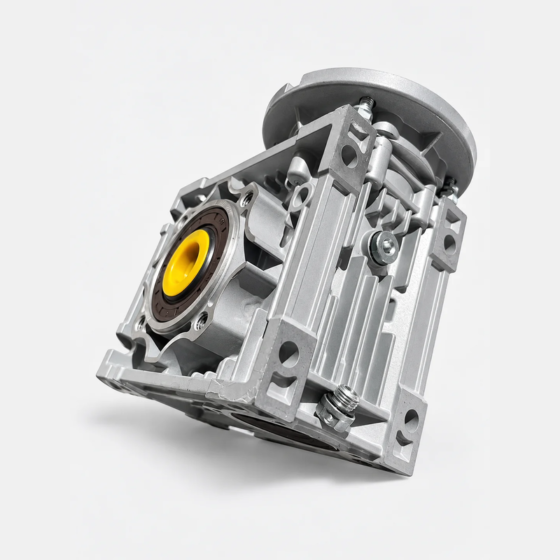
Looking for a reliable motor for an automatic car wash machine? Our industrial car wash motors are designed for equipment manufacturers, system integrators, maintenance teams, and car wash solution providers. They support the drive functions of automatic vehicle washing systems and can be selected to match different machine designs and operating needs.
A suitable car wash machine motor helps keep mechanical systems moving smoothly. It also supports stable equipment operation when correctly matched with the load, duty cycle, control system, and installation environment.
Whether you are building a new automatic car wash system or replacing an existing drive motor, we can help you identify the right motor solution for your application.

Motor for automatic car wash machine
Key product benefits:
- Designed for integration into automatic car wash equipment
- Motor options based on power, voltage, speed, and mounting requirements
- Suitable for OEM projects and industrial equipment applications
- Selection support for different drive loads and operating conditions
- Custom specifications available upon technical review
- Technical documentation and quotation support for B2B buyers
Request a Quote | Send Your Motor Specifications
1. Product Overview: Industrial Motor for Automatic Car Wash Machines
An automatic car wash machine uses several drive systems to control the movement of brushes, conveyors, pumps, dryers, and other mechanical components. Each drive function has its own load and speed requirements. Therefore, choosing the right motor is an important step in equipment design and maintenance.
Our motor solutions for automatic car wash machines are intended for industrial equipment applications. Depending on the required configuration, the motor can be selected for use in suitable drive assemblies, mechanical transmission systems, and automated washing equipment.
In addition, we support application-based motor selection. Instead of choosing a motor by power alone, buyers can consider torque, starting conditions, speed control, mounting space, operating frequency, and environmental exposure.
As a result, equipment manufacturers and maintenance teams can make a more informed purchasing decision.
2. Key Features and Technical Advantages
2.1 Motor Specifications Matched to Your Application
Different car wash systems require different drive characteristics. For example, a brush drive may need suitable starting torque, while a conveyor system may require controlled movement and stable speed.
We can review your application requirements and recommend a motor configuration based on the available technical data.
Typical selection factors include:
- Rated power and output torque
- Rated voltage and operating frequency
- Rated speed and required speed range
- Starting method and control requirements
- Mounting dimensions and shaft configuration
- Duty cycle and expected operating hours
- Ambient temperature and moisture exposure
This approach helps reduce the risk of selecting an unsuitable motor for your equipment.
2.2 Designed for Demanding Equipment Environments
Automatic car wash equipment operates around water, detergents, spray systems, and changing temperatures. For this reason, the installation environment should be reviewed before a motor is selected.
Depending on the application, buyers may require a suitable enclosure, insulation system, corrosion protection, cable entry arrangement, or sealing solution.
However, not every motor offers the same level of protection. The required IP rating and other environmental features should be confirmed for the selected model. Proper installation and maintenance are also important for long-term operation.
2.3 Compatible with Suitable Drive and Control Systems
Modern car wash systems often use motor starters, contactors, variable frequency drives (VFDs), or other control devices. The right configuration depends on the machine design and the required motion profile.
When selecting a motor for VFD operation, buyers should check the motor’s speed range, cooling method, insulation system, and compatibility with the drive.
Furthermore, mechanical compatibility matters. Shaft dimensions, mounting type, gearbox ratios, and coupling design should all be reviewed before installation.
Our team can assess these details to help you identify a suitable motor for your equipment.
2.4 Options for OEM and Custom Projects
OEM manufacturers often need motors that fit a specific machine layout. In these cases, standard electrical ratings may not be enough.
Subject to technical feasibility, project requirements may include alternative mounting dimensions, shaft configurations, cable arrangements, electrical ratings, or other application-specific features.
Please provide your drawings, existing motor nameplate, or equipment model. This information helps us review the application and determine which options may be available.
3. Applications of Motors for Automatic Car Wash Machines
A car wash system contains multiple mechanical and electrical components. The motor must match the function it is expected to perform.
Automatic Roll-Over Car Wash Systems
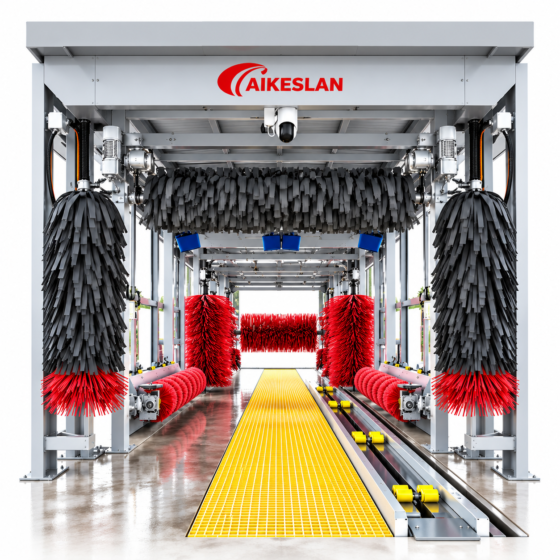
Roll-over car wash machines move a washing gantry around a stationary vehicle. Depending on the machine design, motors may be used in gantry movement, brush rotation, or other drive assemblies.
A suitable motor should match the mechanical load, required speed, operating cycle, and control method.
Tunnel Car Wash Conveyor Systems
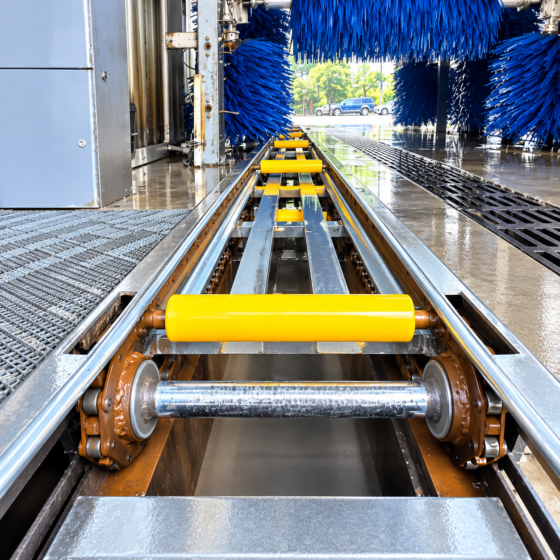
Tunnel car wash systems move vehicles through a sequence of washing, rinsing, and drying stages. Conveyor drives require careful motor and transmission selection.
Important factors include starting torque, conveyor load, operating speed, reduction ratio, and the required level of motion control.
Brush and Wheel Washing Systems
Brush systems use rotating components to clean vehicle surfaces and wheels. Their motor requirements depend on brush size, contact load, transmission design, and operating speed.
Correct motor selection helps ensure that the drive system meets the intended mechanical requirements.
Drying and Auxiliary Drive Systems
Some automatic car wash machines use motors in air-handling equipment, positioning mechanisms, or other auxiliary assemblies. These applications can have different speed, power, and cooling requirements.
The motor should therefore be selected according to the actual function and equipment specifications.
Important: The motor’s suitability for each application must be confirmed through a review of the load, mounting arrangement, electrical supply, control system, and operating environment.
4. Technical Specifications
The following table lists the main parameters used when selecting an industrial motor for an automatic car wash machine. Final values depend on the selected model.
| Parameter | Specification |
|---|---|
| Product Type | Motor for Automatic Car Wash Machine |
| Motor Type | To be confirmed by model |
| Rated Power | To be confirmed |
| Rated Voltage | To be confirmed |
| Rated Frequency | To be confirmed |
| Rated Speed | To be confirmed |
| Rated Torque | To be confirmed |
| Efficiency Class | To be confirmed |
| Protection Rating | To be confirmed |
| Insulation Class | To be confirmed |
| Mounting Type | To be confirmed |
| Shaft Dimensions | To be confirmed |
| Speed Control | To be confirmed |
| Operating Duty | To be confirmed |
| Ambient Temperature | To be confirmed |
| Certifications | To be confirmed by model and target market |
For accurate motor selection, please share the equipment model, motor nameplate, required output, and installation dimensions. We can then review the available specifications and identify a suitable configuration.
5. How to Choose the Right Car Wash Machine Motor

Motor for automatic car wash machine
Choosing a motor involves more than matching the rated power. The following steps can help you make a better decision.
Step 1: Identify the drive function.
Determine whether the motor will drive a brush, conveyor, pump, dryer, gantry, or another component. Each function has different operating needs.
Step 2: Confirm the electrical supply.
Check the available voltage, frequency, phase, starting method, and control equipment. These details are especially important when replacing an existing motor.
Step 3: Calculate the required torque and speed.
Review the mechanical load, gearbox ratio, acceleration needs, and target operating speed. A motor that has enough rated power may still be unsuitable if its torque characteristics do not match the application.
Step 4: Check the installation dimensions.
Confirm the mounting type, shaft diameter, shaft length, flange dimensions, and available space. This step helps reduce installation changes and unnecessary downtime.
Step 5: Review the operating environment.
Consider water spray, detergent exposure, humidity, temperature, and cleaning procedures. Select the protection level and materials according to the actual conditions.
Step 6: Confirm the control method and duty cycle.
If the motor will operate with a VFD, verify that the selected motor supports the intended speed range and cooling arrangement. Also, check the expected start-stop frequency and operating hours.
By following these steps, you can improve motor compatibility and reduce the risk of avoidable selection errors.
6. Why Work with Us for Your Car Wash Motor Requirements?
Choosing a motor supplier is not only about the product itself. Technical communication, specification review, and supply coordination also matter.
We support B2B buyers who need to identify a motor for a new machine, an OEM project, or an existing equipment replacement.
Application-Based Technical Support
We review your application details before recommending a motor. This helps align the proposed configuration with the actual mechanical and electrical requirements.
OEM Project Coordination
For equipment manufacturers, early technical communication can help identify installation constraints and specification gaps before an order is placed.
Support for Replacement Motor Selection
If you need to replace an existing car wash motor, the nameplate, photographs, mounting dimensions, and shaft details can help us check compatibility.
Clear Specification Review
A clear specification sheet helps purchasing teams, engineers, and maintenance staff compare motor options and confirm the requirements before ordering.
Support for International B2B Enquiries
For buyers in North America and Europe, we can review the technical information needed for project evaluation. Available documentation, product options, lead times, packaging, and delivery terms should be confirmed for each order.
7. Motor Selection for European and North American Markets

Motor for automatic car wash machine
Industrial buyers in Europe and North America may have different electrical, safety, and documentation requirements. Therefore, market compliance should be reviewed before the motor is specified.
European Market Considerations
For projects in the European Union, buyers should check the applicable electrical requirements, product conformity obligations, efficiency rules where relevant, and installation conditions.
Depending on the product type and intended use, relevant standards or regulatory requirements may include IEC motor standards, applicable EU legislation, and requirements for the complete machine.
Do not assume that a motor is CE compliant simply because it is intended for industrial use. The applicable requirements and supporting documentation must be confirmed for the specific product and intended installation.
North American Market Considerations
For the United States and Canada, buyers should confirm the required voltage, frequency, enclosure rating, motor efficiency, and applicable electrical approvals.
Depending on the project, requirements may involve NEMA design or dimensional considerations, UL or CSA certification, or approval by the relevant authority having jurisdiction.
Not every project requires the same approvals. Therefore, the motor and its intended use should be reviewed against the applicable local rules before purchase.
Documentation for Procurement and Engineering
Depending on the selected model and order, useful documents may include:
- Motor datasheet and nameplate information
- Outline drawing and mounting dimensions
- Wiring diagram and connection instructions
- Operating and maintenance manual
- Test records or inspection documents, where available
- Applicable declarations and certificates, where required
Please confirm document availability and certification scope before placing an order.
8. Frequently Asked Questions
What type of motor is used in an automatic car wash machine?
The motor type depends on the drive function and machine design. Automatic car wash systems may use different motors for brushes, conveyors, pumps, dryers, and auxiliary mechanisms. The correct choice depends on the load, speed, control method, and operating environment.
How do I choose a motor for an automatic car wash machine?
Start with the drive function, required power, output torque, rated speed, electrical supply, and mounting dimensions. Then check the duty cycle, environmental protection, and control system. If you are replacing a motor, provide the existing nameplate and installation measurements.
Can the motor work with a variable frequency drive?
That depends on the selected motor model and the required operating range. Before using a VFD, confirm the motor’s electrical design, cooling method, insulation system, speed limits, and drive compatibility.
Is the motor suitable for wet environments?
Suitability depends on the enclosure, sealing, materials, installation, and exposure conditions. Check the specified IP rating and other environmental limits for the exact model. A general industrial motor should not automatically be assumed suitable for direct water spray.
Can you supply a replacement motor for an existing car wash machine?
Replacement selection may be possible if the electrical and mechanical requirements can be matched. Please provide the motor nameplate, equipment brand and model, mounting dimensions, shaft details, and photographs of the existing installation.
Can the motor be customized for OEM equipment?

Motor for automatic car wash machine
Customization depends on the motor design and production capabilities available for the project. Send your technical drawings, required ratings, mounting details, and estimated order quantity so that the available options can be reviewed.
What information is needed for a quotation?
To help us prepare a suitable proposal, please provide the required motor quantity, rated power, voltage, frequency, speed, mounting type, application, delivery destination, and any certification requirements. If some information is unavailable, an existing motor nameplate or equipment drawing is a useful starting point.
9. Request a Quote for an Automatic Car Wash Machine Motor
Need a motor for a new automatic car wash system or a replacement project?
Send us your motor specifications or equipment details. Our team can review your requirements and help identify a suitable motor configuration for your application.
To speed up the quotation process, please include:
- Application and equipment model
- Required motor power, voltage, frequency, and speed
- Existing motor nameplate, if available
- Mounting and shaft dimensions
- Expected operating conditions
- Required certificates or technical documents
- Order quantity and delivery country
With this information, we can review the technical requirements and discuss the next steps for your project.
Contact Us Today to Discuss Your Car Wash Motor Requirements.
Final motor specifications, compatibility, certifications, availability, and delivery terms are subject to confirmation for the selected model and order.