 Aikeslan | Fully Automatic Car Wash Machine Manufacturer
What Should Buyers Know About Automatic Car Wash Machine Operating Modes?
2026 Technical Buying Guide to Automatic Car Wash Operating Modes, PLC Control, Manual Operation, Maintenance Functions, Safety, and Commercial Performance
Introduction: Why Operating Modes Matter When Buying an Automatic Car Wash Machine
An automatic car wash machine does not always operate in the same way. During normal service, it may follow a preset washing program. When technicians inspect the equipment, they may need a different control method. If a fault occurs, the machine must respond according to its designed fault-handling and safety functions.
These different ways of working are called operating modes.
For commercial buyers, understanding these modes is important. They affect how the machine is controlled, who can operate it, what happens during maintenance, and how the equipment returns to service.
However, buyers often focus first on cleaning speed, water pressure, brush design, and purchase price. The control system may receive less attention.
That can be a mistake.
A machine with unclear controls may create extra work for employees. It may also make fault diagnosis harder. In addition, poor mode management can lead to confusion during service and machine recovery.
This is why automatic car wash operating modes should be part of every serious equipment evaluation.
For gas stations, commercial car wash centers, dealerships, and fleet operators, a suitable machine should have operating functions that match the site and its staff.
However, not every machine offers the same modes. Some functions may be optional. Others may use different names across brands.
Therefore, buyers should request model-specific documentation.
This guide explains common operating modes, the role of PLC and HMI technology, the difference between operating modes and wash programs, and the questions to ask a manufacturer.
It also covers safety, maintenance, overseas installation, and commercial buying decisions for the United States, Canada, the United Kingdom, and European Union.
Quick Answer: What Are Automatic Car Wash Machine Operating Modes?
Automatic car wash operating modes describe the different control states or methods used to run, inspect, configure, or service a machine.
Depending on its design, a commercial automatic car wash may provide:
- Automatic mode: Runs approved washing programs under defined operating conditions.
- Manual or jog mode: Allows authorized personnel to control selected functions for approved tasks.
- Setup mode: Supports certain adjustments or commissioning activities.
- Maintenance or service mode: Supports defined service procedures with appropriate protective measures.
- Standby or ready state: Keeps the equipment prepared for a new operation.
- Fault state: Restricts or stops functions when a specified problem is detected.
- Remote monitoring: Shows machine status or selected diagnostic information, where supported.
These terms are not universal product specifications. The actual functions depend on the model.
Also, a wash package such as Basic Wash or Premium Wash is not the same as an equipment operating mode.
The key buying question is whether each mode has a clear purpose, suitable access control, appropriate safeguards, and a documented way to return to normal operation.
1. What Is an Operating Mode in an Automatic Car Wash?
An operating mode defines how the equipment responds to commands and manages its functions.
For example, automatic mode may coordinate the entire washing process. A controlled manual function may let a trained technician move one approved component during inspection.
However, these activities require different control logic.
They may also require different protective measures.
Therefore, the manufacturer should clearly describe what each mode allows.
A useful mode description explains who can select it, which functions are available, and what conditions must be satisfied before movement can begin.
It should also explain what happens when the operator changes modes.
Clear mode definitions make training and daily operation easier.
They also help buyers compare machines from different suppliers.
2. Operating Modes Are Not the Same as Wash Programs
This distinction is important.
An operating mode controls the way the machine is operated.
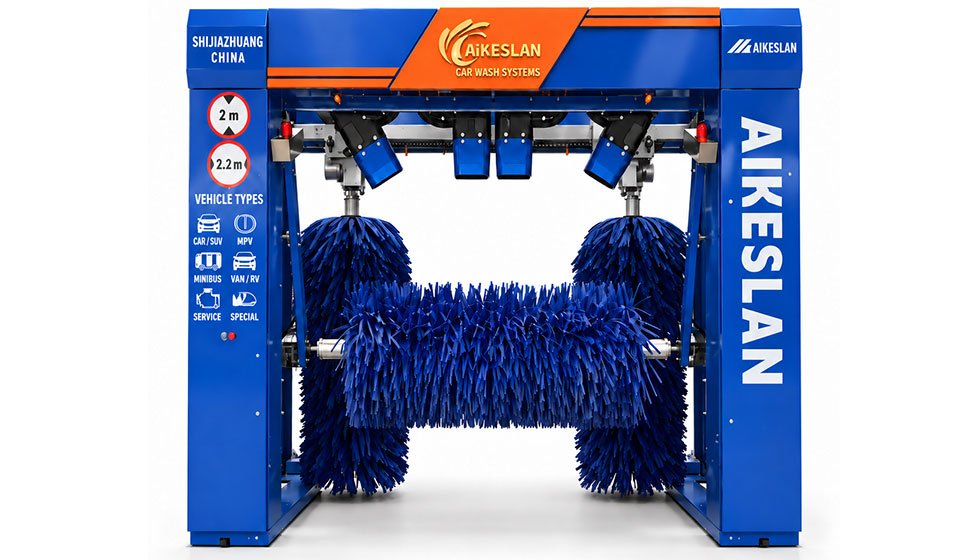
Reciprocating Automatic Car Wash
A wash program determines which cleaning services the customer receives.
For example, automatic mode may run a Basic Wash or Premium Wash program.
The Basic Wash may include pre-soak, main cleaning, and rinse.
The Premium Wash may add an optional finishing treatment or longer drying stage.
However, both programs may run under the same automatic operating mode.
By contrast, maintenance mode serves a different purpose. It is not a service package for customers.
Buyers should request separate information about machine modes and wash packages.
This prevents confusion when reviewing product brochures and technical proposals.
3. Automatic Mode: The Main Commercial Operating Function
Automatic mode is normally used during routine customer washing.
After the required conditions are met, the control system coordinates the selected wash program.
For example, it may start water pumps, operate valves, move a gantry, and activate blowers.
Sensors provide feedback during the process.
However, automatic operation does not mean the machine should ignore abnormal conditions.
The system must respond according to its designed control logic and protective functions.
The manufacturer should explain when an automatic cycle can begin, what can interrupt it, and how it ends.
For buyers, these details matter because automatic mode determines much of the customer experience.
It also affects employee workload and daily operating efficiency.
4. How Automatic Mode Uses PLC Control
Many commercial car wash machines use programmable logic controllers, or PLCs.
A PLC receives signals and coordinates equipment according to programmed rules.
For example, it may control pumps, motors, valves, and selected machine movements.
The PLC may also manage wash program selection and machine status.
However, a PLC is only one part of the system.
A reliable machine also needs suitable components, electrical design, sensors, and software.
In addition, required safety-related functions must have an appropriate design and validation.
A normal PLC output is not automatically a safety-rated function.
Buyers should ask which operations are controlled by the PLC and how the system handles faults.
This helps evaluate the manufacturer’s automation engineering.
5. Manual Mode: What Does It Actually Mean?
Manual mode usually allows an authorized operator to control selected machine functions directly.
However, the term does not mean that every motor or valve can be activated without restriction.
A properly designed manual function may be limited to certain tasks.
For example, authorized personnel may use it to check an approved movement or inspect a specific operating function.
However, each action must remain within the machine’s documented operating limits.
Some manufacturers may call this function jog mode or individual-component control.
Buyers should ask which commands are available and what conditions govern them.
Manual mode must not be treated as a shortcut around normal protective measures.
The exact requirements depend on the machine and its risk assessment.
6. When Is Manual Operation Useful?
Manual control may be useful during installation, commissioning, testing, or approved maintenance activities.
For example, a technician may need to confirm that a selected actuator responds correctly.
However, this does not mean manual control should be available to every employee.
Routine operators may need only a small number of approved controls.
Qualified technicians may require access to additional functions.
Therefore, the supplier should explain different user permissions.
The controls should also make the active mode clear.
A technician should not need to guess whether the machine is still able to start an automatic wash.
Good control design reduces confusion and supports more efficient service work.
7. Setup Mode and Commissioning Functions
Some machines include a setup or commissioning mode.
This may support approved adjustments during installation.
For example, technicians may need to verify position information, operating ranges, or selected configuration settings.
However, these activities should follow a documented procedure.
A setup mode should not allow unrestricted hazardous movement.
Where different protective measures are needed, the control architecture must address them.
Buyers should ask whether the supplier provides setup instructions and commissioning records.
They should also clarify who is allowed to change settings.
For overseas installations, these questions are especially important.
A well-documented setup process can reduce installation delays and misunderstandings between the manufacturer and the local installation team.
8. Maintenance Mode: A Different Operating Purpose
Maintenance mode may support specific inspection or service tasks.
However, it is not a substitute for hazardous-energy isolation.
Some service work requires equipment to be stopped, isolated, and protected against unexpected startup.

Tunnel Car Wash Machine
Other limited tasks may be performed under specially designed protective conditions.
The correct approach depends on the task and applicable rules.
Therefore, buyers should ask the manufacturer to explain what maintenance mode actually does.
Does it restrict automatic starts?
Which components remain available?
What protective measures apply?
How does the system return to normal operation?
A clear answer is more useful than a simple claim that the machine has a maintenance function.
9. Standby Mode and Ready State
Many machines spend time waiting between customers.
During this period, the equipment may be in a ready or standby state.
However, the exact meaning depends on the control system.
A ready state may indicate that the machine has completed relevant checks and can accept a wash request.
A standby state may indicate that certain functions are inactive while the system waits.
These are often normal process states rather than formal safety-related operating modes.
Therefore, buyers should ask how the manufacturer defines them.
For example, what happens if water pressure becomes unsuitable while the machine is waiting?
Can a customer start a wash immediately?
Clear status information helps employees and customers understand whether the equipment is available.
10. Fault Mode and Protective Stop Conditions
Automatic machines may detect faults during operation.
For example, a sensor may fail to provide the expected signal.
A drive may report an abnormal condition.
A pump may be unable to operate correctly.
Depending on the design, the control system may enter a fault state or stop selected functions.
However, not all faults have the same safety importance.
Safety-related faults require responses defined by the safety design.
Normal process faults may require different handling.
The manufacturer should provide an understandable fault list.
Buyers should also ask what the operator is allowed to do after a fault.
A good system does not encourage employees to bypass protective devices to resume washing.
11. Emergency Stop Is Not an Ordinary Operating Mode
An emergency stop is a protective function, not a customer wash option.
Its purpose is different from automatic, manual, or standby operation.
The machine’s emergency stop system must be designed according to the hazards and applicable requirements.
However, pressing or resetting an emergency stop should not be confused with normal shutdown and restart.
The manufacturer should explain how the machine reaches a safe condition and what must happen before operation resumes.
Buyers should also confirm how employees are trained to use the emergency stop.
An emergency stop does not replace all other safeguards.
It also does not replace suitable energy isolation during maintenance.
12. Mode Selection and Operator Permissions
Operating modes should not all be available to every user.
For example, customers should not be able to access technical setup functions.
Routine employees may need fewer permissions than qualified maintenance technicians.
Therefore, a suitable machine may use keys, access codes, or another appropriate method to control mode selection.
However, the exact method must match the machine’s risks and design.
Buyers should ask whether the selected mode is clearly displayed.
They should also check if the machine prevents conflicting commands.
A proper permission structure can reduce unauthorized changes.
It can also support more consistent training and service management.
13. How the HMI Helps Operators Understand Modes
The human-machine interface, or HMI, is the screen or control panel used to interact with the machine.
Depending on the configuration, it may show the active mode, wash program, alarm information, and operating status.

Tunnel Car Wash Machine
However, an attractive screen is not enough.
The information should be clear and useful.
For example, operators should be able to tell whether the machine is ready, running, or unavailable.
Qualified personnel may need access to approved technical information.
The manufacturer should explain which HMI screens are available.
Buyers should also ask whether the display language suits their team.
Clear HMI design can help reduce operating errors and training time.
14. Switching From Manual to Automatic Mode
A mode change should follow a defined procedure.
For example, the system may need to confirm that a manual command has ended before automatic operation becomes available.
However, the exact requirements depend on the machine.
Some systems may require the equipment to return to a specified condition.
Others may require an authorized confirmation.
Buyers should ask whether changing modes can cause unexpected movement.
They should also review the documented transition process.
A mode selector should not be treated as a substitute for suitable control logic and protective measures.
The goal is a controlled transition rather than an immediate change regardless of machine condition.
15. Restarting After a Fault or Stop
Machine recovery is an important buying consideration.
After a fault, the operator may need to inspect the equipment and identify the cause.
However, different faults require different actions.
Some process faults may be resolved through approved procedures.
Other conditions may require qualified service or additional checks.
The control system should define how the machine returns to a ready state.
However, clearing an alarm should not automatically authorize hazardous movement when other conditions must first be met.
Buyers should request examples of fault recovery procedures.
This information can help estimate downtime and technical support needs.
16. How Operating Modes Affect Wash Cycle Control
An automatic wash normally runs through several defined stages.
These may include vehicle detection, pre-rinse, chemical application, main washing, final rinse, and drying.
However, the machine’s operating mode determines whether that automatic sequence is allowed.
For example, normal production may be unavailable while the equipment is in an approved service configuration.
The specific controls depend on the design.
Therefore, automatic car wash operating modes should be understood together with wash sequence control.
Buyers should ask how the PLC manages the selected program and how the system prevents incompatible actions.
Good integration supports clear operation throughout the complete customer cycle.
17. Automatic Wash Packages and Customer Choices
Commercial operators may sell different wash packages.
For example, a gas station may offer Basic, Standard, and Premium services.
Each package may include a different set of cleaning stages.
However, these packages are normally program choices within the machine’s automatic operation.
They do not replace the underlying operating modes.
This matters when evaluating equipment flexibility.
A supplier may advertise many wash programs while offering limited service controls.
Another machine may have fewer customer packages but stronger diagnostic and maintenance functions.
Buyers should evaluate both categories separately.
A useful quotation explains what customers can buy and what technicians can control.
18. Rollover Car Wash Operating Modes

Tunnel Car Wash Machine
A rollover car wash typically moves its equipment around a stationary vehicle.
During automatic operation, the gantry follows the approved wash sequence.
However, technicians may need controlled access to selected functions during maintenance.
For example, travel position, brush movement, or water delivery may need inspection.
The exact control functions depend on the model.
Buyers should ask how the machine prevents normal washing while certain service conditions are active.
They should also verify the operator interface and recovery procedure.
A rollover machine may be compact, but it still requires careful control of moving equipment.
Operating modes should reflect that reality.
19. Touchless Car Wash Operating Modes
Touchless systems rely on controlled spraying, water delivery, and chemical application.
They may also use moving gantries or spray assemblies.
However, touchless does not mean risk-free.
High-pressure water, electrical systems, moving parts, and chemicals still create operating and service considerations.
Therefore, mode management remains important.
Buyers should ask how the equipment is placed into a suitable state for inspection or cleaning.
They should also review the automatic wash programs and pump control functions.
A manufacturer should explain which service operations can be performed under each approved mode.
This gives buyers a clearer view of everyday operating responsibilities.
20. Soft-Touch Machine Operating Modes
Soft-touch car wash machines use mechanical cleaning assemblies.
Depending on the design, these may include side brushes, top brushes, and other moving components.
During automatic operation, the control system coordinates their movements.
However, brush inspection and replacement may require different procedures.
Therefore, buyers should review the maintenance documentation.
They should also ask how the machine prevents unintended automatic operation during relevant service activities.
Some models may provide controlled jog functions for specified tasks.
However, such functions must have appropriate safeguards.
The presence of a manual button alone does not establish a safe maintenance process.
21. Tunnel Car Wash Operating Modes
Tunnel systems are different from rollover machines.
Vehicles may move through several cleaning zones while different systems operate at the same time.
Therefore, the control architecture can be more complex.
The machine may coordinate conveyor functions, washing equipment, drying, and customer tracking.
However, control requirements depend on the installation.
A tunnel may need clear procedures for normal operation, fault response, and service work.
Buyers should ask how individual equipment zones interact.
They should also review how the system responds if one part becomes unavailable.
A commercial tunnel should be evaluated as an integrated process, not just a group of independent machines.
22. Unattended Operation and Automatic Mode
An automatic machine is not automatically suitable for unattended operation.
This is a common misunderstanding.
Automatic mode means the machine can perform its approved washing process under defined conditions.
Unattended operation means the business can run the site without continuous staff presence, subject to its operating model and applicable requirements.
That may require additional systems.
Examples include automated payment, clear customer instructions, suitable protective measures, and remote fault alerts.
However, maintenance and emergency response still need people.
Buyers should ask the manufacturer whether unattended operation is supported and under what conditions.
They should also review local requirements before making a decision.
23. Remote Monitoring Versus Remote Control
Remote monitoring and remote control are not the same.
Remote monitoring may show machine status, alarms, or completed wash records.
Remote control may allow certain commands to be issued from another location.
However, remote commands can create additional safety and security issues.
Therefore, buyers should ask exactly what the system supports.
Can a remote user only view information?
Can they acknowledge certain process alarms?
Are any movement commands available?
If remote operation is supported, appropriate access control and protective measures are essential.
Manufacturers should not present remote control as automatically safer or more efficient.
The design must match the actual operating risks.
24. User Roles and Access Levels
A commercial site may have several types of users.
Customers need a simple washing process.
Routine employees may need basic start, stop, and status information.
Managers may review activity and selected settings.
Maintenance technicians may need specialized diagnostic functions.
However, access should match each person’s responsibilities.
The manufacturer should document available roles and permissions.
Buyers should also ask how passwords or access credentials are managed.
For multi-site operations, consistent role management can help standardize procedures.
However, cybersecurity and machinery safety need to be evaluated separately.
A secure login does not replace a required protective device.
25. Operating Mode Indicators and Alarms
Users should know which mode is active.
For example, the HMI may display Automatic, Manual, Service, or Fault.
However, a clear label is only one part of the interface.
The system may also need to show why a machine cannot begin a wash.
A useful message is more informative than a general error code.
For example, it may identify a selected fault condition or maintenance requirement.
However, messages should not invite unqualified repairs.
Buyers should ask for sample HMI screens and an alarm list.
Clear communication helps operators understand what action is appropriate.
26. Why Mode Changes Need Clear Procedures
A mode transition may affect the availability of machine functions.
Therefore, it should follow an approved process.
For example, a technician leaving service mode may need to confirm that work is complete.
The equipment may also require specified checks before returning to automatic operation.
However, the exact procedure depends on the machine.
The manufacturer should identify responsibilities clearly.
Who can select a mode?
Who can authorize a restart?
What must be inspected first?
These questions matter because an unclear transition process may lead to delays or incorrect operation.
Good documentation supports a consistent return to service.
27. Maintenance Is More Than Selecting Service Mode
A maintenance mode may support a task, but it does not make every activity safe.
For example, replacing a pump component may involve electrical energy, water pressure, or other stored energy.
Brush or drive repairs may involve moving machinery.
Therefore, the correct servicing procedure must address the actual hazards.
In certain US workplaces, the OSHA hazardous-energy control standard may apply.
However, requirements depend on the task and workplace.
Buyers should request maintenance instructions and relevant safety information.
They should also ensure qualified personnel perform specialist work.
Reducing repair time should never come before appropriate protection.
28. How Operating Modes Support Preventive Maintenance
Planned maintenance is important for commercial equipment.
For example, operators may need to inspect sensors, pumps, valves, brushes, chains, and blowers.
Some machines may provide diagnostic screens or service information to support these checks.
However, the actual features vary.
A suitable operating mode may help qualified personnel carry out an approved inspection.
The manufacturer should describe which checks require shutdown and isolation.
It should also identify recommended service intervals.
For buyers, clear maintenance information helps estimate the effort needed to keep the machine available.
This matters when comparing long-term operating costs.
29. Fault Diagnosis and Service Efficiency
Unexpected equipment problems can interrupt business.
For example, a drive fault may prevent machine movement.
A sensor problem may stop the wash sequence from advancing.
However, a useful diagnostic system may help identify the affected function.
The HMI may display relevant fault information.
Some systems may also record events.
Buyers should ask whether fault records are available and how technicians use them.
However, fault messages do not always reveal the complete cause.
A qualified technician may still need to inspect the equipment.
Good diagnostics can support faster investigation without replacing proper technical work.
30. How Operating Modes Affect Customer Experience
Customers usually do not need to know the machine’s technical operating modes.
However, those modes affect their experience.
For example, a machine in a ready state may accept a new customer.
A machine in service or fault state should not be presented as available when it cannot deliver the wash.
Therefore, payment systems and customer displays should reflect actual machine availability.
The operator should also have a process for interrupted service.
A clear customer journey can reduce confusion and complaints.
Buyers should ask how the machine communicates status to external systems.
This is particularly important for gas stations with integrated wash sales.
31. Operating Modes for Gas Station Car Washes
Gas stations often use automatic washing as an additional service.
Employees may be busy with fuel and retail operations.
Therefore, simple automatic operation is valuable.
However, the station still needs clear procedures for faults, maintenance, and customer support.
For example, the business may need to prevent new wash sales while the machine is unavailable.
It may also need to assign responsibility for routine checks.
Buyers should consider whether the HMI and normal controls are easy for staff to understand.
The correct automatic car wash operating modes can support a practical gas station workflow.
However, actual staffing needs depend on the site and equipment.
32. Operating Modes for Commercial Wash Centers
Dedicated car wash facilities may operate for long periods each day.
They may also offer several service packages.
Therefore, routine automatic operation should be easy to manage.
However, the business also needs reliable recovery and maintenance procedures.
A technician may need to inspect the equipment before opening.
A manager may need to review status information.
Employees may need to assist customers after a failed wash.
The manufacturer should explain how its controls support these activities.
Buyers should evaluate the complete daily workflow, not only the automatic wash demonstration.
33. Operating Modes for Vehicle Dealerships
Vehicle dealerships often wash cars as part of preparation and delivery.
However, washing may not be their main business.
Therefore, the equipment should be practical for the employees who use it.
The automatic mode should support the intended routine process.
Technical functions should be restricted to trained personnel.
The dealership should also establish which vehicles are approved for the equipment.
For example, unusual vehicle shapes or special accessories may require additional review.
Buyers should ask about staff training and normal operating procedures.
A clear control system can reduce confusion when washing is only one part of a larger business.
34. Operating Modes for Fleet Washing
Fleet operators may wash vehicles at set intervals.
Therefore, repeatable automatic operation can be useful.
However, fleet vehicles may differ in size and design.
The machine must suit the approved vehicle range.
The buyer should also assess whether staff will operate the equipment directly or whether vehicles will use a customer-style entry process.
Maintenance arrangements matter because the machine may serve many vehicles during a limited time window.
The manufacturer should explain the available wash programs and operating controls.
Clear procedures help the fleet team manage routine washing and service interruptions.
35. Operating Modes and Energy Consumption
Different machine states may use different amounts of energy.
For example, a machine in active washing operation may use pumps, drives, and blowers.
A standby state may have fewer active loads.
However, actual consumption depends on the equipment design.
Therefore, buyers should not assume that a standby label guarantees a specific energy reduction.
The manufacturer should provide relevant power requirements and operating data.
Buyers may also consider how equipment is shut down outside business hours.
However, energy-saving settings must not interfere with required protective functions.
The best approach combines realistic energy data with appropriate operational procedures.
36. Operating Modes and Water Management
Water supply is essential during automatic washing.
However, different wash stages may require different water delivery conditions.
The PLC may coordinate pumps and valves according to the selected program.
If the system detects an unsuitable process condition, it may prevent or interrupt certain functions.
However, buyers should ask how this works in the actual model.
Some installations may also include water treatment or recycling equipment.
These systems may have separate controls.
Therefore, the interface between the car wash and water system needs to be defined.
A complete technical proposal should explain the relevant water requirements.
37. Operating Modes and Chemical Management
Automatic car wash systems may apply several cleaning products.
However, chemicals should be used only within the manufacturer’s approved limits.
The machine may control application through pumps and valves.
During service, selected chemical functions may need inspection.
However, working with chemical systems creates additional hazards.
Therefore, buyers should review the maintenance instructions and chemical handling requirements.
The manufacturer should explain how product dosing is controlled and how faults are reported.
A clear operating system can help prevent confusion between normal chemical application and service activities.
However, it cannot replace proper handling procedures.
38. Electrical Systems and Mode Management
Commercial automatic car wash machines contain electrical control equipment.
This may include a PLC, motor drives, switching devices, and protective components.
However, electrical requirements vary by destination and model.
Buyers should confirm the electrical supply and installation conditions.
They should also ask how machine control functions interact with the electrical design.
For example, switching between operating modes must not undermine required protective measures.
Electrical servicing may require qualified personnel and appropriate isolation.
Therefore, the supplier should provide technical drawings and relevant documentation.
International buyers should not assume that equipment suitable for one market will automatically satisfy another market’s requirements.
39. How to Compare Operating Modes Across Manufacturers
A useful comparison should go beyond the number of modes advertised.
For example, Supplier A may offer Automatic, Manual, and Fault states.
Supplier B may also provide controlled setup functions and more detailed diagnostics.
However, more functions do not always make the second machine better.
The correct choice depends on the site.
Buyers should ask what each mode allows and what protections apply.
They should also review the quality of the HMI, documentation, and support.
A manufacturer that explains its control behavior clearly may be easier to evaluate than one that uses broad claims about intelligent operation.
40. Factory Acceptance Testing of Operating Modes
Factory acceptance testing, or FAT, can help verify agreed machine functions before shipment.
For example, the test plan may include automatic program operation, selected manual functions, status indications, and fault reporting.
However, the scope must be agreed before the test.
The buyer should know which functions will be demonstrated.
Safety-related validation may require separate evidence.
A factory demonstration is not proof that every site condition has been tested.
Therefore, buyers should request relevant records.
They should also confirm how unresolved issues will be handled.
Documented acceptance criteria make purchasing decisions more transparent.
41. Site Commissioning and Mode Verification
After installation, the machine should be checked under actual site conditions.
For example, power supply, water connections, drainage, and positioning systems may affect operation.
The commissioning team should verify the agreed functions.
However, the exact checks depend on the machine and project.
Buyers should confirm that operators receive training before routine use.
They should also request final operating instructions.
Any approved settings should be recorded.
The machine’s return-to-service procedures should be understood by the responsible team.
Good commissioning helps the operator move from installation to normal commercial use.
42. EU, UK, US, and Canadian Buying Considerations
Different markets have different product and installation requirements.
In the European Union, machinery placed on the market must meet the applicable requirements at the relevant time.
The EU Machinery Regulation, Regulation (EU) 2023/1230, generally applies from January 20, 2027.
Therefore, 2026 projects should be assessed against the rules currently applicable to the equipment.
The United Kingdom has its own product framework.
In the United States and Canada, electrical approval, machinery safety, and local installation requirements may also affect the project.
Buyers should request destination-specific information.
A general claim of international certification is not enough.
Operating modes and safety functions should be assessed as part of the complete machine.
43. Operating Mode Documentation Buyers Should Request
A professional technical proposal should describe the machine’s available control functions.
However, buyers should not rely only on marketing material.
Request an operating-mode description.
Ask for sample HMI screens.
Review the wash program list.
Confirm the user access structure.
Ask for an explanation of fault recovery.
Also, request relevant maintenance and safety documentation.
The manufacturer should identify functions that are standard, optional, or unavailable.
This is especially useful for overseas procurement.
Clear documentation helps installers, operators, and service teams understand what the purchased machine can actually do.
44. Automatic Car Wash Operating Modes: Buyer Comparison Table
| Function or State | Typical Purpose | Questions for the Manufacturer |
|---|---|---|
| Automatic mode | Routine programmed washing | What are the start conditions? |
| Manual or jog mode | Selected authorized component control | Which functions can be operated? |
| Setup mode | Approved configuration or commissioning | Who can access and change settings? |
| Maintenance mode | Defined service tasks | What protective measures apply? |
| Ready state | Prepared for customer service | How is availability confirmed? |
| Standby state | Waiting between cycles | Which components remain energized? |
| Fault state | Response to selected abnormalities | What faults prevent operation? |
| Emergency stop | Protective stopping function | How is safe restart managed? |
| Remote monitoring | Viewing selected machine information | Which data and alerts are available? |
| Remote control | Issuing authorized remote commands | What access and safety controls apply? |
Note: Not every machine provides all these functions or uses the same terminology. Emergency stop is a safety function, while ready and fault are commonly operating states rather than selectable modes.
45. Questions to Ask an Automatic Car Wash Manufacturer
Before placing an order, buyers should ask practical questions about the control system.
What operating modes are included?
How does automatic operation begin?
Which technical functions are available in manual mode?
Can routine workers access service settings?
What happens if an automatic cycle stops?
How are fault messages displayed?
Can the machine restart without an approved operator action?
What documentation is supplied?
Is remote monitoring included?
How does the supplier provide technical support?
These questions help buyers assess real functionality.
They also help prevent unexpected service limitations after installation.
A manufacturer should provide model-specific answers rather than generic claims.
Frequently Asked Questions
What are automatic car wash operating modes?
They are the defined control methods or states used to operate, configure, inspect, or manage an automatic car wash machine.
What is automatic mode in a car wash machine?
Automatic mode allows the machine to complete an approved wash program under defined operating conditions.
What is manual mode in an automatic car wash?
Manual mode may allow authorized personnel to control selected functions for approved tasks. The available commands depend on the machine.
Is maintenance mode the same as manual mode?
Not necessarily. Manufacturers may define these functions differently, and maintenance tasks may require additional protective measures or hazardous-energy isolation.
Can an automatic car wash run without staff?
Some installations may support unattended operation, but automatic mode alone does not establish that the site is suitable for unattended service.
What does standby mode mean?
Standby usually refers to a waiting condition between operations. Its exact meaning depends on the manufacturer’s control system.
What happens when the machine enters fault mode?
The machine responds according to its defined fault logic. It may stop selected functions or prevent a new wash until the issue is resolved.
Can operators change operating modes during a wash?
That depends on the machine. Mode changes must follow the designed conditions and should not create uncontrolled or unexpected hazardous movement.
What does the PLC do in automatic mode?
The PLC coordinates selected machine inputs, outputs, and wash stages according to the programmed control logic.
What is an HMI in an automatic car wash?
An HMI is the interface used to view machine information and access permitted operating controls.
Can a manufacturer customize operating modes?
Some customization may be possible. However, changes require appropriate engineering, documentation, testing, and safety review.
Do touchless and soft-touch machines have the same modes?
Not always. Their mechanical and cleaning systems differ, so their control and maintenance functions may also differ.
Is an emergency stop an operating mode?
No. It is a protective function and should not be treated as a normal customer operating option.
Does remote monitoring mean the machine can be controlled remotely?
No. Remote monitoring may only provide information. Remote control is a separate capability with additional design and access considerations.
How should buyers evaluate operating modes?
They should compare the actual functions, permissions, protective measures, HMI design, fault recovery procedures, and technical documentation.
Conclusion: Choose Operating Modes That Match the Business
Automatic car wash machines use different modes and control states to support routine washing, setup, maintenance, and fault handling.
However, the available functions differ between manufacturers.
Automatic mode coordinates the normal wash process.
Manual or jog functions may support selected authorized tasks.
Setup and maintenance functions may help qualified personnel carry out approved work.
Standby and fault states provide information about the machine’s operating condition.
However, none of these functions should replace suitable safeguards or hazardous-energy control procedures.
For gas stations, commercial car wash centers, dealerships, and fleet operators, the right choice depends on the installation and daily operating needs.
Therefore, buyers should evaluate automatic car wash operating modes as part of the complete equipment design.
A useful control system should be clear, practical, well documented, and supported by appropriate engineering.
The best manufacturer is not simply the one offering the largest number of features.
It is the supplier that can explain how each function works, demonstrate the agreed capabilities, and support safe, reliable operation.
Understanding machine operating modes before purchase helps businesses choose equipment that is easier to operate, maintain, and manage throughout its service life.
Request an Automatic Car Wash Machine Technical Proposal
Are you planning to purchase automatic car wash equipment for a gas station, commercial wash facility, dealership, or fleet operation?
Before contacting a manufacturer, prepare the following information:
- Country and installation location
- Intended commercial application
- Preferred machine type
- Estimated washes per day
- Available installation space
- Typical vehicle dimensions
- Electrical supply
- Water supply and drainage details
- Required wash programs
- Preferred operating and control functions
- Desired payment integration
- Remote monitoring requirements
- Available maintenance staff
- Technical support expectations
- Project budget and delivery timeline
Ask the supplier to provide a model-specific technical proposal.
The proposal should explain the operating modes, available wash programs, control interfaces, maintenance requirements, relevant safety functions, and testing arrangements.
Request a Technical Consultation | Compare Automatic Car Wash Control Systems | Get a Commercial Equipment Quotation
Technical References
Google Search Central — Creating Helpful, Reliable, People-First Content
https://developers.google.com/search/docs/fundamentals/creating-helpful-content
OSHA — Control of Hazardous Energy (Lockout/Tagout)
https://www.osha.gov/laws-regs/regulations/standardnumber/1910/1910.147
OSHA — Machine Guarding
https://www.osha.gov/machine-guarding
European Union — Regulation (EU) 2023/1230 on Machinery
https://eur-lex.europa.eu/eli/reg/2023/1230/oj
IEC 60204-1 — Safety of Machinery: Electrical Equipment of Machines
https://webstore.iec.ch/
Disclaimer: This guide provides general technical and procurement information. Operating modes, software functions, safeguards, remote capabilities, and maintenance procedures vary by manufacturer and model. Buyers should confirm the actual equipment specifications and applicable requirements before purchase.