 Aikeslan | Fully Automatic Car Wash Machine Manufacturer
Why Does My Automatic Car Wash Machine Have Delayed Sensor Responses?
2026 Commercial Troubleshooting Guide: Vehicle Detection, Photoelectric Sensors, PLC Controls, Wiring, Moisture Protection, Signal Delays, and Equipment Reliability
Introduction: Why Sensor Response Time Matters in Automatic Car Wash Machines
Automatic car wash machines use sensors to detect vehicles, control movement, and support the washing process.
When these sensors work correctly, the equipment can follow its programmed sequence. A vehicle enters the wash bay, the control system confirms its position, and the machine starts the required operations.
However, problems can occur when the equipment seems slow to detect a vehicle or respond to a position signal.
For example, the washing process may start later than expected. A brush assembly may appear slow to move. The gantry may stop unexpectedly. A tunnel conveyor may also display repeated detection alarms.
These problems can affect customer experience and equipment reliability.
For commercial operators, even a small delay may become costly when many vehicles arrive during busy hours.
However, automatic car wash sensor response delay is not always caused by a damaged sensor.
A dirty optical surface may weaken the signal. An incorrectly aligned sensor may detect a target inconsistently. Wiring problems may interrupt the signal. A PLC may receive the correct input but delay the commanded output because of program logic.
In other cases, a mechanical drive may respond slowly even though the sensor is working normally.
Therefore, a useful diagnosis must examine the complete detection and control process.
This guide explains the common causes of delayed sensor responses, how to identify the affected system, and which maintenance practices can help prevent repeat problems.
It also provides practical buying advice for gas stations, commercial car wash centers, tunnel wash operators, and equipment distributors in North America and Europe.
Quick Answer: Why Does an Automatic Car Wash Sensor Respond Slowly?
An automatic car wash machine may appear to have delayed sensor responses because of contamination, misalignment, moisture, weak signals, wiring faults, incorrect settings, controller delays, or problems with the equipment receiving the command.
Common causes include:
- Dirty or wet photoelectric sensor lenses

sensor
- Misaligned optical sensors or reflectors
- Unstable detection of dark or reflective vehicles
- Loose connectors or damaged cables
- Incorrect sensitivity or switching settings
- Excessive sensor filtering or debounce time
- PLC input, scan, or program delays
- Communication problems between control devices
- Power supply instability
- Slow motor, pneumatic, or hydraulic operation
- Worn or incorrectly positioned mechanical targets
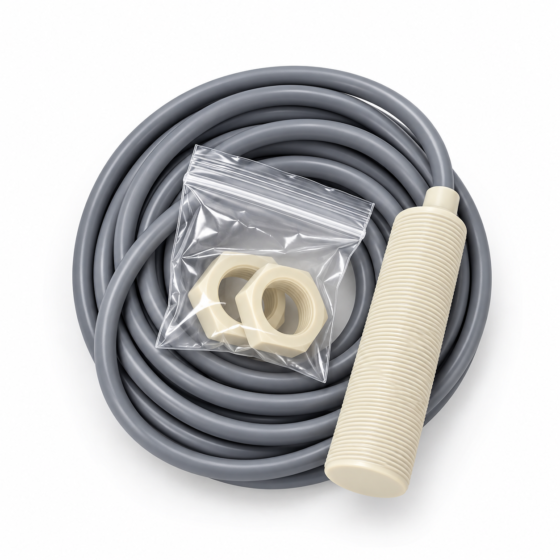
The best solution is to identify where the delay starts.
A technician should confirm when the physical target reaches the sensing point, when the sensor changes state, when the controller receives the signal, and when the machine begins its commanded action.
This approach helps prevent unnecessary sensor replacement.
1. How Sensors Work in Automatic Car Wash Systems
Sensors provide information about conditions inside the washing machine.
For example, a sensor may indicate that a vehicle has reached a certain position.
Another device may confirm the location of a moving gantry.
A different sensor may monitor the movement of a mechanical component.
However, sensors do not normally control the entire machine by themselves.
Their signals are interpreted by a controller or another control device.
The control system then decides what action should happen.
Therefore, the complete sequence involves sensing, signal transmission, control logic, and machine movement.
A delay in any stage may appear to the operator as a sensor problem.
Understanding that sequence is the first step toward accurate troubleshooting.
2. What Is Automatic Car Wash Sensor Response Delay?
Sensor response delay describes a gap between an expected detection event and an observed response.
However, the phrase can refer to different problems.
The sensor itself may take longer than expected to change output.
Alternatively, the sensor may respond immediately while the PLC delays the next action.
The machine may also receive the command promptly but move slowly.
Therefore, technicians should avoid using the term without defining the measurement.
A proper investigation separates the sensor’s response from the system’s total reaction time.
This distinction is especially important in automated machines.
Replacing a functioning sensor will not correct a slow drive, delayed timer, or unstable control program.
3. Understanding the Complete Response Chain
Consider a vehicle entering an automatic rollover car wash.

sensor
First, the vehicle reaches a detection position.
Next, a sensor changes its output state.
The controller receives the input.
Then, the control program checks the required operating conditions.
Finally, the controller issues an output command, and the machine responds.
Each stage has its own timing.
For example, a deliberate safety or sequencing delay may be part of the normal operation.
Therefore, not every pause indicates a fault.
The correct question is whether the observed timing matches the manufacturer’s approved design.
A qualified technician should compare the actual response sequence with the documented expected behavior.
4. Dirty Photoelectric Sensor Lenses
Photoelectric sensors use light to detect an object or change in the sensing path.
However, automatic car wash environments contain water mist, detergent spray, dust, and road dirt.
These materials can accumulate on optical surfaces.
As a result, less light may reach the receiver.
In some applications, the signal may become weak or inconsistent.
The sensor may then appear to detect vehicles late or fail to detect them reliably.
Therefore, optical surface condition is an important inspection point.
Operators should follow the sensor manufacturer’s approved cleaning instructions.
Use suitable cleaning materials.
Do not use abrasive tools or aggressive solvents unless they are expressly approved.
5. How Water Mist Affects Optical Detection
Water mist may interfere with light-based sensing.
However, the effect depends on the sensing method and installation.
For example, a through-beam sensor has a transmitter and receiver positioned across a sensing path.
A retroreflective sensor uses light returned from a reflector.
A diffuse sensor receives light reflected from an object.
These arrangements behave differently when exposed to water droplets or contamination.
Therefore, sensor selection should consider the actual wash environment.
A device intended for clean indoor automation may not be suitable for heavy mist exposure.
Buyers should ask whether the sensor configuration has been evaluated for the intended application.
6. Condensation on Sensor Surfaces
Condensation can form when temperature and humidity conditions cause moisture to collect on a surface.
This may happen in enclosed washing facilities or in areas with temperature changes.
However, the risk varies by location.
Moisture on an optical lens can affect the transmission of light.
It may also create misleading reflections in some sensor arrangements.
Therefore, repeated problems during humid weather should be recorded.
A technician should check environmental conditions and approved sensor protection measures.
The correct solution may involve better component selection, placement, or a manufacturer-approved enclosure design.
Do not assume a sensor is defective simply because a fault appears during wet conditions.
7. Incorrect Sensor Alignment
sensor
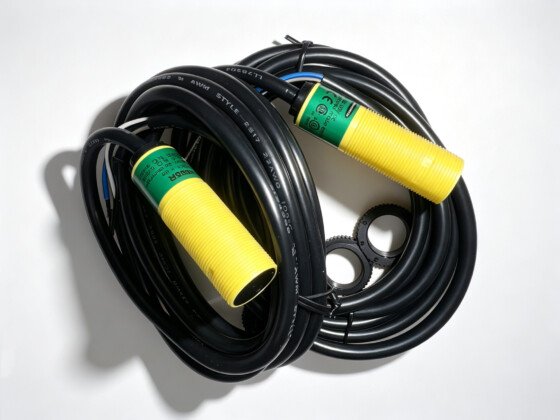
Optical sensors must be installed within their specified operating geometry.
For example, a through-beam sensor needs a suitable path between its transmitter and receiver.
A retroreflective system requires correct alignment with the reflector.
If the mounting shifts, the received signal may weaken.
However, the system may still work intermittently.
This can make the problem difficult to identify.
Therefore, technicians should verify alignment according to the sensor documentation.
Mounting brackets and fasteners should also be inspected.
Do not adjust a sensor while exposed to moving machinery or hazardous energy.
After alignment, the complete machine sequence should be validated.
8. Vibration and Sensor Mounting Problems
Automatic car wash machines include motors, pumps, rotating brushes, and moving structures.
These components may create vibration.
If a sensor bracket becomes loose, its sensing position may change.
However, even a small movement can affect some optical arrangements.
Therefore, mounting stability is important.
A technician should check whether the sensor and its target remain correctly positioned throughout the machine’s operating cycle.
Repeated adjustment may indicate an underlying mounting problem.
The bracket may need repair or replacement using an approved design.
Temporary modifications should not compromise guarding or sensor function.
9. Reflective Vehicles and Optical Sensors
Vehicles have different surface colors and finishes.
Some are dark.
Others have glossy paint, glass, or reflective trim.
However, optical sensors do not all respond to these surfaces in the same way.
For example, certain diffuse sensing applications depend on light reflected by the target.
A highly reflective or very dark surface may change the amount of received light.
Therefore, target characteristics should be considered during sensor selection.
The supplier may recommend a different sensing principle, detection range, or configuration.
Operators should not increase sensitivity without understanding the risk of false detection.
Testing should use representative vehicles and operating conditions.
10. Sensor Sensitivity and Detection Settings
Many industrial sensors offer adjustable detection settings.
However, the correct adjustment depends on the sensor type and application.
A poorly selected threshold may produce unreliable detection.
For example, a weak signal may fail to reach the required switching level consistently.
Alternatively, overly sensitive settings may cause unwanted triggering.
Therefore, technicians should follow the manufacturer’s configuration procedure.
Record the approved settings.
After any adjustment, verify detection with the intended target types.
A setting that works with one vehicle may not work reliably with every approved vehicle.
The goal is stable sensing, not simply maximum sensitivity.
11. Why Sensor Filtering Can Create Apparent Delays
Some sensors and controllers use filtering to reduce unwanted signal changes.
For example, a system may ignore an input until it remains stable for a specified period.
This can help prevent false operation caused by brief disturbances.
However, excessive filtering can delay a legitimate signal.
Therefore, the filter setting should be reviewed when detection appears slow.
The correct value depends on the application and control design.
A short delay may be intentional and necessary.
Do not remove or reduce filters without confirming their purpose.
Changes to safety-related functions require a formal engineering review and appropriate validation.
12. Photoelectric Sensor Response Time

Tunnel Car Wash Machine
Industrial photoelectric sensors have specified switching or response characteristics.
However, those values vary by product.
A sensor data sheet may state a response time or switching frequency.
These values describe the sensor under defined conditions.
They do not necessarily describe the total response of the automatic car wash.
Therefore, a sensor with a fast specification may still be part of a slow overall system.
Buyers should compare the sensor’s data sheet with the machine’s required detection task.
The correct device must also suit the sensing distance, target, environment, and electrical interface.
Fast response alone is not enough.
13. Proximity Sensor Problems
Proximity sensors may be used to detect selected machine positions or targets.
Depending on the design, they may use inductive or other sensing principles.
However, an inductive sensor is not suitable for detecting every type of material.
The target material and distance matter.
If a mechanical target moves out of the sensing range, the signal may become unreliable.
Therefore, position sensors should be inspected together with their mounting hardware and targets.
A delayed movement alarm may result from the mechanism reaching the target late.
In that case, the sensing device may be functioning correctly.
14. Encoder Problems in Moving Car Wash Equipment
Encoders can provide information about position, speed, or movement.
However, not every automatic car wash machine uses the same encoder design.
A rollover machine may use position feedback for its travel system.
A conveyor system may use feedback for another purpose.
If encoder signals become unreliable, the controller may report position or movement faults.
Possible causes include wiring problems, mechanical coupling issues, or unsuitable installation.
However, these require qualified diagnosis.
Technicians should follow the manufacturer’s test procedure.
Do not manually reposition moving equipment or bypass its protective functions to confirm an encoder fault.
15. Vehicle Detection Problems at Wash Entrances
Vehicle entry detection is important for controlled wash operation.
However, the exact sensing arrangement depends on the machine.
Some systems use optical sensors.
Others may combine several sensing technologies.
If a vehicle is detected late, the machine may delay a wash sequence or display an entry fault.
However, the issue may involve vehicle position or the entry procedure rather than the detector itself.
Therefore, operators should review the approved vehicle loading instructions.
A technician should confirm the detection zone and controller input.
Entry sensing should be tested with appropriate vehicles and under controlled conditions.
16. Sensor Delays in Rollover Car Wash Machines
Rollover machines move around a stationary vehicle.
Their operation requires coordinated motion and position control.
Depending on the design, sensors may confirm gantry travel, brush positioning, or other functions.
If a position confirmation is delayed, the next programmed step may not begin.
However, this does not always mean the position sensor is slow.
The gantry may be moving slower than expected.
A drive fault or mechanical restriction may be involved.
Therefore, technicians should compare physical movement with sensor and controller signals.
This helps identify the real source of the delay.
17. Sensor Delays in Tunnel Car Wash Systems
Tunnel systems move vehicles through several washing stages.
Therefore, vehicle detection and sequence timing are important.
A delayed or unstable input may affect when certain wash functions begin.
However, the conveyor position, control program, and actuator response also matter.
A complete investigation should follow the relevant signal from detection to machine action.
Operators should record which stage experiences the fault.
If the issue occurs only at one spray arch or brush station, the problem may be localized.
The manufacturer should provide a system-specific diagnostic method.
18. Sensor Issues in Touchless Car Wash Machines
Touchless washing depends on controlled spray movement and vehicle positioning.
Some systems use sensors to support the positioning of spray equipment.
However, the exact technology varies.
A detection problem may affect the intended wash sequence.
Therefore, operators should monitor unusual pauses, position faults, and incomplete programs.
A technician should determine whether the problem involves sensing, communication, control logic, or mechanical movement.
Do not adjust spray positioning or detection limits without manufacturer approval.
Incorrect settings may create risks to vehicles or equipment.
19. PLC Input Delays
A programmable logic controller, or PLC, receives signals and executes control logic.
However, a PLC does not necessarily respond to every input instantaneously.
Response time depends on the controller design, program execution, input filtering, and other factors.
Therefore, a sensor may change state before the PLC records or acts on the signal.
Technicians should check the documented input configuration and available diagnostics.
A longer-than-expected delay may need engineering review.
However, routine operators should not modify PLC programs.
Control software changes should be documented, tested, and approved.
20. PLC Scan Time and Program Logic
PLC scan time is one factor in controller response.
However, different controllers and program structures behave differently.
An input may be read at a particular point in the control cycle.
The program then evaluates the required logic.
Outputs may update according to the controller’s operating model.
In addition, intentional timers and interlocks may affect the sequence.
Therefore, a slow machine response cannot be explained by scan time alone.
A technician should review the actual control design and event timing.
The goal is to identify whether the delay is normal, intentional, or caused by a fault.
21. Communication Delays Between Devices
Some automatic car wash systems use networked control devices.
These may include controllers, drives, remote input modules, and operator interfaces.
However, communication architecture varies by manufacturer.
A network problem may cause delayed or missing information.
Possible indicators include communication alarms or intermittent data updates.
However, an HMI display that updates slowly does not necessarily mean the machine’s real control response is slow.
Therefore, technicians should distinguish display behavior from control behavior.
Network diagnostics should be completed by qualified personnel.
Do not change communication settings without reviewing the machine’s approved configuration.
22. Wiring and Connector Problems
Sensors depend on suitable electrical connections.
A loose connector, damaged wire, or unsuitable cable route may create an intermittent signal.
However, electrical problems can appear differently under different conditions.
For example, vibration or moisture may influence a damaged connection.
Therefore, technicians should inspect cable condition and connectors according to approved procedures.
Any replacement should meet the required electrical and environmental specifications.
Do not splice safety-related circuits or install unapproved connectors.
A reliable sensor needs both the correct sensing principle and dependable signal transmission.
23. Electrical Noise and Signal Interference
Electrical interference may affect some sensing and control circuits.
However, the effect depends on equipment design, cable routing, grounding, and electromagnetic compatibility.
Motors, drives, and switching equipment can create electrical noise.
Therefore, suitable wiring practices matter.
A technician may need to evaluate cable separation, shielding, earthing, and device specifications.
However, these measures must follow the manufacturer’s design.
Do not assume that every intermittent sensor problem is caused by interference.
The diagnosis should be supported by measurements or appropriate technical evidence.
24. Unstable Power Supply
Sensors require electrical power within their specified operating limits.
If the supply is unsuitable, the device may behave incorrectly.
However, a low-voltage problem can affect several devices at once.
Therefore, technicians should review whether multiple sensors experience faults together.
Power supply status and relevant alarms may help identify the issue.
Electrical testing should be performed by qualified personnel.
Do not replace several sensors before checking shared supply conditions.
The correct repair may involve the power system rather than the sensing devices.
25. Moisture Inside Sensor Connectors
Car wash equipment operates in a wet environment.
Therefore, connector protection is important.
However, a connector’s environmental rating depends on its design and correct installation.
A damaged seal or improperly fitted connection may allow moisture to enter.
This may affect electrical performance.
Therefore, maintenance should include relevant connector inspections.
Replacement parts must meet the specified protection requirements.
Do not assume an IP rating guarantees resistance to every chemical or cleaning method.
Correct installation and material compatibility remain essential.
26. Understanding IP Ratings
An ingress protection, or IP, rating describes specified resistance to the entry of solid particles and water.
However, it does not prove that a device is compatible with all car wash chemicals.
It also does not guarantee performance under every pressure-washing procedure.
Therefore, buyers should review the actual device specifications and test conditions.
Sensor location matters.
A component near frequent spray exposure may need a different design from one inside a protected enclosure.
The equipment manufacturer should specify the required environmental protection.
Buyers should request this information before choosing replacement sensors.
27. Chemical Damage to Sensor Housings
Cleaning chemicals may affect some plastics, elastomers, or coatings.
However, chemical compatibility depends on the complete formulation and exposure conditions.
A sensor may have suitable water ingress protection while still being unsuitable for a particular detergent.
Therefore, chemical resistance should be evaluated separately.
Operators should use manufacturer-approved cleaning products.
Do not spray concentrated chemicals directly onto sensors unless the manufacturer permits it.
If housings show cracks, swelling, or damaged seals, arrange inspection.
The root cause should be identified before replacing the component.
28. Why Mechanical Delays Look Like Sensor Delays
A sensor may detect an event correctly while the machine takes longer to move.
For example, a motor drive may respond slowly because of an operating fault.
A pneumatic cylinder may move slowly because of an air supply problem.
A mechanical component may also experience excessive resistance.
However, these symptoms may appear on the operator screen as a position timeout.
Therefore, technicians should compare sensor input timing with output commands and actual movement.
This distinction avoids incorrect repairs.
Replacing a sensor will not correct a mechanical restriction or a slow actuator.
29. Pneumatic System Delays
Some automatic car wash equipment uses pneumatic cylinders or valves.
These components depend on suitable air supply conditions.
If the pneumatic system cannot deliver the intended performance, movement may take longer than expected.
However, this can create a sensor-related alarm if the expected position is not reached on time.
Therefore, a position timeout may indicate an actuator or air system problem.
Technicians should review the manufacturer’s pneumatic requirements.
Compressed air stores energy and can create hazards.
Only qualified personnel should inspect or service the system using approved isolation procedures.
30. Motor and Drive Response Delays
Electric motors and drives control many moving machine functions.
However, a delayed movement may involve the drive rather than the associated sensor.
For example, the controller may issue the command on time while the drive limits movement because of a fault or programmed condition.
Therefore, available drive alarms and operating data should be reviewed.
The technician should also confirm the mechanical load.
Do not increase motor speed or change acceleration settings without technical approval.
The correct solution should address the fault while maintaining safe operating limits.
31. Distinguishing Normal Timers From Actual Faults
Automatic machines often use intentional delays.
For example, a controller may wait for a position confirmation before moving to the next stage.
It may also use timing to coordinate different wash functions.
Therefore, a pause may be part of the approved control sequence.
However, operators may notice it only after the equipment has been serviced or settings have changed.
The technician should compare the actual sequence with the documented program.
Never remove a safety interlock or protective delay to improve throughput.
A reliable machine must operate according to its validated design.
32. A Step-by-Step Sensor Delay Troubleshooting Process
Start by identifying the exact symptom.
Does the vehicle entry detector respond late?
Does a brush assembly move slowly?
Does the machine show a position timeout?
Next, record the operating conditions.
Include the wash program, time, vehicle type, and fault message.
Then, a qualified technician should follow the signal path.
Confirm the physical detection event.
Check whether the sensor output changes correctly.
Verify that the controller receives the input.
Review the relevant control logic and output.
Finally, determine whether the mechanical equipment responds as intended.
This approach separates sensing problems from control and actuator problems.
33. Sensor Response Delay Troubleshooting Table
| Symptom | Possible Cause | What to Check |
|---|---|---|
| Vehicle detection is inconsistent | Dirty lens or poor alignment | Optical surfaces and sensor positioning |
| Faults increase during humid weather | Condensation or moisture intrusion | Environmental conditions and sealing |
| One sensor fails intermittently | Cable or connector problem | Wiring and connection integrity |
| Several sensors fault together | Shared power or control issue | Supply and controller diagnostics |
| Sensor switches correctly but action is late | PLC logic or output sequence | Input-to-output timing |
| Position timeout occurs | Slow drive or actuator | Mechanical and drive performance |
| HMI updates late | Display or communication issue | HMI data updates versus real control events |
This table provides general guidance.
Actual diagnosis must follow the specific machine documentation.
34. Why Random Sensor Replacement Is Expensive
Replacing a sensor may seem like the fastest solution.
However, the replacement may not correct the real problem.
For example, an incorrectly aligned mounting bracket will still create trouble with a new sensor.
A damaged cable may also affect the replacement.
Likewise, PLC timing problems will remain unchanged.
Therefore, replacement should follow diagnosis.
Technicians should confirm the failed component and relevant operating conditions.
This can reduce unnecessary parts costs.
It also helps avoid repeated downtime.
A systematic repair process is especially important for high-volume commercial washing facilities.
35. Choosing the Correct Replacement Sensor
A replacement sensor should meet the required electrical, optical, mechanical, and environmental specifications.
However, two sensors that look similar may behave differently.
Important details may include:
- Sensing principle
- Detection range
- Response time
- Output configuration
- Supply voltage
- Connector type
- Housing material
- Environmental protection
- Chemical compatibility
- Mounting requirements
Safety-related sensors require additional design and validation considerations.
Therefore, buyers should use manufacturer-approved replacements or obtain written engineering approval for alternatives.
36. How to Improve Sensor Reliability
Reliable sensing starts with correct selection and installation.
For example, an appropriate photoelectric sensing mode may provide more stable performance in a wet environment.
A suitable mounting position may reduce direct spray exposure.
Properly installed cables and connectors can help protect signal integrity.
Regular approved cleaning may reduce contamination.
However, maintenance alone cannot correct an unsuitable sensor design.
Therefore, operators should review recurring faults with the equipment supplier.
The best improvement may involve better protection, a different sensing arrangement, or correction of the associated control system.
37. Daily Sensor Inspection Practices
A daily operator check should focus on safe, visible information.
Review fault messages and unusual machine behavior.
Check whether vehicle detection and wash sequences appear consistent.
Report visible damage from accessible locations.
However, staff should not enter a machine’s danger zone during operation.
They should not manually block sensors or test moving equipment without authorization.
The manufacturer should identify permitted operator checks.
Detailed inspection may require trained maintenance personnel and hazardous-energy controls.
A clear reporting process helps identify developing problems.
38. Weekly and Monthly Maintenance Planning
Periodic maintenance may include cleaning approved optical surfaces, checking mounting hardware, reviewing sensor fault history, and examining cable condition.
However, the actual interval depends on the device and operating environment.
A busy tunnel facility may face different contamination conditions from a low-volume indoor wash.
Therefore, the maintenance plan should be based on manufacturer instructions and actual site conditions.
Recurring faults should trigger a review.
Simply cleaning the same lens every day may not be the best long-term solution if direct spray exposure is avoidable through approved design changes.
39. Using Fault Logs to Identify Patterns
Fault logs can help reveal when sensor-related problems occur.
For example, an alarm may appear mainly during peak operating periods.
Another fault may increase during heavy rain or humid weather.
However, these patterns are clues, not proof.
Operators should record the fault code, affected wash stage, machine state, and environmental conditions.
Where available, controller diagnostic information may help technicians identify the sequence of events.
Consistent records also support communication with remote technical support teams.
This is useful for international equipment installations.
40. Measuring Sensor and System Response Time
The response of a complete washing system can be divided into several stages.
These may include detection, controller input processing, program execution, output processing, and actuator movement.
However, each stage must be measured using suitable methods.
The technician should define the start and end of the measurement.
For example, an optical sensor switching time is different from the time required for a gantry to begin moving.
Where precise timing is important, appropriate diagnostic tools may be needed.
Do not estimate electrical response time from visual observation alone.
41. Example: Understanding a Response Delay
Consider a hypothetical automatic car wash system.
A vehicle reaches a detection point.
The sensor changes state after 5 milliseconds.
The controller and programmed sequence require another 40 milliseconds.
The drive then requires 300 milliseconds before visible movement begins.
The approximate total is:
5 + 40 + 300 = 345 milliseconds
These numbers are illustrative, not specifications for a real car wash.
The example shows why a fast sensor can still be part of a slower overall response.
Any technical assessment should use actual device and controller data.
42. Sensor Delay and Wash Quality
Sensor-related timing issues can affect wash results.
For example, a late position confirmation may delay a programmed cleaning stage.
In a tunnel, a detection error may affect the intended relationship between vehicle location and equipment operation.
However, poor cleaning may have other causes.
Water pressure, chemicals, brush condition, and spray settings also influence performance.
Therefore, the operator should identify whether the wash problem and the sensor fault occur together.
A complete process review is more reliable than adjusting one component.
43. Sensor Delay and Customer Waiting Time
Small delays may matter when a commercial car wash operates at high volume.
However, not every delay reduces throughput by the same amount.
For example, a pause that occurs during an otherwise idle part of a cycle may have little effect.
A delay that extends the complete wash time may reduce capacity.
Therefore, operators should measure actual cycle time.
They should also distinguish normal safety sequences from avoidable faults.
Reliability improvements can support customer experience, but changes must not weaken required protective functions.
44. Example: The Commercial Cost of Repeated Delays
Consider a hypothetical wash facility completing 80 wash cycles per day.
Suppose an avoidable control delay adds 12 seconds to every cycle.
The additional time is:
80 × 12 = 960 seconds per day
That equals 16 minutes.
However, this does not mean the business automatically loses 16 minutes of revenue.
The effect depends on queues, operating hours, and whether the delay changes total throughput.
The calculation simply illustrates why repeated small faults deserve attention.
Actual business benefits should be evaluated using measured operating data.
45. Sensor Reliability in Gas Station Car Washes
Gas station wash systems may serve customers with different vehicle types and washing needs.
Therefore, consistent vehicle detection is important.
However, site employees may not have specialist automation training.
This makes clear operator instructions valuable.
The supplier should provide fault codes, basic troubleshooting guidance, and contact information for qualified support.
Operators should also understand when to stop the machine.
A well-documented system can reduce confusion when an entry or position alarm appears during busy hours.
46. Sensor Reliability in Convenience Store Washes
Convenience store car washes may have limited service access.
Therefore, sensor location and cable routing should be reviewed during equipment selection.
Buyers should ask whether common inspection points can be accessed safely.
They should also verify replacement part availability.
A compact machine may fit the available space but still require suitable maintenance clearance.
Therefore, installation planning should consider service needs as well as machine dimensions.
Clear documentation and accessible components can improve long-term ownership experience.
47. Sensor Reliability in High-Volume Tunnel Washes
Tunnel facilities depend on coordinated vehicle movement and multiple wash stages.
Therefore, recurring detection problems may create operational interruptions.
A suitable maintenance program should record which stations generate faults.
Operators should also review whether errors occur under particular traffic or environmental conditions.
However, changes to sensing zones and program timing require technical review.
The correct goal is reliable detection under the machine’s approved operating conditions.
Increasing conveyor speed or overriding detection checks is not an acceptable substitute for repairing the underlying problem.
48. Choosing Sensors for Wet Industrial Environments
Car wash sensors must suit the installation environment.
However, not every device requires the same specification.
Important considerations include water exposure, cleaning chemicals, temperature, target characteristics, and sensing distance.
The buyer should also review mounting space and wiring requirements.
Ask the manufacturer why a particular sensing method was selected.
Does it remain reliable with dark and reflective vehicles?
How is contamination managed?
Can the sensor be serviced safely?
The supplier should support its selection with appropriate technical documentation rather than broad claims such as “waterproof and maintenance-free.”
49. Comparing Sensor Technologies
| Sensor Type | Common Application Consideration | Main Selection Question |
|---|---|---|
| Photoelectric | Detects objects using light | Can it reliably detect the intended target in mist and dirt? |
| Inductive proximity | Detects suitable metal targets | Is the target material and distance appropriate? |
| Ultrasonic | Uses reflected sound for distance or presence | How do target geometry and environmental conditions affect readings? |
| Encoder | Provides movement or position feedback | Does it meet the required accuracy and mechanical arrangement? |
| Pressure sensor | Measures fluid or air pressure | Is the range suitable for the process and control function? |
The table is a general comparison.
It does not mean every technology is suitable for every wash machine or safety function.
50. Sensor Requirements for US and Canadian Buyers
Equipment buyers should review the applicable electrical, machinery safety, and workplace requirements.
The exact obligations depend on location and machine design.
In the United States, servicing work that exposes employees to unexpected startup or hazardous energy may be subject to OSHA’s lockout/tagout requirements.
Canadian installations require review of applicable national, provincial, and local requirements.
Buyers should ask for relevant technical documentation, electrical specifications, safety information, and maintenance procedures.
Imported equipment should be evaluated for its intended installation market.
51. Sensor Requirements for UK and EU Buyers
UK and EU equipment buyers should assess the relevant machinery and electrical requirements for the destination market.
The EU Machinery Regulation (EU) 2023/1230 is scheduled to apply generally from January 20, 2027.
Equipment placed on the market before or after that date may be subject to different applicable provisions.
UK rules must be reviewed separately.
Buyers should confirm what technical documentation and conformity information the manufacturer provides.
Safety-related sensing systems also require appropriate design assessment.
An ordinary process sensor should not automatically be treated as a safety-rated protective device.
52. Questions to Ask an Automatic Car Wash Manufacturer
Before buying a machine, ask:
- What sensor technologies does the system use?
- Which sensors detect vehicle entry and position?
- How are dark and reflective vehicles handled?
- What environmental ratings do the devices have?
- Are the sensors suitable for chemical and water exposure?
- What controller is used?
- Can technicians view sensor status and fault history?
- Are intentional response delays documented?
- How are sensor faults distinguished from drive faults?
- What maintenance procedures are required?
- Are replacement sensors available in the destination market?
- Can the supplier provide electrical drawings and part numbers?
- Is remote technical support available?
- What commissioning tests are performed?
- How are safety-related sensing functions validated?
These questions can help commercial buyers compare equipment reliability and service quality.
53. Automatic Car Wash Sensor Response Delay Prevention Checklist
Sensor Condition
- Check approved optical cleaning requirements.
- Review sensor alignment.
- Inspect mounting stability.
- Identify visible housing damage.
- Confirm the correct sensor type is installed.
Electrical and Control Systems
- Review fault logs.
- Check permitted cable and connector inspection points.
- Verify power supply conditions through qualified testing.
- Review PLC inputs and programmed timing where required.
- Identify communication faults.
Environmental Protection
- Review water mist exposure.
- Check condensation patterns.
- Confirm required ingress protection.
- Verify chemical compatibility.
- Assess cable and connector sealing.
Mechanical Response
- Compare sensor switching with machine movement.
- Review motor or drive alarms.
- Assess pneumatic movement where relevant.
- Investigate position timeouts.
- Do not bypass interlocks.
Business and Maintenance
- Record recurring faults.
- Track affected wash programs.
- Maintain approved spare-parts information.
- Arrange trained technical support.
- Review response performance during commissioning and after repairs.
54. Frequently Asked Questions About Automatic Car Wash Sensor Delays
Why does my automatic car wash sensor respond slowly?
Possible causes include contamination, alignment problems, incorrect settings, wiring faults, controller timing, and delayed mechanical movement.
Can dirty sensors cause delayed vehicle detection?
Yes. Dirt or moisture can weaken optical signals and make detection unreliable.
Do car wash sensors need regular cleaning?
Some do. Follow the actual sensor and machine manufacturer’s cleaning instructions.
Can water mist interfere with photoelectric sensors?
Yes. Mist and moisture may reduce or alter optical signals, depending on the sensing method.
Can sensor misalignment cause intermittent faults?
Yes. Incorrect alignment may weaken the received signal or shift the detection area.
Are black vehicles harder for some sensors to detect?
Some optical sensing methods are affected by target reflectivity. The correct sensor selection depends on the application.
Does a slow PLC cause sensor response delays?
Controller processing or programmed timing can contribute to total system response, but the cause must be verified.
Can a faulty cable make a sensor seem slow?
Yes. Intermittent electrical connections may produce unstable or missing signals.
Why does the machine show a sensor alarm when the gantry moves slowly?
The sensor may be waiting for a mechanical component to reach the expected position. The actual problem may be a drive or movement fault.
Can a pneumatic cylinder cause a position sensor timeout?
Yes. Slow pneumatic movement may delay the expected position confirmation.
Should I increase sensor sensitivity?
Only according to the manufacturer’s approved procedure. Incorrect settings can increase false detection.
Can I replace a sensor with a similar model?
Only after confirming all relevant technical specifications and obtaining required manufacturer or engineering approval.
How do I measure sensor response time?
Use the appropriate device specifications and qualified diagnostic methods. Separate sensor switching from controller and actuator response.
Do IP ratings guarantee chemical resistance?
No. Water ingress protection and chemical compatibility are different properties.
Why do sensor faults occur more often during humid weather?
Moisture, condensation, and damaged sealing may contribute, but diagnosis is required.
Can electromagnetic interference cause sensor faults?
It can affect some systems. Wiring design and technical measurements are needed to confirm the cause.
What should I do when a sensor fault appears?
Follow the machine’s operating and shutdown instructions. Record the alarm and arrange qualified inspection when necessary.
Is a delayed sensor dangerous?
It depends on the function. A fault affecting machine positioning or a safety-related system may create serious risks and requires prompt assessment.
Can I bypass a sensor to keep washing vehicles?
Do not bypass protective or required sensing functions. Follow the manufacturer’s approved fault procedures.
What should I check before buying a car wash with advanced sensors?
Review sensor types, environmental ratings, control diagnostics, safety design, maintenance requirements, replacement parts, and technical support.
Conclusion: Fix the Cause, Not Just the Sensor
Delayed responses in automatic car wash machines can affect cleaning performance, throughput, and customer experience.
However, the problem is not always caused by a damaged sensor.
A dirty lens may weaken detection. A loose bracket may shift the sensing area. Moisture may affect a connector. An incorrect controller setting may create an unnecessary delay.
In other cases, the sensor responds correctly, but the machine moves slowly because of a drive or actuator problem.
Therefore, successful troubleshooting starts by checking the complete response chain.
Operators should record symptoms and faults. Qualified technicians should verify sensor signals, controller inputs, programmed logic, and machine movement.
For long-term prevention, select components suitable for wet and chemically active environments. Maintain correct alignment, use approved cleaning methods, protect wiring, and keep reliable maintenance records.
Commercial buyers should also review the machine’s complete control system rather than comparing sensor specifications alone.
The best solution to automatic car wash sensor response delay is a properly designed, accurately configured, and well-maintained sensing and control system.
Request Reliable Automatic Car Wash Equipment and Control System Specifications
Are you planning to install a new automatic car wash or upgrade a machine with recurring sensor problems?
A qualified manufacturer can help review the intended application and technical requirements.
Prepare the following project information:
- Installation country
- Business and wash system type
- Site dimensions
- Expected daily wash volume
- Vehicle types
- Existing sensor faults, if applicable
- Required control and monitoring functions
- Water and electrical supply
- Operating environment
- Maintenance expectations
- Project budget
Request machine specifications, sensor part numbers, controller information, electrical drawings, environmental ratings, maintenance documentation, and available technical support.
Request Technical Specifications | Compare Automatic Car Wash Control Systems | Get a Customized Equipment Quote
Technical References and Further Reading
Banner Engineering — Photoelectric Sensors and Sensing Principles
https://www.bannerengineering.com/sg/en/products/sensors/photoelectric-sensors.html
Banner Engineering — Excess Gain and Environmental Conditions
https://www.bannerengineering.com/us/en/company/expert-insights/what-is-excess-gain-how-to-use.html
US OSHA — The Control of Hazardous Energy, 29 CFR 1910.147
https://www.osha.gov/laws-regs/regulations/standardnumber/1910/1910.147
European Union — Machinery Regulation (EU) 2023/1230
https://eur-lex.europa.eu/eli/reg/2023/1230/oj
Google Search Central — Creating Helpful, Reliable, People-First Content
https://developers.google.com/search/docs/fundamentals/creating-helpful-content
Disclaimer: This article provides general technical, maintenance, and purchasing information. Actual sensor response times, control settings, wiring requirements, environmental ratings, and fault procedures depend on the specific machine and components. Sensor, controller, and safety-system modifications must follow manufacturer instructions and applicable regulations. Only qualified personnel should perform electrical tests, hazardous-energy isolation, and technical repairs. Numerical examples are illustrative and are not verified equipment specifications.