 Aikeslan | Fully Automatic Car Wash Machine Manufacturer
What Should Buyers Consider When Replacing an Existing Car Wash Machine?
2026 Commercial Buying Guide: Equipment Upgrades, Site Compatibility, Replacement Costs, Installation, Downtime, and Return on Investment
Introduction: What Should You Check Before Replacing an Existing Car Wash Machine?
Automatic car wash machine replacement requires careful planning. Before removing an old system, buyers should check the condition of the existing equipment, available site space, electrical supply, water connections, drainage, replacement costs, and expected business benefits.
A new automatic car wash machine may offer improved controls, better customer features, different wash programs, and more convenient maintenance. However, replacing equipment does not automatically increase profits.
The real value depends on whether the new system solves the business’s existing problems.
For example, a gas station may need to replace a machine that breaks down too often. A commercial car wash may want to reduce customer waiting times. Another operator may need equipment that supports modern payment systems or fits a wider range of vehicles.
In each case, the replacement plan should start with a clear business objective.
Existing infrastructure also matters. A new machine may not fit the old foundation, electrical supply, water system, or building dimensions.
Therefore, buyers should evaluate the entire installation rather than compare equipment prices alone.
This guide explains how to plan an automatic car wash machine replacement, compare new systems, calculate project costs, reduce downtime, and choose suitable commercial equipment.
It is written for gas station operators, independent car wash owners, fuel retail groups, equipment distributors, and international buyers in the United States, Canada, the United Kingdom, and European Union.
Important: Technical specifications, regulatory requirements, prices, and financial results vary by project. All numerical examples in this guide are hypothetical unless clearly identified as official requirements or published guidance.
1. When Should You Replace an Existing Car Wash Machine?
The first question is whether full replacement is necessary.
An older machine may still provide reliable service with proper maintenance. In other cases, its condition or limitations may make replacement more practical.
Frequent Breakdowns
Repeated faults can increase repair expenses and interrupt customer service.
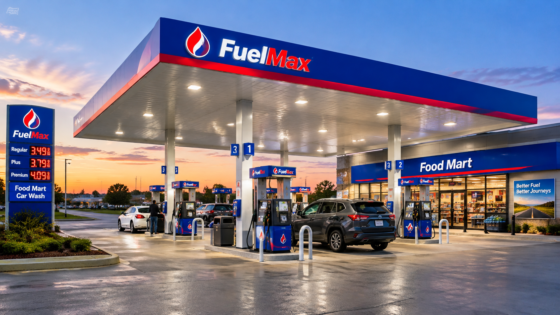
Gas Station
However, the cause should be identified before making a replacement decision.
A recurring problem may come from one repairable component rather than the complete machine.
High Maintenance Costs
As equipment ages, certain parts may need more frequent replacement.
If repair expenses continue to rise, a new system may offer better long-term value.
Poor Wash Performance
Customers may complain about cleaning quality, drying results, or inconsistent service.
However, operators should first check maintenance, chemical dosing, nozzle condition, and program settings.
Limited Capacity
A machine with long wash cycles may create queues during busy periods.
If demand consistently exceeds practical throughput, higher-capacity equipment may help.
Parts Availability
Older equipment may use discontinued components.
If essential spare parts become difficult to obtain, repair time and business risk may increase.
Changing Customer Expectations
New payment options, wash programs, or vehicle-size requirements may make an upgrade attractive.
The decision should follow measurable business needs rather than equipment age alone.
2. Repair, Retrofit, or Replace: Which Option Is Better?
Buyers generally have three possible approaches.
They can repair the existing machine, upgrade selected components, or replace the full system.
Each option has different benefits and costs.
| Option | Suitable Situation | Main Consideration |
|---|---|---|
| Repair | Equipment remains suitable and the fault is limited | Repair cost and reliability |
| Retrofit or upgrade | Main machine is sound but selected functions need improvement | Compatibility and upgrade value |
| Full replacement | Major wear, obsolete parts, unsuitable capacity, or extensive problems | Total investment and business improvement |
Repair
Repair may be appropriate when the equipment remains reliable and replacement parts are available.
Retrofit
A retrofit changes or upgrades part of the existing system.
For example, the owner may consider an approved control upgrade, a suitable water reclamation system, or replacement of selected pumps or dryers.
Replacement
Full replacement may make sense when the existing system can no longer meet business requirements at an acceptable cost.
However, a new machine should be evaluated against the best realistic repair or retrofit option.
The EPA’s WaterSense at Work: Vehicle Washes guidance recommends evaluating maintenance and retrofit opportunities before replacing a vehicle washing system, especially because full replacement can involve significant capital costs.
3. Start With an Equipment Condition Assessment
A professional condition assessment is a useful first step in automatic car wash machine replacement.

Aikesilun tunnel-type car wash system installed at a gas station
The assessment should review the machine’s technical state and its actual operating history.
Structural Condition
Inspect the main frame, supports, corrosion protection, and relevant mechanical connections.
Pumps and Motors
Review service history, abnormal noise, overheating, and repeated faults.
Sensors and Controls
Check whether the system operates consistently and whether technical documentation remains available.
Moving Components
Inspect applicable chains, gears, bearings, brushes, and drive mechanisms.
Water and Chemical Systems
Review leaks, chemical dosing, valves, and cleaning performance.
Electrical Equipment
Qualified personnel should inspect relevant cabinets, wiring, and protective systems.
Repair History
Use maintenance records to identify recurring problems and rising expenses.
The inspection should produce a written summary of what can be repaired, what should be replaced, and which risks remain.
4. Compare the Current Machine With Your Business Needs
A replacement machine should solve a specific operational problem.
Therefore, start by defining what the existing equipment cannot do.
Current Wash Volume
How many vehicles does the machine complete each day?
Peak Demand
How many customers arrive during the busiest periods?
Average Wash Time
Does the existing cycle create unnecessary queues?
Vehicle Compatibility
Can the machine safely accept the vehicles commonly used by local customers?
Cleaning Quality
Does the current system meet the service level advertised to customers?
Operating Costs
How much does each wash cost in water, electricity, chemicals, and maintenance?
Customer Experience
Do customers report payment problems, slow service, or inconsistent results?
These measurements establish a baseline.
Without a baseline, it becomes difficult to judge whether the replacement investment produces real improvements.
5. Site Compatibility: Will the New Machine Fit the Existing Bay?
Site compatibility is one of the most important parts of replacing an old car wash machine.
A new model may look similar to the previous equipment but require different installation dimensions.
Machine Dimensions
Request the overall dimensions of the proposed system.
Installation Clearances
Check the space needed for operation, inspection, and maintenance.
Vehicle Clearance
Confirm the maximum vehicle height, width, and length.
Entry and Exit
Review vehicle access and positioning requirements.
Existing Building
The structure must provide sufficient space for the equipment and any required alterations.
Maintenance Access
Technicians need safe access to motors, pumps, sensors, and control equipment.
Future Expansion
Consider whether the site should allow room for future changes.
A manufacturer should provide a model-specific layout drawing before the buyer approves the replacement.
6. Can You Reuse the Existing Car Wash Foundation?
Reusing the existing foundation may reduce construction work.

site
However, reuse must be confirmed rather than assumed.
Foundation Dimensions
The original concrete base may not match the new machine’s anchor positions.
Structural Capacity
The foundation must support the new equipment loads and operating forces.
Existing Damage
Cracks, corrosion of embedded components, or settlement may need investigation.
Drainage Slope
Floor slopes and collection channels must work with the new system.
Anchor Requirements
The manufacturer’s approved drawings should specify the relevant anchoring needs.
Engineering Review
A qualified local engineer should assess the foundation before reuse.
Simply drilling new holes without checking the complete structure is not a sound replacement plan.
7. Electrical Requirements for Car Wash Machine Replacement
Electrical compatibility can affect installation cost and project timing.
The new machine may use different motors, controls, or drying equipment from the old system.
Supply Voltage
Confirm that the machine matches the available electrical supply.
Phase and Frequency
Verify whether the system requires a particular phase arrangement and supply frequency.
Available Capacity
The existing electrical service may not support the proposed machine’s operating demand.
Motor Starting Requirements
Some components may create important starting loads.
Electrical Protection
The new equipment may need revised distribution, protective devices, or isolation arrangements.
Wiring and Documentation
Qualified local electricians should work from the machine’s technical documentation.
Equipment Environment
Electrical installations must be suitable for the moisture, chemicals, and other conditions present at the site.
Do not assume that old cables or protective equipment can be reused without inspection.
8. Water Supply Compatibility With a New Machine
A replacement machine may have different water requirements.
Therefore, the existing supply should be tested before equipment selection is finalized.
Water Flow
The site must deliver enough water during the machine’s operating stages.
Water Pressure
The available pressure should remain within the manufacturer’s permitted range.
Pipe Connections
Connection size and position may differ from the old machine.
Water Quality
Hardness, sediment, and dissolved minerals can affect cleaning performance and equipment reliability.
Storage and Pumps
Some installations may need revised storage or booster arrangements.
Backflow Protection
The plumbing design should include any protection required by the relevant local authority.
Operating Costs
Ask for model-specific water consumption data under clearly defined wash programs.
The buyer should compare fresh-water use rather than assume that every newer machine consumes less water.
9. Drainage and Wastewater Requirements
Wastewater infrastructure must be reviewed during a car wash replacement.
The new equipment may change where water is sprayed, collected, or discharged.
Existing Floor Drains
Check their condition, capacity, and location.
Wastewater Collection
Confirm that the new wash bay layout directs water toward suitable collection points.
Sediment Management
Grit and solids may need to be collected or separated.
Pretreatment
Local requirements may call for suitable treatment before discharge.
Sewer Connection
Verify the approved discharge route with the relevant authority.
Stormwater Separation
Commercial wash wastewater should not be routed to storm drains without specific approval.
Maintenance Access
Drains, traps, and treatment equipment need practical inspection and cleaning access.
In addition, check whether the existing wastewater permits or consents remain valid after the equipment change.
10. Should You Add Water Reclamation During Replacement?
Replacing an old car wash can create an opportunity to improve water management.
A suitable reclamation system may reduce fresh-water demand by collecting and treating used wash water.

Small guide rail structure
However, the economics and technical feasibility vary by site.
Existing Infrastructure
A replacement project may already involve drainage or plumbing work.
This can make it practical to evaluate water reclamation at the same time.
Water Treatment
Reclaimed water must be treated to a level suitable for its intended use.
Storage and Piping
Additional tanks, pumps, or pipework may be needed.
Maintenance
Filters and other treatment components require ongoing service.
Local Requirements
Discharge limits and water-use regulations may influence the design.
Financial Value
Compare installed cost, annual operating expenses, and expected utility savings.
EPA guidance identifies reclamation as an important water-saving option for suitable in-bay and conveyor washes. However, owners should complete a site-specific feasibility assessment.
11. Replacing a Touchless Car Wash Machine
A touchless car wash uses water pressure and cleaning chemicals without brushes making direct contact with the vehicle body.
When replacing an existing touchless system, buyers should compare more than the pump rating.
Cleaning Program
Review the available cleaning and rinse stages.
Pump System
Confirm pressure, flow, motor requirements, and maintenance needs.
Chemical Dosing
Check the control method and expected chemical use.
Vehicle Detection
Review sensors and vehicle positioning requirements.
Drying
Compare the blower configuration and drying-cycle options.
Water Use
Request water consumption data under defined operating conditions.
Installation
Confirm whether existing piping, electrical service, and drainage can be used.
The right replacement should maintain reliable cleaning performance while matching the site’s practical needs.
12. Replacing a Rollover or Gantry Car Wash Machine
A rollover or gantry system moves around a stationary vehicle.
It may use high-pressure cleaning, brushes, or both, depending on the design.
Existing Wash Bay
Check whether the replacement gantry fits the available width, length, and height.
Rail or Movement System
The new equipment may require a different support or movement arrangement.
Mechanical Components
Review motor, drive, and guide-system requirements.
Brush Configuration
If choosing a contact wash, confirm the material and maintenance needs of the cleaning components.
Wash Programs
Compare program duration and available finishing options.
Controls
Ask about diagnostic functions, payment integration, and operator interfaces.
Installation Downtime
A like-for-like replacement may be easier to plan than a complete change in equipment type, but this should be confirmed through drawings and site inspection.
13. Replacing a Tunnel Car Wash System
A tunnel replacement can involve more complex construction and operational planning.
Unlike an in-bay system, a tunnel moves vehicles through a sequence of cleaning stages.
Conveyor Layout
Confirm the required conveyor length and vehicle loading arrangement.
Wash Stages
Review cleaning, rinsing, finishing, and drying functions.
Customer Throughput
Compare rated capacity with actual peak demand.
Building Dimensions
The new system must fit the tunnel and provide suitable maintenance access.
Utility Capacity
Multiple motors, pumps, and blowers may increase or change the facility’s electrical and water requirements.
Site Traffic
Entry lanes, payment areas, and exit capacity must support the proposed operating rate.
Installation Schedule
Tunnel replacement may require significant coordination between equipment installers and local contractors.
A complete project plan is essential before closing the existing wash.
14. Should You Change From Soft-Touch to Touchless?
Some owners consider changing cleaning technology during a replacement project.
However, the decision should reflect customer expectations, site conditions, and operating costs.
Soft-Touch Washing
A contact wash uses suitable cleaning materials to remove dirt from the vehicle.
Its performance depends on equipment condition, correct operation, and maintenance.
Touchless Washing
A non-contact system relies on water pressure and chemicals.
It may appeal to customers who prefer washing without brushes.
Cleaning Performance
Results vary by machine design, soil type, chemical process, and operating conditions.
Operating Expenses
Water, chemicals, energy, brushes, and maintenance needs may differ.
Site Compatibility
The replacement technology may require different utility and layout arrangements.
Customer Preferences
Local customers may value different service features.
Buyers should compare the complete operating model rather than assume one cleaning method is always superior.
15. How to Compare Old and New Machine Capacity
Capacity helps determine whether an upgrade can reduce queues and support more paid washes.
However, buyers should distinguish rated capacity from actual throughput.
Current Throughput
Use operating records to measure completed vehicles per hour.
New Machine Rating
Ask the supplier for the conditions behind its stated capacity.
Wash Program Mix
Longer premium programs may reduce throughput in a single-bay system.
Vehicle Loading
Entry, positioning, payment, and exit time affect practical performance.
Site Traffic
The property may limit how quickly customers can approach or leave the wash.
Peak Demand
A faster machine only creates more sales if sufficient demand exists.
Therefore, compare realistic operating scenarios rather than maximum technical figures alone.
16. Payment Systems and Customer Experience Upgrades
A machine replacement may be a good time to review the payment system.
Some modern car wash systems support compatible payment terminals, wash codes, membership recognition, or digital management features.
However, these functions vary by model.
Existing Payment Compatibility
Check whether the new machine can work with the current payment equipment.
Fuel Retail Integration
Gas stations should confirm compatibility with their fuel payment systems.
Membership Management
A recurring wash program may need suitable software and customer account controls.
User Instructions
Clear screens and signs can help customers use the new equipment.
Transaction Records
Sales reports may support business analysis.
Subscription Costs
Payment processing and software services may involve additional charges.
Therefore, buyers should review the complete payment solution before ordering.
17. How Much Does Automatic Car Wash Machine Replacement Cost?
The cost of replacing an existing car wash machine depends on the selected equipment and the amount of site work required.
The machine purchase price is only one part of the budget.
Equipment Purchase
Cost varies by machine type, capacity, features, and manufacturer.
Old Equipment Removal
The project may require dismantling, lifting, transport, and disposal.
Civil Works
Foundations, floors, and building structures may need modifications.
Electrical Changes
The existing supply and distribution may require upgrades.
Water and Drainage
Pipework, pumps, treatment equipment, and drainage may need changes.
Installation
Assembly, testing, and commissioning must be included in the plan.
Business Interruption
Temporary closure may reduce wash sales.
Contingency
Unexpected conditions can create additional work.
The best way to understand the project cost is to obtain both a detailed machine quotation and a local installation estimate.
18. Example Replacement Project Budget
The following budget is a hypothetical planning example.
It is not a supplier quotation or an industry average.
| Project Item | Illustrative Cost (USD) |
|---|---|
| New automatic car wash machine | $75,000 |
| Old equipment removal and disposal | $8,000 |
| Foundation and civil changes | $18,000 |
| Electrical and water modifications | $14,000 |
| Shipping and handling | $9,000 |
| Installation and commissioning | $12,000 |
| Contingency | $14,000 |
| Total Project Investment | $150,000 |
Actual costs can differ substantially.
For example, a project requiring a new building, extensive drainage work, or a large tunnel system may have a very different budget.
Compare Full Project Scope
Ask suppliers to show what is included and excluded.
Allow for Site Surprises
Older foundations and utility systems may reveal problems during removal.
Update the Budget
Revise the cost model after a professional site survey and before final approval.
The goal is to avoid treating the quoted machine price as the complete replacement investment.
19. How to Estimate Downtime During Replacement
Downtime is an important cost for an existing car wash business.
The operator may need to stop selling washes while the old machine is removed and the new one is installed.
Main Schedule Stages
The replacement plan may include shutdown, energy isolation, dismantling, site preparation, installation, utility connection, testing, and handover.
Prepare Before Closure
Complete design reviews, equipment procurement, permits, and contractor planning before shutting down where possible.
Coordinate Contractors
Ensure that removal crews, civil contractors, electricians, plumbers, and installers follow a shared schedule.
Allow for Testing
Commissioning should not be skipped simply to reopen faster.
Communicate With Customers
Explain temporary service changes through suitable signs and online business information.
Avoid Unsupported Timelines
The actual closure period depends on the machine, site conditions, delivery, and approval requirements.
A manufacturer should not promise an exact replacement duration without reviewing the project.
20. Calculating the Financial Impact of Replacement Downtime
A simple financial model can help operators understand the cost of closing the wash.
However, lost revenue is not the same as lost profit.
Hypothetical Example
Assume an existing wash completes 45 paid vehicles per day.
Average revenue is $12 per vehicle.
Average variable cost is $3 per vehicle.
Contribution per wash is:
$12 − $3 = $9
Daily contribution associated with those washes is:
45 × $9 = $405
If the business closes for seven operating days, the potential contribution at risk is:
7 × $405 = $2,835
This is a simplified example.
Actual loss depends on customer behavior, whether some washes are delayed rather than permanently lost, and other business effects.
Include Other Costs
Some fixed expenses continue during closure.
There may also be contractor costs, staff scheduling changes, and marketing expenses.
Use Real Records
Historical sales data provide a stronger basis for planning than a generic industry estimate.
21. Can a New Car Wash Machine Improve Operating Efficiency?
A modern machine may offer different efficiency features.
However, a new model should not automatically be described as more efficient without supporting data.
Water Consumption
Compare measured or specified fresh-water use per wash.
Electricity Use
Review electrical demand and estimated energy consumption for comparable programs.
Chemical Use
Compare chemical dosing under suitable operating conditions.
Wash Cycle Time
Assess whether the new system can complete the intended program more efficiently.
Maintenance
Review required service intervals and expected replacement parts.
Fault Diagnosis
Modern controls may provide useful alarms and operating data.
Overall Cost
Calculate operating expenses per paid wash.
A well-maintained older machine may still perform competitively in some categories.
Therefore, the investment decision should use actual comparative information.
22. How to Calculate ROI for a Car Wash Replacement
Return on investment helps buyers assess whether the new equipment can create enough additional value.
However, the relevant benefit is the incremental financial improvement compared with keeping the existing machine.
Example
Assume the total replacement investment is $150,000.
Suppose the business estimates the following annual improvements:
- Additional contribution from extra paid washes: $30,000
- Maintenance savings: $12,000
- Net utility and operating savings: $8,000
Total annual improvement:
$30,000 + $12,000 + $8,000 = $50,000
Illustrative simple payback:
$150,000 ÷ $50,000 = 3 years
However, this calculation excludes financing, income tax, depreciation, future replacement capital, and changes in demand.
It also assumes that the extra sales and savings are achieved.
Use Several Scenarios
Prepare conservative, base, and strong-demand cases.
Avoid Double Counting
Do not count lower maintenance costs twice.
Include Alternatives
Compare replacement with repairing or upgrading the existing system.
Use Discounted Cash Flow
For major investments, a more complete financial model can include cash flow timing and risk.
ROI should support the purchasing decision, not replace technical and commercial due diligence.
23. How to Compare Total Cost of Ownership
Total cost of ownership includes more than the initial investment.
A useful model reviews costs over the period the business expects to operate the equipment.
Purchase and Installation
Include the full installed project cost.
Utilities
Estimate water, electricity, and wastewater expenses.
Cleaning Chemicals
Include routine chemical consumption.
Maintenance
Budget for inspections, repairs, and replacement parts.
Labor
Consider the staff required for operation and technical support.
Software
Include payment and monitoring subscriptions where applicable.
Downtime
Consider the financial effect of equipment interruptions.
End-of-Life Costs
Where relevant, include future dismantling, disposal, or residual equipment value.
Comparing these categories helps buyers understand whether a higher-priced replacement may provide better long-term value.
24. Removing and Disposing of the Old Machine
Old equipment removal should be planned as a controlled project stage.
Commercial car wash systems may include heavy structures, motors, pumps, electrical controls, chemicals, and water systems.
Site Survey
Identify equipment dimensions, lifting access, and surrounding structures.
Energy Isolation
Qualified personnel should isolate and verify relevant power and other hazardous energy sources.
Chemical and Water Systems
Residual chemicals and water should be managed appropriately.
Lifting and Handling
Use suitable equipment and approved lifting methods.
Waste Classification
Materials may need different recycling or disposal arrangements.
Recordkeeping
Keep relevant disposal, service, or contractor documentation.
In the United States, OSHA’s hazardous-energy requirements may apply to relevant servicing and dismantling activities.
The demolition and removal plan should follow the equipment documentation and applicable local rules.
25. Reusing Existing Components: What Is Safe?
A replacement project may offer opportunities to reuse selected infrastructure.
However, reuse should not compromise compatibility or safety.
Electrical Distribution
Existing equipment may be reused only when it is suitable for the new load and installation requirements.
Water Pipes
Pipework must meet the required flow, pressure, and condition standards.
Drainage
Collection and treatment systems must support the new process.
Water Reclamation
An existing reclaim system may be usable if its treatment and capacity match the new equipment.
Payment Equipment
Compatibility must be confirmed with the relevant providers.
Building Structure
The structure and access arrangements must suit the new machine.
Mechanical Parts
Reusing old machine components requires specific technical approval.
The preferred approach is to obtain a written compatibility review before incorporating existing components into the new installation.
26. What Should Gas Station Owners Consider?
A gas station car wash often operates alongside fuel pumps, a convenience store, and other services.
Therefore, replacement planning should consider the full property.
Customer Traffic
The new machine should not create queues that interfere with fuel sales.
Existing Bay
A compact rollover or touchless system may fit an existing bay, subject to technical review.
Utility Availability
Fuel retail properties may have limited spare electrical or water capacity.
Payment Integration
The replacement may need to work with existing fuel-and-wash promotions.
Staff Training
Station employees should receive suitable operating instructions.
Closure Planning
The fuel station may remain open while the wash is being replaced.
However, construction areas must be managed safely.
Customer Retention
Operators may want to communicate the upgrade and new wash options to regular customers.
The goal is to improve the wash service without reducing the convenience of the wider fuel station.
27. Replacement Considerations for US and Canadian Buyers
North American buyers should verify site requirements, equipment compatibility, and available support.
United States
Electrical, plumbing, building, environmental, and workplace requirements vary by jurisdiction.
The buyer should review applicable permits and inspections with local professionals.
Canada
Electrical approval requirements and local building rules must be checked.
Cold-weather conditions may also affect water systems and installation design.
Parts Supply
International shipments may have longer lead times than locally stocked parts.
Technician Availability
Confirm who will install, commission, and maintain the replacement equipment.
Documentation
Request technical manuals, drawings, and appropriate conformity or approval information.
Contract Scope
Clarify shipping, local construction, installation, and warranty responsibilities.
A complete project review is more valuable than relying only on a manufacturer’s general export experience.
28. Replacement Considerations for UK and EU Buyers
UK and EU buyers should review both the technical installation and applicable machinery requirements.
Existing Building
Check whether the new machine fits the structure and local planning conditions.
Electrical Supply
Confirm compatibility with the destination site.
Wastewater Management
Review existing trade-effluent or wastewater permissions and determine whether changes are required.
Machinery Documentation
Request the relevant instructions, declarations, and other applicable documentation.
Installation Responsibility
Clarify who is responsible for final assembly, integration, and putting the system into service.
EU Regulatory Transition
Regulation (EU) 2023/1230 is scheduled to become generally applicable on 20 January 2027, replacing the current machinery directive framework.
Buyers should verify the requirements applicable to their project, including any relevant transitional provisions.
UK Requirements
UK rules should be checked separately rather than assuming every EU requirement applies in the same way.
Local regulatory and engineering advice is important for complex replacement projects.
29. What After-Sales Support Should the New Manufacturer Provide?
Reliable after-sales support can help protect the value of a replacement investment.
Buyers should compare support arrangements before placing the order.
Warranty
Ask for written coverage and exclusions.
Installation Guidance
Request site drawings, utility specifications, and commissioning information.
Operator Training
Staff should understand correct daily operation and basic fault reporting.
Technical Assistance
Confirm contact methods, service hours, and escalation procedures.
Spare Parts
Request a parts catalog and information about ordering and availability.
Maintenance
Obtain the recommended maintenance schedule.
Remote Diagnostics
Where supported, ask about monitoring functions and access arrangements.
Local Service
Confirm whether on-site service is provided by the manufacturer, a partner, or the buyer’s contractors.
Support commitments should be specific and included in the commercial agreement.
30. How to Compare Replacement Machine Manufacturers
A structured supplier comparison helps buyers make better decisions.
| Evaluation Area | Questions to Ask |
|---|---|
| Equipment compatibility | Will it fit the existing site? |
| Technical specifications | Does it meet vehicle and capacity needs? |
| Utility requirements | Can current connections be reused? |
| Installation | Who handles dismantling, installation, and commissioning? |
| Project cost | What is the complete installed investment? |
| Downtime | What shutdown stages are required? |
| Operating expenses | What water, power, and chemical data are available? |
| Warranty | What is included and excluded? |
| Spare parts | How are critical parts supplied? |
| Technical support | Who assists with faults and repairs? |
Ask for Evidence
Request specification sheets, dimensioned drawings, and written service terms.
Compare Equivalent Scope
One quotation may include more accessories or installation services than another.
Review Commercial Risk
Check delivery terms, payment milestones, and responsibilities.
Avoid Unsupported Promises
Claims of zero downtime, guaranteed ROI, or universal compatibility should be treated cautiously.
A strong supplier should provide clear, verifiable information.
31. Step-by-Step Automatic Car Wash Machine Replacement Plan
A structured process can reduce avoidable delays.
Step 1: Review the Existing Machine
Document its condition, faults, costs, and operating performance.
Step 2: Define Replacement Objectives
Identify the improvements the business needs.
Step 3: Survey the Site
Measure the installation area and inspect existing infrastructure.
Step 4: Review Repair and Retrofit Options
Confirm whether full replacement is financially justified.
Step 5: Compare Suitable Machine Types
Evaluate touchless, rollover, and tunnel options based on demand.
Step 6: Request Technical Drawings
Confirm dimensions, foundations, utilities, and vehicle access.
Step 7: Obtain a Complete Project Budget
Include removal, construction, shipping, installation, and contingency.
Step 8: Prepare a Financial Model
Compare expected cash flows with the existing system and other options.
Step 9: Confirm Permits and Responsibilities
Review applicable requirements and contractor roles.
Step 10: Plan the Shutdown
Coordinate removal, site work, installation, and testing.
Step 11: Commission the Replacement
Complete required testing and operator training.
Step 12: Measure Performance
Track wash volume, costs, uptime, and customer feedback after reopening.
This approach helps ensure the project addresses the business’s original goals.
32. Common Mistakes When Replacing a Car Wash Machine
Buying Before Measuring the Site
A machine may not fit the existing building or foundation.
Assuming Old Utilities Are Suitable
Electrical, water, and drainage requirements may change.
Comparing Only Machine Prices
Removal, construction, installation, and downtime also affect project cost.
Ignoring Repair Options
A targeted upgrade may be more economical than full replacement.
Overestimating New Revenue
Higher theoretical capacity does not guarantee more paying customers.
Underestimating Closure Time
Unexpected site problems can delay reopening.
Forgetting Operator Training
New controls and processes may require different skills.
Overlooking After-Sales Support
A replacement is harder to maintain without suitable parts and technical information.
Skipping Commissioning
The machine must be tested before entering normal service.
A careful project plan helps buyers avoid these mistakes.
33. Frequently Asked Questions About Automatic Car Wash Machine Replacement
When should I replace an automatic car wash machine?
Consider replacement when the existing equipment has major reliability problems, high maintenance costs, limited parts availability, unsuitable capacity, or other problems that cannot be addressed economically.
Is it better to repair or replace an old car wash machine?
The answer depends on equipment condition, repair cost, expected remaining life, and business needs. Compare repair, retrofit, and replacement scenarios.
Can I install a new car wash machine in an existing bay?
Possibly. The new machine must fit the available dimensions, foundation, utilities, and maintenance access requirements.
Can I reuse my old car wash foundation?
Only after the foundation has been assessed against the new equipment’s loads and anchoring requirements.
Do I need to upgrade the electrical supply?
Not always. However, the existing electrical service must meet the new machine’s requirements.
Will a new car wash machine use less water?
It may, depending on the models, programs, and water reclamation systems. Compare verified fresh-water use under equivalent conditions.
How much does replacing a car wash machine cost?
Costs vary by equipment type and site work. A complete budget should include the machine, removal, civil works, utilities, shipping, installation, and contingency.
How long does car wash replacement take?
The schedule depends on equipment availability, removal, site preparation, utility modifications, installation, and commissioning. Obtain a project-specific schedule.
Can I change from a soft-touch wash to a touchless system?
Yes, it may be possible, subject to equipment selection, site conditions, utility compatibility, and project design.
Should I replace a rollover wash with a tunnel?
Only if customer demand, site dimensions, operating costs, and the investment case justify a tunnel.
Can a new machine increase wash capacity?
It may provide higher rated throughput, but actual sales depend on demand and site operations.
How do I calculate replacement ROI?
Estimate the additional annual cash contribution and savings from the new system, then compare them with the full investment and relevant risks.
Do I need new permits when replacing equipment?
Requirements vary by location and scope. Building, electrical, plumbing, wastewater, or other approvals may be needed.
What should I do with the old machine?
Plan safe removal, energy isolation, handling, recycling or disposal, and required documentation through suitable contractors.
What information should I send a manufacturer?
Provide the existing machine model, site dimensions, utility details, expected wash volume, vehicle sizes, and desired improvements.
34. Request an Automatic Car Wash Machine Replacement Quote
Replacing an existing automatic car wash can create an opportunity to improve equipment reliability, customer experience, and operating performance.
However, the project should begin with a clear review of the current machine and the available site.
A suitable manufacturer should help buyers evaluate the required equipment configuration and provide the technical information needed for local installation planning.
Share Your Replacement Project Details
When requesting a quotation, provide:
- Country and city of installation
- Current car wash machine type and model
- Age and condition of existing equipment
- Available wash bay dimensions
- Photographs or drawings of the current installation
- Electrical supply information
- Water and drainage conditions
- Current and expected daily wash volume
- Preferred cleaning technology
- Existing payment system requirements
- Target replacement budget
- Planned installation period
Request Technical and Commercial Information
Ask for equipment specifications, installation dimensions, utility requirements, available features, warranty information, and delivery terms.
The supplier can then review the proposed application and discuss suitable replacement options.
Request Replacement Equipment Specifications | Discuss Site Compatibility | Get a Customized Commercial Quote
Conclusion: Replace the Machine Only When the Business Case Makes Sense
Automatic car wash machine replacement is a significant commercial decision.
The new machine should not be selected simply because it looks more modern or offers a higher capacity rating.
Instead, the project should address specific problems with the existing equipment.
Buyers should examine reliability, maintenance costs, customer demand, cleaning performance, site compatibility, and available infrastructure.
They should also compare repair and retrofit options before committing to a complete replacement.
For operators in North America and Europe, electrical compatibility, wastewater arrangements, installation responsibilities, and applicable machinery requirements deserve particular attention.
A complete budget must include equipment removal, construction, utilities, installation, and possible business interruption.
Finally, buyers should review the manufacturer’s documentation, warranty, spare parts, and support arrangements.
A successful replacement project delivers a system that fits the site, meets customer needs, and offers sustainable long-term value.
Planning to replace an existing automatic car wash machine? Contact our team to discuss equipment options, site requirements, and a customized quotation for your commercial project.
References and Further Reading
- U.S. Environmental Protection Agency — WaterSense at Work: Vehicle Washes (November 2023). https://nepis.epa.gov/Exe/ZyPURL.cgi?Dockey=P1018SSR.TXT
- U.S. Occupational Safety and Health Administration — 29 CFR 1910.147: The Control of Hazardous Energy. https://www.osha.gov/laws-regs/regulations/standardnumber/1910/1910.147
- European Union — Regulation (EU) 2023/1230 on Machinery. https://eur-lex.europa.eu/eli/reg/2023/1230/oj/eng
- Google Search Central — Creating Helpful, Reliable, People-First Content. https://developers.google.com/search/docs/fundamentals/creating-helpful-content
Technical and financial disclaimer: This guide provides general information for commercial equipment replacement planning. All financial examples are hypothetical and do not represent market prices, average operating performance, or guaranteed returns. Final technical requirements depend on the equipment, site, and applicable local regulations. Qualified professionals should review dismantling, structural, electrical, plumbing, drainage, installation, and commissioning work.