 Aikeslan | Fully Automatic Car Wash Machine Manufacturer
How Can Automatic Car Wash Systems Support EV Charging Stations?
2026 Business Guide | Commercial Automatic Car Wash Equipment for EV Charging Hubs
Automatic car wash systems for EV charging stations can help operators add a useful service, create new revenue opportunities, and improve the value of their sites. As electric vehicle charging becomes part of daily travel, many charging operators are looking beyond electricity sales. They want practical services that attract drivers and make better use of commercial property.
An automatic car wash is one option worth considering.
For many drivers, charging is already part of a planned stop. A nearby car wash can give them another reason to visit the location. Moreover, it can create a new source of business income without changing the main purpose of the charging station.
However, the best results depend on good planning.
A charging site needs safe traffic flow, enough space, suitable utilities, and the right washing equipment. Operators must also consider vehicle size, wastewater management, energy demand, and maintenance needs.
This guide explains how automatic car wash systems can support EV charging stations in the United States, Canada, the United Kingdom, and Europe.
It covers business opportunities, equipment selection, installation planning, technical requirements, operating costs, and return on investment.
1. How Can Automatic Car Wash Systems Support EV Charging Stations?
Automatic car wash systems can support EV charging stations by adding paid vehicle cleaning services, improving site convenience, and creating new commercial opportunities.
They work best as a separate service within the same commercial location.
For example, a charging hub may offer fast charging, a convenience store, a waiting area, and an automatic car wash. Drivers can choose to wash their vehicles before or after charging.
This approach can help an operator provide more value from a single property.

Tunnel Car Wash Machine
Additional Service Revenue
Electricity sales are the main income source for many charging businesses.
However, charging operators may also earn revenue from related services.
An automatic car wash can generate income from individual wash purchases, prepaid packages, or commercial fleet contracts.
As a result, the business does not need to depend entirely on charging fees.
Better Use of Commercial Property
Some charging locations have suitable space beside parking bays or retail buildings.
When the site layout allows it, an automatic washing bay may create another productive use for the property.
However, operators should first check traffic flow, zoning, construction needs, and utility capacity.
More Reasons to Visit
A well-managed charging hub offers more than a place to connect a charging cable.
Additional services can improve the overall customer experience.
For example, a site that combines charging, refreshments, and car washing may appeal to drivers who prefer one location for several vehicle-related needs.
A Clear Safety Boundary
The charging bay and washing bay should be separate operating areas.
Drivers should disconnect charging equipment, secure the cable, and follow vehicle and machine instructions before using the wash.
The commercial benefit comes from offering both services at one site—not from washing a vehicle while it remains connected to charging equipment.
2. Why Are EV Charging Hubs Exploring Additional Services?
Public EV charging sites have different business models.
Some focus on charging speed. Others serve shopping centers, hotels, parking facilities, or highway travelers.
Despite these differences, site operators often face similar commercial questions.
How can they attract customers?
How can they increase the value of each visit?
And how can they make better use of their location?
Charging Alone May Not Be the Whole Business Model
A charging facility earns revenue from delivering electricity.
However, its financial results also depend on electricity prices, charger utilization, site costs, network fees, and maintenance.
Therefore, operators may look for additional services that fit their customer base.
A commercial car wash can be one of these services.
Different Charging Sites Have Different Customer Needs

Reciprocating machine
A highway charging hub may serve travelers who stop for a short period.
A shopping center may serve drivers who leave their vehicles parked while shopping.
A fleet depot may have predictable daily vehicle movements.
Because these situations differ, car wash equipment should be chosen for the specific site.
Convenience Can Support Customer Preference
Drivers may value locations that provide clean facilities and useful services.
However, adding more services does not guarantee higher visitor numbers.
Operators should study local demand and customer behavior before investing.
Commercial Planning Comes First
An automatic car wash should solve a real customer need.
It should not be installed simply because the site has charging equipment.
A clear business case is essential.
3. What Types of Automatic Car Wash Systems Suit EV Charging Stations?
Several types of commercial automatic car wash systems may be suitable for charging locations.
The right choice depends on available space, expected wash volume, vehicle mix, and budget.
In-Bay Automatic Car Wash Machines
In-bay automatic systems wash one stationary vehicle at a time.
The washing equipment moves around the parked vehicle.
These machines can work well at sites with limited space and moderate daily demand.
They may be suitable for urban charging hubs, service stations, and commercial parking locations.
However, operators must account for the full wash cycle and vehicle entry and exit time.
Touchless Automatic Car Wash Systems
Touchless systems use water pressure, cleaning chemicals, and programmed spray movements.
They are attractive to customers who prefer washing without routine brush contact.
However, cleaning quality depends on water pressure, chemical selection, road conditions, and equipment design.
A touchless system does not guarantee complete cleaning in every situation.
Soft-Touch Car Wash Machines
Soft-touch systems use brush or cloth materials to remove dirt.
They can provide useful mechanical cleaning action.
However, the cleaning materials need regular inspection and maintenance.
Operators should follow the manufacturer’s procedures to reduce avoidable vehicle surface risks.
Tunnel Car Wash Systems
Tunnel systems move vehicles through several washing stages.
They are designed for different throughput needs from in-bay equipment.
However, they generally require more space, vehicle queuing capacity, and construction planning.
A tunnel may make sense at a large charging and retail development with strong wash demand.
For a smaller location, an in-bay system may be more practical.
Equipment Comparison
| Equipment Type | Main Advantage | Suitable Location |
|---|---|---|
| In-Bay Automatic | Compact commercial format | Urban charging hubs |
| Touchless Automatic | Non-contact washing process | Premium or specialist wash sites |
| Soft-Touch Automatic | Mechanical cleaning action | General commercial washing |
| Tunnel Car Wash | Higher-throughput configurations | Large transport and retail hubs |
These are general application patterns. Actual performance must be checked against each model’s technical specifications.
4. How Can EV Charging Station Car Wash Services Generate Revenue?
An automatic car wash can create a separate income stream for a charging station.
However, revenue depends on the number of washes sold, the average selling price, and the site’s operating conditions.

Reciprocating machine
Pay-Per-Wash Revenue
The simplest model allows customers to purchase an individual wash.
For example, the business may offer basic, standard, and premium programs.
Different prices can reflect the included cleaning stages.
Prepaid Wash Packages
Customers may buy several washes in advance.
This can create repeat visits.
However, operators should carefully manage package expiry dates, redemption terms, and local consumer rules.
Fleet Washing Agreements
Commercial fleets may need regular vehicle washing.
A charging hub located near delivery operators, rental facilities, or business districts may have opportunities to serve these customers.
However, fleet access times should not interfere with public charging activity.
Charging and Washing Promotions
A business could offer a wash discount after a charging purchase.
Alternatively, customers may receive a charging discount through a paid wash package.
These offers should be easy to understand and financially sustainable.
Sample Revenue Calculation
Assume a charging-site car wash serves 20 paying vehicles per day.
If the average wash price is $14, daily gross wash revenue would be $280.
Over 30 operating days, gross revenue would be $8,400.
This is an illustrative example, not an industry average or sales forecast.
Actual sales depend on traffic, pricing, demand, weather, and machine availability.
5. How Should an Automatic Car Wash and EV Charging Station Work Together?
A successful combined site needs clear operating boundaries.
The main goal is to let drivers access both services without creating unsafe vehicle movements.
Separate the Charging and Washing Areas
Charging equipment should not be placed inside an active car washing bay unless the entire installation has been specifically engineered and approved for that use.
For ordinary commercial projects, the practical approach is to provide separate charging and washing zones.
Create a Clear Vehicle Route
Drivers should be able to enter the site, identify an available charger, and use the washing service without unnecessary reversing or crossing busy lanes.
Clear signs help drivers understand the correct route.
Plan for Vehicle Queues
A car wash may attract customers who are not using the chargers.
Therefore, the site needs space for both types of customer.
Queues should not block charger access, emergency routes, or public roads.
Separate Charging and Wash Transactions
A customer may buy charging and washing services through one platform.
However, the services should remain operationally separate.
Any digital integration should be designed and tested before use.
Make the Process Simple
A clear customer process could look like this:
- Enter the charging station.
- Park and charge the vehicle.
- End the charging session and disconnect the cable.
- Move the vehicle to the washing area.
- Follow the wash machine’s entry and safety instructions.
- Complete the wash and exit through the marked route.
The order can also be reversed when the site design allows it.
6. What Technical Features Matter in Automatic Car Wash Systems for EV Charging Stations?
Commercial buyers should focus on real operating requirements.
A machine’s appearance is less important than its cleaning performance, reliability, and suitability for the location.
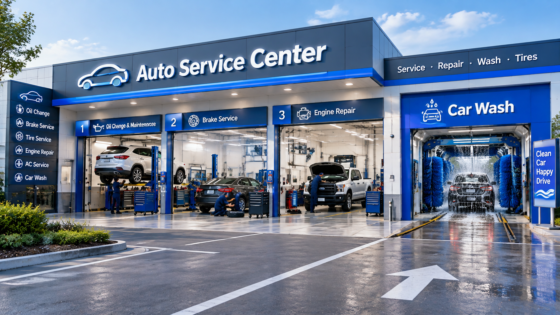
Automotive Services
Intelligent Vehicle Detection
Sensors can help identify vehicle position and dimensions.
This information allows the control system to manage certain washing movements.
However, sensor functions differ by machine.
Buyers should request details about detection methods, limitations, and protective controls.
PLC-Based Automatic Control
Many industrial car wash machines use programmable logic controllers.
A PLC can manage pumps, motors, valves, washing stages, and operating signals.
This supports repeatable wash programs.
Flexible Wash Programs
A commercial machine may offer several cleaning packages.
These could include pre-wash, foam application, rinsing, wax, and drying.
Not every model includes every function.
Therefore, buyers should verify the standard configuration and available options.
Industrial Pumps and Water Systems
The pump system must deliver suitable flow and pressure.
However, more pressure does not always mean better cleaning.
Spray design, chemical action, and cycle timing also matter.
Effective Drying
An automatic drying system can improve the customer experience.
However, the results depend on blower design, vehicle shape, and wash program.
Buyers should request operating information rather than relying on broad marketing claims.
Simple Maintenance Access
Technicians need safe access to pumps, motors, sensors, and other parts.
Good service access can help reduce maintenance time.
Therefore, it is an important buying factor.
7. Are Automatic Car Wash Machines Suitable for Electric Vehicles?
Many electric vehicles can use automatic car wash systems when the vehicle manufacturer permits that washing method and the machine is compatible with the vehicle.
However, EV compatibility is not universal.
The correct approach is to check both the car’s instructions and the wash equipment requirements.
Vehicle Dimensions
Electric vehicles include small cars, crossovers, SUVs, and pickup trucks.
Therefore, the machine should support the site’s expected vehicle dimensions.
Check the maximum permitted width, height, and length.
Vehicle Wash Modes
Some electric vehicles include a car wash mode or other settings for automated washing.
Depending on the model, these settings may control windows, wipers, charging-port behavior, or other features.
However, procedures vary.
Drivers should follow their vehicle manufacturer’s instructions.
Charging Port and Cable Safety
The vehicle should not enter the wash while connected to charging equipment.
Before washing, the driver should complete the charging session, disconnect the cable, and secure the charging port as directed by the vehicle manufacturer.
Roof Accessories and External Equipment
Some vehicles have roof racks, antennas, or other accessories.
These may affect wash compatibility.
Therefore, operators should display clear restrictions.
Avoid Unverified Safety Claims
No commercial car wash manufacturer should claim that every EV can use every washing system without risk.
Instead, provide technical limits and clear operating instructions.
8. How Should Operators Plan the Site Layout?
Site planning is one of the most important parts of a successful charging and washing project.
Poor layout can create traffic problems, reduce efficiency, and increase project costs.
Confirm Available Space
Start with a measured site drawing.
Identify existing chargers, parking bays, roads, utilities, buildings, and pedestrian routes.
Then, reserve enough space for the washing machine and related equipment.
Check Machine Installation Dimensions
Equipment dimensions and installation dimensions are different.
For example, a machine may physically fit inside a building but still lack enough space for vehicle entry, maintenance, or emergency access.
Therefore, request detailed layout drawings.
Allow Vehicle Turning Space
Drivers need enough room to approach and leave the machine.
This is especially important for larger SUVs and pickup trucks.
Plan Pedestrian Safety
Charging drivers may walk between their vehicles, stores, restrooms, and waiting areas.
Therefore, vehicle paths and pedestrian routes should be clearly separated where needed.
Prepare Drainage
The washing area needs suitable drainage.
Water should not flow toward charging equipment, pedestrian routes, or electrical cabinets.
The drainage system must also meet local requirements.
9. How Can Automatic Car Wash Systems Improve Charging Hub Efficiency?
A car wash can create more value from a commercial site.
However, it also brings additional operating requirements.
The goal should be efficient coordination rather than simply adding more equipment.
Independent Service Operation
The car wash and charging equipment should be able to operate as separate services.
A problem with one service should not automatically stop the other unless a shared safety condition requires it.
Digital Payment Options
Operators may consider card payments, QR-based transactions, or supported digital platforms.
However, the payment functions depend on the system provider and local market.
Equipment Status Monitoring
Some car wash machines support remote operating information or fault alerts.
This may help managers identify technical issues.
However, remote systems need appropriate access controls and security measures.
Planned Maintenance
Wash maintenance should be scheduled to reduce disruption.
Operators should also ensure that service vehicles do not block public charging bays.
Clear Customer Communication
Visible signs can show wash availability, operating hours, pricing, and expected service time.
This helps customers plan their visit.
10. Energy Management for EV Charging Stations and Car Wash Equipment
Charging equipment and automatic washing machines both use electricity.
Therefore, their combined demand must be reviewed carefully.
Understand Site Power Capacity
DC fast chargers can create significant electrical demand.
Car wash machines may also use pumps, motors, dryers, and heating equipment.
These loads should be evaluated together.
Separate Connected Load from Actual Energy Use
Installed electrical power is commonly measured in kilowatts.
Actual electricity consumption over time is measured in kilowatt-hours.
A machine’s maximum power rating does not show its full energy use per wash.
Evaluate Peak Demand
The site may experience high demand when several EVs are charging and a car wash is operating.
Therefore, electrical engineers should consider coincident loads, utility limits, and demand charges.
Explore Practical Load Management
Some projects may benefit from equipment scheduling or suitable electrical controls.
However, any load management system must respect charger requirements and machine operating limits.
Review Backup and Recovery Needs
A power interruption can affect both charging and washing services.
Therefore, operators should plan safe equipment shutdown, restart, and customer communication procedures.
Example Electricity Calculation
Assume an automatic wash cycle uses 5 kWh.
At an electricity rate of $0.18 per kWh, the estimated energy cost is $0.90 per wash.
The calculation is only an example.
Real energy consumption depends on the equipment and selected program.
11. Water Management and Environmental Performance
Commercial washing equipment needs a dependable water supply.
It also produces wastewater that must be managed.
For EV charging station developers, this makes water planning a major project requirement.
Estimate Water Use per Vehicle
Ask the supplier to state water consumption for a defined wash program.
Do not compare machines using figures that describe different washing conditions.
Consider Water Reclamation
A water reclamation system collects used wash water and treats it for suitable reuse.
This may reduce freshwater demand.
However, reclaimed water quality must fit the intended wash stage.
Protect the Final Rinse
A high-quality final rinse may require treated or fresh water.
Therefore, not every washing stage should automatically use the same reclaimed water.
Plan Wastewater Treatment
Commercial wash water can contain dirt, oils, and cleaning chemicals.
Local authorities may require suitable collection, treatment, and discharge arrangements.
Avoid Direct Stormwater Discharge
Operators should not assume that wash water can be released into ordinary storm drains.
Local wastewater rules must be checked.
Evaluate Environmental Benefits Carefully
Water reclamation can support more efficient operation.
However, it adds installation and maintenance costs.
Therefore, operators should calculate the actual financial and environmental benefits.
12. Automatic Car Wash Systems for Highway EV Charging Hubs
Highway charging hubs are one possible market for commercial automatic washing equipment.
These sites may serve travelers, commuters, and local drivers.
Consider Travel Behavior
Drivers using highway charging stations often value easy access and clear services.
A nearby car wash may be useful when the customer has time and wants the service.
However, not every charging stop creates car wash demand.
Prioritize Traffic Flow
Highway facilities may experience busy periods.
Therefore, a wash queue must not obstruct charging bays or site exits.
Match Washing Capacity to Demand
A high-capacity machine may be valuable at a busy commercial location.
However, operators should use realistic demand estimates before investing.
Offer Simple Wash Packages
Travelers may prefer clearly priced services.
Basic and premium programs can provide choice without making the purchase process too complex.
13. Automatic Car Wash Equipment for Urban Charging Centers
Urban charging facilities often face space constraints.
Therefore, compact equipment and good traffic management can be especially important.
Compact Equipment Selection
In-bay automatic car wash machines may fit some urban commercial sites better than large tunnel systems.
However, actual site suitability must be confirmed with drawings.
Noise Management
Pumps, dryers, and moving equipment can create noise.
Sites near homes or offices may face limits.
Therefore, noise assessment should be included in the project plan.
Local Customer Demand
An urban charging center may serve local residents, commuters, and nearby businesses.
Operators should study which customer groups are most likely to purchase washing services.
Shared Commercial Facilities
Some locations may combine charging with retail stores, parking services, or vehicle care businesses.
An automatic car wash can be considered as part of this wider service mix.
14. How Can Fleet Charging Stations Benefit from Automatic Car Washing?
Fleet facilities have different operating needs from public charging stations.
They often manage vehicles on planned schedules.
Therefore, a washing system may become part of routine fleet preparation.
Delivery Fleets
Delivery vehicles may return to a depot after daily routes.
A nearby automatic wash can support exterior cleaning.
However, the machine must fit the vehicles and accessories used by the fleet.
Rental Vehicle Operations
Rental businesses may need regular washing between customers.
Automatic equipment can support a repeatable process.
Electric Taxi Fleets
Taxi operators may value predictable cleaning times and consistent vehicle presentation.
However, washing must be planned around charging and service demand.
Corporate Vehicles
Business fleets may benefit from centralized washing arrangements.
This can help standardize cleaning procedures across vehicles.
Fleet Project Planning
Ask about daily vehicle volume, available operating hours, and the range of vehicle sizes.
These factors determine which machine configuration is practical.
15. Can Automatic Car Wash Systems Support EV Charging Station Revenue Growth?
They can, but the result depends on customer demand and operating economics.
A separate washing service may add gross revenue.
However, revenue growth does not automatically mean profit growth.
Calculate Wash Sales
Estimate average daily wash volume and selling price.
Use realistic local demand data.
Estimate Variable Costs
These may include water, electricity, chemicals, payment fees, and consumable parts.
Include Fixed and Periodic Costs
A wash facility may also require insurance, site rent, maintenance, software, and labor.
Account for Investment Costs
Include the machine, shipping, duties, construction, electrical work, drainage, and commissioning.
Example Monthly Wash Business Scenario
Assume:
- 25 paid washes per day
- $15 average wash price
- 30 operating days per month
- $4 variable cost per wash
- $3,000 monthly fixed operating costs
Estimated monthly gross revenue:
25 × $15 × 30 = $11,250
Estimated monthly variable costs:
25 × $4 × 30 = $3,000
Estimated monthly contribution after variable costs:
$11,250 − $3,000 = $8,250
Estimated monthly operating cash flow before financing, taxes, depreciation, and additional project-specific items:
$8,250 − $3,000 = $5,250
This example is not a sales guarantee.
The actual financial result can differ substantially.
16. What Determines the ROI of a Charging Station Car Wash Project?
Return on investment depends on the complete project.
Machine price is only one factor.
Initial Capital Investment
Include equipment, delivery, customs, construction, installation, utilities, and professional services.
Wash Volume
The number of paying customers is often a major factor.
A machine with unused capacity may not generate enough sales to recover the investment quickly.
Average Selling Price
Prices vary by location and service package.
Operators should research local competitors.
Operating Cost per Wash
Energy, water, chemicals, and maintenance all affect margins.
Downtime and Reliability
Equipment downtime can reduce sales.
Therefore, spare parts and technical support matter.
Simple Payback Example
Assume the complete wash project costs $180,000.
If it generates $5,250 in average monthly cash flow available for investment recovery, simple payback would be about 34.3 months.
However, this calculation excludes the time value of money and does not represent a complete investment analysis.
It also assumes stable performance.
For a real project, prepare conservative, base, and optimistic scenarios.
17. What Should North American EV Charging Site Operators Consider?
Commercial projects in the United States and Canada must account for local requirements.
Electrical Planning
Confirm the site’s existing electrical capacity.
The car wash system and EV charging infrastructure should be reviewed as part of the total load.
Permits and Inspections
Building, electrical, plumbing, wastewater, and site permits may be required.
The applicable rules depend on the jurisdiction.
Vehicle Compatibility
Some locations may serve a high share of SUVs and pickup trucks.
Therefore, vehicle clearance should be checked carefully.
Cold Weather Operation
Freezing temperatures can affect wash water, drainage, hoses, and moving equipment.
Cold-climate projects may need suitable freeze protection.
Local Service Support
For imported equipment, confirm installation responsibility, spare parts access, and repair arrangements before ordering.
18. What Should European EV Charging Station Buyers Consider?
European operators should review equipment safety, energy use, wastewater management, and local market requirements.
EU Product Requirements
Commercial machinery supplied to the European Union must satisfy applicable product legislation.
The precise obligations depend on the equipment and the date it is placed on the market.
CE Marking and Documentation
Where required, appropriate conformity assessment, documentation, and CE marking are important.
However, CE marking alone does not prove that every installation requirement has been met.
EV Charging Regulations
The EU Alternative Fuels Infrastructure Regulation sets requirements for certain publicly accessible charging services.
However, those charging rules should not be confused with the requirements governing car wash machinery.
Water and Wastewater Compliance
Water discharge requirements can vary by country and municipality.
Therefore, local assessment is necessary.
Multilingual User Interfaces
For international operations, suitable language options can support staff training and customer use.
However, the machine supplier should confirm which languages are actually available.
19. How to Choose a Reliable Automatic Car Wash Machine Supplier
Selecting equipment for an EV charging hub requires careful supplier evaluation.
A professional manufacturer should be able to discuss both technical specifications and project requirements.
Review Equipment Specifications
Ask for machine dimensions, operating modes, utility needs, component information, and installation drawings.
Confirm Vehicle Compatibility
Review the supported vehicle dimensions and operating restrictions.
Compare Equipment Configurations
Identify which functions are standard and which are optional.
Examples may include drying, underbody washing, water treatment, and different payment controls.
Verify Quality Testing
Ask whether the machine is tested before shipment.
Where appropriate, agree on factory acceptance testing procedures.
Review Installation Support
Clarify who handles civil work, electrical connection, mechanical assembly, commissioning, and training.
Confirm Spare Parts Availability
Ask for a recommended spare parts list and estimated replacement lead times.
Evaluate Technical Communication
Clear documents and timely technical responses are important for international projects.
They can help reduce misunderstandings during construction and commissioning.
20. What Questions Should Buyers Ask Before Requesting a Quote?
Before contacting an automatic car wash machine manufacturer, prepare a clear project brief.
This helps the supplier recommend suitable equipment.
Define the Business Model
Is the location a public charging hub, highway service area, fleet depot, or commercial parking facility?
Estimate Daily Washing Demand
How many vehicles are likely to use the wash?
Separate expected charging customers from customers who may visit only for washing.
Confirm Site Dimensions
What space is available for the machine, waiting lane, maintenance access, and vehicle exit?
Identify Local Utilities
Provide available electrical supply, water supply, drainage conditions, and any compressed air arrangements.
Describe the Vehicle Mix
Will the equipment mainly serve passenger cars, SUVs, pickup trucks, or commercial vans?
Identify Service Options
Do you need touchless washing, soft-touch cleaning, drying, premium programs, or optional water reclamation?
Explain Your Project Schedule
Share the expected construction and commissioning timeline.
The more accurate the project information, the more useful the technical proposal can be.
21. Common Mistakes When Combining EV Charging and Car Washing
A combined service site needs more planning than either service alone.
Avoid the following mistakes.
Assuming Every Charging Customer Will Buy a Wash
Charging traffic and car wash demand are different.
A customer may use one service without the other.
Therefore, estimate wash demand independently.
Ignoring Queue Space
A washing queue can block charger access if the site is poorly designed.
Underestimating Electrical Requirements
The combined equipment load may require upgrades.
Always seek a qualified electrical assessment.
Overlooking Wastewater Requirements
Commercial wash water requires suitable collection and management.
Choosing Equipment Only by Price
Low purchase cost does not guarantee good long-term value.
Making Unverified EV Safety Claims
Vehicle compatibility varies.
Operators must follow machine limitations and vehicle manufacturer guidance.
Ignoring After-Sales Service
An imported machine still needs local maintenance and technical support.
22. Frequently Asked Questions About Automatic Car Wash Systems for EV Charging Stations
Can EV charging stations offer automatic car washing services?
Yes. An EV charging station can offer a separate automatic car wash service when the site has suitable space, utilities, permits, and safe traffic arrangements.
Can an electric vehicle be washed while charging?
A normal combined charging and wash site should not assume this is safe. The practical approach is to end charging, disconnect the cable, and move the vehicle to a separate washing area.
Are touchless car wash systems suitable for electric vehicles?
Many EVs can use compatible touchless washing systems. However, owners must follow the vehicle manufacturer’s instructions, and the equipment must meet vehicle size and operating requirements.
What is the best automatic car wash machine for an EV charging hub?
The best machine depends on site dimensions, washing demand, vehicle mix, and budget. Compact in-bay equipment may suit smaller facilities, while larger sites may consider tunnel systems.
How much does it cost to add an automatic car wash to an EV charging station?
Costs depend on the machine, construction needs, utility upgrades, water treatment, shipping, and installation. A complete project quotation is more useful than a machine-only price.
Can automatic car wash systems improve charging station profitability?
They may generate additional revenue. However, profitability depends on customer demand, pricing, operating expenses, equipment reliability, and the total project cost.
Do automatic car wash machines require separate electricity and water supplies?
They require suitable utility connections. The final design depends on local infrastructure, machine specifications, and applicable installation rules.
Can automatic car wash systems support electric vehicle fleets?
Yes. Fleet operators may use compatible automatic car wash equipment for routine exterior cleaning. Capacity and vehicle compatibility must be checked first.
Are water recycling systems useful for charging station car washes?
They may reduce freshwater use when correctly designed. However, treatment costs, water quality requirements, and local discharge rules must be considered.
How should buyers choose an automatic car wash equipment supplier?
Compare technical specifications, manufacturing quality, machine compatibility, documentation, service support, and total ownership costs.
23. Final Checklist for EV Charging Station Car Wash Projects
Before investing in an automatic washing system, confirm the business case.
Start by estimating local wash demand and likely revenue.
Then, review the site layout and vehicle access.
Next, compare machine types, vehicle compatibility, cleaning performance, and expected capacity.
Check the combined electrical demand of the charging and washing equipment.
Also, assess water supply, drainage, wastewater management, and local permits.
Review machine safety, service access, spare parts, and supplier support.
Finally, calculate the total project investment and likely operating cash flow.
A practical evaluation should include more than optimistic sales assumptions.
The goal is to select a system that supports the property and can operate reliably over time.
24. Conclusion: The Business Value of Automatic Car Wash Systems for EV Charging Stations
Automatic car wash systems for EV charging stations can create useful new opportunities for commercial operators.
They can add a vehicle care service, diversify site revenue, and make better use of suitable commercial property.
However, the equipment must fit the project.
A small urban charging hub may benefit from compact in-bay automatic washing equipment.
A larger highway charging and retail development may have different capacity needs.
A fleet charging depot may focus on scheduled cleaning and operational consistency.
In every case, safe site design matters.
Charging and washing activities should be planned as separate services with clear vehicle movement and suitable utility infrastructure.
Equipment quality also matters.
Reliable controls, suitable pumps, durable components, clear maintenance procedures, and responsive technical support can all affect long-term results.
Ultimately, the strongest business case combines real customer demand with the right equipment and responsible financial planning.
For charging station operators, an automatic car wash is not simply another machine. It is a potential commercial service that should be evaluated as part of the site’s wider business model.
Request an Automatic Car Wash Equipment Proposal for Your EV Charging Site
Are you planning to add automatic car washing to an EV charging station, highway service area, commercial parking facility, or electric fleet depot?
The right equipment choice begins with understanding your project requirements.
Our team can discuss commercial automatic car wash configurations based on your available space, expected daily washing volume, vehicle types, and utility conditions.
To prepare a useful equipment proposal, please share your destination country, installation dimensions, target wash capacity, preferred washing method, and project schedule.
You may also request information about available wash programs, drying systems, water treatment options, and equipment documentation.
Contact Us to Discuss Automatic Car Wash Equipment for Your EV Charging Station Project.