 Aikeslan | Fully Automatic Car Wash Machine Manufacturer
Automatic Car Wash Equipment for Ambitious Business Owners
Automatic car wash equipment can help business owners build a repeatable service, manage wash quality, and serve customers through a defined process. However, the right system must fit the site, local demand, vehicle mix, and available support. A machine with strong headline features may still be a poor investment if those basics do not align.
For ambitious owners, the goal is to create a business that can run well today and grow on a sound base.
That requires more than choosing brushes, pumps, or a control screen. It means planning traffic flow, water supply, daily care, payment systems, and service access as one connected operation.
This guide explains how to compare automatic car wash systems for business use. It also shows how buyers in Europe and North America can turn technical features into practical buying decisions.
What Should Business Owners Look for First?
Start with five questions:
- Who will use the wash?
- How many vehicles may arrive during busy periods?
- Which vehicles must the system accept?
- What can the site physically support?
- Who will maintain the equipment?
These questions help narrow the equipment choice before price becomes the main focus.
For example, a fuel station with limited space may need a different layout from a dedicated express wash site. Meanwhile, a dealership may value predictable vehicle preparation more than high public throughput.
Therefore, the best automatic car wash equipment is the system that fits the business model.
A clear project brief also helps suppliers produce useful proposals. Without one, buyers may receive quotes for very different scopes and struggle to compare them.
1. Define the Business Model Before the Machine
An automatic wash can support several types of business.
A stand-alone operator sells washes directly to local drivers. A fuel retailer may use the wash to add convenience and another revenue stream. A dealership may wash vehicles before delivery or after service.
Fleet operators have another set of needs. They may focus on vehicle availability, controlled access, and a known wash schedule.
Each model changes the buying priorities.
Public retail sites need a simple customer journey and clear pricing. Fleet sites may need account records and access controls. Dealerships may place more weight on vehicle compatibility and staff workflow.
First, define the main use. Then identify any secondary use.
For instance, a private fleet wash may later open to the public. That change can affect payment, traffic layout, signage, and support needs.
Planning for it early is easier than rebuilding the site later.
2. Understand the Main Equipment Formats
Commercial car wash equipment comes in several formats. The correct choice depends on available land, demand, and the intended customer experience.
| Format | Basic operating approach | Key buying question |
|---|---|---|
| Rollover or gantry | The wash assembly moves around a stationary vehicle | Does the cycle fit expected demand? |
| Conveyor tunnel | Vehicles move through a sequence of wash stages | Can the whole site support the planned flow? |
| Touchless automatic | Cleaning uses chemicals and spray without wash brushes | Does the tested result suit local soil and expectations? |
| Brush or soft-touch automatic | Wash media contact the vehicle during cleaning | How are media condition and contact controlled? |
These categories overlap.
For example, a rollover may use brushes or a touchless process. A tunnel can combine contact cleaning with high-pressure stages.
Therefore, compare the actual wash sequence rather than relying only on the category name.
Also ask which features are standard, optional, or unavailable on the proposed model.
3. When a Rollover System Fits the Plan
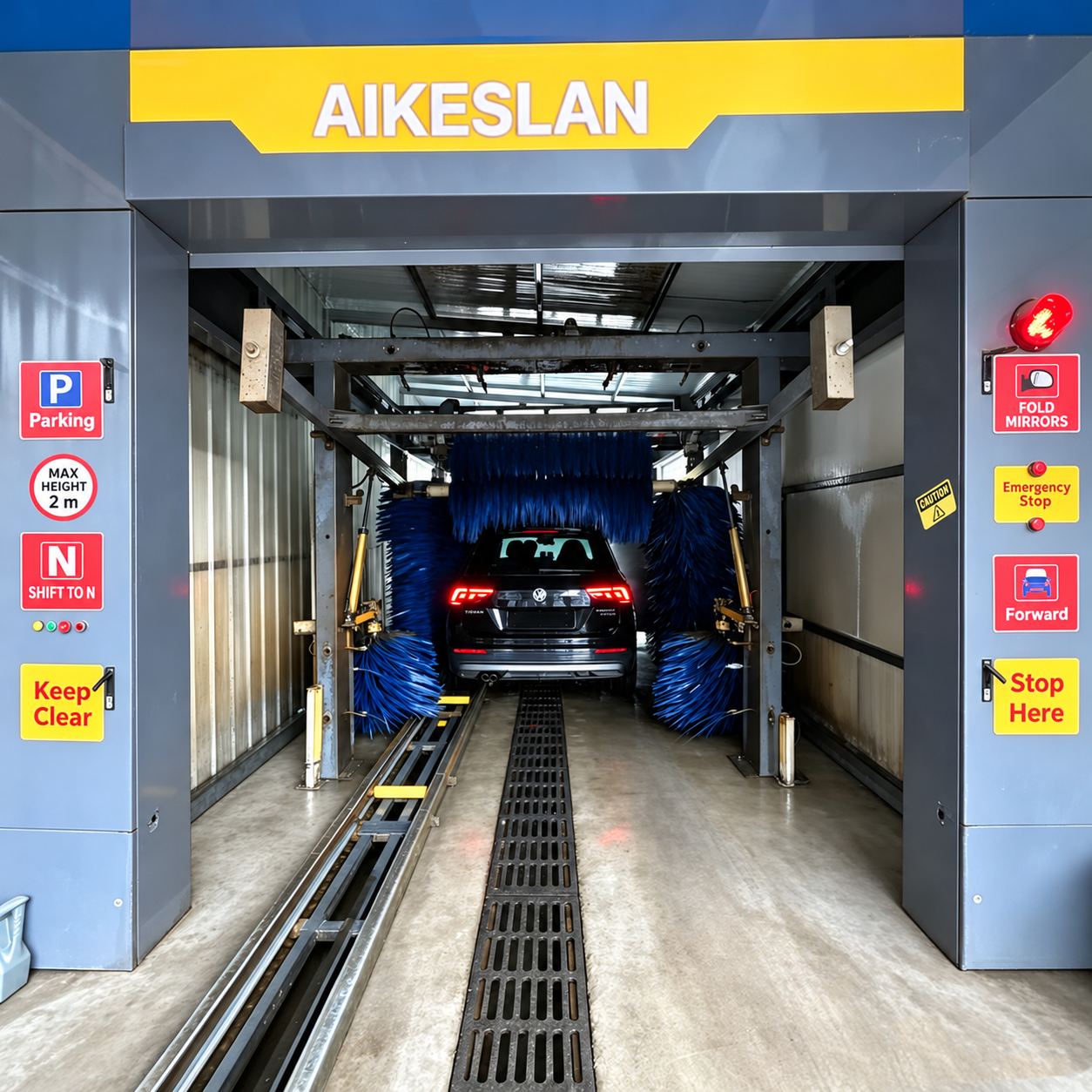
Tunnel Car Wash Machine
A rollover system can suit sites where vehicles enter a defined bay and remain in place during the wash.
Potential applications include fuel stations, dealerships, and stand-alone retail locations.
However, the full layout matters more than the machine’s footprint alone.
The site still needs safe entry, suitable waiting space, vehicle alignment, drainage, and access for service.
In addition, cycle length affects how quickly the bay can accept another vehicle.
Ask suppliers to separate wash time from the complete customer cycle. Payment, entry, positioning, and exit can add time around the wash itself.
A shorter advertised program does not automatically mean a shorter queue.
For an existing bay, request a measured survey. Confirm working clearances, door openings, equipment-room needs, and any structural changes.
This helps reveal whether a retrofit is practical before a final purchase decision.
4. When a Tunnel Wash Brush System Makes Sense
A tunnel wash brush system may suit a business designed around steady vehicle flow.
Vehicles pass through a sequence of stages, which can include prewash, brush cleaning, rinsing, and drying.
However, throughput depends on the complete operation.
Payment speed, loading practices, conveyor settings, vehicle spacing, and customer behavior all affect the result.
Therefore, buyers should ask suppliers to explain the assumptions behind any capacity figure.
Also review how the proposed tunnel handles the expected vehicle mix.
A site serving many pickups or larger SUVs may need different clearances and procedures from one serving mostly compact cars.
For owners planning future growth, review spare utility capacity and physical space for approved upgrades.
Yet avoid buying a much larger system based only on an optimistic forecast.
A tunnel investment should follow evidence of demand, a workable layout, and a realistic operating plan.
5. Compare Brush and Touchless Cleaning Fairly
Brush and touchless systems use different cleaning methods. Neither should be selected through broad claims alone.
Brush systems rely on suitable wash media, controlled movement, water, and chemicals. Touchless systems depend on the chosen chemical process and spray delivery without brush contact.
Both need correct setup and maintenance.
Therefore, request a demonstration using vehicles and soil conditions close to those at your planned site.
Review the result across several areas: lower panels, rear surfaces, wheels, glass, and drying.
Also inspect the same wash package that appears in the quotation.
A premium demonstration does not show what an entry-level package will deliver.
Furthermore, ask how performance changes with water temperature, local water quality, and seasonal dirt.
The best choice is the process that meets your customer promise under the conditions you expect to face.
6. Validate Demand Before Choosing Capacity
An ambitious business plan needs a grounded demand forecast.
Start with the local customer base, nearby services, site access, and likely travel patterns. Then consider pricing, opening hours, and seasonal changes.
Do not treat passing traffic as guaranteed wash demand.
A busy road may still offer poor access or place the site on the wrong side of a common route.
Likewise, an area with many vehicles may already have strong wash competition.
Build a low, base, and high demand case.
Then examine peak periods as well as daily totals.
A site can have modest daily volume but still face a short weekend rush. Conversely, a fleet may spread washing across controlled shifts.
This distinction helps you compare capacity with the actual arrival pattern.
Where possible, support forecasts with local observations rather than broad industry averages.
7. Design the Customer Journey Around the Equipment
The wash machine is one part of the customer journey.
Drivers must find the entrance, understand the offer, pay, position the vehicle, and leave safely.
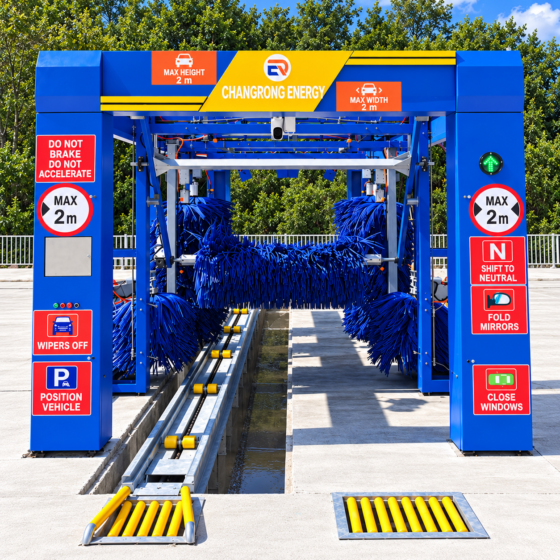
Tunnel Car Wash Machine
Each step can create delays or confusion.
Therefore, review the site from a first-time customer’s point of view.
Can drivers see the entry clearly? Is the package menu easy to read? Can a driver leave the queue before payment if needed?
Also consider staff visibility and access.
An operator who helps with loading should have a defined work area and clear procedures.
For multi-service sites, check whether wash traffic conflicts with fuel pumps, parking, vacuum spaces, or delivery vehicles.
A practical layout supports the machine’s intended flow.
It also helps prevent a common planning mistake: buying capacity that the site entrance or payment area cannot feed.
8. Match Equipment to the Vehicle Mix
Vehicle compatibility should be confirmed in writing for the proposed system.
Ask about accepted dimensions, ground clearance, wheel and tire limits where relevant, and excluded accessories.
Roof racks, rear carriers, open loads, and unusual body shapes can require special rules.
In addition, driver-assistance features and vehicle-specific wash instructions may affect entry procedures.
Clear customer guidance helps staff apply the approved rules consistently.
For fleet projects, create a vehicle list with dimensions and known features. Then ask the supplier to review it against the proposed equipment.
Do not assume a passenger-car machine suits every van or commercial vehicle.
Specialized applications may require a purpose-built system. For example, ISTOBAL describes its HW’ROTATORS as equipment designed for irregularly shaped commercial vehicles that may not suit a standard rollover. ISTOBAL HW’ROTATORS
The lesson is to confirm fit before choosing the machine.
9. Turn Wash Quality Into a Testable Requirement
“Excellent cleaning” is too vague for a purchase specification.
Instead, define what customers should receive.
For example, the offer may promise an exterior wash with a specified rinse and drying stage. Additional wheel or lower-body treatment may belong to a higher package.
Then agree on how the supplier will demonstrate the result.
Use representative vehicles and record the water, chemical setup, selected program, and operating conditions.
Also distinguish cleaning from drying.
A vehicle can look clean while retaining water around mirrors and trim. Likewise, strong drying cannot correct missed soil.
For a dealership, finish expectations may differ from those of a quick retail wash.
Therefore, write acceptance criteria around the intended service.
A documented review gives the buyer and supplier a clearer basis for adjustments during commissioning.
10. Plan Water Supply and Treatment Early
Water planning should begin before the equipment order.
Provide the supplier with available flow, pressure, and water-quality information. Then confirm what the quoted configuration requires.
Depending on the site and wash process, the proposal may include storage, filtration, softening, or final-rinse treatment.
These functions serve different purposes.
For example, filtering particles does not automatically address dissolved minerals. Therefore, avoid treating “water treatment included” as a complete specification.
Ask which circuits receive which water quality.
Also confirm how treatment equipment is serviced and how replacement items are sourced.
Where reverse osmosis is proposed, include feed requirements, maintenance, and reject-water handling in the site plan.
Good water planning supports wash consistency and equipment care.
It also reduces the risk of discovering a major infrastructure gap after the machine has arrived.
11. Evaluate Water Reclaim Claims With Clear Definitions
Water reclaim can reduce fresh-water demand for suitable wash stages. However, performance depends on the system, treatment process, and intended reuse.
Ask suppliers to define every percentage they quote.
Does the figure refer to collected water, treated water, total spray volume, or fresh-water reduction?

Reciprocating Car Wash Machine
These are different measures.
Also check which stages can use reclaimed water and which require another water source.
Treatment needs may include managing particles, odor, and other quality factors. The exact process must match the application.
Furthermore, budget for tanks, cleaning, service, and any required consumables.
Reclaim equipment adds a maintenance responsibility as well as a potential resource benefit.
A useful proposal should show the water balance for the planned site.
That is more informative than a broad claim that the system “recycles nearly all water.”
12. Check Power, Drainage, and Climate Fit
Equipment selection must fit the available site services.
Confirm the required electrical supply, installed load, and expected operating demand. These figures are related, but they are not the same.
Also ask about compressed air, heating, drainage, and equipment-room conditions.
For cold locations, review the approved freeze-protection plan and what happens during a shutdown or power failure.
For outdoor sites, consider the stated environmental limits.
Meanwhile, drying equipment may make noise a key layout issue near homes or other sensitive areas.
Local requirements vary across Europe and North America. Have the project team verify the applicable planning, utility, wastewater, and installation requirements for the exact site.
Do this before finalizing the scope.
A machine quotation does not establish that all building works, permissions, and site services are included.
13. Use Automation to Support Clear Workflows
Automation can control wash stages, apply programmed sequences, and help staff monitor the machine.
However, automatic operation still requires oversight.
Staff may need to clean sensors, inspect equipment, replenish chemicals, assist customers, and respond to faults.
Therefore, ask suppliers to describe a normal operating day.
Which tasks happen before opening? What needs attention during a busy shift? Which checks follow shutdown?
Also request a demonstration of the operator screen.
A useful interface should make normal status, active faults, and required actions easy to understand.
Review language options and training needs for the actual team.
Finally, confirm how settings are protected from unintended changes.
Clear user roles can help keep approved programs consistent across shifts and sites.
The value of automation comes from a reliable process that people can understand and manage.
14. Assess Remote Monitoring as a Defined Feature
Connected equipment can give approved users access to selected site data.
Depending on the platform, that may include wash counts, machine status, sales records, or service alerts.
For example, WashTec Plus describes remote machine monitoring, wash-count access, and issue notifications. These capabilities belong to that offering and do not establish what another supplier’s machine includes. WashTec Plus
For your project, ask exactly which data points are available.
Also confirm subscriptions, user limits, export options, and support terms.
A dashboard showing an error is different from a platform that can create and track a service task.
Furthermore, ask what happens when the internet is unavailable.
Define which local functions continue and how staff receive fault information.
Remote monitoring is most useful when every important alert has an owner and a clear response process.
15. Choose Payment Tools That Fit the Business

Tunnel-type car wash machine
Payment should make buying a wash simple.
Possible options include a local pay station, attended point of sale, fleet accounts, or a compatible digital platform.
However, support varies by supplier and market.
Confirm accepted payment methods, transaction fees, settlement arrangements, and integration costs.
Also ask how refunds, failed payments, and machine outages are handled.
Memberships may support repeat visits, but they need a realistic commercial plan.
Unlimited access can change wash frequency and peak demand. Therefore, assess contribution and capacity rather than judging success only by membership count.
For fleet accounts, useful features may include vehicle identification, access rules, and usage reports.
Test the full customer transaction before opening.
A payment terminal that works on its own does not prove that package selection, machine authorization, receipts, and reporting work together.
16. Make Maintenance Access Part of the Purchase
Maintenance is easier when service needs are considered during selection.
Review how trained staff reach filters, pumps, wear parts, sensors, and control areas.
Ask which tasks require special tools or supplier assistance.
Also request the maintenance schedule for the exact configuration.
It should distinguish routine operator care from technical work.
Where usage-based reminders are offered, confirm which counters trigger them and how completion is recorded.
Then review spare-parts availability.
A clear part number and a suitable local stock plan can matter more during a breakdown than an attractive feature list.
For each critical item, ask about lead time and approved alternatives.
Finally, confirm the service arrangement in the destination market.
The manufacturer’s global presence does not automatically establish local response time for your specific site.
17. Plan Staffing Around the Whole Operation
Automatic car wash equipment can change labor needs. However, staffing depends on the business model and service promise.
A tunnel may need loading assistance and customer support. An in-bay site still needs cleaning, inspection, replenishment, and fault response.
Therefore, build a task-based labor plan.
List opening checks, customer-facing work, routine care, and closing tasks.
Then estimate how those tasks change during busy periods.
Also plan cover for absence and training.
A site that depends on one experienced employee may become difficult to run when that person is unavailable.
For new staff, written instructions should support hands-on training.
Use clear escalation rules so employees know when to stop the equipment and call for help.
A realistic staffing plan makes operating-cost estimates more credible and helps the site deliver a consistent service.
18. Compare Total Installed Cost
The equipment price is only part of the project budget.
A complete investment plan may include:
- Site surveys and design.
- Building and civil works.
- Utility connections.
- Water treatment and reclaim equipment.
- Delivery and installation.
- Payment systems and software.
- Commissioning and training.
- Initial chemicals and spare parts.
- Opening costs and working capital.
Not every project needs every item. However, each should be checked.
Ask suppliers to state inclusions, exclusions, and buyer responsibilities clearly.
For international purchases, also confirm delivery terms, import responsibilities, and the agreed currency.
Next, compare proposals using the same scope.
A lower machine price may become a higher installed cost if essential systems are excluded.
Keep a contingency based on the project’s unresolved risks.
This creates a more useful budget than a single purchase-price comparison.
19. Build a Transparent Profitability Model
Revenue forecasts should connect to actual wash volume and package mix.
A simple starting point is:
Monthly wash revenue = paid washes × average realized revenue per wash
Use realized revenue after relevant discounts rather than the highest menu price.
Next, estimate variable costs such as chemicals, water, wastewater charges, energy, and payment fees.
Then include fixed operating costs and appropriate maintenance provisions.
For illustration, assume a wash earns 12 currency units and has variable costs of 4 units. Its contribution before fixed costs is 8 units.
If monthly fixed costs are 12,000 units, operating break-even would be 1,500 paid washes under those assumptions.
This is a hypothetical calculation, not an industry benchmark.
It excludes costs not included in the model, such as financing or tax.
Test low, base, and high scenarios, and account for seasonality.
A strong investment decision should remain understandable when optimistic assumptions are reduced.
20. Consider Downtime and Recovery Costs
A wash that cannot operate cannot deliver its intended service.
Therefore, evaluate likely recovery as well as normal performance.
Ask how faults are recorded, what support is available, and which repairs can be completed locally.
Also review parts-related delays.
A low-cost component can cause a long closure if it is difficult to obtain.
In the business model, separate planned maintenance from unexpected downtime.
Do not assume all missed sales are permanently lost. Some customers may return later, while others may choose another site.
Use contribution rather than gross sales when estimating the direct effect of missed washes.
Furthermore, record repeat faults after opening.
A machine that repeatedly stops for the same unresolved reason needs a different response from one isolated event.
Useful service history helps the operator and supplier improve reliability together.
21. Design Growth Around Evidence
Ambitious business owners often plan beyond one site.
However, expansion should follow a proven operating model.
Before repeating a layout or equipment choice, review actual traffic, wash quality, maintenance needs, labor use, and customer response.
Then identify which parts of the model can be standardized.
Common reporting, training, and parts can simplify management. Yet site conditions still vary.
A second location may have different water quality, land limits, or customer vehicles.
Therefore, standardize the decision process rather than assuming every site needs the same machine.
For future upgrades, ask suppliers what can be added and what would need replacement.
Confirm physical space, utility headroom, controller compatibility, and commercial terms.
A promise that equipment is “ready to grow” should be supported by a defined upgrade path.
22. Use Demonstrations and Handover Tests Wisely
A demonstration should answer your buying questions.
Bring a checklist and use representative vehicles where possible.
Observe entry, positioning, wash quality, drying, noise, and staff interaction.
Also ask to see routine service access and fault information.
An operating customer site can provide useful context, but its results may not transfer directly to your project.
Record the configuration and conditions behind the demonstration.
At your own site, agree on commissioning and handover checks before installation.
These should confirm the quoted functions, required site services, payment workflow, and approved fault responses.
Document any open items and who will resolve them.
Also obtain final drawings, manuals, spare-parts information, and training records.
A clear handover turns an equipment delivery into a more manageable operating system.
Frequently Asked Questions
What is the best automatic car wash equipment for a new business?
The best fit depends on demand, land, vehicle mix, utilities, budget, and support. Start with a site and business brief. Then compare complete proposals against the same requirements.
Is a tunnel better than a rollover?
A tunnel may suit a planned continuous-flow operation, while a rollover may fit a bay-based site. Neither is automatically more profitable. Compare installed cost, practical capacity, traffic access, and operating needs.
How much does commercial car wash equipment cost?
There is no single useful price without a defined scope. Equipment configuration, site works, water treatment, payment tools, installation, and support all affect the total. Request a complete installed-cost breakdown.
Can an automatic car wash run without staff?
Some sites support limited unattended operation, depending on their design and local requirements. They still need inspection, cleaning, maintenance, and fault response. Confirm the approved operating model with the supplier.
Does water reclaim mean no fresh water is needed?
No. Reuse depends on treatment quality, the wash stage, and system design. Ask for a site-specific water balance and a clear explanation of fresh-water needs.
What should I ask a car wash equipment supplier?
Ask about configuration, practical capacity, accepted vehicles, site services, maintenance, parts, software costs, and local support. Also request a sample maintenance plan and documented acceptance criteria.
Should I choose the fastest wash program?
Choose the program that meets your quality promise and site demand. Review the full customer cycle, including payment and positioning. Faster washing alone does not guarantee better site performance.
How can I prepare for a useful quotation?
Provide a site drawing, vehicle list, traffic estimate, utility information, water data, climate conditions, and budget scope. A detailed brief helps the supplier recommend a suitable configuration.
Turn Your Growth Plan Into an Equipment Specification
Automatic car wash equipment creates value when its capabilities match the business around it.
The right format supports your customer journey. Suitable water and power services support the wash process. Meanwhile, clear maintenance and service arrangements help protect daily operation.
For an ambitious owner, these details are the foundation for repeatable growth.
Before requesting a final price, define your site, expected demand, vehicle mix, wash packages, and service needs.
Then ask for a layout proposal, configuration list, installed-cost breakdown, and maintenance plan.
Whether you are considering a tunnel wash brush system, a rollover, or a touchless machine, those documents make the purchase easier to assess.
They also help you choose a system that fits your business goals and the work required to achieve them.