 Aikeslan | Fully Automatic Car Wash Machine Manufacturer
Great Service Doesn’t Stop at the Pump.
How Automatic Car Wash Equipment Helps Fuel Retailers Deliver a Better Customer Experience
A fuel stop can meet more than one need. Drivers may arrive to fill the tank, buy a drink, clean the vehicle, or prepare for the next part of their trip. For the operator, each service shapes how customers remember the site.
That is why great service should continue beyond the pump.
Fuel station car wash solutions can extend that service by giving drivers another useful reason to visit. However, the value depends on more than installing a machine. Wash quality, payment, access, upkeep, and staff support must work together.
For business owners in Europe and North America, the right automatic car wash equipment should fit both the site and the customer promise.
This guide explains how to make that connection. It covers equipment choices, technical features, operating needs, and practical steps for building a wash service that belongs within the wider business.
What Makes a Fuel Station Car Wash Work Well?
A successful fuel station car wash brings together five things: suitable equipment, clear access, simple payment, consistent results, and dependable support.
When those parts align, the wash becomes a natural part of the visit.
Drivers can understand the offer, find the entrance, use the service, and leave without confusion. Meanwhile, staff can manage routine tasks and resolve problems through a clear process.
However, adding a wash does not guarantee higher profit or more loyal customers.
The result depends on local demand, pricing, costs, and execution.
Therefore, operators should treat the project as a service investment. The machine is central, but it must work within the site’s layout and operating model.
A useful starting question is: what customer need can this wash meet better than the available alternatives?
1. Start With the Whole Customer Visit
Customers rarely divide their visit into separate operating departments.
They see one site.
If the fuel area is clean but the wash entrance is unclear, the overall experience suffers. Likewise, a friendly store team cannot fully offset a wash code that fails without a clear way to get help.
Therefore, map the visit from arrival to departure.
Consider where drivers first see the wash offer, how they pay, and how they reach the bay or tunnel.
Also review what happens after the wash.
Can the vehicle exit without crossing a busy pedestrian route? Is there room to use vacuums, if provided? Can drivers return to the store without blocking others?
These details connect the equipment to everyday convenience.
They also reveal problems that a machine-only quotation may miss.
2. Understand the Commercial Role of the Wash
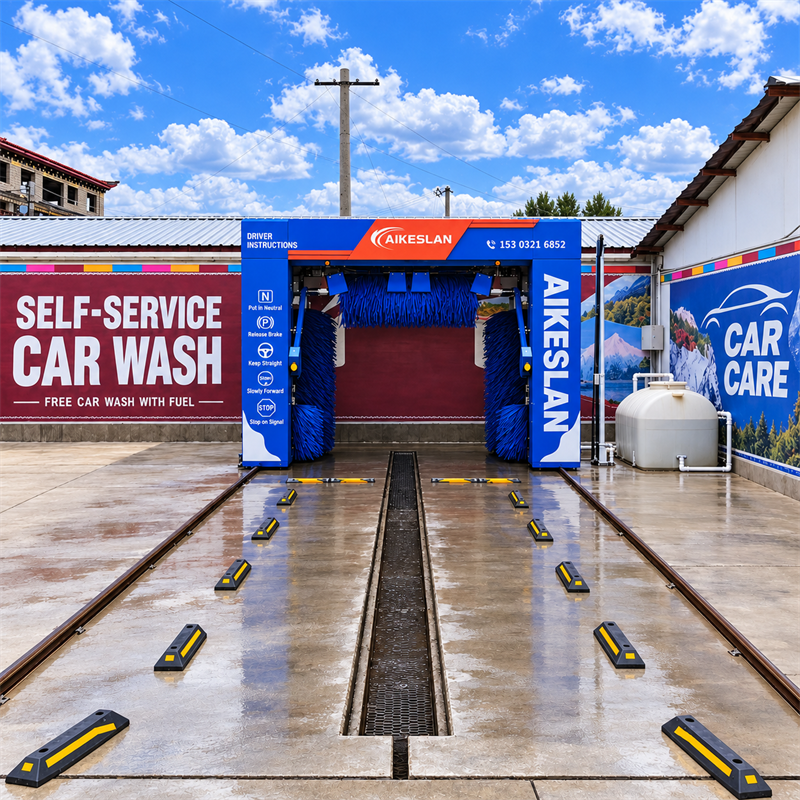
Reciprocating machine
A car wash can serve different business goals.
One operator may want to improve an existing customer offer. Another may want a new source of contribution. A third may plan a broader vehicle-care destination.
Each goal leads to different priorities.
For example, a wash designed mainly for current fuel customers may need strong payment links and easy access from the forecourt.
A site seeking dedicated wash traffic may need better roadside visibility, separate queue space, and a wider local marketing plan.
The combined offer already exists in practice. Dash In, for example, describes rewards that connect store, car wash, and fuel purchases. This shows one way services can be linked; it does not establish the commercial result for another operator. Dash In Fuel and Rewards
Define the intended role before selecting the equipment.
Then measure whether the wash performs that role after opening.
3. Build Demand Forecasts From Local Evidence
Passing traffic is useful information, but it is not a wash forecast.
Drivers may lack time, find access difficult, or already use another wash. Some may visit only for fuel and leave by a route that bypasses the wash entrance.
Therefore, study the actual catchment.
Review nearby homes, workplaces, competing washes, vehicle types, and common travel routes.
Next, observe different days and times.
A commuter site may face short peaks. A residential site may see stronger weekend demand. Meanwhile, a rural station may serve vehicles with different cleaning needs from an urban location.
Build low, base, and high demand cases.
Also separate annual demand from peak arrival patterns.
The equipment must suit the busy periods, while the investment must remain credible during quieter months.
Use local observations and documented assumptions rather than treating broad market figures as a promise.
4. Choose Equipment That Fits the Site
Fuel station car wash solutions can include rollover, tunnel, brush, touchless, or combined configurations.
These terms describe different aspects of a system.
A rollover moves the wash assembly around a stationary vehicle. A conveyor tunnel moves vehicles through a sequence of stages.
Brush and touchless describe cleaning approaches, so they can overlap with those formats.
| Site situation | Format worth assessing | Main point to confirm |
|---|---|---|
| Existing wash bay | Rollover or in-bay automatic | Clearances and full cycle time |
| Strong demand with suitable land | Conveyor tunnel | Queue, loading, and exit capacity |
| Customers seeking no brush contact | Touchless configuration | Tested cleaning result |
| Demand for contact cleaning | Brush or soft-touch configuration | Media care and contact control |
| Mixed or unusual vehicles | Application-specific equipment | Written compatibility |
This table is a starting point.
A measured site review and configuration-specific proposal should guide the final choice.
5. Assess Rollover Equipment Beyond Its Footprint
A rollover can suit a bay-based operating model.
However, buyers should look beyond whether the frame fits inside the building.
The site also needs suitable approach space, vehicle positioning, drainage, service access, and a clear exit.
In addition, consider the complete customer cycle.
Advertised wash time may exclude payment, entry, alignment, and departure.
Those steps affect practical capacity.
For an existing petrol station wash bay, request a measured survey. Confirm doors, rails, equipment-room space, and access to utilities.
Also identify which existing parts can remain and which need replacement.
A retrofit may look simple until drainage or power constraints appear.
Therefore, ask for a written scope that separates machine supply from building work.
This makes the project easier to price and reduces uncertainty during installation.
6. Evaluate a Tunnel Wash Brush System as a Full Operation
A tunnel wash brush system may suit a site designed for a steady flow of vehicles.
Its stages can include prewash, brush cleaning, rinsing, and drying, depending on the configuration.
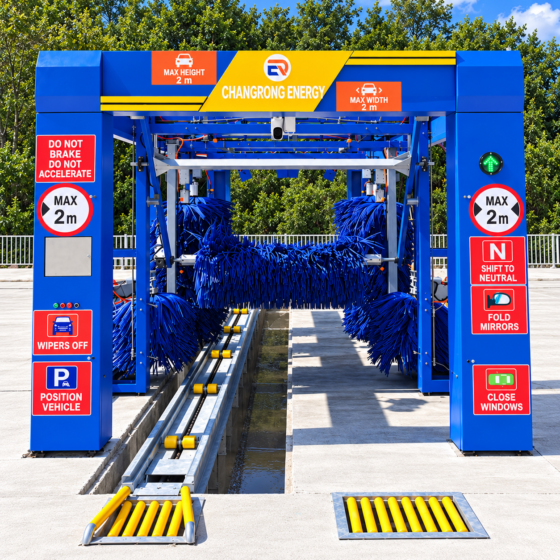
Tunnel Car Wash Machine
Yet the conveyor is only one part of the flow.
Payment, loading, vehicle spacing, and exit access all affect performance.
A tunnel with strong technical capacity can still face delays if the entrance cannot feed it smoothly.
Therefore, request a site-flow review alongside the equipment proposal.
Ask how the system handles the expected vehicle mix and what staff must do during loading.
Also examine maintenance access around brush assemblies and water circuits.
For growth plans, confirm which upgrades are supported.
Space and spare utility capacity may help future expansion, but only if the supplier provides a clear technical path.
Do not treat “expandable” as a complete specification.
7. Turn Wash Quality Into a Clear Promise
Customers need to understand what they are buying.
Therefore, define the result before designing the package names.
Separate the basic exterior wash from optional wheel, lower-body, finish, or drying treatments.
Then ensure the equipment and chemicals can deliver the stated process.
Avoid broad claims such as “perfect cleaning for every vehicle.”
Instead, test representative vehicles under known conditions.
Review front surfaces, rear areas, lower panels, wheels, glass, and drying.
Also note the selected package, water quality, temperature, and chemical setup.
This creates a fair basis for comparison.
Moreover, customer expectations may differ by location.
A quick wash at a commuter station may serve a different need from a premium vehicle-care offer.
The promise should match the actual service, price, and time required.
8. Make Vehicle Compatibility Easy to Understand
A driver should know whether the vehicle can enter before reaching a difficult turning point.
Ask the supplier to confirm accepted dimensions and any model-specific restrictions.
Relevant points may include height, width, wheel limits, ground clearance, and external accessories.
Roof carriers, rear racks, open loads, or unusual body shapes can need special treatment or exclusion.
Therefore, turn the approved rules into clear signs and staff instructions.
Do not rely on one small notice at the bay entrance.
For sites serving commercial vans or local fleets, provide a vehicle list during equipment selection.
Passenger-car compatibility does not establish suitability for every commercial vehicle.
Finally, align entry guidance with vehicle manufacturers’ instructions where relevant.
Clear rules support a smoother customer journey and help staff handle questions consistently.
9. Keep Payment Simple From Pump to Wash
Payment is often where a combined service becomes either convenient or frustrating.
Customers may buy a wash at the pump, in the store, at a terminal, or through a compatible app.
However, these links depend on the payment platform and equipment configuration.
Ask suppliers to show the full transaction.
Can the selected package pass correctly to the wash controller? Is the code easy to read? What happens if a receipt does not print?
Also check expiration rules, refunds, and unused purchases.
A failed transaction should have a clear recovery path.
Staff need a defined way to verify a purchase and provide help without creating duplicate charges.
Before opening, test normal purchases and failure cases.
A working card terminal alone does not prove that the complete fuel station car wash payment process works.
10. Use Bundles Without Hiding the Value
A fuel-and-wash offer can make the combined visit attractive.
However, the terms should be easy to understand.
State what the customer receives, which wash package applies, and any relevant conditions.

Rendering of a gas station
Avoid making drivers search through complex wording while choosing at the pump.
For the operator, assess the bundle as a full transaction.
A higher wash count does not automatically mean higher contribution if the discount is too large.
Therefore, track realized revenue, variable cost, and repeat use.
Also compare promotions with normal trading periods carefully.
Weather, traffic, and season can affect the result.
A useful trial has a defined purpose and a review date.
It should help answer whether the offer creates worthwhile additional business rather than only discounting purchases customers would have made anyway.
11. Design Packages Around Real Differences
A short, clear menu helps customers choose.
Each package should offer a visible or understandable difference.
For example, a higher tier may add an approved wheel treatment, another rinse stage, or a specified finish product.
However, only describe functions included in the actual program.
Vague labels can make different packages appear identical.
Therefore, use familiar words and brief benefit descriptions.
Then train staff to explain the choices in one or two sentences.
Also check how package selection affects cycle time and resource use.
A popular premium option may change queue behavior during busy periods.
Finally, review sales mix alongside complaints and rewash requests.
The best-selling package is valuable only when the business can deliver it consistently at a suitable margin.
12. Treat Traffic Flow as Part of Service Quality
A convenient wash should not make the rest of the station harder to use.
Review queue length, turning space, delivery routes, and pedestrian movement.
Also consider drivers who change their minds.
Where the layout permits, a clear escape route can prevent an undecided customer from blocking the line.
For mixed-use sites, check conflicts with fuel islands, parking, charging spaces, and vacuum areas.
Peak periods deserve particular attention.
The wash queue may grow at the same time as store and fuel demand.
Therefore, test the layout against several realistic scenarios rather than an empty-site drawing.
Include staff movement as well.
Employees need suitable access for routine checks and customer assistance.
Good traffic planning supports both convenience and practical equipment capacity.
13. Plan Water Quality Before Installation
Water conditions influence equipment needs and wash results.
Provide the supplier with available flow, pressure, and water-quality information early.
Then request the requirements for the quoted configuration.
The proposal may include storage, filtration, softening, or final-rinse treatment.
These functions are different.
A filter that removes particles does not automatically remove dissolved minerals.
Therefore, ask which treatment serves each circuit.
Also confirm maintenance tasks and consumable costs.
If reverse osmosis is proposed, include feed requirements and reject-water handling in the plan.
A clear water specification supports more stable operation.
It also helps avoid late project changes when the existing supply cannot meet the machine’s needs.
The building connection and the wash equipment should be planned together.
14. Assess Reclaim Systems With Defined Numbers

Installation Visualization
Water reclaim can reduce fresh-water needs for suitable wash stages.
However, percentage claims need a clear basis.
Ask whether the figure refers to collected water, treated water, reused spray volume, or reduced fresh-water intake.
These measures are not interchangeable.
Also confirm where reclaimed water can be used in the proposed wash process.
The treatment system must suit the expected water quality and intended reuse.
Next, include tanks, cleaning, servicing, and consumables in the budget.
Reclaim adds operating tasks as well as a potential resource benefit.
For a useful comparison, request a water balance based on the planned configuration.
That gives the operator a clearer picture than a general claim that the machine is “water saving.”
Any published environmental claim should reflect evidence from the actual system and conditions.
15. Match the System to Climate and Local Infrastructure
A fuel station in a cold inland region faces different conditions from one in a mild coastal area.
Therefore, equipment selection should follow the actual location.
Review operating temperatures, weather exposure, water conditions, and service-room requirements.
At freezing sites, ask for the approved protection and shutdown process.
Also confirm what happens during a power failure.
For outdoor equipment, review material suitability and stated environmental limits.
Meanwhile, power, drainage, wastewater handling, and noise can affect layout and project cost.
The applicable requirements vary by jurisdiction and site.
Have the project team verify them before finalizing the equipment order.
A machine quotation does not establish that permissions or infrastructure are complete.
Early coordination helps keep the project scope clear.
16. Use Digital Monitoring to Support Action
Remote monitoring can give approved users access to selected machine and business information.
Depending on the offering, this may include wash counts, consumption records, status, or service alerts.
For example, WashTec describes digital management tools that connect operating information with service planning and remote support. These are supplier-specific capabilities; buyers must verify what their own quotation includes. WashTec Digital Car Wash Management
The practical question is what happens after an alert.
Who receives it? Who decides whether the wash remains open? How is the task assigned and closed?
Also confirm connection costs, data export, access permissions, and offline behavior.
A dashboard is most useful when it supports a defined response.
It should help the team act, rather than simply display another number.
17. Keep Preventive Maintenance Visible
Reliable service depends on routine care.
Automatic equipment still needs cleaning, inspection, replenishment, and technical maintenance.
Start with the manufacturer’s schedule for the exact configuration.
Then assign tasks by role.
Operators should know which checks they can complete and which need trained technical staff.
Record findings, service work, and unresolved issues.
Where usage counters are available, combine them with the approved time-based requirements.
Also monitor repeat faults.
Clearing an alarm may restore service without resolving its cause.
Therefore, keep follow-up work visible until the issue is addressed.
Planned service windows should account for local demand, but required work should not be delayed simply because the site is busy.
A maintainable system is part of the customer service offer.
18. Give Staff a Practical Recovery Process
Good service matters most when something goes wrong.
A customer may have a valid code that fails, receive an incomplete wash, or find the bay closed after purchase.
Staff need a clear response for each situation.
Provide instructions for checking transactions, issuing approved refunds, recording complaints, and contacting support.
Also define who can restart the equipment and under what conditions.
Customer assistance should never require staff to bypass safeguards or enter an unsafe area.
For technical faults, follow the approved stop and isolation procedures.
Afterward, record the cause and resolution where known.
This history helps identify recurring problems.
A calm, consistent recovery process can protect trust even when the original visit did not go as planned.
19. Understand the Full Cost of Ownership
The equipment price is only one part of a fuel station car wash investment.
A complete budget may include site design, civil work, utilities, treatment equipment, delivery, installation, payment tools, training, and initial stock.
Then add ongoing costs.
| Cost area | Items to review |
|---|---|
| Resources | Water, wastewater, energy, chemicals |
| People | Routine care, assistance, management |
| Equipment | Wear parts, maintenance, repairs |
| Digital tools | Subscriptions, connectivity, payment fees |
| Site | Cleaning, drainage care, insurance and other relevant overhead |
| Finance | Applicable funding and ownership costs |
Ask suppliers to state inclusions and exclusions clearly.
For a retrofit, identify removal and disposal responsibilities.
For imported equipment, clarify delivery terms and local installation support.
Comparable scope makes price comparisons more meaningful.
20. Build a Business Case With Transparent Assumptions
Start with expected paid washes and average realized revenue.
Then subtract variable costs to estimate contribution per wash.
For illustration, assume realized revenue of 10 currency units and variable costs of 3 units. Contribution before fixed costs would be 7 units.
If the wash’s modeled monthly fixed costs were 7,000 units, operating break-even would be 1,000 washes under those assumptions.
This is a hypothetical example, not a forecast or industry benchmark.
The result changes with discounts, package mix, resource costs, labor, and downtime.
Include all relevant costs in the model and state any exclusions.
Also separate fuel, store, and wash effects.
A promotion may move spending between services rather than create entirely new value.
Test a cautious case before relying on the most optimistic forecast.
21. Choose Support That Fits the Site
Supplier support should be assessed before the order.
Ask who installs, commissions, maintains, and repairs the machine in your market.
Also confirm support hours, escalation routes, and spare-parts lead times.
A global brand name does not define the response available at one location.
Request a sample maintenance plan and service record.
For remote support, clarify which actions technicians can perform and how access is controlled.
Furthermore, plan a suitable stock of approved spare parts.
The right list depends on failure impact, replacement time, and storage needs.
Finally, ask for a documented handover.
It should include configuration records, drawings, manuals, training, and open issues.
Strong support makes the equipment easier to own and helps the operator keep the customer promise.
22. Launch Through a Controlled Review
Opening day should follow testing, not replace it.
Before launch, verify the full customer journey.
Test purchases from each supported channel, package selection, entry guidance, wash operation, and exit.
Also test agreed failure and recovery cases under controlled conditions.
Train staff using realistic questions.
During the early operating period, review queue behavior, wash results, resource use, payment issues, and customer feedback.
Adjust only within approved settings and procedures.
Then compare actual results with the business plan.
For multi-site groups, use those findings before repeating the design elsewhere.
A successful first site provides evidence, but local differences still matter.
Standardize useful processes while checking each location’s demand, water supply, layout, and vehicle mix.
Frequently Asked Questions
What is the best car wash equipment for a fuel station?
The best fit depends on available space, demand, vehicle mix, utilities, and support. A rollover may suit a bay-based site, while a tunnel may suit a continuous-flow operation. Compare complete site proposals.
Can a wash purchase be linked to the fuel pump?
Some payment systems support this function. However, compatibility depends on the forecourt platform, payment provider, and wash controller. Request a demonstration of the exact integration, including refunds and failed transactions.
Does a car wash always increase station profit?
No. Profit depends on demand, pricing, package mix, installed cost, operating costs, and execution. Build a site-specific model and test cautious assumptions before investing.
Is touchless equipment better for petrol stations?
It depends on the intended service and local conditions. Compare representative wash results, cycle times, resource needs, maintenance, and customer expectations. Avoid selecting a process through broad claims alone.
Can the wash operate without dedicated staff?
Some configurations support limited unattended use. However, the site still needs inspection, cleaning, replenishment, customer help, and fault response. Confirm the approved operating model and support needs.
What information helps a supplier prepare a useful quotation?
Provide a site drawing, traffic estimate, vehicle mix, utility data, water information, climate conditions, and payment requirements. Also explain the intended wash packages and service model.
How should operators measure performance?
Track paid washes, realized revenue, contribution, downtime, resource use, payment failures, complaints, and repeat faults. Define each measure clearly so comparisons remain useful over time.
Build a Service That Continues Beyond the Pump
Great service does not end when the tank is full.
A well-planned car wash can extend the visit with a useful service that fits the site and its customers.
However, the strongest offer connects equipment capability with clear access, simple payment, consistent care, and practical support.
For operators considering fuel station car wash solutions, the next step is a site-specific review.
Share your layout, demand forecast, vehicle mix, water conditions, and payment needs with the supplier.
Then request a configuration proposal, operating-cost assumptions, maintenance plan, and commissioning checklist.
Whether the right fit is a rollover, a tunnel wash brush system, or a touchless configuration, those details help turn a broad idea into a reviewable investment.
The goal is a wash service customers can understand, use, and trust each time they visit.