 Aikeslan | Fully Automatic Car Wash Machine Manufacturer
How Do Commercial Car Wash Machines Compare in Performance?
2026 B2B Buying Guide: Cleaning Quality, Wash Capacity, Water Efficiency, Energy Use, Equipment Reliability, Maintenance Costs, and ROI
Introduction: Why Car Wash Machine Performance Matters
Choosing commercial car wash equipment is a major decision for a gas station, convenience store, fleet operator, or professional car wash business.
However, comparing machines is not always simple.
One manufacturer may promote high water pressure. Another may highlight fast washing cycles. A third may focus on water recycling, advanced sensors, or low maintenance.
Each feature can be valuable. Yet no single specification tells buyers how a machine will perform in daily operation.
Commercial car wash machine performance should be evaluated through several connected factors. These include cleaning results, practical throughput, water and energy consumption, equipment reliability, vehicle compatibility, and operating costs.
For example, a fast washing system may support more customers per hour. However, that advantage becomes less useful if the site has limited entry space or frequent equipment interruptions.
Likewise, a machine with a lower purchase price may require more maintenance or use more resources over time.
The right buying decision should focus on measurable operating results.
This guide compares the main commercial automatic car wash technologies and explains how buyers can assess their performance.
It also includes technical checklists, example calculations, supplier questions, and practical guidance for North American and European markets.
Quick Answer: Which Commercial Car Wash Machine Performs Best?
There is no single commercial car wash machine that performs best in every situation.
An in-bay automatic rollover wash may be suitable for compact locations that need a controlled washing process.
A touchless car wash avoids direct brush contact and relies on water spray and cleaning chemistry.
A soft-touch car wash uses designed cleaning materials to help remove dirt through controlled contact.
A conveyor tunnel car wash can support higher vehicle throughput when the site, equipment, and staffing are designed for that operating model.
The best choice depends on the buyer’s priorities.
If space is limited, installation requirements may matter most.
If customer volume is high, practical throughput may be the main factor.
If water costs are significant, resource consumption and reclaim systems deserve closer attention.
Therefore, compare equipment using the same test conditions and operating goals.
1. What Does Commercial Car Wash Machine Performance Mean?
Machine performance describes how effectively and reliably equipment performs its intended job.
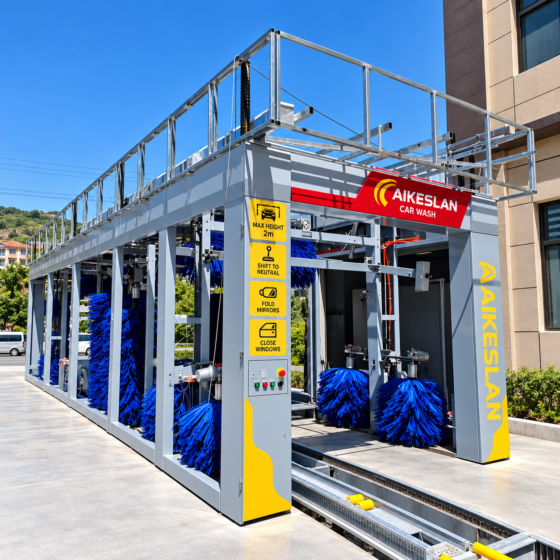
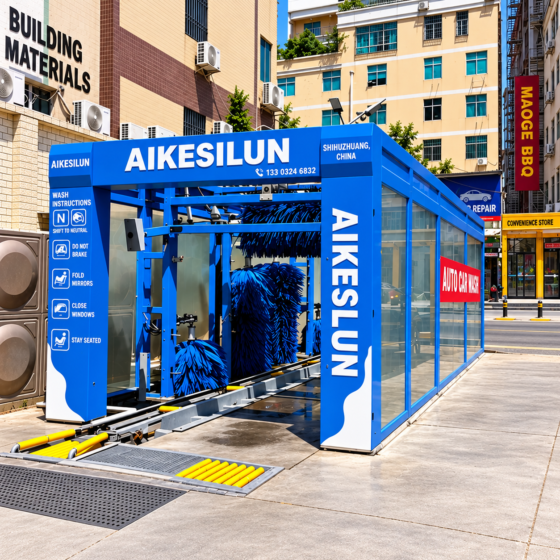
Tunnel Car Wash Machine
For commercial washing, this includes several areas.
Cleaning quality measures the ability to remove selected dirt from supported vehicles.
Throughput measures how many vehicles the business can actually wash within a given period.
Water efficiency considers fresh-water consumption per completed wash.
Energy efficiency considers electricity use relative to the service provided.
Reliability reflects how consistently the equipment remains available.
Maintenance requirements influence operating time and cost.
Financial performance connects machine capabilities with revenue, expenses, and investment.
Together, these measures provide a more useful comparison than advertised cleaning speed or maximum pump pressure alone.
2. Main Types of Commercial Car Wash Machines
Buyers commonly compare several equipment categories.
| System Type | Main Operating Method | Common Business Setting |
|---|---|---|
| In-bay automatic rollover | Machine moves around a stationary vehicle | Gas stations and compact wash sites |
| Touchless automatic wash | Water and chemicals clean without brush contact | Retail locations and selected commercial sites |
| Soft-touch automatic wash | Contact cleaning media help remove dirt | Retail and commercial wash facilities |
| Hybrid automatic wash | Combines supported cleaning methods | Sites seeking multiple cleaning options |
| Conveyor tunnel wash | Vehicles move through washing stages | Higher-volume dedicated wash facilities |
| Self-service wash | Customer operates the cleaning tools | Sites using a customer-operated service model |
These categories overlap.
For example, an in-bay rollover machine can be touchless, soft-touch, or hybrid.
Likewise, a tunnel can use contact or non-contact cleaning stages.
Therefore, buyers should distinguish the machine layout from the cleaning technology.
3. How Does In-Bay Automatic Performance Compare?
In-bay automatic systems clean vehicles while they remain in a designated position.
The machine travels through the wash sequence.
These systems can be practical for fuel stations and convenience stores with limited space.
However, a single-bay machine generally processes one vehicle at a time.
Main Advantages
The layout may be more compact than a long tunnel system.
The washing program can be controlled automatically.
Different service packages may be available.
Main Limitations
Cycle time affects the number of vehicles served.
Vehicle entry and exit can create additional delays.
The machine’s travel area requires suitable clearance.
Buyer Questions
What are the wash times for each program?
What is the maximum supported vehicle size?
How much water and electricity does each program require?
The answers should be based on the exact machine model.
4. How Does Touchless Car Wash Performance Compare?
Touchless washing relies on spray coverage, hydraulic performance, chemical action, and controlled washing stages.
Because brushes do not contact the vehicle body, some customers prefer this method.
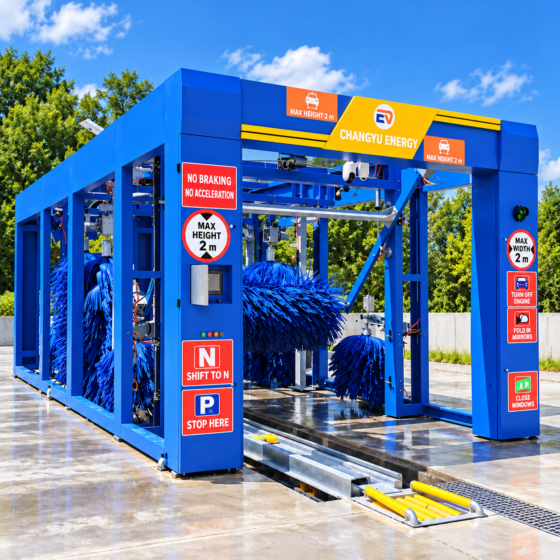
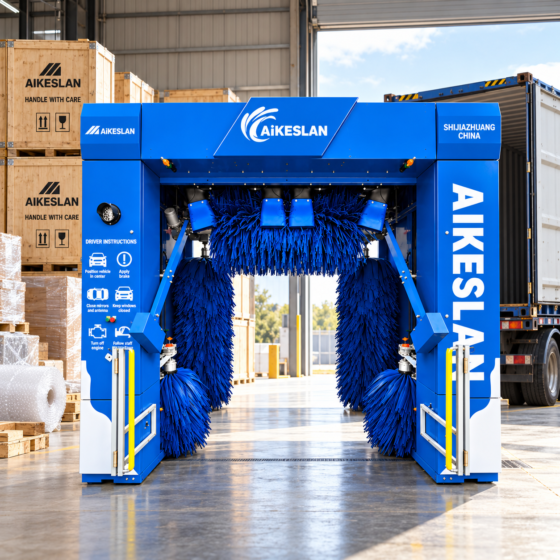
Tunnel Car Wash Machine
However, avoiding brush contact does not automatically produce better cleaning.
Heavy road film may require suitable chemistry, dwell time, or additional cleaning passes.
Important Performance Factors
Pump operating pressure and flow
Nozzle design and positioning
Detergent concentration
Pre-soak duration
Rinse coverage
Vehicle shape
Water quality
Maintenance condition
Buyers should request realistic cleaning information and system specifications.
A touchless wash should not be described as universally damage-free or suitable for every vehicle.
5. How Does Soft-Touch Car Wash Performance Compare?
Soft-touch equipment uses brushes or other designed materials to help remove dirt.
This physical cleaning action can be useful for certain types of contamination.
However, performance depends on equipment design and maintenance.
Worn or contaminated cleaning media may reduce wash quality.
Likewise, incorrect operation can affect vehicle safety.
Key Factors
Brush material and condition
Contact control
Vehicle detection
Chemical application
Water flow
Wash cycle design
Routine inspection
Therefore, buyers should review the manufacturer’s cleaning media specifications and recommended maintenance schedule.
A suitable soft-touch system should also provide clear vehicle restrictions.
6. Touchless vs. Soft-Touch Cleaning Performance
Both cleaning methods can provide useful commercial results.
However, they operate differently.
| Performance Factor | Touchless | Soft-Touch |
|---|---|---|
| Primary dirt removal | Water and chemical action | Water, chemicals, and mechanical contact |
| Brush contact | None | Yes |
| Cleaning heavy road film | Strongly depends on process design | Contact may assist removal |
| Brush maintenance | Not needed on fully touchless systems | Required |
| Nozzle and pump care | Important | Important where fitted |
| Surface compatibility | Must follow vehicle and system restrictions | Must follow vehicle and system restrictions |
| Best choice | Depends on application | Depends on application |
Neither technology should be presented as always superior.
The buyer should compare results using similar vehicles, contamination levels, and operating conditions.
7. How Do Conveyor Tunnel Systems Perform?
Conveyor tunnel washes move vehicles through a sequence of washing stages.
This layout may support higher throughput than a single stationary wash bay.
However, actual capacity depends on conveyor speed, vehicle spacing, equipment operation, and site management.
Tunnel systems also require suitable entry and exit lanes.
A high-capacity machine cannot achieve its potential if payment, queue management, or vehicle loading creates delays.
Furthermore, larger installations may involve more equipment and maintenance work.
Therefore, tunnel washing is most relevant where customer demand supports the operating model.
For a small convenience store, the added land and capital requirements may be difficult to justify.
8. In-Bay Automatic vs. Tunnel Wash Performance
A performance comparison should start with the intended operating environment.
| Comparison Area | In-Bay Automatic | Conveyor Tunnel |
|---|---|---|
| Vehicle movement | Stationary during washing | Moves through cleaning stages |
| Typical site requirement | Dedicated wash bay | Longer equipment and vehicle route |
| Throughput potential | Limited by complete single-bay service cycle | Can be higher with suitable design |
| Staffing model | Site-specific | Site-specific, often more involved |
| Maintenance | Moving gantry and wash components | Conveyor and multiple washing stages |
| Capital requirement | Project-specific | Often larger overall installation |
| Best-fit demand | Compact or moderate-volume sites | Sites with sustained higher demand |
Actual results depend on machine models and project conditions.
9. Which Performance Metrics Should Buyers Compare?
A useful commercial equipment comparison should include measurable indicators.
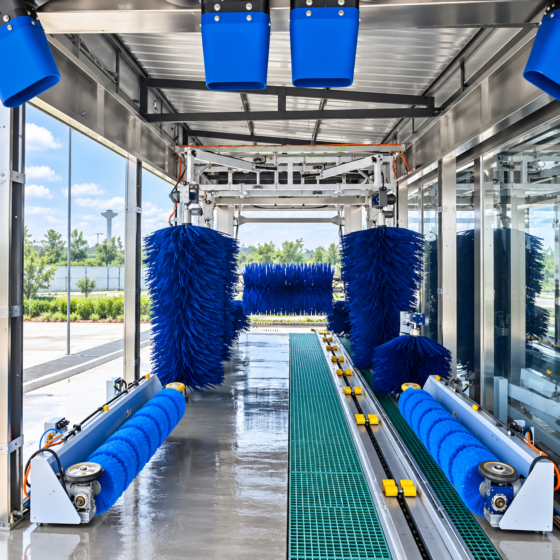
Tunnel Car Wash Machine
Start with cleaning results and wash cycle time.
Next, review water and electricity consumption.
Then evaluate equipment availability, maintenance needs, and customer service capacity.
A practical comparison includes:
- Cleaning performance
- Completed washes per hour
- Water use per wash
- Electricity use per wash
- Chemical consumption
- Vehicle size compatibility
- Downtime
- Maintenance time
- Operating cost per wash
- Expected service life and parts support
No single metric should decide the purchase.
The best machine creates the strongest overall fit for the business.
10. Cleaning Quality: More Than Water Pressure
Some manufacturers advertise maximum pump pressure as a major selling point.
However, higher pressure does not always mean better cleaning.
The wash result also depends on water flow, spray pattern, chemicals, dwell time, and vehicle contamination.
For example, a nozzle that produces a narrow spray may deliver strong local impact but limited coverage.
A wider pattern may cover more area but operate differently.
Therefore, pump specifications should be reviewed alongside nozzle design and cleaning programs.
Buyers should also consider the supported vehicle surfaces.
A professional supplier should explain the intended working conditions and limitations.
11. How to Test Cleaning Performance Fairly
A fair cleaning comparison requires consistent conditions.
First, select representative vehicles.
Next, identify the type and amount of dirt.
Then, compare machines using clearly defined wash programs.
Important test conditions include:
Vehicle category and dimensions
Initial contamination
Chemical type and concentration
Water quality
Ambient conditions
Selected wash program
Cleaning duration
Operator involvement
After washing, inspect relevant vehicle areas.
These may include lower panels, wheels, rear surfaces, and difficult body shapes.
Photos can support the evaluation, but consistent inspection criteria are important.
A comparison based on different dirt levels or programs can be misleading.
12. Wash Cycle Time and Real Throughput
Cycle time is the duration of a washing program.
Throughput measures the number of vehicles actually completed.
The distinction matters.
Suppose a machine finishes a wash cycle in five minutes.
Its ideal machine-only rate would be:
60 ÷ 5 = 12 washes per hour
However, if vehicle entry, positioning, and exit add another two minutes without overlap, the total service time becomes seven minutes.
The idealized practical rate is then:
60 ÷ 7 ≈ 8.6 washes per hour
Real operations may be slower.
Therefore, buyers should request full service-cycle data.
13. Why Higher Rated Capacity May Not Mean Higher Sales
A machine’s potential capacity has value only when enough customers use it.

Tunnel Car Wash Machine
For example, a tunnel wash may support a higher vehicle rate.
However, a small retail site might receive only a few wash customers each hour.
In that situation, the larger capacity may remain unused.
Furthermore, a higher-capacity machine may involve greater investment and fixed costs.
Therefore, buyers should compare capacity with realistic demand.
The right question is not simply, “Which machine is fastest?”
It is, “Which machine can serve my expected customers at a sustainable total cost?”
This distinction helps prevent overinvestment.
14. Water Efficiency: How Much Water Does Each Machine Use?
Water efficiency is an important performance measure.
However, water consumption varies widely across machines and programs.
It also depends on whether reclaimed water is used.
The US EPA’s November 2023 WaterSense vehicle washing guidance cites historical industry studies.
Those studies reported average fresh-water use of approximately:
| System | Historical Average Fresh Water Use |
|---|---|
| In-bay automatic, 2002 study | 43.3 US gallons per vehicle |
| In-bay automatic, 2018 study | 44.8 US gallons per vehicle |
| Conveyor, 2002 study | 34 US gallons per vehicle |
| Conveyor, 2018 study | 30 US gallons per vehicle |
These are historical study averages, not specifications for any particular machine.
They should not be used as guaranteed 2026 performance figures.
The EPA also explains that water consumption depends on equipment configuration and water reclaim practices.
Buyers should request model-specific data and measure water use at the site.
15. Fresh Water vs. Total Wash Water
Buyers should distinguish fresh-water demand from total water circulated during washing.
A system may use both fresh and reclaimed water.
Therefore, a low fresh-water figure does not necessarily mean the machine uses that small amount of total water.
A good quotation should explain:
Fresh water used per program
Reclaimed water used, if applicable
Total process water
Required inlet flow
Water treatment configuration
Storage and filtration needs
For an existing operation, dedicated metering can help establish actual consumption.
This information supports more accurate utility planning and operating cost estimates.
16. What Makes Water Reclamation Effective?
A water reclaim system collects and treats selected wash water for reuse.
However, its performance depends on treatment quality and the wash process.
Sediment, oil, grease, and other contaminants may require removal.
Some stages may also need additional filtration.
Water used for a final rinse may require different quality from water used in an earlier cleaning step.
Therefore, reclaim systems should be designed around the intended uses.
Maintenance also matters.
Blocked filters or poorly maintained tanks can reduce performance.
Buyers should compare fresh-water savings with the additional equipment, energy, treatment, and maintenance costs.
The strongest solution is based on measured site needs.
17. Water Pressure Stability and Wash Consistency
Stable operating pressure helps support repeatable cleaning.
However, the relevant pressure depends on the measurement point.
Pump discharge pressure is not always equal to pressure at the nozzle.
Pipe friction, valve settings, and flow changes can affect the system.
Moreover, insufficient pump inlet supply may create operating problems.
Buyers should evaluate:
Pump operating range
Required inlet pressure
Required inlet flow
Nozzle configuration
Pressure control equipment
Water supply stability
Maintenance access
A suitable pressure system supports its intended cleaning process without exceeding component limits.
18. Nozzle Design and Spray Coverage

aikeslan reciprocating car wash system installed at a gas station
Nozzles influence how water reaches the vehicle.
Their design affects spray angle, flow, impact, and coverage.
Therefore, nozzle specifications matter when comparing commercial car wash equipment.
A system with many nozzles is not automatically better than one with fewer nozzles.
The important question is whether the complete spray arrangement reaches the intended surfaces.
Vehicle shape also matters.
SUVs, vans, and passenger cars may require different cleaning coverage.
Buyers should request information about the machine’s supported vehicle range.
Routine nozzle inspection is important because wear and blockage can change spray performance.
19. Energy Efficiency and Electricity Use
Electricity is another important operating expense.
Automatic washes may use pumps, motors, controls, and dryers.
A machine with more installed motor power does not automatically consume more electricity during every wash.
Actual energy use depends on operating time, load, controls, and selected program.
Therefore, buyers should compare measured or documented kilowatt-hours per completed wash.
They should also review the connected electrical load.
This information supports both cost planning and site design.
Where possible, use the same wash program and comparable operating conditions.
Electricity tariffs may vary by location, so energy costs should be calculated using local prices.
20. Example: Comparing Electricity Cost per Wash
Consider two hypothetical systems.
Machine A uses 1.8 kWh per wash.
Machine B uses 2.5 kWh per wash.
Assume electricity costs $0.18 per kWh.
Machine A’s electricity cost is:
1.8 × $0.18 = $0.324 per wash
Machine B’s electricity cost is:
2.5 × $0.18 = $0.45 per wash
The difference is approximately $0.13 per wash.
At 20,000 annual washes, the modeled difference is:
(2.5 − 1.8) × $0.18 × 20,000 = $2,520
These are illustrative numbers, not published figures for actual products.
Real comparisons should use verified machine consumption and local electricity rates.
21. Drying Performance and Customer Satisfaction
Drying systems can influence how customers judge the finished wash.
However, effective drying depends on several factors.
These include blower airflow, outlet position, vehicle shape, and the selected wash program.
Higher motor power alone does not prove better drying.
Some vehicles may retain water near mirrors, trim, or recessed surfaces.
Therefore, buyers should ask for realistic drying performance information.
They should also consider electricity use and noise.
At urban sites, acoustic conditions may be important.
Routine blower maintenance supports reliable operation.
The best drying configuration balances customer experience, energy consumption, and project needs.
22. Sensor Accuracy and Vehicle Compatibility
Sensors help control machine movement and vehicle positioning.
However, not all sensor systems provide the same functions.
Some equipment uses sensors for vehicle detection.
Others use additional devices to monitor height, position, or machine travel.
The exact capabilities depend on the model.
Buyers should ask:
Which vehicle dimensions are supported?
How are vehicles positioned?
What faults can the system detect?
What happens when a sensor reports an abnormal condition?
How are sensors maintained?
Vehicle accessories and unusual body shapes can create additional restrictions.
A supplier should provide clear information about vehicle compatibility.
23. Reliability: Why Equipment Availability Matters
A commercial machine creates value when it is available to serve customers.
Therefore, reliability should be evaluated alongside cleaning speed.
Equipment that frequently stops may lose business even if its ideal wash cycle is short.
However, buyers should distinguish planned maintenance from unplanned downtime.
They should also account for local repair support.
A reliable performance assessment may include:
Operating hours
Unplanned downtime
Number of faults
Repair duration
Preventive maintenance
Spare-parts availability
Repeat failures
Equipment availability data is especially useful when comparing machines operating under similar conditions.
24. How to Calculate Equipment Availability
Consider a hypothetical commercial wash scheduled to operate 300 hours in one month.
Suppose unplanned downtime totals six hours.
Availability would be:
(300 − 6) ÷ 300 × 100 = 98%
If a second machine experiences fifteen hours of unplanned downtime:
(300 − 15) ÷ 300 × 100 = 95%
This difference can affect completed washes.
However, it is not enough to compare availability alone.
The operator should also consider wash capacity, maintenance arrangements, and demand during downtime.
Consistent definitions are essential.
A supplier should explain exactly how any reported uptime figure is calculated.
25. Maintenance Needs Across Different Wash Systems
Different machines have different maintenance tasks.
Touchless Systems
Common service areas include pumps, filters, nozzles, valves, chemical dosing, and sensors.
Soft-Touch Systems
Brushes, cleaning media, drives, bearings, and sensors also require attention.
Tunnel Systems
Conveyors, multiple cleaning stages, motors, and vehicle-handling equipment add maintenance tasks.
In-Bay Rollover Systems
Gantry movement, rails or drives, sensors, pumps, and cleaning assemblies may need inspection.
No system is maintenance-free.
Buyers should request the manufacturer’s schedule and estimated routine service requirements.
Maintenance should follow applicable safety procedures.
26. Equipment Durability and Component Quality
A machine’s long-term performance depends partly on its components and construction.
However, a durable structure alone does not guarantee reliable operation.
Buyers should examine the complete design.
Important areas include corrosion protection, motors, drives, pumps, bearings, sensors, and control cabinets.
Materials should suit the installation environment.
For example, a coastal site may face different corrosion conditions from an indoor facility.
Cleaning chemicals can also affect material compatibility.
Therefore, manufacturers should provide clear specifications.
Buyers should ask how components can be inspected and replaced.
Easy maintenance access can reduce repair time and improve long-term serviceability.
27. Car Wash Chemical Efficiency
Chemical consumption affects cleaning performance and operating cost.
However, using less detergent is not always better.
The chemical must be suitable for the contamination and equipment.
Concentration should follow the approved cleaning process.
Excessive chemical use can raise costs.
Insufficient use may reduce cleaning quality.
Therefore, performance should be evaluated using consistent wash results and measured consumption.
Buyers should ask whether chemical dosing is automated and how it is controlled.
They should also consider storage, handling, and maintenance requirements.
A fair comparison should measure both cleaning effectiveness and the cost of the process.
28. Comparing Operating Cost per Wash
Operating cost combines several expenses.
These may include water, electricity, chemicals, maintenance, labor, and wastewater handling.
Consider the following hypothetical example.
| Cost Component | Machine A | Machine B |
|---|---|---|
| Water | $0.55 | $0.75 |
| Electricity | $0.32 | $0.45 |
| Chemicals | $0.70 | $0.60 |
| Maintenance allocation | $0.65 | $0.85 |
| Other variable costs | $0.30 | $0.30 |
| Total per wash | $2.52 | $2.95 |
These figures are illustrative.
They are not verified market averages.
Real operating costs depend on local tariffs, actual use, maintenance practices, and machine configuration.
The cheapest machine to operate is not necessarily the best if it cannot meet the site’s cleaning or capacity needs.
29. Purchase Price vs. Total Cost of Ownership
Purchase price is only one part of commercial equipment value.
A buyer should also calculate installation costs, operating expenses, major repairs, and expected useful life.
For example, one machine may cost more initially but use less fresh water.
Another may have a lower equipment price but require more labor or maintenance.
However, these differences must be verified.
A practical total cost of ownership assessment should include:
Equipment purchase
Freight and handling
Civil works
Electrical installation
Water and drainage infrastructure
Chemicals and utilities
Maintenance
Spare parts
Major component replacement
Downtime
The best investment should fit the site’s performance and financial requirements.
30. How Site Layout Changes Machine Performance
A machine may perform well under factory test conditions but differently after installation.
Site layout can influence practical throughput.
For example, a short wash cycle offers limited benefit if customers struggle to enter the bay.
Similarly, a tunnel’s capacity may be restricted by the loading process.
Therefore, buyers should review vehicle entry, payment, queue space, and exit routes.
The wash should also accommodate intended vehicle sizes.
Maintenance access matters because difficult service arrangements can extend downtime.
A qualified professional should review the complete layout.
Machine performance and site performance are connected, but they are not identical.
31. Performance for Gas Stations and Convenience Stores
Fuel retail businesses often need equipment that works within an existing property.
For these sites, compact installation and customer convenience can be important.
An in-bay rollover system may be worth considering.
However, the machine must fit the building and vehicle circulation pattern.
Owners should evaluate cleaning time, queue length, payment integration, and utility requirements.
They should also consider fuel-and-wash offers and customer preferences.
A larger machine is not automatically more profitable.
The most suitable system is one that supports the site’s real demand without disrupting other retail operations.
32. Performance for Dedicated Commercial Car Wash Sites
A dedicated wash business may have different priorities.
Higher wash volume can make practical throughput especially important.
A tunnel system may deserve consideration when demand and land availability support it.
However, such facilities still need reliable equipment, trained staff, and suitable maintenance.
Operators should also measure water use, electricity, chemicals, and customer waiting time.
If the site offers memberships, peak demand patterns may affect capacity planning.
A strong commercial comparison focuses on completed paid washes and operating contribution.
It should not rely only on rated hourly machine capacity.
33. Performance for Fleet Washing Applications
Fleet operators often have predictable vehicle types and washing schedules.
Therefore, they may evaluate equipment differently from retail car wash owners.
Key factors include vehicle dimensions, cleaning frequency, labor needs, and equipment availability.
A fleet may also require selected underbody or wheel cleaning functions.
However, those functions depend on the machine.
A passenger car wash should not be assumed suitable for heavy commercial vehicles.
Buyers should provide their fleet specifications to the manufacturer.
The recommended system should fit the actual vehicles and planned operating schedule.
Consistency and serviceability may matter more than retail customer features.
34. Evaluating Car Wash Equipment for Cold Climates
Climate can affect commercial machine performance.
In Canada, northern US states, and parts of Europe, freezing conditions require additional planning.
Water lines and exposed components may need suitable protection.
The equipment should only operate within its approved temperature range.
Road salt and winter dirt may also influence washing needs.
Therefore, buyers should review cleaning program suitability.
Maintenance access and drainage conditions remain important.
A supplier should explain available cold-weather options and any operating restrictions.
Buyers should not assume standard equipment can operate safely in every climate without modification.
35. Comparing Manufacturers Across Different Markets
B2B buyers should compare suppliers using the same technical criteria.
A quotation should provide clear specifications and conditions.
For example, if one supplier quotes wash capacity under a basic program, another supplier should not be compared using a premium program without adjustment.
Likewise, water consumption should be reported using the same units and program scope.
Ask whether values refer to freshwater consumption or total water circulated.
Confirm local electrical compatibility.
Review installation responsibilities and after-sales support.
Clear documentation reduces uncertainty.
A professional comparison should separate verified technical performance from sales claims.
36. What US and Canadian Buyers Should Check
North American buyers should review local utility conditions, vehicle sizes, and site requirements.
Relevant construction, electrical, wastewater, and other requirements vary by location.
An imported machine should match the intended electrical supply.
Buyers should also consider service availability and spare-parts lead times.
In cold-weather regions, freeze protection can be important.
For existing wash businesses, actual operating data can help identify whether replacement is justified.
The equipment manufacturer should provide model-specific specifications.
Qualified local professionals should confirm installation and compliance requirements.
37. What UK and EU Buyers Should Check
UK and EU buyers should review machinery documentation, electrical compatibility, and wastewater requirements.
For projects in the EU, the applicable machinery compliance framework depends on the relevant dates and circumstances.
Regulation (EU) 2023/1230 generally becomes applicable on 20 January 2027, subject to specific provisions.
UK requirements must be checked separately.
In addition, site planners should consider drainage, water treatment, and possible noise effects.
The supplier should provide accurate technical documents.
Buyers should confirm local installation responsibilities before import or construction.
Performance comparisons should also account for local operating costs.
38. How to Build a Commercial Car Wash Performance Scorecard
A weighted scorecard can help organize supplier comparisons.
The weights should reflect the buyer’s priorities.
For example:
| Evaluation Area | Illustrative Weight |
|---|---|
| Cleaning quality | 25% |
| Practical throughput | 20% |
| Reliability and maintenance | 20% |
| Water and energy efficiency | 15% |
| Total cost of ownership | 15% |
| Supplier support | 5% |
| Total | 100% |
These weights are an example, not an industry standard.
A high-volume tunnel business may give more weight to throughput.
A small gas station may prioritize compact installation and operating costs.
Score each supplier only when comparable evidence is available.
39. Example: A Fair Supplier Comparison
Assume a business is considering two machines.
Machine A has a faster advertised cycle.
Machine B has a slightly slower cycle but requires less routine maintenance.
Before choosing, the buyer should ask:
What is the full customer service time?
What are the actual water and electricity costs?
How often is maintenance required?
What happens when a component fails?
How quickly are replacement parts available?
Does the site have enough demand to use the extra capacity?
The answers may change which option offers better value.
A fair comparison measures performance within the buyer’s operating conditions.
40. How to Estimate Return on Investment
Return on investment depends on both equipment performance and business demand.
Consider a hypothetical wash site.
Assume a new machine helps complete 15 additional paid washes per day.
Average price is $14.
Variable cost per wash is $4.
Contribution per additional wash is:
$14 − $4 = $10
If the site achieves this increase over 300 operating days:
15 × 300 × $10 = $45,000
This is annual incremental contribution before added fixed costs.
If new fixed expenses total $10,000 per year, the remaining illustrative operating contribution is:
$45,000 − $10,000 = $35,000
These calculations are hypothetical.
Real results require adequate customer demand and verified operating expenses.
41. How to Calculate Simple Payback
Suppose the equipment upgrade and installation cost $140,000.
Using the hypothetical $35,000 annual incremental contribution:
$140,000 ÷ $35,000 = 4 years
This is a simple payback estimate.
It does not account for financing, taxes, depreciation, working capital, major future repairs, or the time value of money.
It also assumes stable incremental demand.
Therefore, a buyer should prepare conservative and high-demand scenarios.
A detailed project may require discounted cash flow analysis.
A machine that appears attractive under optimistic assumptions may be less appealing when demand is lower.
42. Why Performance Data Must Be Verified
Manufacturers may test equipment under different conditions.
Therefore, published numbers are not always directly comparable.
For example, washing time may exclude payment and vehicle movement.
Water use may refer only to freshwater consumption.
An energy figure may exclude a separate water treatment unit.
Similarly, maintenance estimates may assume different operating schedules.
Buyers should request the testing basis for important claims.
Where practical, ask for an operating demonstration or customer reference.
A supplier should be able to explain both the strengths and limits of its equipment.
This creates a more reliable buying process.
43. Commercial Car Wash Machine Buying Checklist
Before purchasing, confirm the following information.
Cleaning Performance
- Supported wash programs
- Vehicle compatibility
- Test conditions
- Cleaning system type
- Nozzle or brush configuration
Operational Performance
- Machine cycle time
- Full service-cycle time
- Realistic hourly throughput
- Expected operating hours
- Maintenance intervals
Utility Performance
- Fresh-water use per wash
- Required inlet flow and pressure
- Electrical supply and load
- Energy use per program
- Chemical consumption
Commercial Requirements
- Equipment and installation costs
- Spare-parts availability
- Warranty coverage
- Technical support
- Expected maintenance expense
- Suitable expansion options
A complete checklist helps buyers compare equipment systematically.
44. Frequently Asked Questions About Commercial Car Wash Machine Performance
Which commercial car wash machine is the most efficient?
Efficiency depends on cleaning performance, resource use, throughput, and operating costs. No single machine is best for every application.
Is a touchless car wash better than a soft-touch wash?
Neither method is always better. Touchless washing avoids brush contact, while soft-touch washing uses mechanical cleaning action.
Does higher water pressure mean better cleaning?
Not necessarily. Flow, spray coverage, cleaning chemistry, and program design also affect results.
Are tunnel car washes faster than rollover machines?
Tunnel systems can support higher throughput, but actual performance depends on the equipment and complete site operation.
How many cars can an automatic rollover wash clean per hour?
Capacity varies by machine and wash program. Buyers should include entry, payment, and exit time.
Do commercial car wash machines use a lot of water?
Water use varies by system, program, and reclaim configuration. Ask for measured fresh-water use per completed wash.
Can water recycling improve machine efficiency?
It can reduce fresh-water demand when designed and maintained correctly. Treatment needs depend on how reclaimed water is used.
How much electricity does an automatic car wash use?
Consumption depends on motors, pumps, dryers, cycle time, and operating conditions. Model-specific kWh figures are needed.
What makes a car wash machine reliable?
Suitable component design, correct installation, preventive maintenance, spare-parts access, and proper operation all matter.
How do buyers compare cleaning quality?
Use similar vehicles, contamination levels, wash programs, and inspection criteria.
Is a more expensive car wash machine better?
Not automatically. The buyer should compare total installed cost, operating expenses, and useful performance.
How important is after-sales support?
It can affect repair time, maintenance quality, and equipment availability.
What performance data should manufacturers provide?
Request cleaning specifications, wash cycle times, water and electrical requirements, vehicle limits, maintenance schedules, and warranty terms.
How should I evaluate a new car wash machine?
Compare technical specifications, realistic throughput, operating costs, site fit, reliability, and the supplier’s service arrangements.
45. Request Commercial Car Wash Equipment Specifications
Choosing the right machine starts with clear project information.
Before requesting a quotation, prepare details about your site.
Useful information includes:
- Country and installation location
- Business type
- Available site dimensions
- Intended vehicle categories
- Expected daily wash volume
- Peak-hour customer demand
- Preferred cleaning technology
- Water supply conditions
- Electrical supply details
- Wastewater handling requirements
- Desired wash programs
- Installation budget
- Planned project schedule
Ask the manufacturer to recommend suitable configurations based on these requirements.
Then request comparable technical documents.
These should include drawings, model specifications, operating data, maintenance requirements, and an itemized quotation.
Request Machine Specifications | Compare Automatic Car Wash Systems | Get a Customized Equipment Quote
Conclusion: Choose Performance That Fits the Business
Commercial car wash machines should be compared through real operating value, not one headline specification.
Touchless, soft-touch, rollover, and tunnel systems offer different advantages.
Cleaning performance depends on the complete washing process.
Throughput depends on both machine cycles and site operations.
Water and electricity use depend on program settings, equipment design, and supporting systems.
Reliability also affects long-term business performance.
Therefore, buyers should compare technical documents, maintenance needs, and total installed costs.
A machine with greater capacity may be suitable for a busy dedicated car wash.
Meanwhile, a compact automatic system may create better value for a smaller fuel retail location.
The strongest purchasing decision is based on verified performance data, realistic customer demand, and suitable after-sales support.
The best commercial car wash machine is not simply the fastest or most powerful. It is the system that delivers consistent cleaning, dependable operation, and sustainable economic value for the intended site.
References and Further Reading
US Environmental Protection Agency — WaterSense at Work: Vehicle Washes (November 2023)
https://nepis.epa.gov/Exe/ZyPURL.cgi?Dockey=P1018SSR.TXT
US Environmental Protection Agency — WaterSense at Work: Best Management Practices
https://www.epa.gov/watersense/best-management-practices
Google Search Central — Creating Helpful, Reliable, People-First Content
https://developers.google.com/search/docs/fundamentals/creating-helpful-content
European Union — Regulation (EU) 2023/1230 on Machinery
https://eur-lex.europa.eu/eli/reg/2023/1230/oj
Disclaimer: This article provides general technical and commercial purchasing information. Historical water consumption figures are research-based examples, not product guarantees. Financial calculations are hypothetical and do not represent verified market prices, industry averages, or promised returns. Buyers should obtain model-specific technical data and consult qualified local professionals regarding installation, safety, wastewater, and compliance requirements.




Hi, this is a comment.
To get started with moderating, editing, and deleting comments, please visit the Comments screen in the dashboard.
Commenter avatars come from Gravatar.